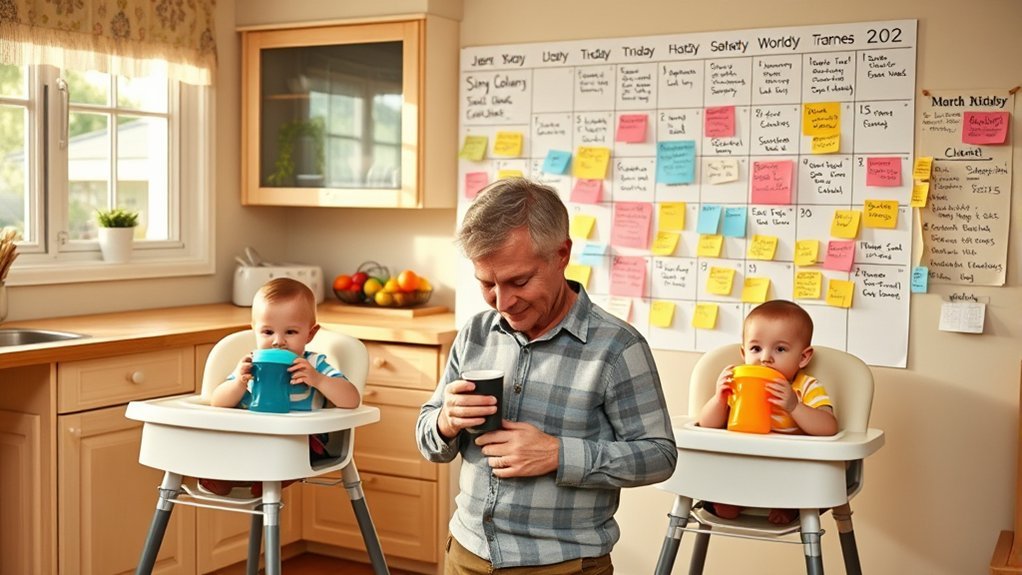
Understanding the Importance of a Twin Schedule
Raising twins can make even a simple day feel hard to manage. Two feeding times, two nap needs, and two moods can quickly stretch your energy. A clear twin schedule gives your day more order while still leaving room for each child’s needs.
Quick Answer
A twin schedule helps you plan feeding, naps, play, and family time for two children. The best schedule stays consistent but flexible, so you can meet shared needs and individual needs without feeling overwhelmed.
Key Takeaways
- Start with a simple routine for feeding, naps, play, and bedtime.
- Keep both twins on a shared schedule when it helps your day run smoother.
- Stay flexible when one child needs more sleep, food, comfort, or quiet time.
- Plan one-on-one time so each twin feels seen as an individual.
- Use calendars, notes, or apps to keep caregivers on the same page.
Why a Twin Schedule Matters
When you’re raising twins, a well-structured schedule can make daily care feel less chaotic. A consistent routine helps your twins know what comes next, which can support calmer feedings, smoother naps, and fewer rushed moments.
A schedule also helps you plan time for feeding, sleep, play, appointments, and rest. You can give both children attention without guessing what needs to happen next. That structure can also help you protect small moments for yourself.
Key Components of Managing Twin Schedules
Managing twin schedules can feel overwhelming at first. You can make the process easier by focusing on three core habits:
- Keep routines consistent: Use regular meal times, nap times, and bedtime cues when possible. Predictable routines help children feel more secure.
- Stay flexible: Adjust the schedule when one twin needs more rest, food, or comfort. A useful routine should guide your day, not control it.
- Communicate clearly: Share the schedule with your partner, family, babysitter, or daycare provider. Use a calendar, notebook, or app so no one has to guess.
Pro tip: Start with one routine block, such as bedtime, before you try to organize the whole day.
Tips for Coordinating Daily Activities
Daily activities become easier when you plan them around predictable blocks. Start with a shared calendar for appointments, daycare events, meals, naps, and family plans.
Build a routine that works for both children, but leave space for changes. You can also involve older twins in simple planning choices, such as picking a book, outfit, snack, or play activity.
Meal prep can save time during busy parts of the day. Set specific windows for homework, quiet play, outdoor time, or bedtime prep when your twins get older.
- Prepare snacks, bottles, or lunch items before busy hours begin.
- Keep diaper supplies, clothes, and comfort items in easy-to-reach spots.
- Use the same sleep cues each day, such as dim lights, soft music, or a short story.
- Talk with your twins about changes so they know what to expect.
Balancing Individual Needs in a Twin Dynamic
Twins often share the same routines, but each child still needs space to grow as an individual. Your schedule should support both the twin bond and each child’s separate identity.
Simple choices can help you avoid constant comparison. Give each twin time, attention, and praise based on their own needs and progress.
- Encourage separate activities: Let each twin try hobbies, books, toys, sports, or creative play that match their interests.
- Plan one-on-one time: Spend short, focused time with each child. Even 10 quiet minutes can help your child feel valued.
- Celebrate differences: Praise each twin for personal effort and growth. This builds confidence without turning daily life into a contest.
How to Adjust a Twin Schedule as They Grow
Your twin schedule should change as your children grow. Babies may need frequent feeding and naps, while toddlers may need more play, outdoor time, and simple choices.
Review the routine when sleep, feeding, daycare, school, or behavior patterns change. If one part of the day feels hard every week, adjust that block first instead of changing everything.
Note: Your twins do not need identical schedules every minute to benefit from a shared routine.
The Impact of Twin Schedules on Family Life
A twin schedule can shape the whole family’s day. Consistent sleep, feeding, and activity times can create more stability and reduce last-minute stress.
Flexibility still matters because each twin may need something different on a given day. You can involve older siblings in simple tasks, such as choosing pajamas or helping set up story time, so they feel included.
Clear communication with your partner or caregiver helps prevent burnout. When each adult knows the plan, your home can feel calmer and more supportive.
Frequently Asked Questions
How Do Twin Schedules Differ From Regular Sibling Schedules?
Twin schedules often group feeding, napping, and play around similar times. Regular sibling schedules may stay more separate because children of different ages usually have different sleep and activity needs.
What Age Is Best to Start a Twin Schedule?
You can start with gentle routines early, such as regular sleep cues and feeding notes. Many parents find a clearer schedule easier once babies begin showing more predictable sleep and feeding patterns.
Can Twin Schedules Help With Feeding Issues?
A twin schedule can make feeding feel more organized. It helps you track who ate, when they ate, and what each child may need next.
How Do I Handle Nap Time for Twins?
Use a calm routine that signals sleep, such as dim lights, a short song, or quiet rocking. Try to align naps when possible, but adjust when one twin clearly needs more rest.
Are There Any Apps for Managing Twin Schedules?
Parenting tracker apps can help you log feeding, naps, diapers, and appointments. You can also use a shared calendar or notes app if you prefer a simple setup.
Final Thoughts on Creating a Twin Schedule
A good twin schedule gives your family structure without removing flexibility. Start small, watch what works, and adjust the routine as your twins grow.
Focus on feeding, sleep, play, and one-on-one time first. With a clear plan and steady communication, you can create a calmer rhythm for your whole family.

