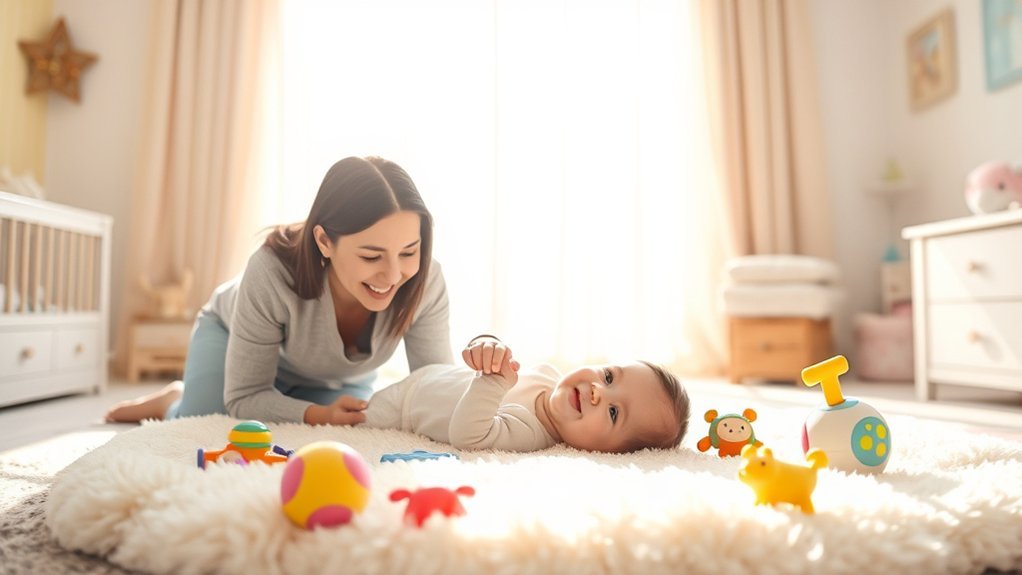
Tummy time can feel hard for a baby who would rather stay on their back or in your arms. Short, playful sessions help your baby build strength without turning practice into a struggle. With a safe space, simple toys, and your close attention, you can make tummy time feel like play while supporting your baby’s next movement milestones.
Quick Answer
Make tummy time fun by starting with short, awake, supervised sessions on a firm, clean surface. Add colorful toys, a baby-safe mirror, songs, and face-to-face play to keep your baby engaged. Follow your baby’s cues, take breaks when they fuss, and build time slowly as they grow stronger.
Key Takeaways
- Start tummy time early with short, supervised sessions while your baby is awake.
- Use toys, sounds, mirrors, and your face to make tummy time more engaging.
- Place your baby on a safe, firm, and clutter-free surface for every session.
- Watch your baby’s cues and increase tummy time slowly as strength improves.
- Ask your pediatrician for guidance if your baby seems stiff, very floppy, or unusually distressed.
Understanding the Importance of Tummy Time
When you place your baby on their tummy while awake, you help them practice key movements. Tummy time builds neck, shoulder, arm, and back strength that supports rolling, reaching, sitting, and crawling.
The American Academy of Pediatrics recommends supervised tummy time because it supports motor development and helps reduce flat spots on the back of the head. Your baby learns to lift their head, shift weight, and explore what they can see and touch.
Tummy time helps your baby build strength, coordination, and confidence for later movement milestones.
Your involvement makes this practice more useful and more fun. Get down on the floor, talk to your baby, and turn each short session into warm, focused play.
How Long Should Tummy Time Last?
Start with brief sessions, such as one to two minutes, a few times a day. Many babies tolerate tummy time best after a diaper change or nap, before they feel hungry or tired.
As your baby grows stronger, add more short sessions through the day instead of forcing one long stretch. The American Academy of Pediatrics suggests working toward about 15 to 30 minutes of tummy time per day by around 7 weeks, based on your baby’s cues.
Stop and comfort your baby if they cry hard, seem exhausted, or tuck their face into the surface. Try again later with a toy, song, or face-to-face play.
Preparing Your Tummy Time Space
Choose a flat, firm, safe area where your baby can move and explore. A clean play mat or blanket on the floor gives your baby enough support without sinking too deeply.
Remove sharp objects, loose blankets, pillows, cords, and small items that could create a choking risk. Keep pets and older siblings close enough to supervise, but far enough to prevent bumps or rough play.
Use a bright but calm spot so your baby can focus. Place a few colorful toys or a baby-safe mirror nearby, then rotate items to keep the space fresh.
Warning: Use tummy time only while your baby is awake and supervised, and place your baby on their back for sleep.
Engaging Tummy Time Activities
To make tummy time enjoyable, choose simple activities that match your baby’s age and mood. Your baby does not need expensive toys. They need safe objects, your attention, and chances to practice small movements.
Place one toy just within reach to encourage looking, lifting, and reaching. Move it from side to side so your baby can practice turning their head and tracking with their eyes.
Fun Tummy Time Toys
While your little one builds motor skills during tummy time, fun toys can help them stay curious and active. Use toys that encourage reaching, grasping, looking, and listening.
| Toy Type | Benefits |
|---|---|
| Soft Rattles | Encourages reaching and grasping |
| Colorful Cloth Books | Supports visual tracking and touch |
| Activity Mats | Offers textures, colors, and gentle sounds |
Rotate toys every few sessions so your baby does not lose interest. Choose washable items with no small loose parts, and keep the play area simple enough for your baby to focus.
Interactive Parent Participation
Interactive parent participation can make tummy time feel safer and more rewarding. Lie down facing your baby, smile, talk, and make eye contact.
Sing short songs, read a board book, or copy your baby’s sounds. These small moments support social bonding while your baby practices lifting their head and looking toward your voice.
You can also place a toy slightly to one side to invite your baby to turn. Celebrate small efforts, such as a brief head lift, a reach, or a smile.
Using Props to Enhance Tummy Time
Props can make tummy time more comfortable when you use them with care. They can support your baby’s chest, draw attention forward, and encourage reaching.
| Prop Type | Benefits | Suggestions |
|---|---|---|
| Tummy Time Mats | Provides a cushioned surface | Choose bright colors and textures |
| Rolled Towels | Supports the arms and chest | Place one under the chest, not the face |
| Soft Toys | Encourages reaching and grasping | Use soft toys with gentle sounds or lights |
| Mirrors | Adds visual interest | Place a baby-safe mirror at eye level |
Try one prop at a time so you can see what helps your baby most. Remove any prop that makes your baby slump, twist, or press their face into the surface.
Pro tip: Place your baby chest-to-chest on you for a gentle tummy time option that still builds strength.
Tips for Keeping Your Baby Interested
Babies often enjoy tummy time more when you vary the activity. Use one or two ideas per session so your baby does not feel overstimulated.
Keep sessions short and positive. A calm voice, a familiar face, and a favorite toy can turn a difficult minute into useful practice.
Use Colorful Toys
Colorful toys can help keep your baby curious during tummy time. Bright colors and bold patterns support visual focus, especially when you place them near your baby’s line of sight.
Choose toys with different textures, shapes, and safe sounds to support sensory play. Place a toy just out of reach when your baby seems ready to stretch, reach, or shift weight.
Move the toy slowly from side to side to encourage tracking. This simple game helps your baby practice head control and attention.
Engage With Sounds
Sounds can help your baby stay engaged during tummy time. Shake a soft rattle, tap a crinkle toy, or play gentle music for a short time.
Your voice works even better than a toy. Talk, sing, count, or read aloud while your baby looks toward you.
Change your tone and rhythm to keep the moment lively. Pause often so your baby can respond with kicks, coos, or eye contact.
Incorporate Mirror Play
Mirror play can make tummy time more engaging because babies often enjoy looking at faces. Use a baby-safe mirror and place it where your baby can see it without straining.
Make silly faces, wave, or move a colorful toy near the mirror. These small actions can encourage head lifting, visual tracking, and reaching.
Stay close during mirror play and remove the mirror when the session ends. Choose a mirror made for babies, not a glass household mirror.
Monitoring Progress and Milestones
Watch how your baby moves during tummy time, but remember that babies develop at different rates. The Centers for Disease Control and Prevention lists head lifting during tummy time as one early movement skill to watch.
By around 2 months, many babies can lift their head briefly while on their tummy. By around 4 months, many babies can hold their head steadier and push up on their forearms.
Encourage reaching, turning, and looking toward toys as your baby gains strength. Celebrate small signs of progress, such as longer head lifts, stronger arm pushes, and more interest in nearby objects.
Note: Milestones give you a guide, but your pediatrician can help if your baby misses skills or loses skills.
When to Ask Your Pediatrician
Talk with your pediatrician if your baby strongly resists every tummy time attempt, seems very stiff, or feels unusually floppy. You should also ask for help if your baby only turns their head to one side or has a flat spot that seems to worsen.
Call sooner if your baby has feeding trouble, poor weight gain, breathing concerns, or frequent forceful vomiting. Your pediatrician can check for reflux, muscle tightness, torticollis, or other issues that may affect comfort and movement.
Frequently Asked Questions
How Often Should I Do Tummy Time With My Baby?
Offer tummy time a few times each day while your baby is awake and supervised. Start with one to two minutes if your baby dislikes it, then add more time as they gain strength.
What Age Is Best to Start Tummy Time?
You can start tummy time as soon as your full-term baby comes home from the hospital, unless your pediatrician gives different guidance. Keep early sessions short, calm, and closely supervised.
Can Tummy Time Help With Reflux Issues?
Tummy time does not treat reflux, and it may bother some babies right after feeding. Try tummy time before a feed or after your baby has rested upright for a while, and ask your pediatrician if reflux symptoms seem frequent or severe.
What Should I Do if My Baby Dislikes Tummy Time?
If your baby dislikes tummy time, make it shorter and more playful. Try chest-to-chest tummy time, a mirror, a favorite toy, or your face at eye level, then stop before your baby becomes too upset.
Are There Any Safety Concerns During Tummy Time?
Supervise every tummy time session and use a firm, clear surface. Avoid loose blankets, pillows, small objects, and tummy time right after a large feeding if your baby seems uncomfortable.
Medical Disclaimer: This article is for informational purposes only and does not constitute professional medical advice. Always consult a qualified doctor or pediatrician before making decisions based on this information.
Conclusion
Tummy time works best when you make it safe, short, and playful. Start with a few minutes, stay close, and use toys, sounds, mirrors, or your face to keep your baby engaged.
Follow your baby’s cues and build time slowly as strength improves. Each small head lift, reach, and smile helps your baby grow more confident in their body.
References
- Back to Sleep, Tummy to Play — American Academy of Pediatrics, HealthyChildren.org
- CDC’s Developmental Milestones — Centers for Disease Control and Prevention
- Ways to Reduce the Risk of SIDS and Other Sleep-Related Causes of Infant Death — Eunice Kennedy Shriver National Institute of Child Health and Human Development
