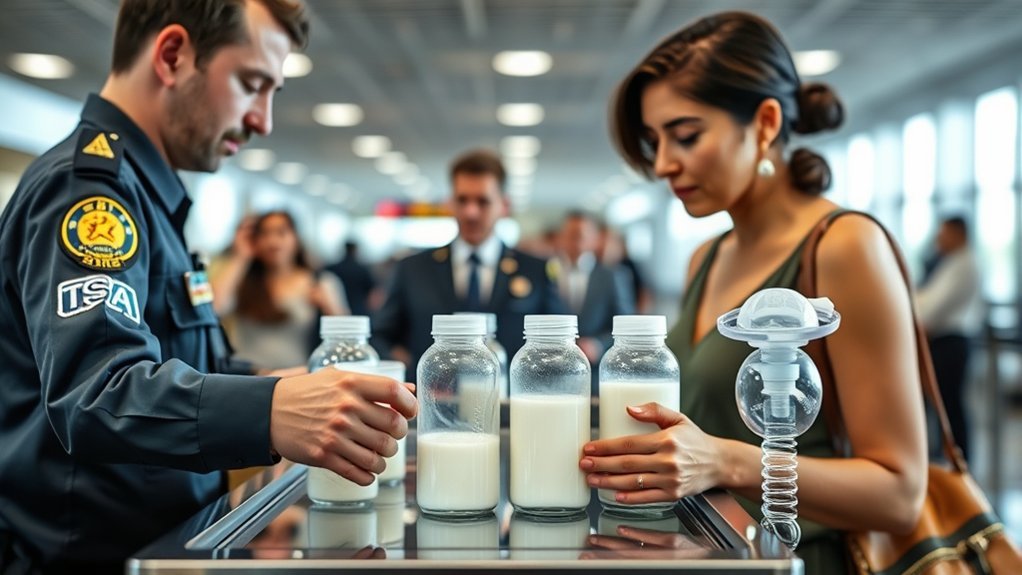
Yes—you can bring breast milk in more than 100 ml through TSA because it’s exempt from the standard liquid limit. Pack it in your carry-on, and tell the officer you have breast milk before screening. TSA may ask to inspect it separately, and frozen milk is usually checked visually. Ice packs and gel packs are allowed to keep it cold. Keep it in clear containers, and you’ll make security easier while learning a few helpful packing tips.
Can You Bring Breast Milk Over 100ml?
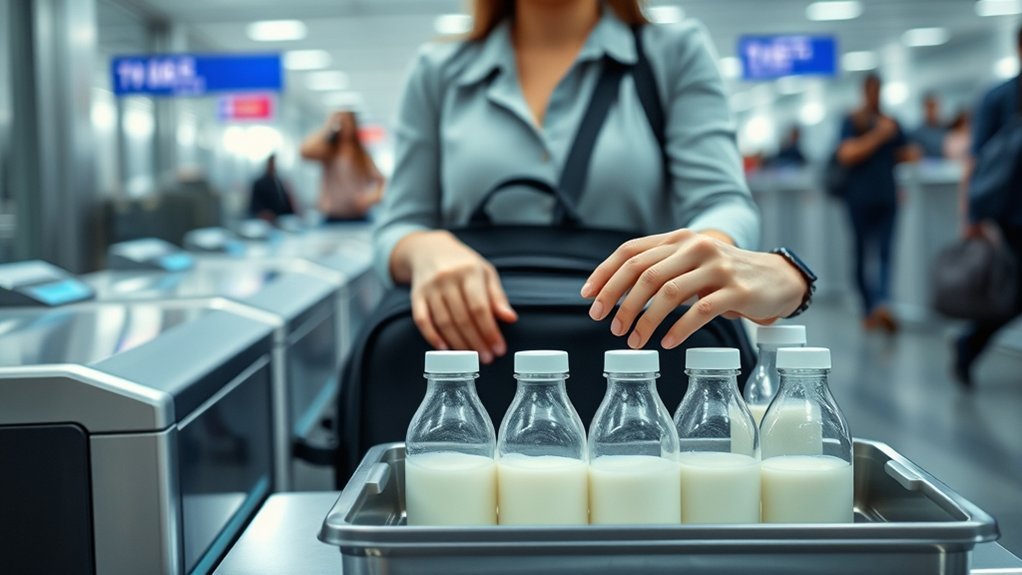
Yes—you can bring breast milk over 100 ml in your carry-on bag. TSA treats breast milk as one of the medically necessary liquids, so you’re not limited by the usual 3-1-1 rule. You can travel with quantities greater than 100 milliliters as long as you declare the milk at the security checkpoint.
Keep it separate from other liquids so screening goes faster and you protect your time and peace. Bring ice packs or gel packs to keep the milk cold; they’re allowed even when no milk is inside.
Tell the TSA officer what you’re carrying before inspection begins. If officers need extra screening, you can ask them to change gloves before touching your items.
You don’t need to shrink your needs to fit a system built without you in mind. Pack your breast milk clearly, speak up confidently, and move through travel with more freedom.
What Are TSA Breast Milk Screening Rules?
At the security checkpoint, TSA requires you to remove breast milk from your carry-on so officers can screen it separately. You can bring more than 100 ml because breast milk counts as a medical necessity, not a standard liquid.
Tell TSA officers what you’re carrying, then place the breast milk and any ice packs or cooling accessories in a bin for screening. Clear, translucent bottles can speed inspection and help reduce delays. Keep the containers accessible, and expect TSA officers to review them as part of security.
Tell TSA officers what you’re carrying, then place breast milk and cooling items in a bin for screening.
If you need a practical accommodation, ask directly and explain your situation. TSA keeps final discretion, so staying calm and clear helps you move through the checkpoint with less stress.
Your rights include bringing the milk you need to care for your baby, without apology. Pack smart, label bottles if you want, and use a cooler that supports easy screening while keeping milk safe during travel.
Does TSA Need to X-Ray Breast Milk?
TSA doesn’t usually need to x-ray your breast milk, but officers can use screening when they need to confirm what’s in your bag.
If your milk is frozen, you’ll often get a visual check instead; if it’s thawed, TSA may swab it for explosives, and you can decline that test.
Keep your milk in clear containers and let officers know about it early so you can move through inspection more smoothly.
X-Ray Screening Basics
If you’re traveling with breast milk, you should know that it’s allowed through security in amounts larger than the standard 3.4-ounce limit because TSA classifies it as a medically necessary liquid.
Your breast milk must go through separate screening, usually a visual inspection, and TSA officers may ask to examine it in your carry-on baggage.
Use clear, translucent bottles so the process stays quick and respectful.
If the milk is thawed and can’t be confirmed visually, officers may test it for explosives.
You should tell TSA officers right away that you’re carrying medically necessary liquids, because that helps them move with less delay.
If you don’t want your breast milk X-rayed, you can ask for alternative screening, though TSA officers still make the final call.
Alternative Inspection Options
Beyond the basic screening process, you can ask for alternative handling if you don’t want breast milk X-rayed.
Tell the TSA officer right away, and your breast milk can be screened separately from other liquids. Frozen milk is usually visually inspected, while thawed milk may be tested for explosives; you can decline that step and request assistance.
Use clear, translucent bottles so screening procedures go faster and easier. If you want more privacy or hygiene, ask the officer to change gloves before touching your breast milk or pumping gear.
The TSA officer still has final discretion, so alternative screening may include additional screening. Stay calm, state your preference clearly, and keep your items organized.
You don’t have to accept needless hassle just to keep feeding on your own terms.
Are Ice Packs Allowed With Breast Milk?
Yes—ice packs, freezer packs, and gel packs are allowed in your carry-on when you’re traveling with breast milk, whether or not the milk is actually in the bag. You can bring them to keep breast milk, formula, or juice cold, and TSA treats them as part of your medical necessity toolkit.
- Pack them in carry-on baggage.
- Expect TSA screening, just like liquids.
- Know that frozen gel packs that feel slushy may need additional screening.
- Put your ice packs with breast milk in a clear bag so officers can inspect them fast.
You don’t need to accept confusion at the checkpoint. If an officer needs to check the packs, stay calm and let the process happen.
The rule is simple: you can travel with the cooling items you need, and they’re allowed as long as they meet screening requirements. That gives you more freedom, less stress, and a smoother trip.
How Do You Pack Breast Milk for TSA?
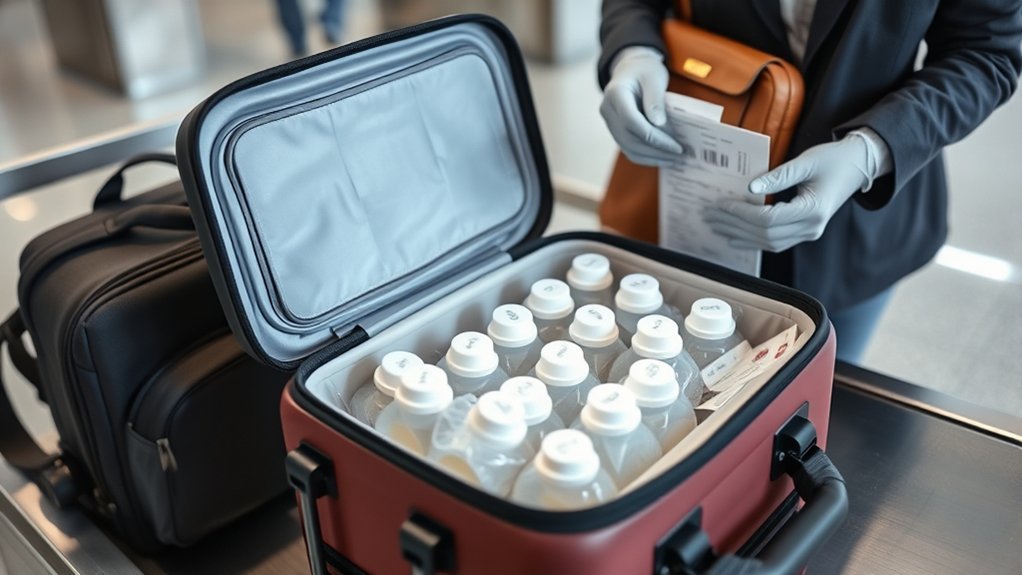
Pack your breast milk in clear, translucent bottles so TSA can screen it quickly, and keep it in a separate section of your carry-on.
Use ice packs or gel packs to keep it cold, and place those cooling items with the milk for easy inspection.
At the checkpoint, let the TSA officer know you’re carrying breast milk so the screening goes smoothly.
Packing Milk for Screening
For smoother TSA screening, put your breast milk in clear or translucent bottles and keep it in a separate bag from your other liquids. This helps you move through security with less hassle and more control over your carry-on baggage.
Tell the TSA officer you’re carrying breast milk, and mention if it’s over 3.4 ounces. It’s allowed, but expect additional screening.
- Pack each container so officers can inspect it fast.
- Use ice packs or gel packs to keep milk cold; they’re allowed even if no milk is inside.
- Place the breast milk bag where you can reach it quickly.
- Be ready to remove it for separate screening so you can keep your travel moving freely.
Use Clear Bottles
Clear, translucent bottles make TSA breast milk screening faster and less stressful because officers can inspect the contents without opening extra packaging.
You should pour your milk into clear containers so the agent can see each one quickly. Keep every bottle accessible in your carry-on, not buried under clothes or gear, so you can present it for separate screening without delay.
Tell TSA right away that you’re carrying breast milk; it’s exempt from the 3-1-1 rule and can exceed 100ml.
Use clear bags to keep everything organized and visible, and label containers if you want extra clarity.
When you pack this way, you protect your freedom to travel with less hassle and give yourself more control at the checkpoint.
Separate Cooling Accessories
Once your milk is in clear bottles, organize the cooling gear with it so TSA can inspect everything quickly. You should pack breast milk, ice packs, and pumping gear together in one bag for the screening process.
TSA rules allow ice packs and gel packs in carry-on baggage, even if they’re empty or unfrozen. Keep all cooling accessories accessible, because you’ll need to remove them with the milk at security. If your breast milk is partially frozen or slushy, expect extra questions and a closer look.
- Put clear bottles in one pouch.
- Add ice packs or gel packs beside them.
- Keep pumping equipment together.
- Open the bag fast for inspection.
This setup saves time and keeps your travel freedom intact.
Can You Fly With Breast Milk and Your Baby?
Yes—you can fly with breast milk, and you don’t have to travel with your baby to do it. TSA treats breast milk as one of its medically necessary liquids, so you can bring more than 3.4 ounces without following the 3-1-1 rule. Pack it in your carry-on baggage, along with cooling accessories or ice packs to keep it cold.
If you’re traveling with children, you can still move through the airport smoothly by telling officers what you’re carrying before the security screening process begins. Keep breast milk separate from other liquids so inspection goes faster.
You can also ask for help through TSA Cares, which offers extra support for parents managing baby gear, milk, and timing at the checkpoint.
This flexibility gives you real freedom: you can pump, store, and board on your schedule, not the airport’s. Remember, you control how you travel, and TSA’s rules are designed to accommodate that.
What If TSA Questions Your Breast Milk?
If TSA questions your breast milk, calmly tell the officer that it’s a medically necessary liquid and not subject to the 3.4-ounce limit. You don’t need to apologize or overexplain. Speak clearly, stay firm, and ask for your items to be screened separately.
- Tell TSA officers your breast milk is exempt as one of the medically necessary liquids.
- Present the milk, pump parts, and other supplies so they can be screened separately.
- If you want extra comfort, ask officers to change gloves before handling your items.
- Know that frozen milk usually gets a visual check, while thawed milk may be tested for explosives; you can decline liquids for explosives testing and still move forward.
As the traveling guardian, you have the right to carry breast milk with confidence. Clear communication helps keep the process smooth and protects your peace.
What Are the International Breast Milk Rules?
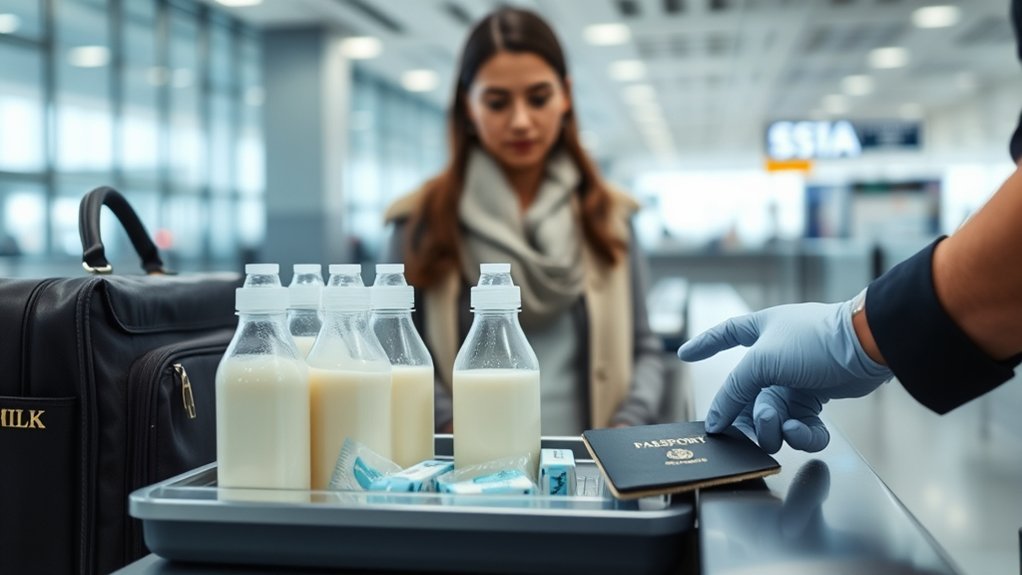
When you fly internationally, breast milk rules can change from one country to the next. You can’t assume TSA-style limits apply everywhere. Many countries treat breast milk as medically necessary liquids, so they allow more than 100 ml in carry-on baggage.
The UK, for example, allows up to 2,000 ml if it isn’t frozen, and Canada doesn’t use the standard liquid cap. Still, international regulations aren’t uniform, so you need to check local regulations before you pack.
Contact the airline, embassy, or consulate for the latest guidance. If you’re shipping breast milk, the U.S. allows non-commercial imports, and couriers like DHL and FedEx offer specialized options.
Some countries may ask for labels, paperwork, or proof that the milk is for personal use. A little prep protects your freedom to travel and keeps your milk moving safely.
Frequently Asked Questions
How Much Breast Milk Can You Bring Through TSA?
You can bring as much breast milk as you need through TSA; there aren’t liquid limits. Follow TSA regulations, check airline policies, use cooling options, and keep breast milk storage safe with smart traveling tips.
How to Travel With a Large Amount of Breast Milk?
Use cooler bags, breast milk storage, and ice packs; pack clear containers, label everything, and tell TSA during security screening. Check airline policies and international flights rules. These traveling tips help when traveling with infants.
What Is the 3-3-3 Rule for Breast Milk?
Ahoy, you know the 3-3-3 rule: carry-on liquids are limited to 3.4 ounces per container, but breast milk’s exempt. Use smart breast milk storage, travel tips, airport security prep, cooling options, container types, pumping schedule, infant nutrition.
How Does TSA Handle Expressed Breast Milk?
TSA screens your expressed breast milk separately, so you’ll tell officers first. You can keep it beyond 100ml, use clear storage solutions, and follow pumping logistics, travel tips, temperature requirements, feeding schedules, and breast milk storage.
Conclusion
So, yes—you can bring breast milk through TSA in amounts over 100 ml, and that’s one less thing you need to stress about. Pack it clearly, expect screening, and keep your supplies organized so you can move through security smoothly. After all, when you’re traveling with breast milk, preparation isn’t just helpful—it’s everything. If you know the rules before you go, you’ll save time, reduce hassle, and focus on what matters most: your baby.
