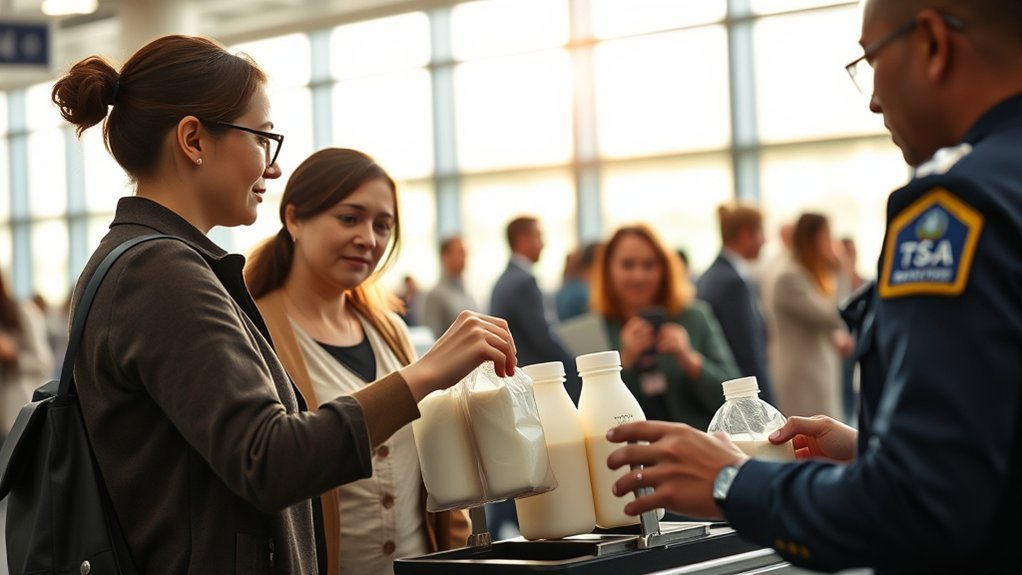
Flying with breast milk is manageable once you know the rules. The TSA has clear policies that protect parents carrying breast milk through security checkpoints, and a new federal law passed in late 2025 strengthened those protections further. Knowing what to expect at the checkpoint, how to pack your milk, and what to do if something goes wrong makes the whole experience much smoother.
Quick Answer
- Breast milk is exempt from the 3.4-ounce liquid rule. You can bring as much as you need.
- Your baby does not need to be traveling with you to carry breast milk.
- Declare your breast milk at the checkpoint and remove it from your bag for separate screening.
- Ice packs and cooling accessories are also allowed, even if partially melted.
- You can request alternative screening (no X-ray) and ask for a private screening area.
Understanding TSA Regulations for Breast Milk
The TSA allows you to carry breast milk in any quantity in your carry-on bag. It is classified as a medically necessary liquid, which means it is fully exempt from the standard 3.4-ounce limit and does not need to fit in a quart-sized liquids bag.
Your child does not need to be traveling with you. Parents pumping on work trips or traveling separately from their infant are fully covered by the same rules.
At the checkpoint, let the TSA officer know you are carrying breast milk before screening begins. You will need to remove it from your carry-on so it can be screened separately. If you prefer not to have your milk X-rayed, you have the right to request alternative screening methods such as Explosive Trace Detection (a swab test) or visual inspection. The officer may need to conduct some additional steps, but this is standard and should not take long.
Ice packs, freezer packs, and gel packs used to keep breast milk cold are also allowed regardless of whether breast milk is actually present in the cooler. If they are partially melted or slushy, they are subject to the same screening process as the milk itself.
For a full breakdown of what is allowed, see TSA’s official breast milk page.
A new law signed in November 2025, the Bottles and Breastfeeding Equipment Screening Enhancement Act (BABES Enhancement Act), strengthens these protections. It requires the TSA to standardize screening procedures across all airports, maintain hygiene protocols when handling breast milk and feeding supplies, and submit to compliance audits. For parents who have faced inconsistent treatment at different airports, this is a meaningful change.
Properly Packing Breast Milk for Travel
Good packing keeps your milk safe and makes the security process faster.
Use clean, sterilized containers or bags made specifically for breast milk. Label each one with the date and time of expression so you know what to use first. Do not overfill containers — leave a little room at the top if you are freezing the milk, since liquids expand when frozen.
TSA recommends using clear, translucent bottles rather than opaque bottles or pouches. Clear containers can be processed through bottle liquid scanners quickly. Pouches and opaque containers may require alternate screening, which takes longer.
Pack your milk in an insulated cooler with ice packs to keep it at a safe temperature. Make sure the cooler seals well to prevent leaks. Keep the cooler accessible in your carry-on since you will need to pull it out at the checkpoint.
Navigating Security Checkpoints With Ease
Here are three things to do when you reach the checkpoint:
- Declare your milk upfront. Tell the TSA officer you are carrying breast milk before they start screening your bags. This sets expectations and keeps things moving.
- Remove it from your bag. Take your breast milk and cooling accessories out of your carry-on and place them in a separate bin for screening.
- Know the quantity rule. There is no limit on how much breast milk you can bring. You do not need a doctor’s note or any documentation. Having a printed copy of TSA’s guidelines can be useful if you encounter an uninformed officer, but it is not required.
Your Rights at the Security Checkpoint
Parents sometimes do not realize they have options when it comes to how their breast milk is screened. Here is what you can ask for:
No X-ray screening. If you do not want your breast milk to go through the X-ray machine, say so. The officer will use alternative methods such as swab testing or visual inspection. Note that you and your carry-on items may undergo additional screening as a result.
Private screening. At any point during the process, you can request to be screened in a private area.
TSA Cares. If you anticipate needing extra support at the airport, you can contact TSA Cares in advance by calling (855) 787-2227 or submitting a request at tsa.gov. They can arrange assistance and walk you through what to expect.
Clean handling. Under the BABES Enhancement Act, TSA officers are required to follow hygiene protocols when handling breast milk and feeding supplies. If an officer handles your milk in a way that seems unsanitary, you can ask them to use clean gloves or flag the issue.
Tips for Traveling With Breast Milk
A little preparation goes a long way. Here is a quick reference to keep in mind before you head to the airport. For further guidance, the CDC’s travel recommendations for nursing mothers cover storage, pumping on the go, and maintaining your milk supply while away.
| Tip | Description | Why It Matters |
|---|---|---|
| Pack in Insulated Bags | Use insulated bags with ice packs. | Keeps milk at the right temperature. |
| Use Clear Bottles | Use clear, translucent containers when possible. | Speeds up screening at the checkpoint. |
| Label Everything | Mark containers with date and time. | Helps with organization and security. |
| Check Airline Policies | Review your airline’s guidelines before flying. | Avoids surprises at the gate. |
| Arrive Early | Give yourself extra time at security. | Separate screening takes a few extra minutes. |
| Print TSA Guidelines | Keep a copy of the official policy handy. | Helpful if an officer is unfamiliar with the rules. |
What to Do If You Encounter Issues at the Airport
Problems at security are frustrating, but they are manageable. Here is what to do:
- Stay calm and explain clearly. Let the officer know that breast milk is a medically necessary liquid exempt from the 3.4-ounce rule. If you have a printed copy of TSA’s policy, show it.
- Ask for a supervisor. If the officer insists on something that conflicts with TSA policy, politely ask for a supervisor. Supervisors generally have more familiarity with the rules and can override incorrect decisions.
- Know your rights. You can refuse X-ray screening, request private screening, and expect your milk to be handled hygienically. If you feel your rights were violated, you can file a complaint through TSA’s complaint system or the Department of Homeland Security’s Office of Inspector General.
Frequently Asked Questions
Can I Bring Frozen Breast Milk on a Flight?
Yes. Frozen breast milk is allowed in carry-on baggage. Pack it in a cooler with ice packs and declare it at the checkpoint. If it is partially thawed, it may require additional screening.
Are There Limits to the Amount of Breast Milk I Can Carry?
No. TSA places no specific limit on the quantity of breast milk you can bring. Carry what you need. Large amounts may take a little longer to screen, but there is no rule capping how much you can have.
Is Breast Milk Screening Different From Other Liquids?
Yes. Breast milk is treated as a medically necessary liquid, not a standard carry-on liquid. It is exempt from the 3.4-ounce rule and screened separately. You can also opt out of X-ray screening if you prefer alternative methods.
Can I Use a Regular Cooler for Breast Milk?
Yes, a regular cooler works. Make sure it is clean, well-insulated, and has a secure seal to prevent leaks. Pack it with ice packs to maintain the right temperature throughout your trip.
Do International Flights Have Different Breast Milk Rules?
Yes. TSA rules apply at U.S. departure airports, but destination countries and airlines may have their own policies. Check the rules for your specific airline and destination before you travel, and carry supporting documentation for a smoother experience.
Conclusion
Flying with breast milk does not have to be stressful. The rules are clear, the exemptions are real, and the 2025 BABES Enhancement Act added even stronger protections for parents at security. Declare your milk, pack it well, know your rights, and give yourself a few extra minutes at the checkpoint. If you run into trouble, ask for a supervisor and refer to the official TSA guidelines. You are well within your rights to travel with your milk — and now you know exactly how to do it.
