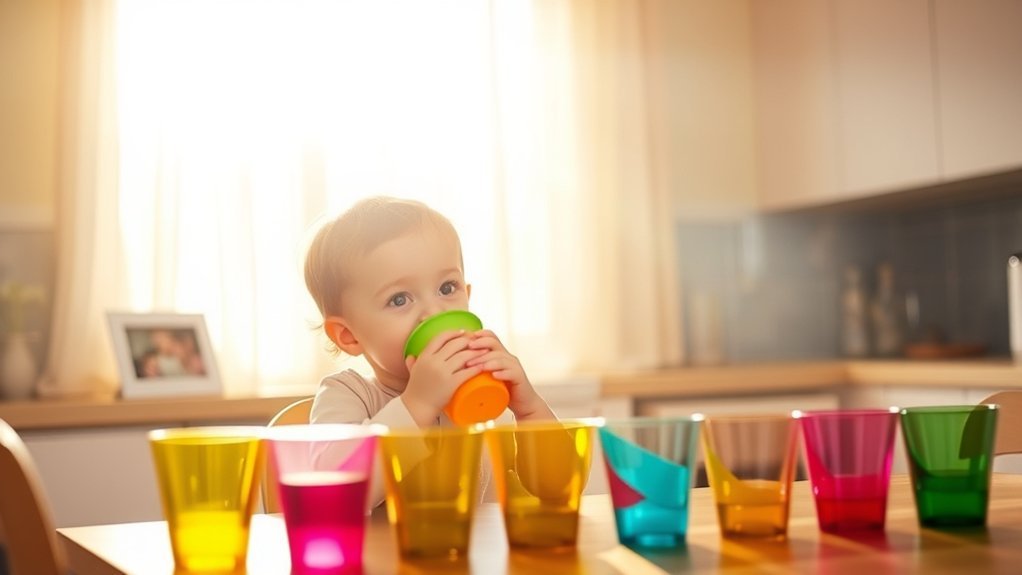
Shifting your child from bottles to cups is more than just a practical change; it’s a profound step in their growth and independence. You might face challenges like spills and resistance, but this journey also offers opportunities to boost your child’s confidence. As you navigate this process together, you’ll find moments that strengthen your bond. So, what strategies can make this shift smoother, and how can you celebrate these milestones along the way?
Understanding the Developmental Significance
When you think about shifting your child to cups, it’s important to recognize the developmental significance of this change. Moving from bottles to cups isn’t just a practical step; it’s an essential milestone in your child’s growth. Using a cup helps enhance their fine motor skills, encouraging hand-eye coordination as they learn to grasp and tilt. This process also promotes independence, empowering your little one to take charge of their drinking. Additionally, sipping from a cup can aid in speech development, as it strengthens the oral muscles needed for clearer sounds. Embracing this change positively impacts your child’s confidence and fosters a sense of accomplishment, making it a rewarding experience for both of you.
Common Challenges Parents Face
As you begin the journey of shifting your child from bottles to cups, it’s natural to encounter a variety of challenges along the way. You might find that your little one resists the change, clinging to their familiar bottle for comfort. Spills are likely to become a regular occurrence as they learn to navigate a cup, which can be frustrating for both of you. Additionally, your child may not grasp how to sip properly, leading to more mess and potential tantrums. It’s also common for parents to worry about their child’s hydration, especially if they refuse the cup initially. Remember, these challenges are part of the learning process, and it’s okay to feel overwhelmed at times. You’re not alone in this!
Tips for a Smooth Transition
Facing challenges while shifting your child from bottles to cups is common, but there are effective strategies to make the process smoother. Start by introducing the cup during mealtimes when your child is most receptive. Choose a cup with a familiar design or their favorite character to spark interest. You might want to demonstrate sipping from the cup yourself, as kids often learn by watching. Gradually replace one bottle feeding with a cup, allowing your child to adjust at their own pace. Be patient and encouraging; celebrate small victories to boost their confidence. If spills happen, reassure them that it’s part of learning. With your support and understanding, your child will adapt to their new cup in no time.
Encouraging Independence and Confidence
While shifting to cups, fostering independence and confidence in your child can make a significant difference in their development. Encourage them to hold the cup themselves, allowing them to explore this new skill at their own pace. Offer choices, like selecting their favorite cup, to empower them and spark their interest. When spills happen—and they will—respond with patience, reassuring them that it’s all part of learning. Celebrate their efforts, no matter how small, to build their self-esteem. Your support plays an essential role in helping them feel capable and confident. Remember, this change isn’t just about drinking; it’s about nurturing their ability to take on new challenges and fostering a sense of autonomy that will benefit them in many aspects of life.
Celebrating Milestones Together
Celebrating milestones together creates meaningful moments that strengthen your bond and acknowledge your child’s growth. Each time your little one successfully sips from a cup, it’s not just a step towards independence; it’s a moment worth recognizing. Take the time to praise their efforts, whether it’s a simple “Great job!” or a fun celebration with their favorite snack. By highlighting these achievements, you’re fostering their confidence and encouraging them to embrace new challenges. Remember, every small victory is a building block in their development. Share in their excitement, capture these moments with photos, and create traditions that make these milestones special. Together, you’re not just moving to cups; you’re creating lasting memories that both of you will cherish.
Frequently Asked Questions
What Age Is Ideal for Starting the Transition to Cups?
The ideal age to start shifting to cups is around six months. At this age, your little one’s motor skills develop, making it easier for them to grasp and sip from a cup confidently.
Are Certain Cup Types Better for Specific Age Groups?
Yes, certain cup types suit specific age groups. For infants, soft spouts are ideal, while toddlers benefit from spill-proof designs. Choosing the right cup can make the shift smoother and more enjoyable for both you and your child.
How Can I Clean and Maintain My Child’s Cup?
Cleaning your child’s cup is as easy as pie! Rinse it daily, use warm, soapy water, and sterilize weekly. Regular checks for wear and tear guarantee it stays safe and ready for hydration adventures.
What if My Child Refuses to Use a Cup?
If your child refuses to use a cup, try offering choices or fun designs. Be patient, and model using a cup yourself. Celebrate small successes to encourage them, and keep the experience positive and pressure-free.
Can I Use a Cup for Both Liquids and Solids?
Yes, you can use a cup for both liquids and solids! Just verify the cup’s appropriate for the food’s texture. It’s a great way to introduce new eating experiences and encourage your child’s independence.
Conclusion
As you guide your little one from the bottle to the cup, think of it as teaching a young bird to fly. At first, it might seem challenging, with spills like raindrops and hesitation like gusts of wind. But with patience and encouragement, you’ll watch them soar, gaining confidence with each sip. Celebrate these small victories together; they’re the stepping stones of growth. Embrace this journey, and you’ll both emerge stronger, hand in hand, ready for the adventures ahead.