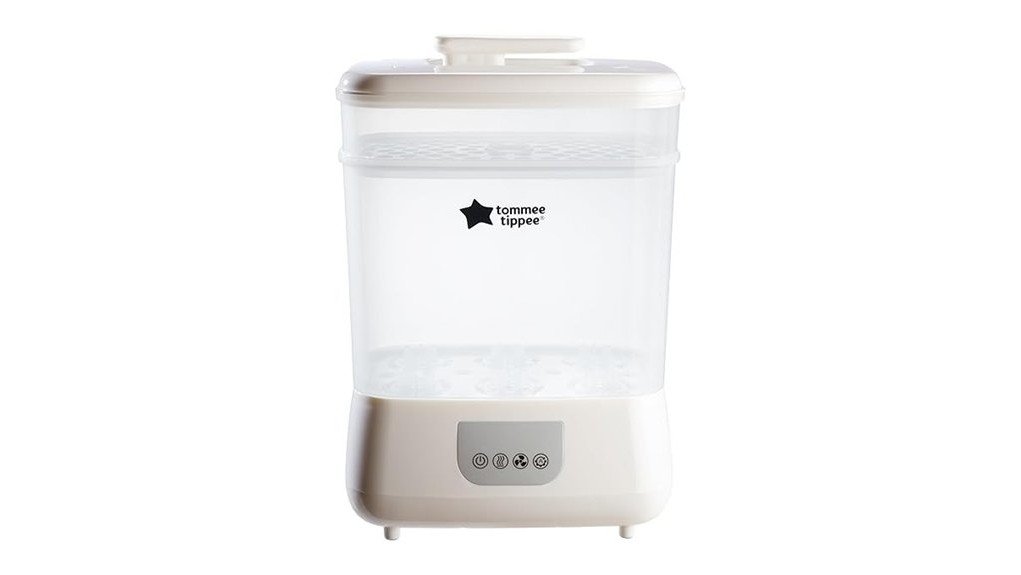
The Tommee Tippee Steridryer combines steam sterilization with drying in one compact unit. It is designed to handle six bottles at once and keep contents sterile for up to 24 hours. For parents managing frequent feeds, that convenience can matter. It also avoids chemical sterilants, which may appeal to those focused on simplicity and hygiene. The key question is whether the performance matches the claims, and that is where the details become important.
Key Takeaways
- Sterilizes bottles, pacifiers, and breast pump parts with steam, killing 99.9% of harmful microbes without chemicals.
- Dries items with filtered air, so bottles come out clean, dry, and ready to use in one 40-minute cycle.
- Best for Tommee Tippee standard bottles, though it also works well with smaller feeding accessories and pump parts.
- Closed-lid storage keeps sterile items safe for up to 24 hours, reducing repeated washing and handling.
- A convenient, cost-effective choice for busy parents who want easier daily bottle prep and better hygiene.
What the Tommee Tippee Steridryer Does
The Tommee Tippee Steridryer Electric Steam Sterilizer and Dryer is designed to clean baby bottles and feeding accessories by using pure steam to kill 99.9% of harmful microbes and viruses, without chemicals.
It serves baby bottle sterilization with a practical, low-effort approach, reducing dependence on harsh products. Its steam cleaning method suits parents who want safer, more autonomous routines.
The unit also handles bottles, pacifiers, and breast pump parts, making it broadly useful. With capacity for six bottles and a compact white body, it offers an organized, efficient option for daily feeding care.
How the Steridryer Sterilizes and Dries
Steam sterilization is the Steridryer’s core function, using pure steam to eliminate 99.9% of harmful microbes and viruses without relying on chemicals. That approach offers practical freedom from boiling pots and manual scrubbing.
Steam sterilization uses pure steam to eliminate 99.9% of harmful microbes and viruses without chemicals.
Its steam efficiency supports fast, even coverage, while the drying technology follows with filtered air to remove remaining moisture. The result is a cleaner, ready-to-use load in one compact cycle.
Evaluatively, the system feels streamlined and dependable, though performance depends on proper loading and closing the lid promptly.
For busy households, it reduces repetitive effort and helps reclaim time with less fuss.
Which Bottles and Accessories Fit Inside?
Fit is one of the Steridryer’s more practical strengths, especially for households already using Tommee Tippee feeding gear. Its bottle compatibility is strongest with the brand’s own standard bottles, which sit securely without awkward angles.
It also handles many common items from other brands, though larger shapes may reduce efficiency.
- Standard bottles
- Pacifiers
- Breast pump parts
- Small feeding accessories
Accessory fit is generally useful, but the tray layout favors compact items over bulky extras. That makes it a sensible, flexible tool for parents who want dependable sterilizing without feeling boxed in by a single ecosystem.
Why 24-Hour Sterile Storage Helps Parents
Convenience becomes more meaningful when sterile bottles can stay ready for up to 24 hours with the lid properly closed. This storage window supports freedom from constant washing, especially during busy nights or unpredictable routines. The sterilization benefits are clear: fewer handling steps and less exposure to contaminants after treatment. Practical convenience factors include pre-sterilizing multiple bottles, reducing stress before feeds, and keeping supplies organized.
| Benefit | Parent Effect | Value |
|---|---|---|
| 24-hour storage | Less rushing | More control |
| Closed lid | Protected contents | Better hygiene |
| Advance prep | Fewer interruptions | Greater flexibility |
This arrangement suits parents seeking efficient, cleaner feeding preparation.
Is the Tommee Tippee Steridryer Worth It?
Value depends on whether the Steridryer’s mix of sterilizing, drying, and storage matches a household’s routine. For many, the unit earns its place through convenience, chemical-free steam, and a 40-minute cycle that reduces daily friction. Its cost effectiveness improves when bottles and accessories are used often enough to justify the purchase.
Steridryer’s value lies in everyday convenience, combining sterilizing, drying, and storage to simplify busy family routines.
- Busy parents gain time.
- Up to six bottles fit.
- Contents stay sterile for 24 hours.
- User experiences often praise cleaner drying with the HEPA filter.
It suits families seeking more autonomy from repetitive washing and drying, though occasional users may find simpler options adequate.
Frequently Asked Questions
How Noisy Is the Steridryer During Operation?
It is generally moderate in noise, with a noticeable fan during drying but not disruptive. Steridryer efficiency stays strong, and drying speed helps limit runtime, making the sound brief and practical for daily use.
Does It Need Distilled Water or Regular Tap Water?
It uses regular tap water, though distilled water benefits include less limescale and cleaner steam. Tap water drawbacks may leave mineral residue. A detached observer notes the machine still performs well, but maintenance improves longevity.
How Often Should the HEPA Filter Be Replaced?
The HEPA filter should be replaced according to the manufacturer’s guidance, typically every few months with regular use. Filter lifespan varies with dust exposure; maintenance tips include checking airflow, cleaning the unit, and monitoring drying performance.
Is It Easy to Clean and Descale?
Yes, it appears fairly easy to clean, with removable parts and a straightforward wipe-down routine. The descaling process is simple enough to manage regularly, supporting good cleaning efficiency and keeping performance reliable over time.
What Is the Power Consumption per Cycle?
It typically uses moderate electricity per cycle, though exact wattage varies; one 40-minute run is generally comparable to a small kettle boil. Its energy efficiency supports favorable cost comparison, especially versus repeated manual sterilizing.
Conclusion
In a nursery like a well-run harbor, the Tommee Tippee Steridryer serves as both lighthouse and drying line, guiding bottles through steam and airflow to a clean, ready state. Its six-bottle capacity and 24-hour sterile storage offer practical relief for parents managing repeated feeds. While not the only vessel in the harbor, it proves sturdy, efficient, and useful. For families seeking cleaner routines and less daily friction, it appears a worthwhile addition to the feeding station.

