
Baby helmets can help reshape an infant’s skull, but they aren’t a universal fix. You’ll usually get the best results when treatment starts before 6 months and is reserved for moderate to severe cases or when repositioning hasn’t worked. A 2014 randomized trial found no clear advantage over conservative care, and some parents reported skin irritation and discomfort. Repositioning and tummy time often help first, and the next details matter.
What Are Baby Helmets For?

Baby helmets, or cranial remolding orthoses, are used to help correct skull shape deformities in infants, including plagiocephaly, brachycephaly, and scaphocephaly.
You use this helmet as cranial therapy to guide growth toward a more symmetrical head shape. The device applies gentle, sustained pressure to selected areas while leaving room for expansion elsewhere.
You use this helmet as cranial therapy to guide growth toward a more symmetrical head shape.
Clinicians usually fit infants before 6 months, when the skull is more malleable and responsive to remodeling. You’ll often hear that the helmet must be worn for about 23 hours a day to maintain consistent force.
Evidence shows measurable improvement in head shape, often at least 50%, but the primary goal remains cosmetic alignment, not treatment of a medical emergency.
For many infants, repositioning and tummy time can offer comparable results, so you deserve clear, noncoercive counseling about whether helmet therapy is truly needed.
Do Baby Helmets Actually Work?
Baby helmets work by applying gentle, continuous guidance to a baby’s skull as it grows, which can improve head symmetry over time.
Research shows mixed results: a 2014 randomized trial found no significant advantage over repositioning alone, but you’re more likely to see benefit when treatment starts before 6 months.
You’d usually consider helmet therapy for persistent or severe asymmetry, but you should weigh the cosmetic benefit against wear time, comfort issues, and the fact that noninvasive options often perform similarly.
How Helmets Work
Cranial remolding helmets work by applying gentle, targeted pressure to an infant’s skull, encouraging growth in flatter areas while limiting expansion in more prominent regions so the head can develop a more symmetrical shape. With helmet therapy, you’re using cranial remolding for a skull deformity in infants with positional asymmetry; it’s mainly for cosmetic correction. Early fitting, especially before six months, can improve outcomes.
| Factor | Effect | Note |
|---|---|---|
| Pressure | Redirects growth | Targeted |
| Age | Better response | Earlier |
| Goal | Shape symmetry | Cosmetic |
| Severity | Often improves | Variable |
| Method | Conservative care | First-line |
This mechanism doesn’t force the skull; it guides natural growth. You should know the device’s purpose is limited, and conservative repositioning remains a strong initial option for many families.
What Research Shows
The evidence on helmet therapy for positional plagiocephaly is mixed, and the best-known randomized controlled trial, published in 2014, found no meaningful difference in head shape outcomes between infants who wore helmets and those managed with conservative measures and natural growth.
For you, that means helmet therapy doesn’t reliably change skull shape better than time alone. A later study shows earlier fitting, before six months, may improve symmetry, but that finding doesn’t overturn the broader evidence.
You should also note that positional plagiocephaly often reflects a cosmetic variation, not medical harm. Because helmets can cost more and may cause skin irritation, you deserve to weigh benefit against burden carefully.
The data support informed choice, not automatic intervention, so you can resist unnecessary treatment.
When To Consider Them
When repositioning and increased tummy time haven’t improved head shape, you may consider a cranial remolding helmet, especially for moderate deformities identified before six months of age.
You should first exhaust repositioning strategies, since parental education can often correct positional flattening without restricting your infant’s head.
Helmet therapy can support symmetry, but evidence shows mixed benefit: one randomized trial found no significant difference versus conservative care, and many cases resolve naturally by age five.
You’re more likely to see gains when a severe deformity persists early, yet the goal is usually cosmetic, not medical necessity.
Expect about three months of wear, 23 hours daily, so adherence matters.
If you value evidence and bodily autonomy, weigh comfort, burden, and realistic head shape improvement before deciding.
What the 2014 Helmet Study Found
In the 2014 BMJ randomized trial, you’d see 84 infants aged 5 to 6 months assigned to helmet therapy or usual care, so the study had a clear comparative design and defined scope.
The two groups showed no significant difference in skull-shape improvement, suggesting that natural growth and conservative care can produce similar outcomes.
You’d also note that all parents in the helmet group reported adverse effects, and the added treatment burden and cost weaken the case for routine helmet use.
Trial Design And Scope
A 2014 randomized controlled trial tested helmet therapy in 84 infants aged 5 to 6 months with moderate to severe positional skull deformities, assigning one group to wear helmets for 23 hours a day and the control group to receive usual care without helmets.
This trial design let you compare helmet therapy against standard management in a severe deformity cohort. You can see that the primary outcomes focused on objective skull-shape measures over time, not parental preference or marketing claims.
The scope stayed narrow: one age window, one deformity type, and one intensive wear schedule. That precision strengthens interpretation, because you’re looking at a controlled test of benefit.
For families seeking freedom from unnecessary medicalization, the study’s structure matters: it asked whether helmets add value beyond natural development and routine care.
Similar Results In Both Groups
The 2014 randomized trial found that helmet therapy didn’t outperform conservative care for moderate to severe positional skull deformities.
In 84 infants aged 5 to 6 months, you saw similar results in both groups: skull shape improved by at least 50% in many cases, whether clinicians used helmet therapy or conservative care.
The data showed no significant between-group advantage for positional plagiocephaly, which means the device didn’t add measurable benefit over non-invasive management.
If you want evidence-based care, this matters: you don’t need to assume more intervention equals better outcomes.
The study instead points you toward conservative care as a viable option and supports further research into effective, non-invasive approaches that respect your infant’s development and your family’s autonomy.
Side Effects And Costs
Beyond the lack of measurable benefit, the 2014 BMJ trial also raised practical concerns about helmet therapy’s burden. You should weigh side effects and costs carefully before choosing this path for positional plagiocephaly. Parents reported skin irritation and discomfort, and the required 23-hour daily wear made adherence difficult. The financial burden was also substantial, because helmets cost far more than repositioning or tummy time.
| Issue | Evidence | Implication |
|---|---|---|
| Skin irritation | Reported in helmet group | Monitor closely |
| Discomfort | Parent-reported | Reduces tolerability |
| Financial burden | Higher than conservative care | Limits access |
These findings suggest you can often preserve your child’s comfort and your autonomy by choosing conservative care first. Helmet therapy may still help select moderate cases, but its cosmetic gains rarely justify the costs and side effects for most families.
When Baby Helmet Therapy Makes Sense
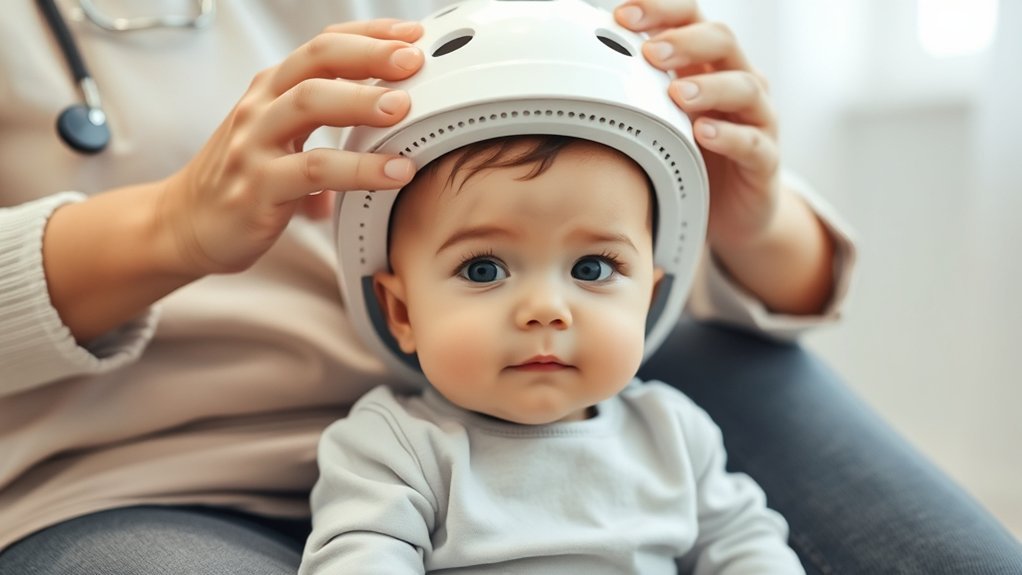
Helmet therapy makes the most sense when an infant has moderate to severe positional plagiocephaly and simpler measures, such as tummy time and repositioning, haven’t corrected the asymmetry.
In these cases, helmet therapy can help correct the shape by guiding skull growth while sutures remain open. You’ll usually see the best response when treatment starts before six months of age; earlier initiation gives you a higher chance of achieving near-symmetry than waiting until later months of age.
For severe plagiocephaly, the helmet can be a practical option, but it isn’t the first line. Clinicians generally reserve it for situations where conservative care has failed or the deformity remains functionally and cosmetically significant.
In moderate deformities, you may see at least a 50% improvement in head shape. Specialized centers fit hundreds of infants each year, showing that this approach remains a common, evidence-based choice when you need more than observation alone.
How Repositioning Helps First
Before considering a helmet, you can often make meaningful progress with repositioning therapy, especially in the first six months when the skull is most moldable.
You can use early intervention to prevent the head from resting in one position too long by increasing tummy time, rotating sleeping orientation, and varying how you hold your infant. This approach targets positional plagiocephaly at its most responsive stage.
Parents who receive clear, specific coaching on head positioning usually achieve better outcomes than those who wait for passive treatment. Evidence shows that less than 1% of infants develop severe flattening by age two, so many head shape concerns improve naturally with consistent repositioning.
When you act early, you may restore near-normal symmetry without exposing your child to costly, prolonged helmet wear. Additionally, proactive monitoring of your baby’s movement patterns can provide valuable insights into their overall health and development.
Repositioning therapy isn’t a fallback; it’s a practical, evidence-based strategy that gives you more control, more flexibility, and more freedom in your infant’s care.
What Helmet Therapy Is Like
If you and your clinician decide a helmet is appropriate, treatment usually starts with a custom cranial orthosis fitted to your baby’s head to guide growth toward a more symmetrical shape.
In helmet therapy, these cranial helmets apply gentle pressure to selected skull areas while giving room for growth where deformational plagiocephaly has flattened the head shape.
You’ll usually keep the helmet on 23 hours a day, removing it only for bathing. Follow-up visits let the orthotist measure growth and adjust fit as your baby’s head changes.
Typical treatment lasts about three months, though age and severity of deformity can change that timeline.
- Wear schedule: consistent use matters.
- Monitoring: regular checks prevent poor fit.
- Timing: starting before six months often improves outcomes.
- Goal: support natural skull growth, not force it.
This approach can help you pursue a more balanced head shape with measured, evidence-based care.
Why Experts Disagree on Baby Helmets

Experts disagree on baby helmets because the evidence is mixed: a 2014 randomized controlled trial found no significant difference in skull-shape improvement between helmet therapy and conservative repositioning, while other studies suggest helmets may help when fitted before 6 months. You also see disagreement because positional plagiocephaly often improves with growth, and many clinicians favor tummy time and repositioning first.
| Finding | Implication |
|---|---|
| Trial data | No clear advantage for baby helmets |
| Early fitting studies | Possible benefit before 6 months |
| Conservative care | Often effective, less intrusive |
Researchers in the Netherlands reported that conservative methods can match or exceed helmet outcomes, with fewer severe cases by age 2. Meanwhile, helmet therapy demands 23-hour daily wear and higher cost, so experts question whether the burden justifies routine use. If you want a liberation-focused approach, the core issue is simple: evidence doesn’t support one universal answer, so experts disagree.
How to Choose the Right Treatment
Choosing the right treatment for plagiocephaly, brachycephaly, or scaphocephaly starts with a physician’s evaluation of severity, age, and likely response to growth. You don’t need to accept an automatic prescription; you can demand evidence-based guidance.
First-line care usually follows the natural course with repositioning and tummy time, plus parent education.
- Confirm whether the deformity is mild, moderate, or a severe deformity.
- Ask if physical therapy can address neck tightness or asymmetry.
- Discuss helmet therapy if asymmetry persists, especially before 12 months.
- Prioritize early intervention, because helmets work best before 6 months and usually require 23 hours daily.
For many infants, conservative care restores skull shape without a helmet, avoiding cost and burden. Additionally, consider that round ligament pain can affect both parents’ well-being during this period.
If your child’s head shape still worsens, you can revisit treatment quickly and choose the least invasive option that still protects development and symmetry.
Frequently Asked Questions
What Is the Success Rate of Helmet Therapy for Babies?
Helmet therapy success varies: you’ll see roughly 50% improvement, with better results before six months and in moderate cases. Helmet therapy effectiveness depends on helmet usage duration; parental concerns, alternative treatments, and cranial deformity prevention matter.
Do Baby Head Shaping Helmets Work?
Yes, baby head shaping helmets can help some infants, but you’ll often see similar improvement with repositioning. You should weigh helmet types, treatment duration, cost considerations, parental experiences, and expert opinions before choosing.
At What Age Is It Too Late for a Baby to Wear a Helmet?
After 12 months, it’s usually too late for helmet fitting; skull growth slows, and outcomes drop. You’ll want to weigh developmental milestones, parental concerns, alternative treatments, and expert opinions before pursuing this option.
What Are the Side Effects of Cranial Helmet for Babies?
You’ll see skin irritation, pressure sores, sweating, and discomfort; helmet comfort often drops during the adjustment period. You may worry about parental concerns and long term effects, but evidence shows mostly temporary, localized adverse effects.
Conclusion
So, if you’ve been eyeing a baby helmet as the fast fix, the irony is plain: the “hard shell” often protects your peace of mind more than it reshapes a skull. Evidence suggests repositioning usually works first, while helmets may help selected, persistent cases. You shouldn’t chase fashion or fear; you should follow measurable asymmetry, age, and response to treatment. In this tiny engineering project, the best result often comes from the simplest intervention.
