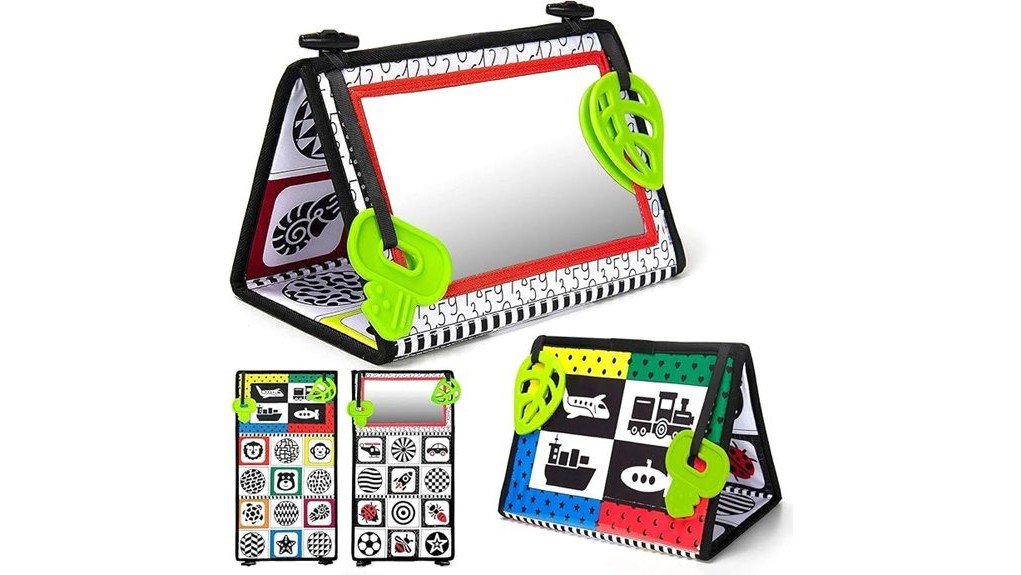
The Teytoy Tummy Time Baby Mirror offers a unique approach to early childhood development. Its contrasting black and white design captures infants’ attention, facilitating vital sensory engagement. This tool not only supports muscle strengthening but also fosters self-awareness through reflection. Parents may find its lightweight and portable nature advantageous for interactive play. However, the broader implications of its design on cognitive and physical growth warrant further exploration. What insights can be gleaned from user experiences and developmental outcomes?
Why Tummy Time Is Essential for Infants
Tummy time is essential for infants as it serves multiple developmental purposes that lay the foundation for future motor skills. Engaging in tummy time promotes infant development by strengthening muscles in the arms, neck, and back, which are vital for crawling and sitting.
This practice also helps prevent flat head syndrome, ensuring healthy cranial growth. Additionally, tummy time fosters cognitive skills, encouraging exploration and self-awareness as infants interact with their environment.
How Teytoy Mirrors Boost Sensory Development for Babies
As infants engage with the Teytoy Tummy Time Baby Mirror, their sensory development is considerably enhanced through interactive exploration.
The high-contrast black and white design provides essential visual stimulation, vital for babies who are yet to perceive colors. This engaging environment fosters infant engagement, as infants are naturally drawn to their reflections and surrounding textures.
The high-contrast black and white design offers crucial visual stimulation, captivating infants with their reflections and the surrounding textures.
By encouraging active discovery, the mirror helps cultivate foundational sensory skills, promoting awareness of their bodies and surroundings.
Consequently, the Teytoy mirror serves as an effective tool in nurturing sensory growth, laying the groundwork for further developmental milestones.
How Teytoy Helps Your Baby’s Physical and Cognitive Growth
The Teytoy Tummy Time Baby Mirror considerably contributes to both physical and cognitive growth in infants. By encouraging tummy time, it helps strengthen motor skills essential for crawling, while mitigating flat head syndrome.
The engaging design enhances visual perception, capturing infants’ attention with high-contrast patterns, essential for early visual development. Interaction with the mirror fosters cognitive skills such as self-awareness and object permanence, as babies explore their reflections.
This multifaceted approach not only supports physical development but also enriches cognitive engagement, providing a holistic foundation for infants to thrive and explore their environment freely.
The 2-In-1 Design: Benefits for Tummy Time and Crib Play
Although infants benefit from various types of play, the Teytoy Tummy Time Baby Mirror’s 2-in-1 design uniquely caters to both tummy time and crib play.
This play versatility allows infants to engage with their reflection, fostering self-awareness and visual stimulation. The mirror benefits extend beyond mere reflection; by encouraging exploration, it enhances cognitive skills like object permanence.
During tummy time, the mirror aids in physical development, strengthening muscles essential for crawling. In the crib, it serves as an engaging focal point, promoting sensory development.
What Parents Are Saying About Teytoy?
Many parents have expressed satisfaction with the Teytoy Tummy Time Baby Mirror, noting its effectiveness in stimulating their infants’ sensory and physical development.
Parent experiences highlight the engaging high-contrast design, which captivates babies and encourages muscle strengthening during tummy time.
Additionally, the product’s durability is frequently praised, with many reporting that it withstands rigorous play without wear.
The lightweight, foldable nature enhances its portability, making it ideal for various settings.
Parents appreciate the emphasis on bonding through interactive play, reinforcing the importance of shared experiences in early development.
Frequently Asked Questions
Is the Mirror Shatterproof for Safety During Playtime?
The mirror incorporates safety features designed to withstand playtime activities, minimizing risks to infants. These attributes enhance playtime benefits, allowing babies to explore their surroundings safely while fostering essential developmental skills.
What Age Range Is the Teytoy Mirror Suitable For?
The teytoy mirror is suitable for infants aged 0-6 months, promoting essential infant development. Its design enhances sensory stimulation, encouraging exploration that fosters physical and cognitive growth during critical early months of life.
Can the Mirror Be Cleaned Easily?
The mirror can be cleaned easily with a damp cloth, promoting hygiene. Maintenance advice suggests avoiding harsh chemicals to guarantee safety. Following these cleaning tips encourages a safe, engaging environment for sensory exploration and development.
Are Any Toxic Materials Used in the Production?
Like a guardian angel, the product adheres to stringent safety standards, ensuring no toxic materials are present. This commitment fosters peace of mind for caregivers, supporting a nurturing environment for infants’ growth and development.
How Does the Mirror Fold for Storage?
The mirror design features a foldable structure, efficiently collapsing for convenient storage solutions. This portability allows caregivers to easily manage space, promoting a clutter-free environment while ensuring the toy remains accessible for developmental play.
Conclusion
To summarize, the Teytoy Tummy Time Baby Mirror serves as an essential bridge between an infant’s early explorations and their developmental milestones. Like a lighthouse guiding ships through fog, this mirror illuminates the path to sensory and physical growth, fostering self-awareness and muscle strength. Parents can confidently integrate this tool into their playtime routines, knowing it not only entertains but also lays the groundwork for their child’s cognitive and physical development.