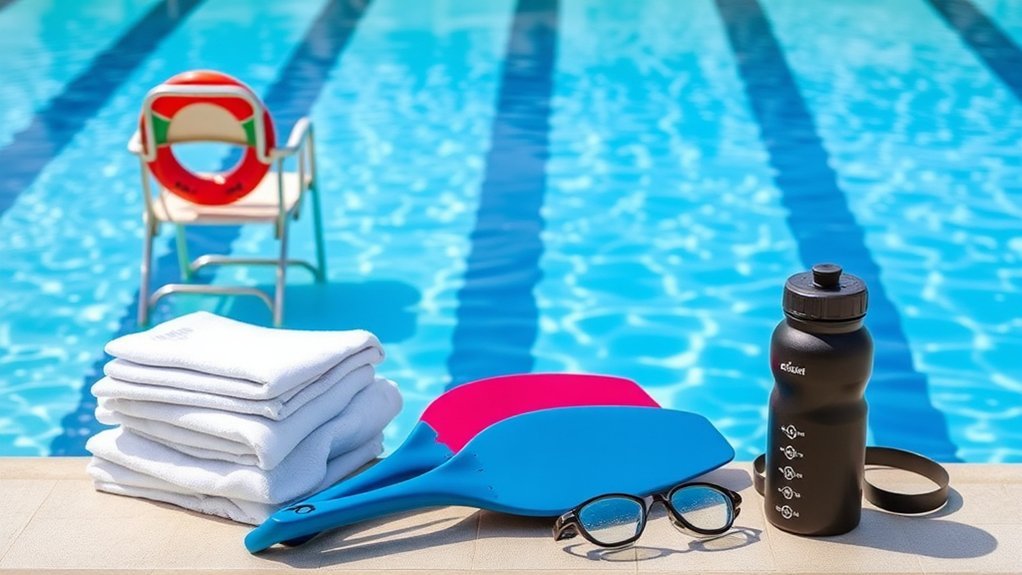
Did you know that nearly 70% of swimmers experience some form of injury during their training? To make the most of your swimming workouts and stay injury-free, it’s essential to understand effective prevention strategies. From proper warm-up routines to recognizing your limits, each aspect plays an important role in your performance. Let’s explore how you can enhance your swimming experience while minimizing risks.
Proper Warm-Up and Cool-Down Techniques
Before diving into your swimming workout, it’s crucial to spend at least 5 to 10 minutes on proper warm-up and cool-down techniques. Warming up increases your heart rate and prepares your muscles, reducing the risk of injury.
Start with dynamic stretches like arm circles and leg swings to loosen up. Incorporate light swimming, focusing on technique, to gradually engage your muscles.
After your workout, don’t skip the cool-down. It helps your body shift back to a resting state and aids in recovery. Swim at a slower pace or perform gentle stretches to prevent stiffness.
Understanding Your Limits
Understanding your limits is essential for maximizing your swimming performance and maintaining a safe workout routine. Recognizing how far you can push yourself helps prevent injury and keeps you motivated.
Here are some practical tips to help you gauge your limits:
- Listen to your body: Pay attention to signs of fatigue or discomfort.
- Set realistic goals: Establish achievable targets based on your current skill level.
- Gradually increase intensity: Progressively ramp up your workouts to avoid overexertion.
- Take rest days: Allow your body time to recover and rebuild strength.
- Seek feedback: Work with a coach or experienced swimmer to assess your capabilities.
Techniques for Correct Swimming Form
Recognizing your limits sets the foundation for improving your swimming, but mastering the right techniques for correct swimming form takes your performance to the next level.
Focus on your body position; keep your head in line with your spine and your hips near the surface. In freestyle, make sure your arms extend fully, entering the water with a relaxed hand. As you pull, engage your core for better stability.
Don’t forget about your kick; a steady flutter helps maintain momentum. Breathing is essential too—turn your head just enough to inhale without disrupting your stroke.
Finally, practice consistently; refine your form bit by bit, and soon you’ll notice significant improvements. Stay motivated, and enjoy the journey toward becoming a better swimmer!
Choosing the Right Equipment
Choosing the right equipment can greatly enhance your swimming experience, so it’s vital to invest in gear that fits well and suits your style.
Having the right tools not only boosts your performance but also keeps you comfortable in the water. Here are some key items to reflect on:
- Swimsuit: Choose one that offers support and reduces drag.
- Goggles: Confirm they fit snugly to prevent leaks and provide good visibility.
- Swim Cap: Helps streamline your body and keeps hair out of your face.
- Kickboard: Aids in building leg strength and improving technique.
- Fins: Enhance your kick and help with body position.
With the right equipment, you’ll feel more confident and motivated to reach your swimming goals!
Hydration and Nutrition for Swimmers
Once you’ve got your gear sorted, it’s time to focus on fueling your body for peak performance in the pool. Staying hydrated is vital; aim to drink water before, during, and after your swim. Dehydration can slow you down and affect your endurance.
Staying hydrated is essential for peak swimming performance; drink water before, during, and after your swim to maintain endurance.
In terms of nutrition, prioritize complex carbohydrates for energy, along with lean proteins for muscle repair. Foods like whole grains, fruits, and vegetables should be staples in your diet.
Don’t forget healthy fats; they’re essential for overall performance.
Consider timing your meals too—eat a light snack about 30 minutes before swimming.
Post-workout, refuel with a balanced meal to help your body recover. By paying attention to hydration and nutrition, you’ll swim stronger and longer!
Frequently Asked Questions
How Can I Prevent Swimmer’s Ear While Training?
To prevent swimmer’s ear while training, wear earplugs, dry your ears thoroughly after swimming, and consider using a drying solution. Staying proactive helps you enjoy your workouts without discomfort or disruptions. Keep swimming strong!
What Should I Do if I Experience Cramps While Swimming?
If cramps hit while you’re swimming, don’t panic! Ease up, stretch the affected muscle, and hydrate. You’ve got this—listen to your body, and soon you’ll be gliding through the water again.
Are There Specific Stretches for Swimmers to Prevent Injuries?
Yes, you can incorporate shoulder stretches, hamstring stretches, and hip flexor stretches into your routine. These help improve flexibility and reduce injury risk, so stay consistent and listen to your body for ideal performance.
How Often Should I Vary My Swimming Routine to Avoid Injury?
You should vary your swimming routine every few weeks to keep your muscles engaged and prevent overuse injuries. Try different strokes, distances, and techniques to challenge yourself while maintaining balance in your training.
What Are the Signs of Overtraining in Swimmers?
If you feel fatigued, irritable, or notice decreased performance, are you overtraining? Look for persistent soreness, sleep disturbances, and lack of motivation. Listen to your body; adjusting your routine can help you recover and thrive.
Conclusion
Incorporating these prevention tips into your swimming routine can keep you injury-free and enhance your performance. Think of your warm-up like a knight donning armor before battle; it prepares you for the challenges ahead. By understanding your limits, perfecting your form, and choosing the right gear, you’ll swim smarter, not harder. Don’t forget to hydrate and fuel your body properly. Stay committed, and you’ll ride the waves of success, hitting your goals while enjoying every stroke!