
Have you ever wondered why your body changes so much during pregnancy? Swelling, particularly in your feet and hands, is a common experience for many expecting mothers, often caused by hormonal shifts and increased blood volume. While some swelling is normal, it’s essential to recognize when it might signal a more serious issue. Understanding the nuances of this condition can help you navigate your pregnancy with confidence and comfort. What should you watch for as your body transforms?
Understanding Edema: What Is Swelling During Pregnancy?

During pregnancy, you might notice swelling in various parts of your body, especially in your feet and ankles, which is a common condition known as edema.
This occurs when excess fluid accumulates in your tissues, often due to hormonal changes and increased blood volume. You may experience this swelling more in the later stages of pregnancy, particularly after long periods of standing or sitting.
While edema is generally harmless, it’s important to monitor it closely. If you notice sudden or severe swelling, especially in your hands or face, reach out to your healthcare provider, as it could indicate a more serious issue.
Common Causes of Swelling in Expecting Mothers

Swelling during pregnancy, particularly in the feet and ankles, can arise from several common causes. Understanding these can help you navigate this uncomfortable experience.
Swelling in the feet and ankles during pregnancy is common and can stem from various causes.
- Fluid Retention: Your body retains more fluid to support your growing baby.
- Hormonal Changes: Increased hormones can lead to swelling as your body adjusts.
- Increased Blood Volume: Your blood volume rises considerably, contributing to swelling.
- Pressure from the Uterus: As your baby grows, it puts pressure on blood vessels, affecting circulation.
- Heat and Activity: Warm weather and prolonged standing can exacerbate swelling.
Recognizing these causes helps you feel more in control.
While swelling can be uncomfortable, it’s often a normal part of pregnancy. Always consult your healthcare provider if you have concerns.
Types of Swelling: Where You Might Notice It
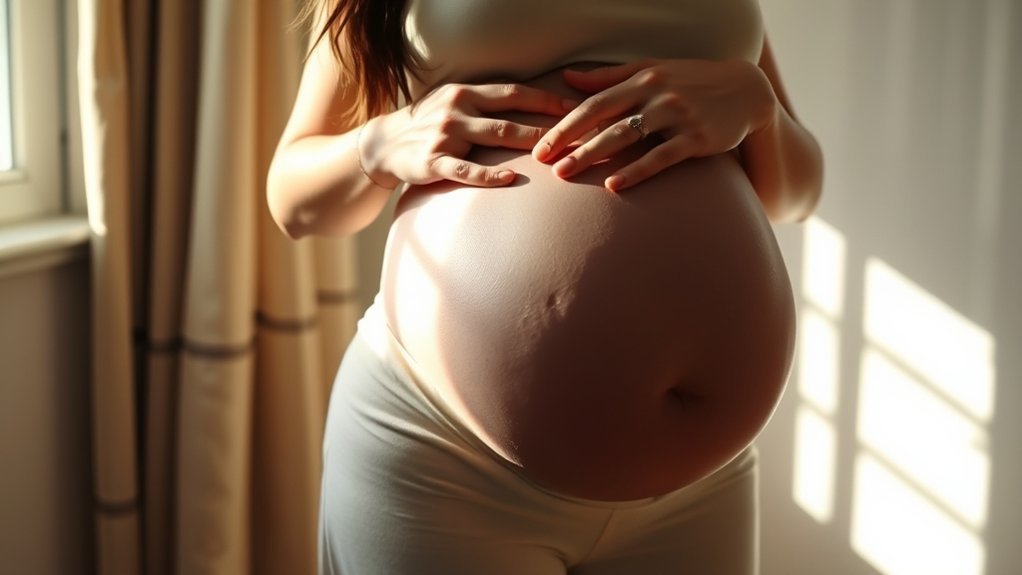
During pregnancy, you might notice swelling, known as edema, primarily in your feet, hands, and wrists.
It’s also possible to see changes in your face, which can be concerning.
Understanding where swelling occurs can help you monitor your symptoms and discuss any worries with your healthcare provider.
Edema in Feet
Many pregnant individuals experience edema in their feet, a common condition characterized by fluid retention and swelling. This can be uncomfortable and sometimes alarming, but it’s usually a normal part of pregnancy.
You might notice swelling in your feet during the later months, especially after standing for long periods.
Here are some feelings you may encounter:
- Discomfort while walking or standing
- A sense of heaviness in your legs
- Difficulty fitting into your shoes
- Anxiety about the condition’s implications
- Fatigue from the extra weight
Understanding that edema is typically harmless can help ease your worries.
However, if swelling becomes severe or sudden, it’s essential to consult your healthcare provider for guidance and reassurance.
Hand and Wrist Swelling
As your pregnancy progresses, you might notice swelling in your hands and wrists, which can be both surprising and uncomfortable.
This swelling, often caused by fluid retention, occurs as your body adapts to the changes of pregnancy. You may find it harder to wear rings or feel a tingling sensation in your fingers. This is usually benign but can be exacerbated by heat, activity, or prolonged sitting.
To alleviate discomfort, try elevating your hands and wrists, staying hydrated, and avoiding excessive salt.
If the swelling becomes severe or is accompanied by pain or other symptoms, it’s important to consult your healthcare provider. They can help guarantee that both you and your baby remain healthy throughout this journey.
Facial Swelling Signs
Swelling can also occur in your face during pregnancy, and it’s important to recognize the signs. Facial swelling isn’t just a cosmetic issue; it can indicate underlying concerns.
Here are some signs to watch for:
- Puffiness around your eyes
- Swelling in your cheeks
- Distorted facial features
- Tightness in your skin
- Increased warmth or redness
Feeling uncomfortable about these changes is normal, but it’s vital to monitor them. While some swelling is typical, sudden or severe facial swelling can signal a condition like preeclampsia.
If you notice these signs, don’t hesitate to consult your healthcare provider. Your health and your baby’s well-being are paramount, and staying informed empowers you during this transformative time.
When Is Swelling Considered Normal?
While it’s natural to experience some swelling during pregnancy, understanding when it’s considered normal can provide peace of mind.
Typically, mild swelling in the feet, ankles, and hands is expected, especially in the later stages. This often occurs due to increased fluid retention and pressure from the growing uterus. You might notice that swelling worsens after long periods of standing or sitting.
It’s usually more pronounced during hot weather or after a long day. Elevating your legs and staying hydrated can help alleviate discomfort.
Signs That Swelling May Indicate a Problem
While some swelling during pregnancy is normal, you should be alert to signs that it might indicate a problem.
If you experience excessive swelling that lasts longer than expected, is accompanied by other troubling symptoms, or occurs in unusual locations, it’s important to consult your healthcare provider.
Recognizing these warning signs can help guarantee your and your baby’s well-being.
Excessive Swelling Duration
It’s important to pay attention to the duration of excessive swelling during pregnancy, as it can sometimes signal underlying issues. If you notice swelling that lasts longer than a day or two, consider discussing it with your healthcare provider.
Here are some signs that may indicate a problem:
- Swelling that suddenly worsens
- Swelling that doesn’t improve with rest
- Swelling affecting your hands or face
- Persistent swelling in one leg
- Swelling accompanied by feelings of anxiety or unease
Recognizing these signs can help you guarantee both your health and your baby’s.
Trust your instincts—if something feels off, it’s always better to seek professional advice. Your peace of mind is paramount during this precious time.
Accompanied by Other Symptoms
Swelling during pregnancy can be a normal occurrence, but when it’s accompanied by other symptoms, it may signal a more serious issue. If you notice sudden swelling in your hands, face, or feet, particularly if it’s rapid, it’s important to stay vigilant.
Accompanying signs such as severe headaches, visual disturbances, or abdominal pain might indicate conditions like preeclampsia, which require immediate medical attention. Additionally, if you experience shortness of breath or chest pain alongside swelling, don’t hesitate to seek help.
Location of Swelling
Understanding the location of swelling during pregnancy is essential for identifying potential problems. Swelling can occur in various areas, and certain locations may signal complications.
Pay close attention to these signs:
- Facial Swelling: Indicates possible preeclampsia, which can be serious.
- Sudden Hand or Foot Swelling: May suggest blood circulation issues.
- Localized Swelling in One Leg: Could be a sign of a blood clot.
- Abdominal Swelling: Might indicate an issue with the liver or other organs.
- Persistent Swelling: If it doesn’t go away after rest, it’s worth discussing with your doctor.
Recognizing these patterns can help you guarantee a healthier pregnancy and address any concerns promptly.
The Role of Hormones in Pregnancy-Related Swelling
As your body adapts to the changes of pregnancy, hormones play a crucial role in causing swelling, particularly in the legs and feet. Increased levels of progesterone and relaxin help your body accommodate the growing fetus, but they also lead to fluid retention.
Progesterone relaxes blood vessels, allowing for more blood flow, which can cause localized swelling. Meanwhile, relaxin helps prepare your body for childbirth by loosening ligaments, impacting fluid distribution.
Additionally, the increased blood volume necessary for supporting your baby adds to the pressure on your veins, contributing to swelling. Understanding these hormonal effects can help you navigate this common experience with greater awareness and empathy for your body’s adjustments during this beautiful yet challenging time.
Tips for Managing Swelling During Pregnancy
While experiencing swelling during pregnancy is common, there are several effective strategies you can implement to manage it. Taking proactive steps can help you feel more comfortable during this time.
Experiencing swelling during pregnancy is common, but proactive strategies can enhance your comfort and well-being.
Consider these tips:
- Stay Hydrated: Drinking plenty of water helps reduce fluid retention.
- Elevate Your Feet: Prop your feet up whenever you sit or lie down to encourage circulation.
- Wear Comfortable Shoes: Choose supportive footwear to alleviate pressure on your feet and ankles.
- Limit Sodium Intake: Reducing salt in your diet can help minimize swelling.
- Practice Gentle Exercise: Light activities like walking or swimming can improve circulation and reduce swelling.
These simple adjustments can make a significant difference in your comfort and well-being throughout your pregnancy.
Lifestyle Changes to Reduce Edema
Making certain lifestyle changes can greatly help in reducing edema during pregnancy.
Start by elevating your feet whenever you can; this encourages better circulation and reduces swelling. Staying hydrated is essential, too, as it helps flush out excess sodium that can contribute to swelling.
Incorporating gentle exercise, like walking or prenatal yoga, can improve circulation and ease fluid retention. Wearing supportive compression stockings may also be beneficial.
Pay attention to your diet; limit salt intake and focus on nutrient-rich foods that promote hydration, such as fruits and vegetables.
Finally, avoid standing or sitting for long periods. By making these adjustments, you can effectively manage edema and feel more comfortable during your pregnancy journey.
Seeking Medical Advice: When to Consult Your Healthcare Provider
Recognizing when to seek medical advice during your pregnancy is essential for your health and the well-being of your baby.
If you experience swelling, it’s vital to consult your healthcare provider if you notice:
- Sudden swelling in your face or hands
- Swelling accompanied by severe headaches or vision changes
- Persistent swelling in one leg, which could indicate a blood clot
- Shortness of breath or chest pain
- Rapid weight gain over a few days
Don’t hesitate to reach out to your provider; they can provide reassurance and help you understand what’s normal.
Trust your instincts—if something feels off, it’s always better to be safe. Your peace of mind matters as much as your physical health during this important time.
Frequently Asked Questions
Can Swelling Affect the Baby’s Development During Pregnancy?
Swelling itself usually doesn’t affect your baby’s development. However, if it’s severe or accompanied by other symptoms, it’s vital to consult your healthcare provider to guarantee both your health and your baby’s well-being.
How Does Diet Impact Swelling in Pregnant Women?
A balanced diet can reduce swelling; studies show that 25% of pregnant women experience significant swelling. By staying hydrated and consuming potassium-rich foods, you can help manage fluid retention and improve your comfort during pregnancy.
Are There Specific Exercises to Reduce Swelling?
Yes, gentle exercises like walking, swimming, and leg stretches can help reduce swelling. Elevating your legs and practicing prenatal yoga also promote circulation, easing discomfort. Always consult your healthcare provider before starting any new exercise routine.
Does Swelling Increase as Pregnancy Progresses?
Yes, swelling often increases as pregnancy progresses, with about 75% of pregnant women experiencing some form of edema. Staying active and elevating your feet can help manage this common discomfort throughout your pregnancy journey.
Can Certain Medications Help Alleviate Pregnancy-Related Swelling?
Yes, certain medications can help alleviate pregnancy-related swelling. Always consult your healthcare provider before taking any medication, as they’ll guide you on safe options tailored to your specific needs and circumstances during pregnancy.
Conclusion
In the beautiful journey of pregnancy, a little extra puffiness can be a common companion. While most swelling is harmless, staying alert to changes is essential for peace of mind. Embracing simple lifestyle tweaks can help ease discomfort, ensuring you’re feeling your best. Remember, if you notice sudden or severe swelling, it’s a gentle nudge to reach out to your healthcare provider. Prioritizing your well-being helps create a healthier environment for both you and your little one.
