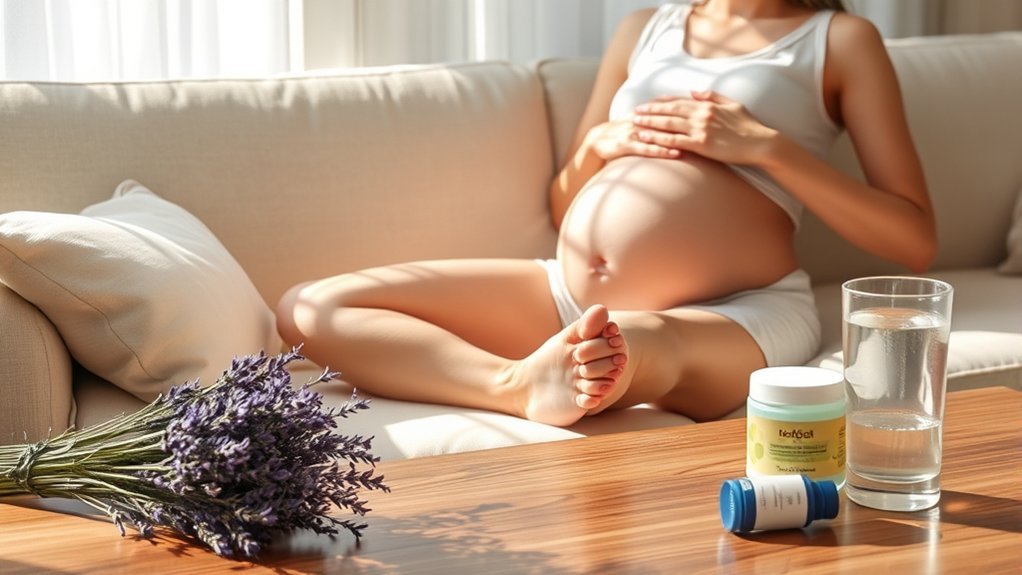
Like a river swelling with rain, your body may experience edema during pregnancy. This common condition can bring discomfort, making it essential to understand its causes and management options. By exploring effective treatments and lifestyle adjustments, you can alleviate this swelling. However, recognizing when swelling becomes concerning is equally important. Let’s uncover the strategies that can help you find relief and maintain comfort throughout your pregnancy journey.
Understanding Swelling: What Causes Edema During Pregnancy

During pregnancy, around 75% of women experience some form of swelling, commonly known as edema. This condition primarily occurs due to increased blood volume and hormonal changes.
Your body retains more fluid to support the growing fetus, which can lead to swelling, particularly in your feet, ankles, and hands. Additionally, the expanding uterus may put pressure on blood vessels, hindering blood flow and causing fluid buildup.
Fluid retention during pregnancy can cause swelling in the feet, ankles, and hands due to hormonal changes and pressure from the uterus.
Factors like prolonged standing or sitting can exacerbate this issue. While edema is often harmless, it’s essential to monitor any sudden or severe swelling, as it may indicate underlying complications.
Staying hydrated, elevating your legs, and wearing comfortable shoes can help manage the discomfort and promote better circulation during this time.
When to Expect Swelling: Common Stages of Pregnancy

During your pregnancy, you may notice swelling at different stages, particularly in the first and third trimesters.
In the first trimester, hormonal changes can lead to mild swelling, while by the third trimester, it often peaks as your body accommodates the growing baby.
Understanding these patterns can help you manage your comfort and expectations throughout this journey.
First Trimester Changes
As your body begins to adapt to pregnancy, you may notice subtle changes in the first trimester, including some swelling. This usually occurs due to hormonal changes and increased blood volume. You might experience swelling in areas like your feet, ankles, and hands.
| Change | Description | Tips for Relief |
|---|---|---|
| Hormonal Fluctuations | Increased progesterone can lead to fluid retention. | Stay hydrated and limit salt intake. |
| Increased Blood Volume | Your body pumps more blood to support the fetus. | Elevate your legs when resting. |
| Weight Gain | Early weight changes may cause swelling. | Maintain a balanced diet. |
| Heat Sensitivity | Hormonal changes can make you feel warmer. | Stay cool and wear breathable fabrics. |
| Stress | Emotional changes can affect fluid balance. | Practice relaxation techniques. |
Understanding these changes helps you manage discomfort effectively.
Third Trimester Peaks
In the third trimester, swelling can become more pronounced as your body prepares for labor and delivery. Increased fluid retention, hormonal changes, and the growing weight of your baby can contribute to noticeable swelling, especially in your feet, ankles, and hands.
You might find that your shoes fit tighter, and your rings may feel snug. While this is common, it’s important to monitor the swelling. If it occurs suddenly or is accompanied by severe headaches, vision changes, or abdominal pain, consult your healthcare provider promptly, as these could be signs of preeclampsia.
Staying hydrated, resting with your legs elevated, and avoiding prolonged standing can help manage swelling and provide relief during this vital time.
Symptoms of Swelling: Identifying the Signs
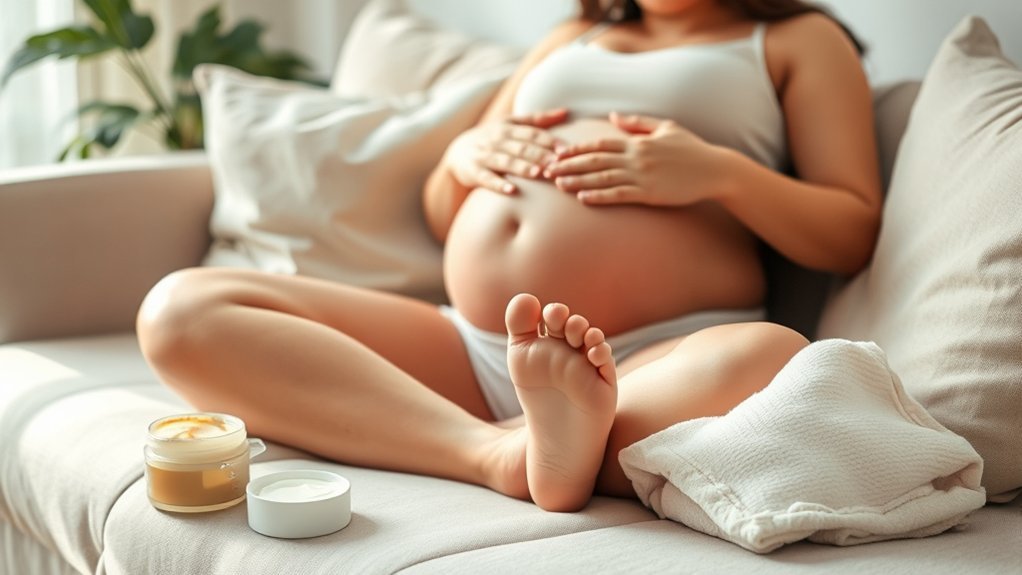
As your pregnancy progresses, you may notice swelling in specific areas of your body, particularly in your feet, ankles, and hands.
It’s crucial to recognize accompanying symptoms, such as pain or redness, which could indicate a more serious issue.
Understanding these signs will help you monitor your health and guarantee a safe pregnancy experience.
Common Swelling Locations
Swelling during pregnancy can manifest in several common locations, often signaling the body’s adjustments to accommodate your growing baby.
You might notice swelling in your feet and ankles, particularly after long periods of standing or sitting. This is due to increased fluid retention and pressure on your veins.
Your hands and fingers can also swell, making rings feel tight. Additionally, some women experience swelling in their face, particularly around the eyes. This can be more pronounced during warmer weather.
Recognizing these common areas of swelling helps you understand your body’s changes. While these symptoms are usually normal, staying aware of how your body feels is essential for maintaining your health and well-being during pregnancy.
Accompanying Symptoms to Watch
While recognizing common swelling locations is important, being aware of accompanying symptoms can help you gauge whether the swelling is within normal limits or if it requires further attention.
Watch for symptoms like sudden weight gain, persistent headaches, visual disturbances, or pain in your abdomen. These signs could indicate issues such as preeclampsia, which requires immediate medical evaluation.
Additionally, if swelling occurs in one leg and is accompanied by redness or warmth, it may signal a blood clot.
It’s essential to stay vigilant and consult your healthcare provider if you experience any concerning symptoms. Trust your instincts—your well-being and that of your baby are paramount, and timely intervention can make a significant difference.
Lifestyle Changes to Reduce Swelling
Managing swelling during pregnancy can greatly enhance your comfort and well-being. Making specific lifestyle changes can help reduce this common issue. Here are some effective strategies you can adopt:
- Stay Hydrated: Drinking plenty of water helps flush out excess sodium, reducing swelling.
- Elevate Your Legs: Prop your feet up when sitting or lying down to promote better circulation.
- Wear Compression Stockings: These can help minimize swelling by improving blood flow in your legs.
- Limit Sodium Intake: Reducing salt in your diet can help manage fluid retention.
Implementing these changes can make a noticeable difference in how you feel throughout your pregnancy.
Always consult your healthcare provider before making significant adjustments to your routine.
Home Remedies for Pregnancy-Related Swelling
If you’re experiencing swelling during your pregnancy, several home remedies can provide relief and improve your comfort.
Elevating your feet when resting helps reduce fluid accumulation. You might also find relief through gentle massages, which promote circulation and ease tension.
Elevating your feet and gentle massages can enhance circulation and alleviate discomfort during pregnancy.
Applying cold compresses to swollen areas can numb discomfort and minimize inflammation. Incorporating Epsom salt baths can offer soothing effects, as magnesium may help relax muscles and reduce swelling.
Herbal teas like ginger or peppermint can support digestion and potentially decrease bloating.
Finally, wearing compression socks can improve blood flow, decreasing swelling in your legs.
Always consult your healthcare provider before trying new remedies to verify they’re safe for you and your baby.
Importance of Hydration and Nutrition
Staying properly hydrated and nourished during pregnancy is essential for both your health and your baby’s development. Proper hydration helps regulate body temperature and supports ideal blood circulation, while balanced nutrition provides the necessary vitamins and minerals for growth.
Here are some key aspects to focus on:
- Drink plenty of water throughout the day to prevent dehydration.
- Include fruits and vegetables rich in potassium, like bananas and spinach, to help manage swelling.
- Opt for whole grains and lean proteins to guarantee you’re getting adequate nutrients.
- Limit sodium intake to reduce water retention.
When to Seek Medical Attention for Swelling
While some swelling during pregnancy is normal, it’s essential to recognize when it may indicate a more serious issue. If you notice sudden or severe swelling in your hands, face, or around your eyes, it’s vital to seek medical attention immediately.
These symptoms can signal conditions like preeclampsia, which requires prompt intervention. Additionally, if swelling is accompanied by headaches, visual disturbances, or sudden weight gain, don’t hesitate to contact your healthcare provider.
Tips for Comfort: Footwear and Positioning Strategies
Choosing the right footwear and positioning can greatly enhance your comfort during pregnancy, especially when dealing with swelling.
Here are some effective strategies:
- Opt for supportive shoes: Choose footwear with arch support and cushioning to alleviate pressure on your feet.
- Avoid high heels: Stick to flats or low-heeled shoes that provide stability and comfort.
- Elevate your feet: Whenever possible, elevate your feet to reduce swelling and improve circulation.
- Practice gentle stretching: Engage in simple foot and leg stretches to promote blood flow and relieve tension.
Frequently Asked Questions
Can Swelling Indicate a Serious Health Problem During Pregnancy?
Yes, swelling can indicate serious health problems during pregnancy, such as preeclampsia or gestational hypertension. It’s essential you monitor any sudden or severe swelling and consult your healthcare provider for evaluation and guidance.
Are There Specific Foods to Avoid to Reduce Swelling?
Yes, to reduce swelling, avoid high-sodium foods, processed snacks, and sugary items. These can cause fluid retention. Focus on fresh fruits, vegetables, and whole grains to promote better circulation and overall health during pregnancy.
Is Swelling More Common in Certain Pregnancy Trimesters?
Yes, swelling’s often more noticeable in the third trimester due to increased fluid retention and pressure on blood vessels. However, it can occur at any stage, so keep monitoring your body and discuss concerns with your healthcare provider.
Can I Exercise if I Have Swelling During Pregnancy?
Absolutely, you can exercise with swelling during pregnancy! Gentle activities like walking or swimming can help reduce discomfort. Just listen to your body, and consult your healthcare provider to guarantee you’re staying safe and healthy.
How Can Stress Impact Swelling During Pregnancy?
Stress can increase inflammation in your body, potentially worsening swelling during pregnancy. Managing stress through relaxation techniques, deep breathing, or gentle exercise can help alleviate some of this discomfort and support your overall well-being.
Conclusion
In managing swelling during pregnancy, you’re not alone; many experience this challenge. By staying hydrated, elevating your legs, and making mindful dietary choices, you can find relief. Embrace gentle exercises and soothing home remedies to enhance your comfort. Remember, it’s essential to listen to your body and seek medical advice if you notice sudden changes. With awareness and care, you can navigate this journey, prioritizing your well-being and nurturing your growing life.