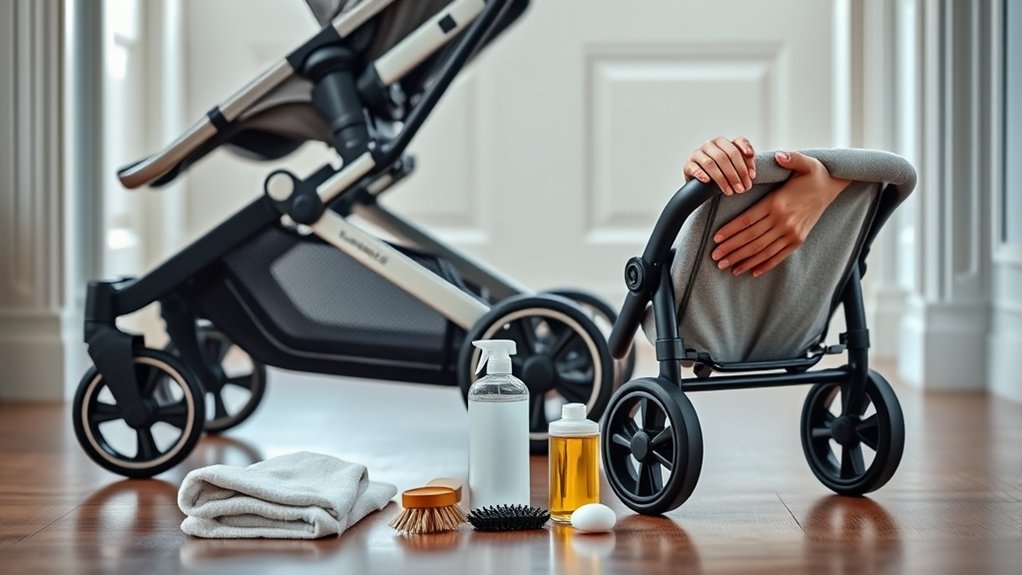
Cleaning a stroller is less about scrubbing harder and more about using the right method for each part. Fabric, harness webbing, frame joints, wheels, and trays can all have different care limits, so the stroller manual comes first. The routine below explains how to clean a stroller thoroughly without soaking safety parts or trapping moisture.
Quick Answer
To clean a stroller, check its manual first. Vacuum crumbs, then use a damp cloth, mild detergent, and a soft brush on surfaces the manufacturer allows. Spot-clean harness straps instead of soaking them unless the manual says otherwise. Clean wheels and frame separately, then air-dry every part completely before reassembly or storage.
At a Glance
| Difficulty | Easy, but care instructions vary by stroller model |
| Tools Needed | Stroller manual or care label, handheld vacuum, mild detergent, microfiber cloths, soft brush, and clean water |
How Often Should You Clean a Stroller?
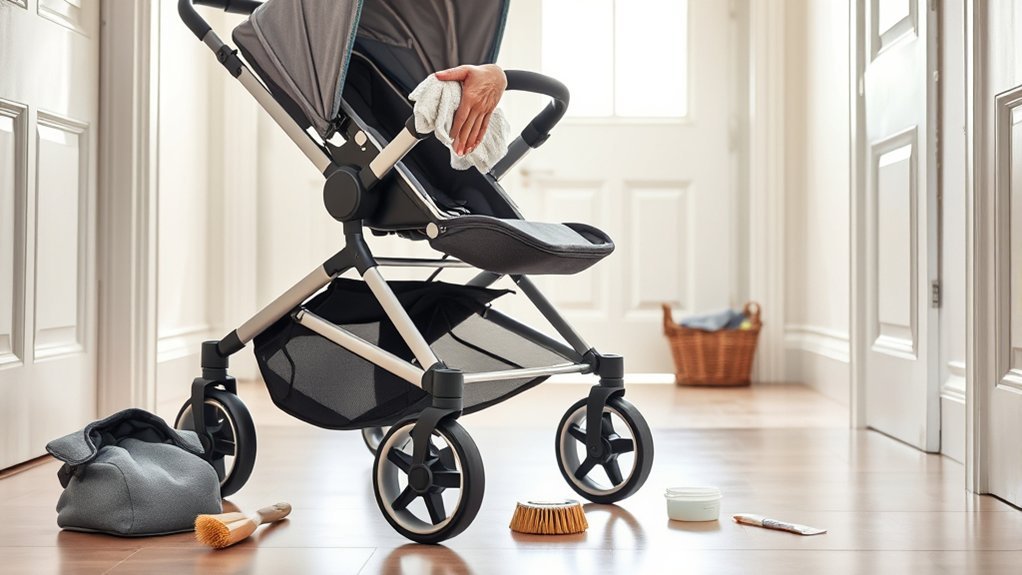
A practical routine is to do a light stroller cleaning weekly or after a particularly messy outing, then deep-clean it about every three months or each season. Treat that as a housekeeping schedule rather than a universal manufacturer rule, because your stroller’s manual may give different instructions.
Clean fresh spills, spit-up, food, mud, or other messes as soon as practical so they do not dry into the fabric or collect inside seams and joints.
Vacuum crumbs, wipe frequently touched surfaces, and remove visible dirt during routine cleaning. A deeper clean should cover the seat, canopy, harness area, frame, storage basket, cupholders, wheels, and accessible joints.
If you use the stroller every day, inspect it while cleaning. Look for loose hardware, damaged fabric, frayed webbing, stiff wheels, or a buckle that no longer works correctly.
What You Need to Clean a Stroller
You do not need strong chemicals to handle most stroller messes. Start with the stroller manual or care label, then gather basic tools that let you remove dry debris before adding moisture.
| Item | Why you need it |
|---|---|
| Handheld vacuum | Removes crumbs and dirt from seams, pockets, and harness paths |
| Mild detergent | Cleans washable surfaces without relying on harsh products |
| Microfiber cloth and soft brush | Wipes surfaces and loosens debris in seams and textured areas |
Keep clean water and a dry towel nearby. If the manual permits a stain remover, test it first on a hidden area. Do not assume that bleach, disinfectant, vinegar, baking soda, solvents, fabric softener, or a household stain treatment is safe for every stroller material.
Check whether any fabric pieces are removable and whether they are hand-wash, spot-clean, or machine-wash only. Those directions determine how you should clean them.
Step 1: Read the Stroller Manual First
Read the manual or sewn-in care label before taking the stroller apart or applying cleaner. This is the most important step because washing and drying instructions can differ significantly between models.
Official manufacturer instructions illustrate the difference. Some stroller cleaning and hand-washing guidance calls for cold water, mild detergent, and flat drying, while other stroller fabric guidance allows machine washing for many fabrics but lists exceptions and specific temperature limits.
Check the manual for instructions covering the seat fabric, canopy, basket, harness, buckles, frame, wheels, and removable accessories. Also note any warnings about bleach, solvents, abrasive cleaners, heat, machine drying, or removing sewn-in parts.
If you misplaced the printed manual, look for the exact model’s digital manual on the manufacturer’s website. Do not rely on instructions for a different stroller from the same brand unless the manufacturer says the care directions are shared.
Step 2: Vacuum Crumbs and Loose Dirt
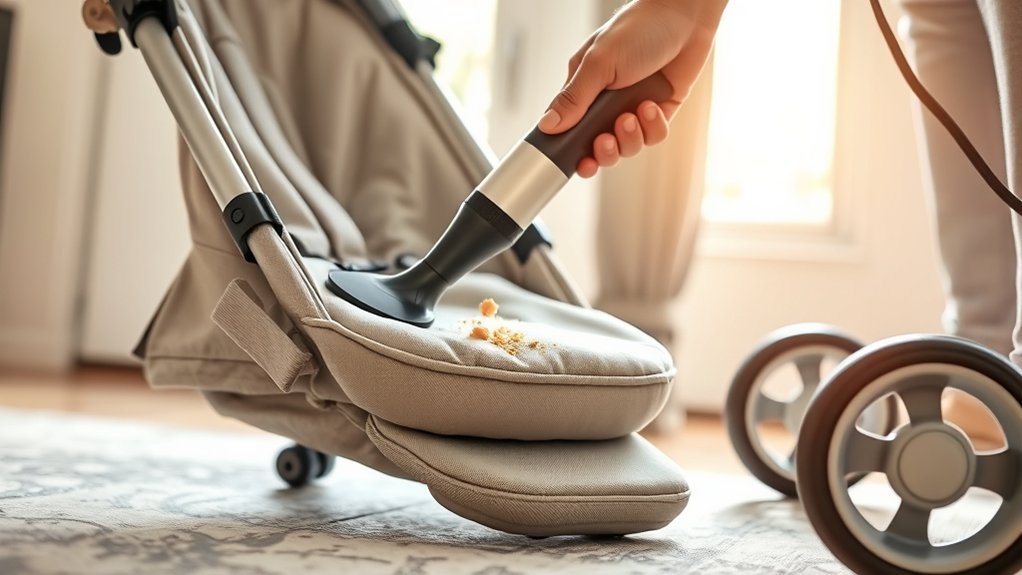
Remove dry debris before using water or detergent. A handheld vacuum or hose attachment can lift crumbs, dust, sand, and loose dirt without turning them into wet residue.
Empty the storage basket and pockets first. Then vacuum the seat, footrest, canopy folds, cupholders, basket edges, and any accessible spaces around the harness.
Reach Tight Crevices
Use a crevice tool around seams, buckle housings, seat edges, storage pockets, and other narrow areas. Work slowly so you remove debris instead of pushing it deeper into the stroller.
If dirt clings to textured fabric or a seam, loosen it with a dry soft brush or toothbrush before vacuuming again. Avoid forcing vacuum attachments against delicate fabric or foam.
Clear the Seat and Canopy
Vacuum the seat and canopy from top to bottom, paying attention to folds and stitched edges. If the manual allows you to remove a fabric cover, you can vacuum both sides before washing or spot-cleaning it.
- Remove crumbs from seat seams and the footrest.
- Vacuum dust from canopy folds and edges.
- Empty and clean cupholders, pockets, and the storage basket.
Removing dry debris first makes the later wet-cleaning steps faster and reduces the amount of rubbing the fabric needs.
Step 3: Spot-Clean Stroller Fabric and Harness Straps
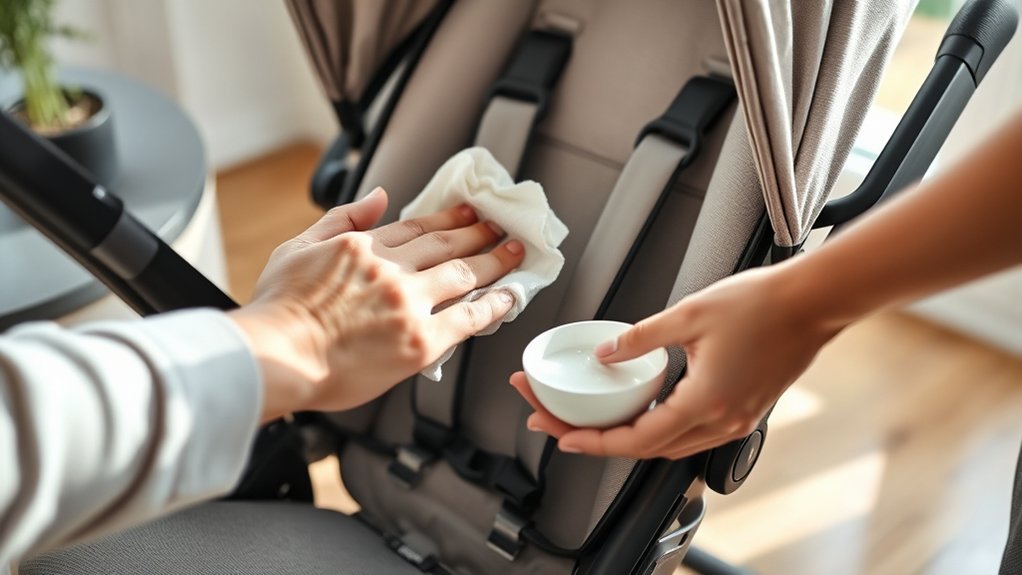
Clean stroller fabric with the method listed in the manual. For spot-clean-only material, a well-wrung microfiber cloth with water and a small amount of permitted mild detergent is usually enough for everyday dirt.
Blot spills rather than saturating padding. Work from the outside of a stain toward the center, then remove detergent residue with a clean damp cloth if the care directions allow it.
Warning: Do not soak, machine-wash, bleach, aggressively scrub, or remove harness webbing unless your stroller’s instructions explicitly permit it. Harnesses are safety components, and cleaning directions can differ from those for the seat fabric.
For harness straps, follow the stroller maker’s instructions exactly. Current manufacturer harness-cleaning guidance, for example, advises wiping sewn-in straps with mild soap and water, avoiding soaking, and letting them air-dry fully.
Wipe around the buckle to remove crumbs or sticky residue, but do not pour cleaner into the mechanism unless the manual specifically tells you how to clean it. Before reuse, make sure the buckle latches and releases normally.
Let cleaned fabric and straps air-dry completely. Do not use a dryer or direct heat unless the care label specifically permits it.
Step 4: Clean the Stroller Frame, Wheels, and Cupholders
Clean hard stroller parts separately from the seat fabric. A damp cloth and mild cleaner approved by the manufacturer are usually appropriate for the frame, while wheels may need brushing to remove sand, mud, hair, and grit.
Wipe the frame carefully, remove moisture from metal parts, and keep excess water away from joints or mechanisms unless the manual says they can be rinsed.
Clean the wheels in a simple sequence:
- Brush loose dirt, hair, and grit from the wheels and accessible axle areas.
- Wipe the tires and wheel surfaces with a damp cloth.
- Dry the wheels and surrounding hardware before reassembly or storage.
If the wheels are removable, take them off only according to the stroller instructions. Do not apply silicone spray, oil, or another lubricant unless the manual calls for lubrication and identifies a suitable product or method.
Wash removable cupholders or trays according to their own care instructions. Some accessories may tolerate washing that the stroller frame or harness does not.
If you’re checking the rest of your baby setup at the same time, these home safety measures can help you review the surrounding space too.
Dry the frame, wheels, cupholders, and exposed hardware before moving to reassembly.
Step 5: Deep-Clean Stubborn Stroller Stains
For a stubborn stain, start with the least aggressive cleaning method allowed by the stroller manufacturer. Test any approved cleaner on a hidden area first so you can check for fading, spotting, or other material changes.
Avoid making a universal vinegar-and-baking-soda mixture for stroller fabric or harness straps. Different textiles, coatings, foam, stitching, and hardware have different cleaning limits.
Treat Stubborn Stains Without Soaking the Stroller
Apply only the cleaner or mild detergent permitted by the care instructions. Give it enough contact time to loosen the stain if the product directions allow, then blot or gently work the area rather than saturating the entire seat.
- Test the approved cleaning solution on a hidden area.
- Treat the stained section with as little moisture as practical.
- Blot or brush gently, then remove residue as directed.
- Inspect the stain after the material has dried before repeating the treatment.
If a removable cover is machine washable, laundering it according to the exact care label may be safer and more effective than repeatedly soaking one spot by hand.
Clean High-Contact Areas Carefully
Seat edges, the footrest, handles, cupholders, and areas beside the harness often collect the most grime. Use a soft cloth or brush appropriate for the material rather than abrasive pads.
Do not scrub harness webbing aggressively or flood buckle openings. If a safety component remains sticky, frayed, cracked, or difficult to operate after proper cleaning, contact the manufacturer rather than trying stronger chemicals.
For severe staining, recurring mold, or contamination that cannot be cleaned according to the manual, a professional baby-gear cleaning service may be an option. Make sure the service follows the manufacturer’s restrictions for harnesses, buckles, fabric, and drying.
Step 6: Let Your Stroller Air-Dry Completely
Every cleaned component should be completely dry before you reassemble, fold, or store the stroller. Trapped moisture can contribute to mildew, odors, and corrosion.
- Lay washable cushions or removable fabric flat if the care label calls for flat drying.
- Leave the stroller open in a well-ventilated area so seams and joints can dry.
- Check hidden folds, padding, pockets, and wheel areas for remaining moisture.
Avoid tumble drying, ironing, high heat, or prolonged direct sun unless the manufacturer specifically allows it. Heat can affect some fabrics, foam, coatings, or plastic components.
Once everything is dry, reinstall each component according to the manual. Check that the harness is routed correctly, the buckle latches, the stroller folds and opens normally, the brakes work, and the wheels move freely.
Keep Your Stroller Clean Longer
Small cleanups prevent many stroller messes from turning into deep-cleaning jobs. Remove crumbs regularly, wipe fresh spills promptly, and never fold the stroller away while it is still damp.
| Action | Why it helps | Safety note |
|---|---|---|
| Spot-clean spills promptly | Keeps residue from drying into fabric and seams | Use only products and methods allowed by the manual |
| Wipe frame and wheels regularly | Removes mud, grit, hair, and other buildup | Dry metal and moving parts thoroughly |
| Store in a dry place | Reduces trapped moisture and mildew risk | Do not fold or store the stroller while damp |
Periodically inspect the harness, buckle, wheels, brakes, joints, fasteners, and frame while you clean. If you find a cracked frame, damaged restraint, broken locking part, or another structural problem, stop using the stroller until the manufacturer confirms the correct repair or replacement.
For U.S. products, you can also search the CPSC stroller recall listings if you are concerned about a product defect or safety issue.
Consistent light cleaning also means you can often avoid stronger stain treatments later. A vacuum, mild approved cleaner, careful drying, and dry storage cover most routine stroller care.
Key Takeaways
- The stroller manual overrides generic cleaning advice, especially for fabric, harness webbing, buckles, and machine washing.
- Vacuum dry crumbs and dirt before introducing water so you do not grind wet debris into seams.
- Avoid soaking harness straps or using harsh cleaners unless the manufacturer specifically permits that method.
- Use lubricant only when the stroller instructions call for it and specify an appropriate type or location.
- Do not fold or store the stroller until fabric, frame joints, wheels, and hidden areas are completely dry.
Frequently Asked Questions
What Is the Best Way to Clean a Stroller?
The best way to clean a stroller is to follow its manual, vacuum loose debris first, and then clean each material with the approved method. Spot-clean or wash fabric as directed, wipe the frame and wheels, clean the harness gently, and let everything dry completely before use.
How Do You Get a Stroller Professionally Cleaned?
You can use a baby-gear cleaning service if you prefer not to deep-clean the stroller yourself. Before booking, ask whether the service follows the manufacturer’s instructions for fabric, harnesses, buckles, drying, and removable parts rather than using one cleaning method on every stroller.
How Do You Make a Stroller Look New Again?
Start by vacuuming the seat and seams, treating permitted stains, wiping the frame, and removing dirt and hair from the wheels. Cleaning small crevices and allowing every part to dry fully can improve its appearance without using harsh chemicals or treatments that may damage the stroller.
Can You Take a Stroller Apart to Wash It?
Yes, but only remove parts that the stroller manual says are removable for cleaning. Follow the exact instructions for seat fabric, canopy pieces, wheels, accessories, and harness routing, and do not force off sewn-in or structural components simply to make washing easier.
Conclusion
A clean stroller starts with the manual, not a stronger cleaner. Vacuum debris, clean each material with the method approved for your model, protect the harness and buckle from unnecessary soaking, and dry everything completely before reassembly. Regular light maintenance will make future deep cleans easier while helping the stroller stay functional and ready for everyday use.
Sources
- UPPAbaby Cleaning and Care: Supports manual-specific fabric care, mild detergent, frame cleaning, thorough drying, and avoiding damp storage.
- Bugaboo Stroller Cleaning Guide: Supports checking care labels, model-specific machine-washing exceptions, gentle cleaning, and complete air drying.
- Evenflo Stroller Cleaning Guide: Supports mild cleaning of stroller fabric and harness webbing, avoiding harsh cleaners and soaking sewn-in harnesses, and air drying.
- U.S. Consumer Product Safety Commission Stroller Recalls: Supports checking current stroller recalls and safety notices when damage or a product defect is suspected.