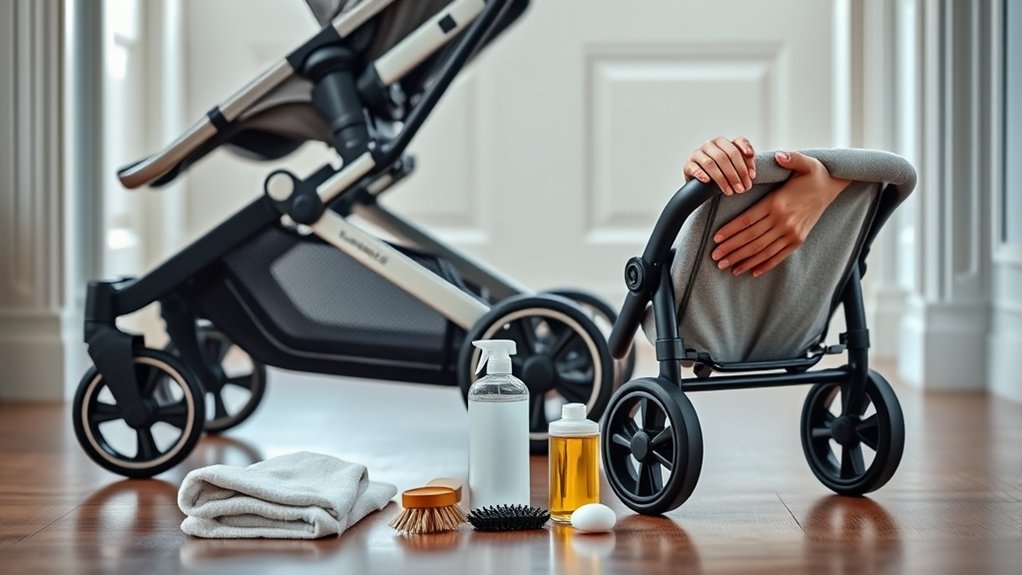
Clean your stroller weekly or after each use, and deep-clean it at least every season. Check the manual first, then gather a handheld vacuum, mild detergent, water, a soft brush, and baby-safe stain remover. Vacuum crumbs, wipe the frame, wheels, and cupholders, and spot-clean fabric and harness straps without soaking them. Air-dry every part fully before storage to prevent mildew, and you’ll keep your stroller safer, cleaner, and ready for longer use.
How Often Should You Clean a Stroller?
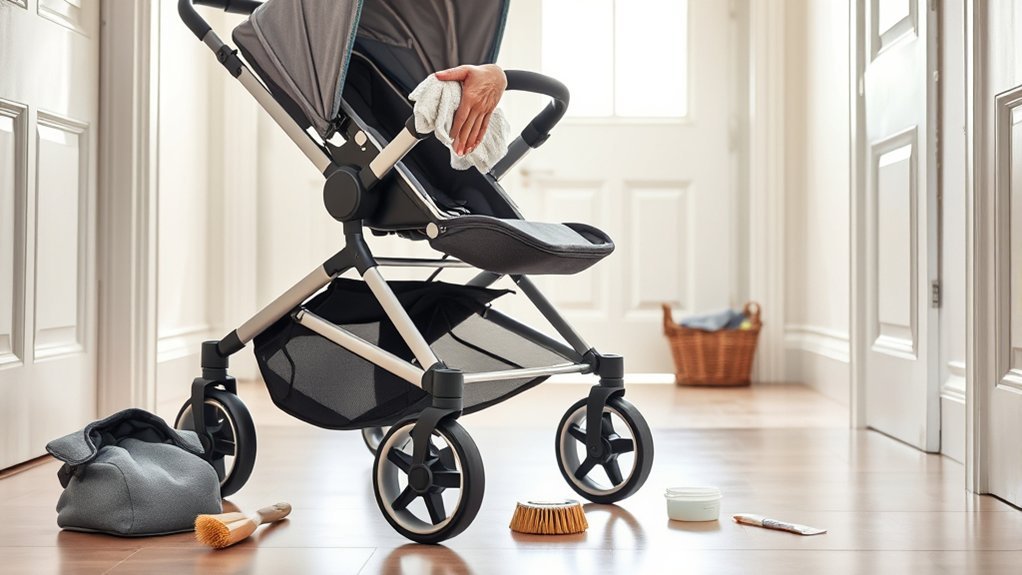
You should clean your stroller regularly to keep it safe, hygienic, and looking its best. To clean your stroller well, use regular light cleaning weekly or after each use: vacuum crumbs, wipe surfaces, and remove fresh spills right away.
Clean your stroller weekly or after each use to remove crumbs, wipe surfaces, and catch spills early.
If spit-up or other bodily fluids land on it, act immediately so odors and stains don’t set in. A deep clean works best every season, or at least four times a year, especially if you use it occasionally.
If your toddler rides daily, aim to clean your stroller every three months to stay ahead of grime. Consistent cleaning lowers germs and allergens, which helps create a safer space for your baby.
Follow the cleaning instructions in your manual so you protect fabrics, straps, and finishes while keeping the stroller ready for everyday freedom and movement.
What You Need to Clean a Stroller
Before you start cleaning, gather a few basics: a handheld vacuum for crumbs and debris, a gentle stain remover, and a soft toothbrush or sponge for scrubbing seams and textured spots. Add mild detergent, clean water, and microfiber cloths so your stroller cleaning stays safe and effective. Use non-toxic products like dish soap, vinegar, or baking soda to protect fabric and your baby’s skin.
| Item | Why you need it |
|---|---|
| Vacuum | Removes dirt from corners and harness paths |
| Mild detergent | Lifts grime without damaging fabric |
| Machine washable parts | Save time when covers or inserts come off |
Check for machine washable pieces before washing them separately. Keep a damp cloth handy for wheels, and use silicone spray only on moving axle parts, not on seats or straps. Air-dry every component fully before reassembly to prevent mildew and keep the stroller ready for free, safe movement.
Read the Stroller Manual First
Start by reading your stroller manual so you can follow the manufacturer’s cleaning instructions for your exact model. This step protects your child and preserves the stroller’s materials.
Your stroller’s manual usually identifies removable components, shows which parts you can wash, and explains what needs gentler care. Follow the manufacturer’s recommendations closely, because fabrics, padding, buckles, and frames can react differently to moisture, heat, or scrubbing.
Check for warnings about detergents, bleach, solvents, or abrasive tools, since harsh products can weaken stitching, fade colors, or leave unsafe residue. If you’ve misplaced the printed guide, look up a digital copy online so you still have reliable directions.
Reading first helps you clean with confidence instead of guessing, and that’s part of reclaiming control over the tools you rely on every day. When you know the rules, you can maintain your stroller safely, respectfully, and for longer use.
Vacuum Crumbs and Loose Dirt
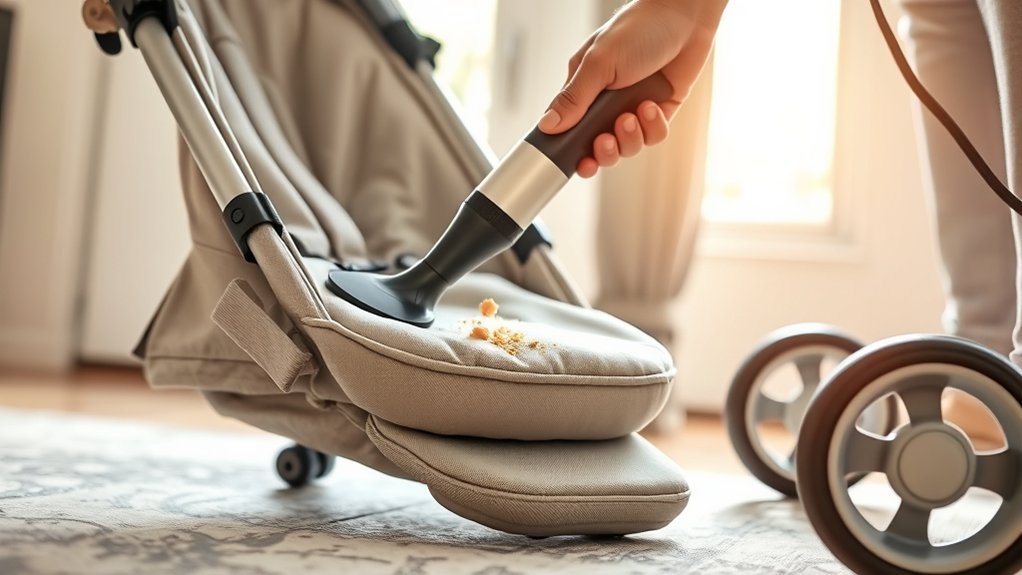
Use a handheld vacuum or hose attachment to clear crumbs and loose dirt from the seat and canopy, since these high-contact areas collect debris fast.
To reach tight crevices, run a soft brush or toothbrush along seams, buckles, and storage pockets so you don’t miss hidden buildup.
Regular vacuuming helps reduce allergens and keeps your stroller cleaner and safer for your baby.
Reach Tight Crevices
A handheld vacuum with a hose attachment helps you reach tight stroller crevices, pulling crumbs and loose dirt from seams, buckles, storage compartments, and other hard-to-clean spots.
For safer stroller cleaning, use a crevice attachment first, then switch to a soft brush or toothbrush attachment when debris clings to fabric. This keeps grime from building up and helps preserve stroller function.
Pay attention to the seat, canopy, and cup holders, where daily use can trap debris fast. Vacuum at least once a week, or after each outing if your routine is busy.
Consistent care reduces hidden buildup, supports hygiene, and protects your baby’s environment. With a few focused minutes, you keep control over the mess and maintain a stroller that works reliably for you.
Clear Seat And Canopy
After clearing the tight crevices, move to the seat and canopy with a handheld vacuum or hose attachment to lift out loose crumbs and dirt.
To clean safely, use slow passes over seams, buckles, and edges, where debris hides. If your stroller has removable fabric covers, lay them flat and vacuum both sides so you don’t miss trapped grit.
Focus on high-contact zones, including cupholders and storage pockets, because hidden dirt can hold germs.
- Seat seams packed with crumbs
- Canopy folds collecting dust
- Cupholders and pockets hiding debris
Regular vacuuming after each use, or at least weekly, helps reduce allergens and supports a healthier space for your baby.
Let all fabric dry fully before reassembling, so you keep the stroller fresh, functional, and free to use.
Spot-Clean Stroller Fabric and Harness Straps
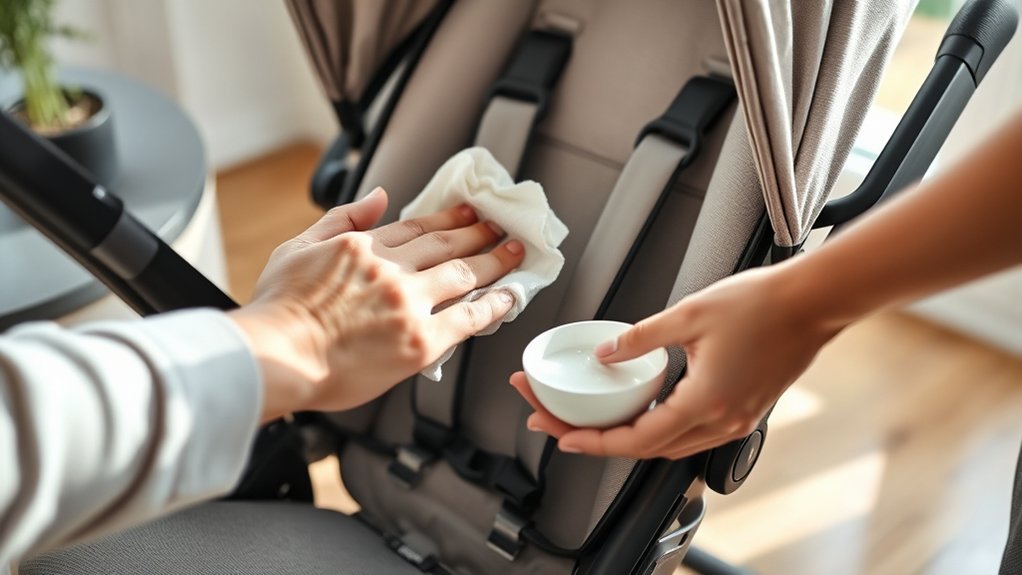
Keeping stroller fabric and harness straps clean helps prevent stains, odors, and germ buildup, and it’s best to do it regularly with a gentle solution like mild dish soap mixed with warm water.
To spot-clean stroller fabric, dampen a microfiber cloth, wring it out well, and blot the area instead of soaking it. For tough stains, use a baby-friendly stain remover spray, then gently scrub with a soft brush or cloth.
Don’t oversaturate padding or seams, since trapped moisture can lead to mildew. Wipe harness straps with a microfiber cloth during routine cleanups so they stay free of dirt and germs and remain comfortable against your child’s skin.
Check your stroller manual before cleaning removable fabric parts, because manufacturer guidance protects fit and durability.
After cleaning, let every section air dry completely in a well-ventilated space. Skip the dryer, which can warp or damage materials and weaken the stroller’s safety and function over time.
Wash the Stroller Frame, Wheels, and Cupholders
Wipe down the stroller frame regularly with a damp cloth and mild detergent to remove dirt and help prevent corrosion, paying close attention to high-contact areas like the handles and cupholders.
Wipe down the stroller frame regularly with a damp cloth and mild detergent to remove dirt and help prevent corrosion.
When you wash the stroller frame, clean your stroller’s wheels too:
- Brush off grit from the axles.
- Wipe the tires with a damp cloth.
- Wipe off any excess moisture so parts keep moving smoothly.
Use a soft brush or toothbrush to reach tight seams where grime hides.
For cupholders, wash them with warm, soapy water to lift food residue and reduce odors. Implementing regular home safety measures can help ensure your equipment remains in good condition.
These small steps protect function and support safer outings because clean parts roll easier and harbor less buildup.
After each cleaning, fully dry every component with a clean towel, then let the stroller air-dry in a ventilated spot.
That helps prevent mildew, protects metal finishes, and keeps your baby’s ride hygienic and ready for the next journey.
Deep-Clean Stubborn Stroller Stains
Before you treat a stubborn stain, test your cleaning solution on a hidden spot so you don’t damage the fabric.
Then apply a vinegar-and-baking-soda mix and let it soak long enough to break down the stain more effectively.
After that, use a soft brush or toothbrush to gently scrub high-contact areas like the seat fabric and restraint straps.
Soak Stubborn Stains
To lift stubborn stroller stains, let a vinegar-and-baking-soda cleaning mix sit on the affected area for several minutes so it can loosen embedded debris.
This soak stubborn stains step gives cleaning agents time to work before you use a soft brush. Test the solution on an inconspicuous spot first, especially near the stroller frame, to confirm it won’t harm the fabric or finish.
Then follow this simple routine:
- Apply the mix and wait.
- Gently brush the stain in small circles.
- Rinse, inspect, and repeat if needed.
If the mark lingers, repeat the soak and scrub cycle.
You’re not trapped by grime; careful maintenance and quick spill cleanup help you keep your stroller clean, safe, and ready for freedom.
Scrub High-Contact Areas
Give extra attention to the stroller’s most-used spots: the seat, restraint straps, and cup holders, where dirt and grime tend to collect fastest.
To scrub high-contact areas safely, mix a gentle stain remover with vinegar and baking soda, then test it on a hidden patch first. Let it sit for a few minutes so the solution can break down buildup.
Use a soft brush or toothbrush to loosen residue without fraying fabric or weakening straps. Wipe with a clean cloth dampened in cold water, then repeat only where needed.
Don’t oversaturate padding or hardware. Regular deep cleaning helps prevent bacteria, protects materials, and keeps your stroller ready for independent, everyday movement.
If stains persist, consider professional cleaning services instead of harsher chemicals.
Let Your Stroller Air Dry Completely
- Lay cushions flat where air can reach both sides.
- Prop the frame open so joints breathe freely.
- Touch-test hidden corners before reassembling.
You’ll protect your baby’s health and preserve the stroller’s integrity by waiting until every component feels completely dry.
Before storing your stroller, inspect hard-to-reach areas one more time so you’re not trapping moisture inside and compromising hygiene or safety.
Keep Your Stroller Clean Longer
Once your stroller is fully dry, you can help it stay cleaner longer with a few simple habits. Vacuum strollers weekly to lift crumbs, grit, and dust before they grind into fabric or joints. | Action | Why it helps | Safety note |
| — | — | — |
|---|---|---|
| Spot clean spills | Stops stains from setting | Use baby-safe products, not harsh chemicals |
| Wipe frame and wheels monthly | Removes grime and bacteria | Let parts dry fully |
| Store in a dry place | Blocks mildew and moisture damage | Keep away from damp walls |
If your specific stroller has machine-washable fabrics, follow the manufacturer’s instructions exactly so you don’t weaken seams or coatings. Clean stains as soon as they happen; quick action protects both appearance and function. A clean stroller supports your freedom to move without worrying about hidden dirt, odors, or avoidable wear. By using a vacuum, avoiding harsh chemicals, and storing it well, you extend its lifespan and keep every ride safer and easier.
Frequently Asked Questions
What Is the Best Way to Clean a Stroller?
You’ll clean it best by checking your stroller’s manual, vacuuming debris, washing stroller materials as directed, treating stains gently, disinfecting, and wiping wheels. Match cleaning frequency to use, and follow maintenance tips to protect safety.
How to Get a Stroller Cleaned?
You can book on-demand stroller cleaning, choose drop-off or house-call service, and pick a package for your stroller materials. Keep cleaning frequency at every three months, prioritize stain removal, and follow maintenance tips for safe, evidence-based care.
How to Make a Stroller Look New?
You’ll make your stroller look new by vacuuming crumbs, treating upholstery care with mild cleaners, checking wheel maintenance, revitalizing stroller accessories, and using sunshade protection. Wipe the frame, then store it dry and clean.
Can You Take a Stroller Apart to Wash It?
Yes—you can, if your stroller’s manual says so; otherwise, you’ll audition for “How to Summon Mold.” Use stroller assembly tips, fabric care methods, stroller storage advice, and maintenance frequency recommendations to stay safe, evidence-based, and free.
Conclusion
Keep your stroller cleaner, safer, and ready for every outing by making maintenance a habit. When you vacuum crumbs, spot-clean spills, and wash the frame and wheels regularly, you help prevent wear, reduce grime buildup, and support smoother rides. Read your manual, use gentle cleaners, and let every part dry fully before you use it again. With consistent care, you’ll extend your stroller’s life, protect your child’s comfort, and keep each trip easier.
