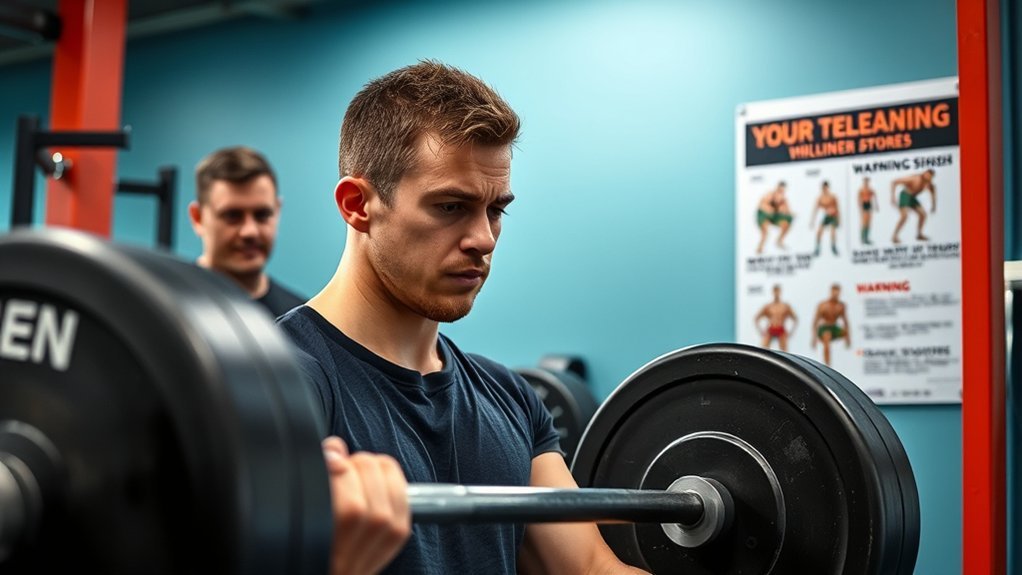
When you’re lifting weights, pushing limits, and seeking for progress, it’s essential to recognize the signs that something might be wrong. Knowing when to call a doctor can prevent minor issues from becoming major setbacks. From persistent pain to sudden weakness, understanding these warning signals can keep your fitness journey on track. So, how do you differentiate between typical soreness and a genuine concern?
Common Injuries in Strength Training
When you push your limits in strength training, you might encounter common injuries that can sideline your progress. Strains and sprains are frequent culprits, often occurring when you lift too heavy or use improper form.
Tendonitis can flare up in your elbows, shoulders, or knees, resulting from repetitive movements or overuse. A muscle tear can happen unexpectedly, leaving you in pain and unable to continue your routine.
Additionally, lower back injuries are common, particularly if you neglect proper warm-ups or core stability. It’s vital to listen to your body; if you feel sharp pain or persistent discomfort, consider adjusting your technique or reducing weight.
Signs You May Need Medical Attention
Recognizing when to seek medical attention is essential for maintaining your strength training routine. Ignoring certain signs can lead to serious complications, so pay attention to your body.
Being aware of when to seek medical help is crucial for your strength training success. Listen to your body to avoid complications.
Here are three key indicators that it’s time to call a doctor:
- Severe Pain: If you experience sharp or persistent pain that doesn’t improve with rest, it’s a red flag.
- Swelling or Bruising: Noticeable swelling or bruising around a joint or muscle may indicate an injury that needs professional evaluation.
- Loss of Mobility: If you can’t move a limb or joint as you normally would, don’t hesitate to seek help.
Being proactive about these signs can prevent further issues and keep you on track with your fitness goals.
Importance of Proper Form and Technique
Proper form and technique are essential components of an effective strength training routine. When you lift weights, using the right posture and movement patterns not only maximizes your results but also minimizes the risk of injury.
Each exercise has specific mechanics, and if you don’t follow them, you could strain muscles or joints. It’s crucial to engage your core, maintain a neutral spine, and align your joints correctly. You’ll find that focusing on form enhances your stability and strength, allowing you to progress safely.
Plus, mastering the basics builds a solid foundation for more advanced techniques later. Always prioritize quality over quantity; a few well-executed reps will benefit you more than a dozen poorly performed ones.
When to Seek Help for Muscle Pain
While muscle soreness is a common part of strength training, knowing when it crosses the line into something more serious is vital for your health.
If you experience any of the following symptoms, it’s time to seek help:
- Persistent Pain: If muscle pain lasts more than a few days or worsens rather than improves.
- Swelling or Bruising: Noticeable swelling or bruising around the affected area can indicate injury.
- Weakness or Numbness: If you feel weakness or numbness in the affected muscle, it could signal nerve involvement.
Listening to your body is important.
If something feels off, don’t hesitate to consult a healthcare professional.
It’s better to be safe and guarantee you’re on the right track in your strength training journey.
The Role of a Healthcare Professional in Your Fitness Journey
When you’re committed to a strength training regimen, having a healthcare professional in your corner can make a significant difference. They can help you navigate potential pitfalls, ensuring you stay healthy and injury-free. Regular check-ins can provide valuable insights into your progress and any concerns that may arise.
| Role of Healthcare Professional | Benefits |
|---|---|
| Initial Assessment | Tailored fitness plan |
| Injury Prevention | Reduced risk of injuries |
| Nutritional Advice | Enhanced performance |
| Progress Monitoring | Accountability and motivation |
| Recovery Guidance | Faster healing and adaptation |
Frequently Asked Questions
Can I Continue Training With Mild Discomfort?
You can continue training with mild discomfort, but listen to your body. If pain worsens or persists, it’s wise to take a break and assess the situation. Prioritize your safety and overall well-being.
What Are Common Overtraining Symptoms to Watch For?
Did you know that around 25% of athletes experience overtraining symptoms? Watch for fatigue, decreased performance, mood swings, insomnia, and persistent soreness. If these symptoms persist, listen to your body and consider adjusting your routine.
How Can I Prevent Injuries During Strength Training?
To prevent injuries during strength training, always warm up properly, use correct form, listen to your body, incorporate rest days, and gradually increase weights. Staying hydrated and cross-training also helps maintain balance and reduces injury risk.
Is It Safe to Lift Weights With Pre-Existing Conditions?
Lifting weights with pre-existing conditions can be safe, but you need to assess your situation carefully. Consult your doctor, listen to your body, and adjust your routine to avoid exacerbating any issues.
How Do I Choose the Right Healthcare Professional for Advice?
To choose the right healthcare professional, consider their expertise in sports medicine or physical therapy, check their credentials, and guarantee they understand your specific needs. Don’t hesitate to ask for recommendations from trusted sources.
Conclusion
In strength training, the thrill of progress can quickly turn into the dread of injury. While pushing your limits is vital, ignoring pain can lead to setbacks that sideline you for months. Recognizing when to call a doctor is just as important as mastering your form. By listening to your body and seeking help when needed, you not only protect your health but also guarantee a sustainable fitness journey. Stay strong, but always prioritize your well-being.