Disclosure: As an Amazon Associate, we earn from qualifying purchases. If you click a link on this page and make a purchase, we may receive a small commission at no extra cost to you.
Choosing a first yogurt can feel confusing because babies need soft texture, simple ingredients, and age-appropriate nutrition without too much sweetness. Stonyfield Organic YoBaby Yogurt is made as a first dairy option for infants starting solids around 6 months, using whole milk, fruit purees, and USDA organic ingredients. It adds vitamin D, protein, and calcium, while the 4-ounce cups make serving easier at home or in a diaper bag. This review helps you decide whether YoBaby fits your baby’s feeding routine, while also covering its limits for dairy allergies, storage, cost, and everyday use.
Quick Verdict
Rating: Recommended with caveats
Best For: Parents who want a chilled, whole-milk, organic baby yogurt with mild fruit flavors and small single-serve cups.
Bottom Line: Stonyfield Organic YoBaby is a practical starter yogurt for babies who are ready for dairy and solids. It is not suitable for babies with dairy allergies, and it needs steady refrigeration, so it works best when you can store and serve it safely.
Key Takeaways
- Stonyfield Organic YoBaby is a whole-milk yogurt made for babies starting around 6 months old.
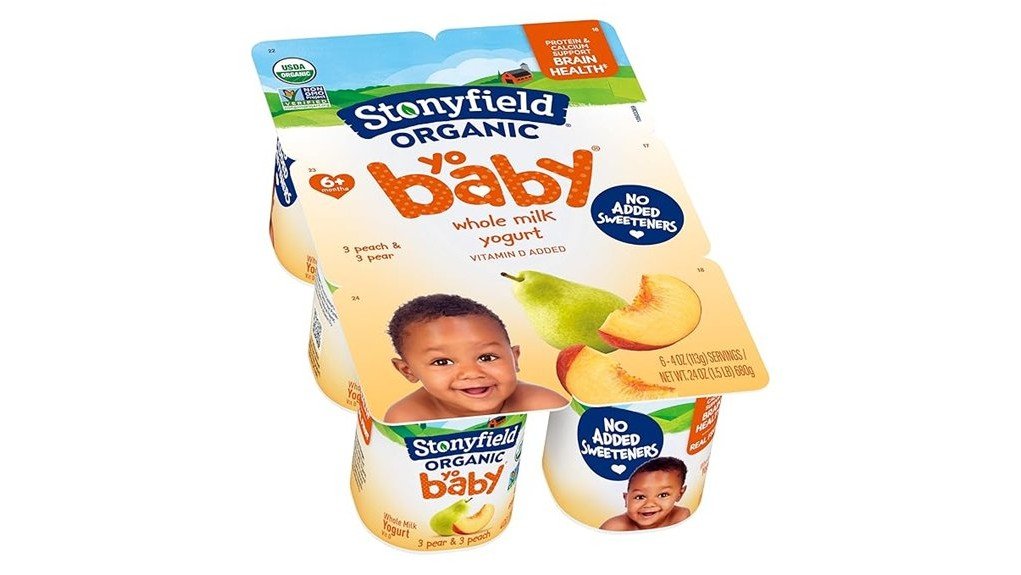
- It comes in a variety pack with six 4-ounce cups of pear and peach flavors.
- The yogurt uses real fruit puree and is USDA organic, non-GMO, and free from antibiotics and artificial growth hormones.
- It provides protein, calcium, and vitamin D, making it a nutritious option for babies starting solids.
- It has no added sweeteners and offers a mild, convenient, baby-friendly texture for easy feeding.
- It contains dairy, so it is not suitable for babies with dairy allergies or babies who have been told to avoid milk products.
| Specification | Detail |
|---|---|
| Brand | Stonyfield Organic |
| Product | YoBaby Yogurt |
| Product type | Whole-milk baby yogurt |
| Age guidance | Made for babies starting around 6 months, when they are ready for solids |
| Flavor variety | Pear and peach |
| Count | Six cups |
| Cup size | 4 ounces per cup |
| Main ingredients | Whole milk with pear or peach fruit puree |
| Nutrition notes | Provides protein, calcium, and vitamin D |
| Sweetener note | No added sweeteners stated in the source article |
| Organic note | USDA organic, non-GMO, and made without antibiotics or artificial growth hormones |
| Storage | Keep refrigerated before opening and during storage |
| Safety note | Contains dairy and should not be used for babies with dairy allergies unless a pediatric professional says it is safe. |
What Is Stonyfield YoBaby?
Stonyfield Organic YoBaby is a whole milk baby yogurt made for infants starting at 6 months, offered in a variety pack with six 4 oz cups split between pear and peach flavors. The product is meant for babies who are already developmentally ready for solids and can handle spoon-fed foods with a soft texture.
It is positioned as an early feeding option that combines flavor variety with organic benefits. The small cups make portioning simple, and the mild pear and peach flavors can help babies try dairy without a strong or sharp taste.
The format is practical for portions and introduction to dairy foods. Still, suitability depends on your baby’s readiness, allergy history, and pediatric guidance, especially when dairy is new in the diet.
Stonyfield YoBaby Ingredients and Nutrition
Behind the baby-friendly format, the ingredient list and nutrition profile help explain why this yogurt is often considered for early feeding. This organic yogurt uses real pear or peach puree, whole milk, and added vitamin D, protein, and calcium.
It is USDA organic certified, with no GMOs, antibiotics, artificial growth hormones, or added sweeteners. For baby nutrition, that profile gives you a simple dairy option with fat from whole milk, fruit flavor, and key nutrients commonly associated with yogurt.
- Fruit puree base
- Whole milk richness
- Key micronutrients
- Clean-label sourcing
The result is a balanced option for families who want nourishing food without unnecessary additives. The main point to remember is that this is still a dairy food, so it should be introduced carefully if your baby has a history of reactions or a family allergy concern.
Why YoBaby Works for Babies Starting Solids
For babies beginning solid foods, YoBaby offers a familiar, mild introduction with textures and flavors that are generally easy to accept. Yogurt is soft, spoonable, and easy to combine with other baby-safe foods when your baby is ready.
Its whole-milk base provides energy and fat needed in early baby nutrition, while protein, calcium, and vitamin D add nutritional support. The pear and peach purees keep the flavor gentle, which can be helpful if your baby rejects stronger tastes.
The fruit purees keep the profile simple, and the absence of added sweeteners may suit families seeking cleaner options. USDA organic standards also support the product’s clean-label appeal, including no GMOs, antibiotics, or artificial growth hormones.
As part of a varied diet, it can support a gradual shift toward self-directed eating and broader food acceptance. You can serve it plain, pair it with soft fruit, or use it as a spoon-fed snack when your baby is seated safely.
Before You Buy: YoBaby contains dairy and must be refrigerated. Skip it for babies with known dairy allergies unless your pediatrician gives specific guidance, and do not use it as a shelf-stable travel snack.
Who Should Buy It?
Best For
- Parents introducing dairy to babies around 6 months who are already ready for solids.
- Families who prefer USDA organic, non-GMO yogurt without added sweeteners.
- Caregivers who want small 4-ounce cups for easy serving, daycare bags, or quick snacks.
Skip If
- Your baby has a dairy allergy or has been advised to avoid milk-based foods.
- You need a product that can stay unrefrigerated during long travel.
- You prefer plain yogurt only and do not want fruit puree flavors.
Texture, Flavor, and Baby Acceptance
YoBaby’s main advantage for early feeding is its soft yogurt texture. Babies who are learning to eat from a spoon often do better with smooth foods that do not require chewing, and this format supports that stage.
The pear and peach flavors give gentle variety without relying on added sweeteners. That matters because very sweet foods can shape taste preferences early, while mild fruit flavors may help your baby accept yogurt as part of normal meals.
The 4-ounce cup size is also useful because you can open one portion at a time. For younger babies, you may still serve only part of a cup and refrigerate the rest promptly if it has not been contaminated by a used spoon.
Baby Safety Notes
Because this product touches baby feeding, safety matters as much as nutrition. YoBaby should be offered only when your baby is ready for solids, can sit with support, and is supervised during feeding.
Use a clean spoon and avoid feeding directly from the cup if you plan to save leftovers. Once saliva gets into the cup, bacteria can grow faster, so leftover yogurt from a used feeding cup should be discarded instead of stored for later.
This product is not suitable for babies with dairy allergies. If your baby has eczema, previous food reactions, vomiting, hives, breathing symptoms, or blood in stool after dairy, speak with a pediatric professional before offering milk-based yogurt.
Pro Tip: For a first serving, offer a small spoonful earlier in the day instead of at bedtime. That makes it easier to watch for tolerance and keep the rest of the cup chilled if your baby only eats a little.
How to Serve YoBaby at Home or On the Go
YoBaby can be served straight from the refrigerator once it is ready to eat, making it a simple option for both home snacks and short outings. Keep the cup chilled until feeding time, open it only when you are ready, and use clean utensils.
Evidence-based preparation stays minimal: keep cups chilled, open just before feeding, and use clean utensils when needed. Avoid leaving opened yogurt at room temperature for long periods, especially in warm weather or during travel.
Creative serving can add variety without changing the product itself.
- Pair with soft fruit.
- Offer with a spoon at the table.
- Pack in an insulated bag for travel.
- Serve after naps or errands.
These snack ideas support convenience, autonomy, and predictable routines while preserving safe, practical use. For baby-led weaning, you can preload a spoon and let your baby practice, but always supervise closely because yogurt can get messy fast.
How It Performs in Real Use
For First Dairy Introduction
YoBaby works well as a gentle dairy introduction because the texture is smooth and the flavor is mild. The whole-milk base gives it a richer feel than low-fat yogurt, which can be helpful for babies who need energy-dense foods during early feeding.
For Daily Snacks
The 4-ounce cup format makes daily snacks easier because you do not need to scoop from a large tub. You can serve it as a small snack, pair it with soft fruit, or use it alongside other age-appropriate foods.
For Daycare or Grandparents’ House
The single-serve packaging is useful when another caregiver is feeding your baby. It reduces measuring, keeps portions consistent, and makes it easier to send a simple snack with clear storage instructions.
For Short Travel
YoBaby can work for short outings when packed in an insulated bag with cooling support. It is not ideal for long trips without reliable refrigeration, so plan around safe storage instead of treating it like a shelf-stable pouch.
Pros and Cons
Pros
- Whole-milk yogurt provides a richer texture and fat source for babies starting solids.
- Six 4-ounce cups make portioning and caregiver handoff easier.
- Pear and peach flavors give gentle variety without added sweeteners.
- USDA organic, non-GMO sourcing supports families who prefer cleaner ingredient standards.
- Protein, calcium, and vitamin D add useful nutrition for early feeding.
Cons
- Not suitable for babies with dairy allergies.
- Requires refrigeration, so it is less convenient for long travel.
- May cost more than standard yogurt because of the organic baby-focused format.
Is Stonyfield YoBaby Worth It?
Whether Stonyfield YoBaby is worth it depends largely on your family’s priorities, but it offers several clear advantages for babies starting at 6 months. This baby yogurt provides organic benefits through USDA certification, real fruit, and no added sweeteners. It also supplies vitamin D, protein, and calcium.
| Factor | Evidence | Value |
|---|---|---|
| Ingredients | Pear, peach, whole milk | Simple |
| Safety | No GMOs, antibiotics, hormones | Reassuring |
| Convenience | 4 oz cups, portable | Practical |
For families seeking clean-label nourishment and easy feeding, the cost may feel justified. The value is strongest if you want a baby-specific yogurt with organic sourcing, small cups, mild fruit flavors, and no added sweeteners.
Is It Worth the Price?
YoBaby sits closer to a premium baby food choice than a basic tub of plain yogurt. You are paying for USDA organic sourcing, baby-sized cups, fruit flavors, and a ready-to-serve format.
It is worth considering if you want a simple first yogurt that is easy to portion and share with other caregivers. It may not be the best fit if your main goal is the lowest cost per ounce, since a larger tub of plain whole-milk yogurt may stretch further.
The strongest value comes from convenience. If small cups help you reduce waste, pack snacks faster, and serve the right amount more easily, YoBaby can make sense for everyday use.
How It Compares to Alternatives
Compared with plain whole-milk yogurt, YoBaby is more convenient because it comes in 4-ounce cups and includes baby-friendly fruit flavors. Plain yogurt may be better if you want full control over flavor, ingredients, and serving size.
Compared with shelf-stable baby pouches, YoBaby offers dairy-based nutrition with protein, calcium, vitamin D, and whole milk. Pouches may be easier for long travel, but YoBaby makes more sense when you want a chilled yogurt snack for home, daycare, or short outings.
Common Mistakes to Avoid
Do not treat YoBaby as a meal replacement. It can be part of a varied diet, but babies still need a range of age-appropriate foods, textures, and nutrients as they grow.
Do not leave opened yogurt unrefrigerated for long periods. Since yogurt is a chilled dairy food, safe storage is important before and after opening.
Do not reuse leftovers from a cup if your baby has eaten directly from it. Saliva can enter the yogurt, so it is safer to serve a small amount in a separate bowl when you expect leftovers.
Frequently Asked Questions
Is YoBaby available in other flavor combinations?
Yes, YoBaby flavors may appear beyond pear and peach in some product lines, though availability can vary by retailer. This reviewed variety pack focuses on six 4-ounce cups with pear and peach flavors.
Does YoBaby need to be refrigerated before opening?
Yes. YoBaby should be refrigerated before opening because yogurt needs continuous chilling to help preserve safety and quality.
Can YoBaby be used in baby-led weaning recipes?
Yes, it can be used with baby-led weaning when your baby is ready for yogurt and you supervise closely. You can offer it on a preloaded spoon, mix it with soft fruit, or serve a small amount in a bowl.
Is YoBaby suitable for babies with dairy allergies?
No. YoBaby contains dairy, so it is not suitable for babies with dairy allergies unless a pediatric professional specifically advises otherwise.
How long does an opened YoBaby cup stay fresh?
An opened YoBaby cup is best used promptly and kept refrigerated if it has not been eaten from directly. If your baby’s spoon has touched the yogurt during feeding, discard the leftovers instead of saving them.
Can a 6-month-old eat YoBaby every day?
YoBaby can be part of a baby’s diet if your baby tolerates dairy and is ready for solids. It should still be one part of a varied feeding routine that includes other age-appropriate foods.
Is YoBaby better than regular yogurt?
YoBaby is more convenient because it is packaged in small cups and designed for babies. Regular plain whole-milk yogurt may be a better value if you want larger servings, fewer flavors, or more control over what you mix in.
Who should skip Stonyfield YoBaby?
Skip it if your baby has a dairy allergy, needs a dairy-free diet, or you cannot keep it refrigerated. You may also want another option if you prefer plain yogurt without fruit puree.
Conclusion
Stonyfield Organic YoBaby stands out as a solid starter yogurt for babies beginning solids. Its whole-milk base, simple fruit purees, and added vitamin D, protein, and calcium support early nutrition, while the mild flavors suit developing taste buds.
Though pricier than standard yogurt, its organic ingredients and portable packaging add practical appeal. For families seeking a gentle, clean-label dairy option, YoBaby offers a sensible, safe, and satisfying first spoonful when dairy is appropriate for the baby.
The Bottom Line
Stonyfield Organic YoBaby is a smart buy if you want a chilled, organic, whole-milk yogurt for a baby who is ready for solids and can tolerate dairy. Skip it if your baby has a dairy allergy, you need shelf-stable snacks, or you prefer plain yogurt without fruit flavors.