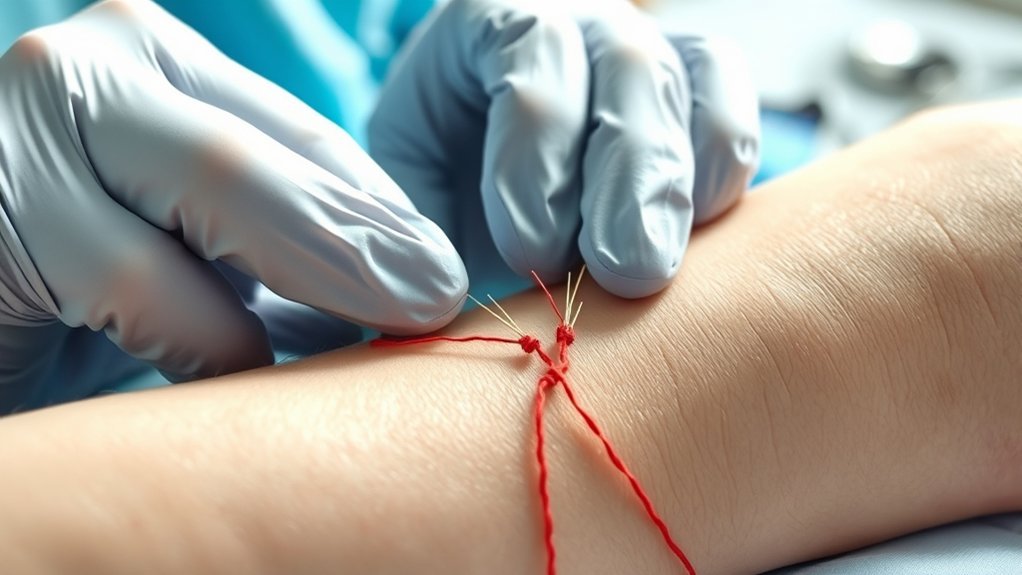
When it comes to stitches care, you’ve probably heard a lot of myths that can complicate your healing process. For instance, many believe that keeping stitches dry is essential, but that’s not the whole story. Understanding how to properly care for your stitches can greatly affect your recovery. So, what’s the truth behind these common misconceptions, and how can you guarantee ideal healing? Let’s explore the facts you need to know.
Common Myths About Stitches Care
When it comes to stitches care, many myths can mislead you about their necessity and maintenance. It’s essential to know that even minor wounds may require stitches for proper wound care, especially if they’re deep or gaping.
Another common myth is that all stitches can stay in for the same duration; removal timelines vary based on the wound’s location and type. Just because you have stitches doesn’t mean you’re immune to infection risk—monitoring and proper care are vital.
Not all stitches have the same removal timeline; care is crucial to prevent infection.
You might think removal will be painful, but most people experience minimal discomfort. Finally, while some believe stitches should remain dry, maintaining a clean and slightly moist environment can actually promote healing and improve healing outcomes.
Don’t hesitate to seek medical attention for any concerns.
The Importance of Keeping Stitches Moist
Although many people believe that keeping stitches dry is crucial for healing, maintaining a moist environment is actually essential for optimal recovery.
Keeping stitches moist helps create an ideal healing environment, reducing scab formation that can hinder tissue regeneration. Moisture around stitches enhances comfort and minimizes pain, as dry conditions can lead to increased irritation.
Using a topical antibiotic ointment or petroleum jelly not only retains moisture but also provides a barrier against infection. Properly covered stitches with breathable dressings further promote a moist environment, encouraging faster healing and reducing scarring.
Studies show that wounds in moist conditions heal more quickly and with less visible scarring compared to those kept dry.
When to Seek Medical Attention for Stitches
How can you tell if your stitches need medical attention? If you notice signs of infection, like increased redness, swelling, warmth, or discharge around the stitches, it’s time to seek medical help.
Additionally, if the wound begins to reopen or you experience excessive bleeding, prompt evaluation is necessary.
Persistent pain or tenderness around the stitches can also indicate complications, so don’t ignore those symptoms.
You should consult healthcare providers if the stitches feel loose or if there are gaps in the wound edges that could hinder the healing process.
Finally, if your stitches aren’t healing as expected within the prescribed time frame, don’t hesitate to reach out for professional care.
Your well-being matters, so stay attentive!
How Stitches Promote Faster Healing
Stitches play an essential role in promoting faster healing by holding the edges of a wound together, which facilitates tissue bonding.
By securing the wound, stitches help it heal properly and minimize the risk of infection, a common concern that can delay recovery.
Timely application of stitches—ideally within 6 to 8 hours—reduces potential complications and guarantees ideal healing outcomes.
Effective wound closure techniques not only promote faster recovery but also contribute to healthier tissue formation, leading to less visible scarring.
Compared to alternatives like skin glue or staples, stitches often provide a more comfortable healing experience, enhancing your quality of life during recovery and decreasing the chances of developing chronic wounds.
Understanding the Risks of Ignoring Stitches
When you ignore stitches, you’re putting yourself at risk for a range of complications that can hinder your recovery.
Without proper care, the risk of infection increases considerably, especially after 6 to 8 hours. Neglecting stitches can prolong the healing process, potentially extending recovery beyond three weeks and increasing complications.
Deep or gaping wounds that aren’t stitched may result in visible scarring due to misaligned edges. Cuts near joints or nerves could even lead to loss of function and increased pain.
Delaying stitch placement or removal raises the chances of dehiscence or evisceration, which may require further medical intervention.
To guarantee your wounds heal properly, always prioritize stitches and proper care.
Frequently Asked Questions
Do I Actually Need Stitches?
If your cut is deep, gaping, or bleeding excessively, you likely need stitches. Evaluate the wound’s size and location; if it’s longer than ½ inch or won’t stop bleeding, seek medical attention quickly.
What Are the 4 C’s of Wound Care?
The 4 C’s of wound care are Clean, Cover, Control, and Consult. You should clean wounds properly, cover them to prevent infection, control pain and monitor for complications, and consult a professional when needed.
Do Wounds Heal Better With or Without Stitches?
Wounds generally heal better with stitches, especially when they’re deep or wide. Stitches help align the edges, promote tissue bonding, and reduce infection risk, leading to faster healing and potentially less visible scarring.
Why Are Stitches No Longer Needed?
Stitches aren’t always needed because modern techniques, like skin adhesives and advanced dressings, effectively close wounds. Many minor cuts heal well on their own with proper care, making stitches less common and simplifying recovery for you.
Conclusion
Now that you know the truth about stitches care, it’s time to put this knowledge to the test. Remember, a moist environment can speed up healing, and staying vigilant against infection is vital. As your stitches heal, don’t let fear of removal hold you back—it’s usually a breeze. But what happens if you ignore your stitches? The answer might surprise you. Stay informed, stay proactive, and guarantee your recovery goes smoothly. Your healing journey is just beginning!

