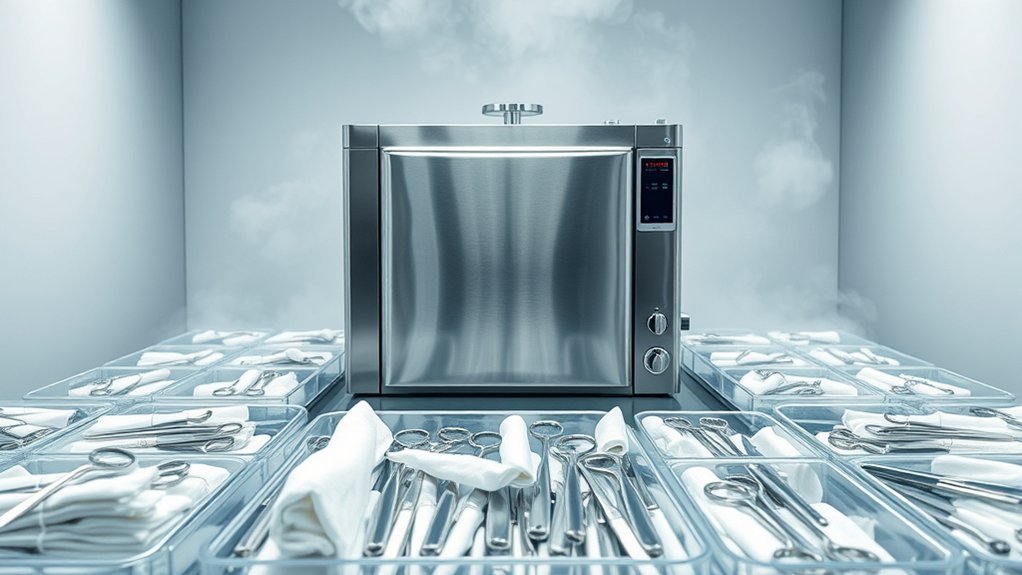
Did you know that nearly 30% of sterilization failures can be traced back to equipment issues? Inconsistent results, unusual odors, and visible residue can all signal underlying problems with your sterilizing equipment. It’s crucial to recognize these symptoms early to prevent contamination and guarantee compliance. Understanding how to interpret these signs can greatly influence your sterilization outcomes and overall safety. What are the key indicators you should be monitoring?
Inconsistent Sterilization Results
When you notice inconsistent sterilization results, it’s crucial to investigate the underlying causes promptly.
Start by examining equipment calibration; any discrepancies can lead to ineffective sterilization. Check the sterilization parameters, such as temperature, pressure, and exposure time, confirming they align with established protocols.
Evaluate the loading configuration within the sterilizer; improper placement can obstruct steam or gas circulation, compromising results. Regular maintenance and routine checks are essential to prevent malfunctioning components from affecting performance.
Additionally, consider the quality of sterilization indicators used; unreliable indicators may yield false readings.
Unusual Odors During Sterilization
What could be causing unusual odors during sterilization? These odors often signal underlying issues with your sterilization process.
One potential cause is the presence of organic material that’s not adequately removed from equipment before sterilization. This residue can produce foul smells when subjected to high temperatures or chemicals.
Additionally, malfunctioning sterilization equipment, such as a faulty vacuum pump, can release odors due to improper air removal.
If you’re using chemical sterilants, verify they’re not expired or improperly mixed, as this can also lead to unusual smells.
Finally, check for any leaks in your sterilization chamber, which may allow moisture to interact with residual substances, resulting in off-putting odors.
Addressing these issues will enhance your sterilization process.
Visible Residue on Equipment
Unusual odors during sterilization often indicate issues that can manifest as visible residue on the equipment.
This residue, which may appear as a film, spots, or discoloration, can compromise the sterility and functionality of your tools. It often results from improper cleaning, inadequate rinsing, or the presence of contaminants prior to sterilization.
To address this, ascertain you thoroughly clean all equipment before sterilizing, using appropriate detergents and techniques.
Regularly inspect your sterilization process and equipment for signs of malfunction, as these can contribute to residue buildup.
If you encounter persistent residue, consider adjusting your cleaning protocols or evaluating the effectiveness of your sterilization method.
Maintaining clean and residue-free equipment is essential for achieving reliable sterilization outcomes.
Changes in Sterilization Cycle Times
Changes in sterilization cycle times can greatly impact the effectiveness of your sterilization process. When cycle times are altered, whether due to equipment malfunction or procedural adjustments, the risk of improper sterilization increases.
Insufficient exposure time may lead to microbial survival, while excessive durations can compromise equipment integrity. It’s essential to monitor and document these changes meticulously to guarantee consistent outcomes.
Always calibrate your equipment regularly and validate the cycle parameters according to manufacturer specifications. If you notice fluctuations, investigate the root cause promptly, as this could indicate underlying issues that require immediate attention.
Equipment Maintenance Records
Maintaining detailed equipment maintenance records is essential for ensuring the effectiveness of your sterilization processes. These records provide a thorough history of each piece of equipment, including service dates, repairs, and routine inspections.
By documenting this information, you can identify patterns that may indicate potential failures or inefficiencies. Regularly updating your records allows you to schedule preventive maintenance proactively, minimizing downtime and maximizing productivity.
Documenting equipment maintenance allows for early detection of issues and proactive scheduling of preventive measures, ensuring optimal productivity.
Additionally, accurate records support compliance with regulatory standards, demonstrating your commitment to quality and safety. When issues arise, these records serve as crucial references for troubleshooting, helping you address problems swiftly.
Ultimately, vigilant record-keeping empowers you to maintain peak sterilization performance, safeguarding both equipment integrity and patient safety.
Staff Training and Compliance Issues
Since proper sterilization relies heavily on trained personnel, staff training and compliance issues play an essential role in maintaining effective sterilization protocols.
Without adequate training, risks of contamination and equipment failure increase considerably. To guarantee compliance, consider focusing on these key areas:
- Regular Training Sessions: Schedule ongoing training to keep staff updated on the latest sterilization techniques and equipment use.
- Standard Operating Procedures (SOPs): Develop clear SOPs that outline each step in the sterilization process, ensuring everyone understands their responsibilities.
- Compliance Audits: Conduct regular audits to assess adherence to protocols, identifying areas needing improvement or further training.
Frequently Asked Questions
How Often Should Sterilization Equipment Be Calibrated?
You should calibrate sterilization equipment at least annually. However, if you notice inconsistent performance or after significant repairs, it’s essential to recalibrate sooner to guarantee effective sterilization and maintain compliance with industry standards.
What Are the Best Practices for Storing Sterilized Equipment?
Store sterilized equipment in a clean, dry environment, away from direct sunlight and contaminants. Use labeled, sealed containers to maintain sterility, and guarantee proper ventilation. Regularly inspect storage areas for potential hazards and cleanliness.
Can Sterilization Equipment Be Repaired, or Should It Be Replaced?
If sterilization equipment’s like a worn-out shoe, you can repair it, but consider its reliability. If repairs become frequent, replacing it guarantees consistent performance and safety, freeing you from the worry of potential failures.
What Types of Sterilization Methods Are Most Effective for Specific Instruments?
For effective sterilization, steam autoclaving is ideal for heat-resistant instruments, while ethylene oxide gas works well for heat-sensitive tools. Hydrogen peroxide plasma suits delicate devices, ensuring thorough disinfection without damaging their integrity. Choose wisely based on instrument needs.
How Can I Ensure Compliance With Sterilization Regulations and Standards?
To guarantee compliance with sterilization regulations, regularly review guidelines, train your staff, document procedures, and conduct audits. Staying updated with best practices keeps your facility running smoothly and helps you maintain safety standards.
Conclusion
In the domain of sterilization, think of your equipment as a steadfast guardian. If it shows signs of distress—like inconsistent results or unusual odors—don’t ignore these warning signals. Just as a knight sharpens their sword before battle, you must maintain your equipment and train your staff diligently. By doing so, you guarantee that your guardian remains vigilant, protecting the sanctity of sterile environments and safeguarding against the lurking threats of contamination. Stay proactive; your success hinges on it.