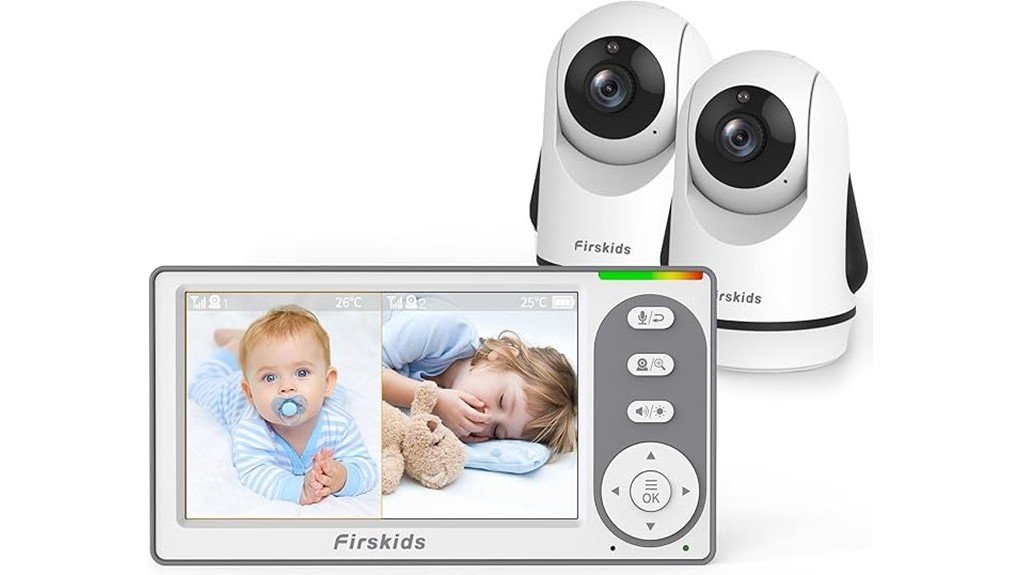
The split-screen baby monitor is designed for parents overseeing multiple children or rooms simultaneously. It features a 4.3-inch IPS display, providing clear visuals while supporting dual-camera functionality for extended coverage. Key capabilities include pan, tilt, and zoom, enhancing monitoring flexibility. Additionally, auto night vision and two-way audio facilitate communication. However, users may face connectivity challenges or battery concerns. Understanding these aspects can help optimize use and address potential drawbacks. What else should one consider before making a purchase?
Key Takeaways
- Split-screen baby monitors offer dual coverage, allowing simultaneous viewing of two rooms or children for enhanced caregiving efficiency.
- A 4.3 IPS display provides clear, real-time visuals, ensuring confident monitoring of your little ones.
- Features like pan, tilt, and zoom capabilities enhance visibility, while auto night vision ensures safety in low light.
- Two-way audio allows for soothing communication, making it easier to comfort your child from another room.
- Battery life can be optimized with ECO mode, brightness adjustments, and regular software updates to prevent unexpected drain.
The Benefits of a Split-Screen Baby Monitor
When considering the advantages of a split-screen baby monitor, it becomes evident that such devices offer enhanced functionality for parents managing multiple caregiving tasks.
These monitors provide dual coverage, allowing simultaneous viewing of two rooms or children, which promotes parental peace.
The clarity of a 4.3 IPS display guarantees that caregivers can monitor their little ones with confidence, while features like pan, tilt, and zoom capabilities enhance visibility.
The 4.3 IPS display ensures caregivers can confidently monitor their children, while pan, tilt, and zoom features enhance visibility.
Furthermore, the ability to track room temperature and receive alerts adds another layer of reassurance, making split-screen monitors a practical choice for families seeking efficient and thorough monitoring solutions.
Key Features of Split-Screen Baby Monitors
Key features of split-screen baby monitors greatly enhance the monitoring experience for parents.
These devices typically include a 4.3 IPS display, providing clear, real-time vision, and support for multiple camera capabilities.
With features such as a 320-degree pan and 120-degree tilt, parents can effortlessly adjust views.
The split-screen option allows simultaneous feed viewing from two cameras, broadening monitoring options.
Additionally, auto night vision guarantees visibility in dim conditions, while two-way audio facilitates soothing communication.
Temperature monitoring and cry detection alerts further promote peace of mind, making these monitors practical tools for informed parenting.
Setting Up Your Split-Screen Baby Monitor
Setting up a split-screen baby monitor can be a straightforward process that enhances the monitoring experience for parents. The installation process typically involves a few key steps, guaranteeing ideal camera placement for effective monitoring.
Setting up a split-screen baby monitor is simple, ensuring parents can effectively monitor their little ones with ease.
- Position cameras at varied angles for thorough coverage.
- Follow the manufacturer’s instructions for secure mounting.
- Confirm the monitor’s display is within easy reach for quick access.
- Test the signal strength to avoid connectivity issues.
Tips for Maximizing Battery Life
To guarantee peak performance from a split-screen baby monitor, taking steps to maximize battery life is essential.
Utilizing battery saving modes, such as ECO/VOX, can greatly extend usage time by turning off the display after 20 seconds of inactivity.
Implementing smart power management strategies, like dimming the screen brightness or reducing volume levels, further conserves energy.
Additionally, keeping the monitor charged when not in use guarantees readiness.
Regularly checking for software updates can enhance battery efficiency, as manufacturers often optimize power consumption through updates.
Common Issues With Split-Screen Baby Monitors
Many parents find that split-screen baby monitors offer an array of features designed to enhance child supervision, but they may also encounter common issues that can affect their overall experience.
These difficulties can disrupt user experience and require some troubleshooting tips:
- Limited range can lead to connectivity issues.
- Interference from other devices may cause audio or video disruptions.
- Battery drain can occur more quickly than expected.
- Complicated setup can frustrate new users.
Frequently Asked Questions
Can I Use a Split-Screen Monitor for Multiple Children?
Yes, a split-screen monitor facilitates simultaneous observation of multiple children, enhancing user experience. Its advanced monitor features allow parents to maintain vigilance, ensuring each child’s well-being while promoting a sense of freedom and peace of mind.
How Far Can the Monitor Transmit Signals Effectively?
The monitor effectively transmits signals up to 1,000 feet, though interference issues may arise in densely populated areas or near electronic devices, potentially limiting range. Awareness of surroundings enhances freedom for caregivers monitoring their children.
Is the Monitor Compatible With Smart Home Devices?
The monitor lacks smart integration and device compatibility with smart home systems. Its design prioritizes standalone functionality, allowing parents to maintain privacy and control without reliance on interconnected technologies, fostering a sense of independence and security.
What Is the Warranty Period for the Baby Monitor?
The baby monitor offers a one-year warranty, covering replacement options for any defects. This assurance allows parents to focus on nurturing their child, liberated from concerns about product reliability and unforeseen malfunctions.
Are There Any Additional Costs for Features or Apps?
There are no additional costs for features or apps associated with the monitor. Cost considerations remain straightforward, allowing parents to enjoy enhanced functionality without unexpected expenses, fostering a sense of freedom in their monitoring experience.
Conclusion
In the domain of parenting tools, the split-screen baby monitor stands as a lighthouse, guiding caregivers through the often turbulent waters of monitoring multiple children or rooms. Its array of features, such as the 4.3 IPS display, pan-tilt-zoom capabilities, and dual-camera support, guarantees clarity and control. While challenges like connectivity issues may arise, the benefits of real-time visibility and two-way communication make it a worthy investment for modern families maneuvering the complexities of childcare.

