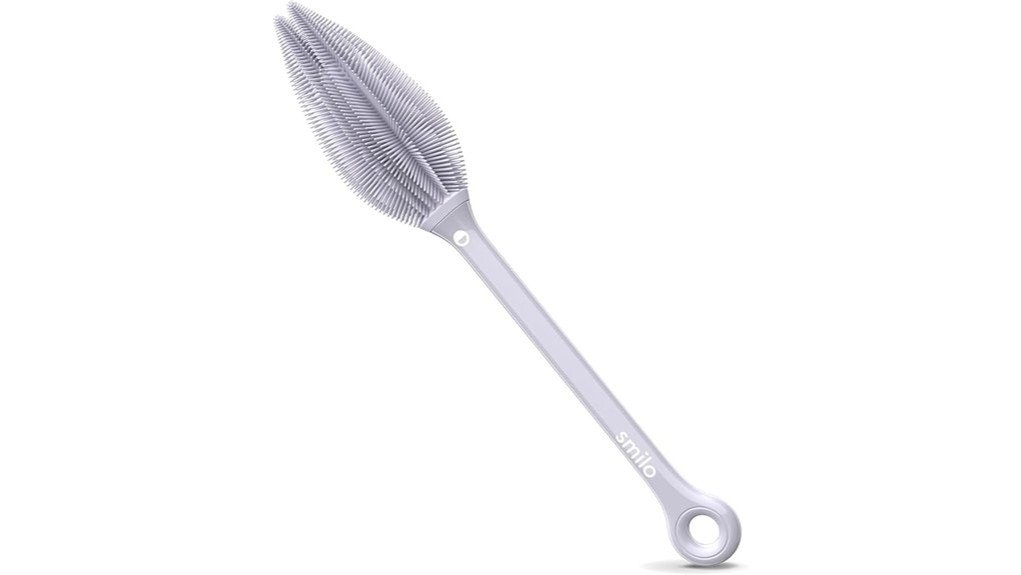
The Smilo Silicone Baby Bottle Brush draws attention for its twin-tip design and all-silicone build. It claims to clean bottles and nipples with less effort than standard brushes, while avoiding the wear and residue common in sponge versions. Its food-grade, BPA-free construction also raises questions about safety and long-term use. The main issue is whether its design truly improves daily cleaning enough to justify the switch.
Key Takeaways
- Smilo Silicone Baby Bottle Brush uses a flexible twin-tip head for better access to hard-to-reach bottle areas.
- Its soft silicone bristles clean curved surfaces gently without scratching bottles or nipples.
- The brush is made from 100% food-grade, BPA-free silicone and is dishwasher-safe.
- Its compact, firm design resists flattening and offers better control than sponge brushes.
- The durable silicone construction cleans efficiently, dries quickly, and lasts longer than disposable options.
How Well the Smilo Brush Cleans
The Smilo Silicone Baby Bottle Brush is designed to clean efficiently in hard-to-reach areas, with a flexible twin-tip head that helps reach bottle edges, nipples, and teats.
Its soft silicone bristles support cleaning efficiency by contacting curved surfaces without apparent strain. The compact form appears suited to routine washing of bottles, cups, and glasses, while the firm structure resists flattening during repeated use.
This shape may improve user experience by reducing effort and improving control. Overall, the brush presents a practical cleaning tool for people seeking autonomy over daily care tasks, with focused reach and consistent performance.
Is the Smilo Silicone Baby Bottle Brush Safe?
Built from 100% food-grade silicone and labeled BPA-free, the Smilo Silicone Baby Bottle Brush is positioned as a safe option for baby feeding items.
Its soft bristles reduce the chance of scratching bottles, nipples, or teats, supporting hygienic use. Dishwasher-safe construction adds practical sanitation, while the silicone build limits moisture retention common in sponge tools. That can improve cleaning efficiency over time.
Material durability also matters: repeated use should not quickly degrade the brush or shed particles. From a safety standpoint, the design appears suitable for regular home use, though users still need proper rinsing and drying after each cleaning.
What Makes the Smilo Brush Different?
What sets the Smilo Silicone Baby Bottle Brush apart is its twin-tip design, which targets narrow areas such as bottle edges, nipples, and teats with greater precision than a standard single-head brush.
This design innovation shifts cleaning from routine labor to a more controlled process, reducing reliance on awkward tools. The soft silicone structure also improves user experience by offering a stable, reusable form that resists wear.
In practical terms, the brush presents a compact, efficient alternative to sponge-based options. Its construction supports consistent handling while preserving delicate surfaces, aligning with users who value autonomy, durability, and simpler maintenance.
How the Twin Tip Cleans Bottles and Nipples
Its flexible twin tip reaches into bottle edges and around nipples and teats with more precision than a single brush head can usually provide.
The flexible design allows controlled contact along curved surfaces, reducing missed spots in narrow openings. On bottle interiors, one tip can trace seams while the other addresses residue near the neck, supporting precision cleaning without excessive pressure.
Flexible design supports controlled contact on curved surfaces, helping reach narrow openings and reduce missed spots.
For nipples, the smaller end adapts to tight channels and delicate contours, helping maintain cleanliness where buildup often concentrates.
The result is a methodical, low-effort routine that supports hygienic feeding tools and gives caregivers more practical freedom.
Why It Beats Sponge Brushes
Compared with sponge brushes, the Smilo Silicone Baby Bottle Brush offers greater durability and more consistent cleaning performance.
In a durability comparison, its food-grade silicone body resists wear, sheds neither fibers nor odor, and remains effective after repeated dishwasher cycles. Sponge tools often retain residue and degrade quickly, reducing cleaning efficiency.
The twin tip improves access to bottle edges, nipples, and teats, supporting more thorough sanitation with less effort. Its soft bristles protect surfaces while maintaining control.
For users seeking practical independence from disposable cleaning habits, this design provides a more reliable, reusable alternative.
Frequently Asked Questions
Is the Smilo Brush Dishwasher Safe?
Yes, the Smilo brush is dishwasher safe, preferably on the top rack. Its cleaning efficiency and ergonomic design support practical maintenance, while food-grade silicone helps it endure repeated washing without compromising performance or safety.
What Are the Brush Dimensions?
The brush measures 2L x 4W x 16H cm, small enough for tight storage despite doubts about reach. Its brush material supports cleaning efficiency, while the compact profile suits practical, liberated daily use.
Can It Clean Cups and Glasses Too?
Yes, it can clean cups and glasses too. Its cleaning versatility suits different cup materials, while soft silicone bristles help prevent scratches. The tool remains practical, durable, and efficient for repeated household use.
How Much Does the Brush Weigh?
It weighs 0.06 kg. In a medieval sense of precision, that weight comparison suggests a remarkably light tool, supporting cleaning efficiency while remaining easy to handle. Its minimal mass suits practical use and user liberation.
What Color Is the Smilo Brush?
The Smilo brush is gray. Its brush color options appear limited, while silicone benefits include flexibility, durability, and gentler cleaning. This restrained palette suits practical use, supporting efficient, independent care without unnecessary visual clutter.
Conclusion
In the small kingdom of feeding time, the Smilo Silicone Baby Bottle Brush stands like a well-made tool rather than a fragile helper. Its twin tips move through bottle necks and nipples like careful hands in a narrow corridor, lifting residue without leaving scars. Safe, durable, and easy to wash, it outlasts the brief life of sponge brushes. In this practical parade, it proves less a novelty than a steady, trustworthy cleaner.

