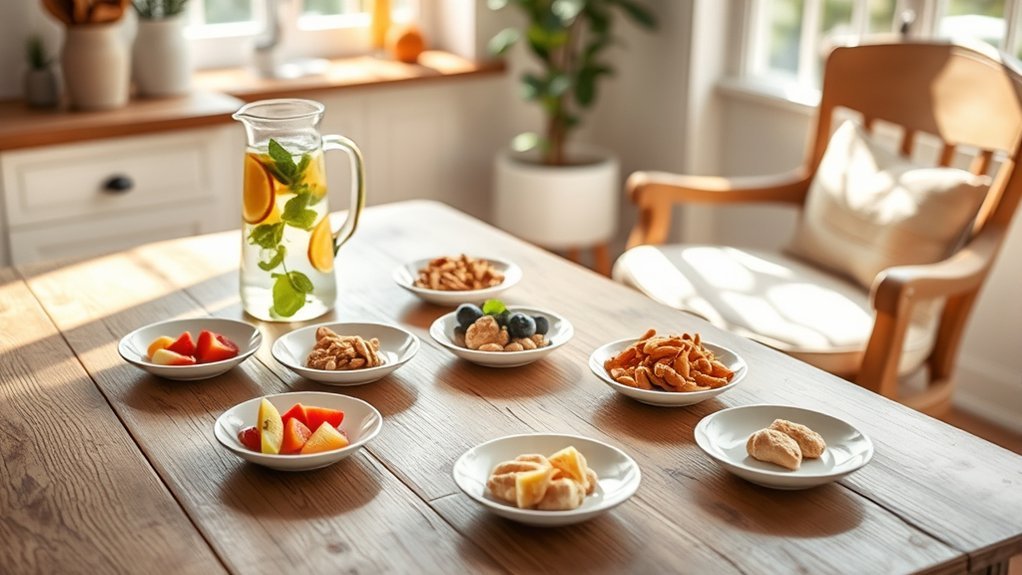
Pregnancy can make normal meals feel harder than they used to feel. Nausea, heartburn, bloating, and low energy can all change the way you eat each day. Small, frequent meals may help you feel more comfortable while still supporting your nutrition and your baby’s growth.
Quick Answer
Small, frequent meals during pregnancy can help reduce nausea, heartburn, bloating, and energy crashes. Aim for balanced mini meals that include protein, fiber-rich carbohydrates, healthy fats, and fluids. If you have gestational diabetes, severe nausea, weight loss, or trouble eating enough, ask your healthcare provider for personal guidance.
Key Takeaways
- Small meals can help keep your stomach gently filled and may ease pregnancy nausea.
- Balanced snacks can support steady energy and reduce sharp blood sugar changes.
- Smaller portions may reduce heartburn by lowering pressure on your stomach.
- Each mini meal should include protein, fiber, healthy fats, and fluids when possible.
- Talk with your healthcare provider if symptoms affect your weight, hydration, or daily eating.
Understanding Digestive Changes During Pregnancy
As you move through pregnancy, your digestive system can work more slowly. Hormonal changes, especially higher progesterone levels, relax smooth muscles in your gastrointestinal tract.
Slower digestion may lead to bloating, gas, constipation, or a heavy feeling after meals. Your growing uterus can also place more pressure on your stomach and intestines.
Nutrient-dense foods matter for both you and your baby. Choose fiber-rich fruits, vegetables, beans, oats, and whole grains to support digestion.
Hydration also helps your body manage constipation and fatigue. Smaller meals can reduce discomfort because your stomach does not need to handle a large portion at once.
Benefits of Small Frequent Meals
Eating small, frequent meals during pregnancy can support your comfort, digestion, and daily energy. Smaller portions may help steady your blood sugar and reduce sudden hunger.
Smaller, frequent meals during pregnancy can support steadier energy, smoother digestion, and better daily comfort.
This eating pattern may also make it easier to get enough nutrients across the day. Instead of forcing large meals, you can spread protein, fiber, vitamins, and minerals into smaller portions.
Smaller meals often feel easier on your digestive system. They may reduce bloating, fullness, and discomfort that can follow larger meals.
You may also find it easier to manage cravings and avoid long gaps without food. A steady intake of nourishing foods supports your body’s changing needs during pregnancy.
How Small Meals Help With Nausea
When nausea appears during pregnancy, an empty stomach can make it feel worse. Small meals can help because they keep your stomach gently filled.
Frequent meals may also help steady your blood sugar. This can reduce the weak, shaky feeling that sometimes comes with nausea.
Choose simple foods that feel easy to tolerate. Whole grain toast, oatmeal, rice, bananas, applesauce, eggs, yogurt, crackers, and mild soups can work well for many people.
Ginger may help some people manage nausea, but it does not work for everyone. Sip water often, and ask your provider before using ginger supplements.
Warning: Call your healthcare provider if you cannot keep fluids down, lose weight, feel dizzy, or urinate much less than usual.
Alleviating Heartburn Through Eating Patterns
You can often ease pregnancy heartburn by changing when and how much you eat. Smaller meals help limit stomach fullness, which can reduce reflux.
Try eating slowly and stop before you feel overly full. Staying upright after meals may also help your stomach settle.
Food choices matter too. Greasy, spicy, acidic, or very large meals may trigger heartburn for some people.
Meal Timing Strategies
Heartburn can feel worse when your stomach feels too full. Spacing meals across the day can reduce pressure and help limit reflux.
Use this sample meal timing plan as a guide, then adjust it to your schedule and hunger level:
| Meal Type | Suggested Timing | Portion Size |
|---|---|---|
| Breakfast | 7:00 AM | Small |
| Morning Snack | 10:00 AM | Small |
| Lunch | 1:00 PM | Moderate |
| Afternoon Snack | 4:00 PM | Small |
| Dinner | 7:00 PM | Moderate |
Try to finish your last meal or snack before lying down. Listen to your body’s signals, and adjust your timing when symptoms change.
Food Choices Impact
Choosing the right foods can greatly influence heartburn during pregnancy. Build small meals with lean proteins, whole grains, fruits, vegetables, and mild dairy foods if you tolerate them.
Avoid foods that often trigger your symptoms. Common triggers include fried foods, spicy meals, citrus, tomato-based foods, chocolate, peppermint, and large caffeine portions.
Stay hydrated, but sip fluids between meals if drinking during meals worsens fullness. A food diary can help you find your personal triggers.
Once you know your patterns, you can plan meals that feel easier on your stomach. This simple step can make eating feel less stressful.
Maintaining Energy Levels With Frequent Meals
Small, frequent meals can help keep your energy steadier during pregnancy. This matters when fatigue, nausea, and changing appetite affect your normal routine.
Balanced snacks and mini meals can support your metabolism and reduce long gaps without food. They can also help you avoid feeling overly hungry at your next meal.
Energy Boosting Snacks
Pregnancy can bring energy dips at odd times. Easy snacks can help you feel more steady and ready for the day.
Choose snacks that pair protein with fiber or healthy fats. These options can help you feel full for longer:
- Greek yogurt with berries: Adds protein, calcium, and fruit-based fiber.
- Nut butter on whole grain toast: Provides healthy fats, fiber, and lasting energy.
- Hummus with carrot sticks: Offers plant protein, fiber, and helpful vitamins.
- Trail mix with nuts and dried fruit: Gives you a quick option for busy moments.
Keep snacks simple and safe to store. Choose shelf-stable options for your bag and chilled options for home.
Balanced Nutrient Intake
Balanced nutrient intake during pregnancy helps support energy, digestion, and fetal growth. Frequent meals can make that goal easier when large meals feel uncomfortable.
Try to include a mix of carbohydrates, protein, and healthy fats in each mini meal. Whole grains with eggs, yogurt with berries, or beans with rice can offer balanced fuel.
Nutrient-dense snacks can also fill gaps between meals. Yogurt with fruit or nut butter on whole grain toast can support energy without a large portion.
Metabolism Regulation Strategies
Small, frequent meals can help you avoid sharp hunger and energy crashes. This approach gives your body steady fuel during a time of higher nutritional need.
- You may feel more energized throughout the day.
- Your mood may feel steadier with regular nourishment.
- You may reduce nausea or indigestion from long gaps.
- You can support your body’s changing needs with planned meals.
Choose nutrient-dense foods across the day. Aim for protein, healthy fats, and fiber-rich carbohydrates to help you feel satisfied.
Nutritional Considerations for Small Meals
When you choose small, frequent meals, focus on nutrient density. Smaller portions still need to support your health and your baby’s development.
Prioritize whole foods that offer vitamins, minerals, fiber, protein, and healthy fats. Include fruits, vegetables, whole grains, lean proteins, beans, nuts, seeds, and dairy or fortified alternatives.
Pay special attention to iron, calcium, folate, vitamin D, iodine, and choline. Your healthcare provider can help you decide whether your diet and prenatal vitamin meet your needs.
Smaller portions can help you avoid overwhelming your digestive system. Drink water often through the day, especially if constipation or nausea affects you.
Planning Balanced Small Meals
To create balanced small meals during pregnancy, combine foods from several groups. This helps you meet your increased needs without relying on one food type.
Balanced mini meals can help you meet pregnancy nutrition needs while keeping digestion more comfortable.
Think about protein, fiber-rich carbohydrates, healthy fats, and color from fruits or vegetables. These parts work together to support energy and fullness.
- Fresh fruits and vegetables for vitamins, minerals, and fluid
- Lean meats, eggs, beans, tofu, or lentils for protein
- Whole grains for fiber and steady energy
- Healthy fats, such as avocado, nuts, seeds, or olive oil
A simple plate could include oatmeal with yogurt and berries. Another option could include whole grain toast with egg and avocado.
Snacks vs. Meals: Finding the Right Balance
Balancing snacks and meals during pregnancy helps you meet your nutritional needs. You need steady fuel without feeling overly full.
Healthy snacks can bridge the gap between small meals. Fruits, nuts, yogurt, cheese, hummus, boiled eggs, or whole grain crackers can work well.
Aim for a mix of protein, healthy fats, and complex carbohydrates in both meals and snacks. This mix can support blood sugar balance and longer-lasting energy.
Your needs may differ from someone else’s needs. Listen to your body and ask a healthcare professional for a plan that fits your pregnancy.
Tips for Preparing Small Meals on a Busy Schedule
Meal prep can make small, frequent meals easier during pregnancy. A little planning can reduce stress when hunger hits fast.
Quick snacks, simple ingredients, and ready-to-eat portions can help you stay consistent. You do not need complicated meals to eat well.
Meal Prep Strategies
A busy schedule can make pregnancy nutrition feel harder. Simple meal prep can help you enjoy small, balanced meals without daily pressure.
Use these strategies to make your week easier:
- Plan your meals: Choose a few small, balanced options before the week starts.
- Batch cook: Make larger portions and store them in single-serving containers.
- Keep essentials on hand: Stock oats, nuts, beans, whole grains, and frozen vegetables.
- Share the work: Ask your partner or family to help with cooking and cleanup.
Quick Snack Ideas
Quick snacks can help you satisfy hunger during a busy day. Keep a few nourishing options ready at home, work, or in your bag.
Yogurt cups, string cheese, and mixed nuts offer fast protein and healthy fats. Whole grain crackers with hummus or avocado can give you fiber and steady energy.
Fresh fruits like bananas and apples travel well and provide vitamins. You can also prep snack bags ahead of time for easy grab-and-go choices.
Smoothies can help when solid food feels hard to eat. Blend yogurt, banana, spinach, and milk or a fortified alternative for a gentle snack.
Pro tip: Keep one protein snack near your bed if morning nausea feels worse before breakfast.
Personalizing Your Meal Plan for Comfort and Relief
A personalized meal plan can improve comfort during pregnancy. Your symptoms, appetite, culture, schedule, and health needs should shape your choices.
Focus on nutrient-dense foods that feel gentle on your stomach. Choose foods that help you manage nausea, heartburn, constipation, or fatigue.
- Choose easy-to-digest foods like bananas, oatmeal, rice, and toast.
- Add small portions of protein to help maintain energy.
- Use fruits and vegetables to support hydration and fiber intake.
- Adjust meals based on your cravings, symptoms, and provider’s advice.
If you have gestational diabetes, anemia, severe nausea, or food aversions, ask for tailored guidance. A registered dietitian or healthcare provider can help you plan safely.
When to Call Your Healthcare Provider
Small meals can help many pregnancy symptoms, but they cannot replace medical care. Contact your provider if eating becomes hard or symptoms feel severe.
Call for help if you cannot keep fluids down, lose weight, feel faint, or notice signs of dehydration. Also ask for guidance if heartburn, nausea, or blood sugar issues affect your daily life.
Frequently Asked Questions
Can Small Meals Help With Gestational Diabetes Management?
Small meals may help some people manage gestational diabetes by spreading carbohydrates across the day. Your provider may recommend balanced meals with healthy carbohydrates, protein, and fats. Follow your care team’s meal plan and blood sugar testing instructions.
What Foods Should Be Avoided in Small Meals During Pregnancy?
Limit sugary snacks, highly processed foods, and large caffeine portions because they may worsen energy swings. You should also follow pregnancy food safety guidance for high-risk foods. Choose whole grains, lean proteins, fruits, vegetables, and safe dairy options when possible.
How Do Cravings Affect Meal Planning During Pregnancy?
Cravings can make meal planning feel less predictable. You can include cravings in small amounts while still building balanced meals. Pair sweet or salty foods with protein, fiber, or healthy fats when possible.
Is It Safe to Skip Meals if I’m Not Hungry?
Occasional appetite changes can happen during pregnancy, but long gaps without food may worsen nausea or fatigue. Try a small snack if a full meal feels hard. Contact your provider if low appetite continues or affects your weight.
Can Small Meals Impact Fetal Growth and Development?
Small meals can support fetal growth when they help you get enough calories and nutrients. The meal pattern matters less than your total nutrition over time. Ask your provider if you worry about weight gain, appetite, or your baby’s growth.
Medical Disclaimer: This article is for informational purposes only and does not constitute professional medical advice. Always consult a qualified doctor, midwife, or dietitian before making decisions based on this information.
Conclusion
Small, frequent meals can make pregnancy eating feel more comfortable and manageable. Focus on balanced mini meals that include protein, fiber, healthy fats, fluids, and foods you tolerate well.
Start with one simple change, such as adding a protein-rich snack between breakfast and lunch. With steady nourishment and personal guidance when needed, you can support your comfort, energy, and your baby’s growth.