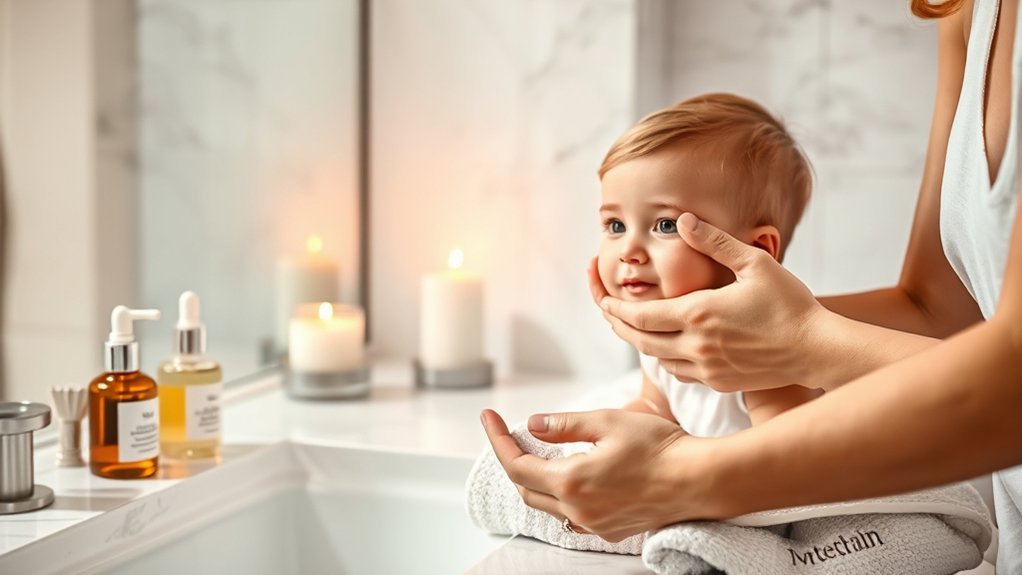
Parenting can leave little time for personal care, but a skin care routine for parents does not need to be long or expensive. In 2023 parental stress data summarized by the U.S. Surgeon General, 33% of parents reported high stress in the previous month, while 48% said their stress felt completely overwhelming on most days. A short routine built around cleansing, moisturizing, and sun protection is easier to maintain and can also model practical self-care for children.
Quick Answer
For most parents, keep skin care to three core steps: gentle cleansing, a moisturizer matched to your skin, and broad-spectrum SPF 30 or higher sun protection. Children generally need an even simpler, age-appropriate routine. Share healthy habits, but tailor products to each person’s age, skin type, sensitivity, acne, or eczema.
Key Takeaways
- Consistency matters more than building a long, complicated routine.
- Children usually need gentle cleansing, moisturizer when needed, and age-appropriate sun protection rather than adult anti-aging products.
- For babies under 6 months, shade and protective clothing should be the main forms of sun protection.
- Fragrance-free products are often a better choice for sensitive or eczema-prone skin.
- Introduce products one at a time so it is easier to identify anything that causes irritation.
The Importance of Self-Care for Parents
Self-care for parents does not have to mean finding large blocks of free time. A short skin care routine can be one manageable habit that protects your skin while giving you a predictable moment to care for yourself.
Skin care should not, however, be presented as a treatment for anxiety, depression, burnout, or overwhelming parental stress. If stress is affecting your sleep, relationships, daily functioning, or ability to cope, skin care can remain part of your routine while you seek appropriate support.
The most sustainable approach is usually the simplest one. Rather than trying to complete a long list of products every morning and night, choose a few steps that address your actual skin needs and fit naturally into your day.
Building a Family-Friendly Skin Care Routine
A family-friendly routine uses the same basic principles for everyone while adjusting products to age and skin condition. Adults, babies, school-age children, and teenagers do not need identical products or treatments.
| Family member | Core skin care | Main caution |
|---|---|---|
| Adults | Gentle cleanser, moisturizer, and sun protection; add treatment products only for specific concerns. | Too many active products at once can increase irritation. |
| Infants under 6 months | Gentle bathing, moisturizer when needed, shade, hats, and protective clothing. | The FDA advises against routine sunscreen use under 6 months and recommends asking a doctor before applying it. |
| Children 6 months and older | Gentle cleansing as needed, moisturizer for dryness, plus sunscreen and protective clothing outdoors. | Avoid turning normal children’s skin care into an adult anti-aging routine. |
| Tweens and teens | Gentle cleanser, moisturizer, and broad-spectrum sunscreen. | American Academy of Dermatology guidance for tweens and teens recommends avoiding unnecessary retinol, vitamin C, and exfoliating acids intended for adult concerns. |
This approach keeps family skin care practical. A cleanser or moisturizer may work for several family members, but you do not need to force everyone to use the same formula simply for convenience.
Skin Care, Confidence, and Self-Esteem
Skin care can help you feel comfortable and cared for, particularly when it reduces dryness, irritation, or another concern that bothers you. It should support confidence rather than make appearance the measure of your worth.
This distinction matters when children are watching. Present cleansing, moisturizing, and sun protection as normal health habits rather than ways to fix an unattractive face or achieve perfect skin.
If acne, eczema, discoloration, or another condition affects someone’s confidence, treating the underlying condition appropriately is more useful than adding cosmetic products at random.
Setting a Positive Example for Children
Children learn a great deal from routines they see repeated at home. Modeling simple, sensible skin care can teach them consistency, sun protection, and respect for their bodies without creating pressure to follow beauty trends.
Daily Habits Matter
Keep the visible habits straightforward. Wash gently, moisturize when your skin needs it, and protect exposed skin from excessive sun rather than constantly changing products or chasing new trends.
Explain what each step does in practical terms. For example, moisturizer helps reduce dryness, while sunscreen helps protect skin from ultraviolet radiation.
Emphasizing Self-Care Importance
Frame skin care as one part of looking after yourself, alongside sleep, nutrition, movement, hygiene, and medical care when needed. Children do not need to believe that healthy skin must be flawless skin.
Avoid criticizing your own appearance while doing your routine. A more helpful message is that bodies need care and different people need different products.
Building Healthy Routines
Start with habits your child can understand and repeat. Depending on age, that may mean washing gently, applying moisturizer to dry areas, wearing a hat outdoors, or learning how to apply sunscreen with supervision.
As children get older, give them more responsibility while continuing to check labels and keep treatments appropriate for their age and skin condition. Social-media popularity is not a good reason to add an adult-strength product.
Integrating Skin Care Into Daily Life
The easiest routine is one that fits around things you already do. Keep morning skin care focused on protection and evening skin care focused on cleansing, any needed treatment, and moisture.
Morning Routine Essentials
Most parents can build a practical morning routine around three steps. You can adjust cleansing and moisturizer texture according to how oily, dry, or sensitive your skin feels.
- Cleanse gently: Wash with a mild cleanser if your skin needs it. Avoid aggressive scrubbing, which can leave skin irritated rather than cleaner.
- Moisturize: Apply a moisturizer that suits your skin type. Oily skin can still need moisture, so look for a lightweight, non-comedogenic formula if clogged pores are a concern.
- Protect from the sun: The American Academy of Dermatology recommends broad-spectrum SPF 30 or higher. Apply it to exposed skin and reapply during prolonged outdoor time, especially after swimming or heavy sweating.
Evening Wind-Down Ritual
Your evening routine can usually be shorter than the original multi-product approach suggests. Cleanse away sunscreen, makeup, oil, and daily buildup, use a treatment if you actually need one, and finish with moisturizer.
The AAD’s recommended order for skin care products is cleansing first, treatment or medication next, followed by moisturizer and/or sunscreen as appropriate.
Toner, exfoliant, serum, face mask, and eye cream are not universal requirements. Add an optional product only when it addresses a real concern and your skin tolerates it.
Family Skin Care Tips
A shared routine works best when the habit is shared but each person’s skin is respected. Keep basic products easy to find, supervise younger children, and avoid making a long routine feel compulsory.
- Keep it simple: Start with cleanser, moisturizer when needed, and sun protection.
- Match products to the person: Dry, oily, acne-prone, sensitive, and eczema-prone skin may need different textures or ingredients.
- Introduce one change at a time: If irritation appears, this makes it easier to identify the likely cause.
- Treat face masks as optional: Adults may enjoy them, but children do not need a weekly face-mask ritual for healthy skin.
Choosing the Right Products for Different Skin Types
Choose products according to skin type and the problem you are trying to solve, not according to whether the user is a mom, dad, boy, or girl. A basic product that your skin tolerates is often more useful than a long list of specialized formulas.
| Skin type or concern | What usually helps | What to watch for |
|---|---|---|
| Oily or acne-prone | Gentle cleanser plus lightweight products labeled non-comedogenic or won’t clog pores. | Harsh washing and repeated scrubbing can increase irritation. |
| Dry | Gentle cleanser and a richer cream or ointment; ingredients such as glycerin or hyaluronic acid can help hold moisture. | Over-cleansing, hot water, and frequent exfoliation can worsen dryness. |
| Sensitive or eczema-prone | Simple, fragrance-free cleanser and moisturizer formulas. | Fragrance, unnecessary active ingredients, and frequent product changes may trigger irritation. |
| Combination | A gentle cleanser and balanced moisturizer, with lighter application on oily areas if needed. | One aggressive product used across the whole face may make dry and oily areas harder to manage. |
Be careful with broad claims that an ingredient is automatically unsafe simply because its name sounds chemical. For example, the FDA says it does not currently have information showing that parabens as used in cosmetics affect human health. For children and sensitive skin, choosing gentle, age-appropriate, fragrance-free products is generally more useful than relying on a long blanket list of ingredients to fear.
If you have reactive skin, test a new product before using it widely. The AAD’s home product-testing guidance recommends applying it to a small test area twice daily for seven to 10 days and watching for redness, itching, or swelling.
Note: If you or your child has persistent eczema, acne, repeated rashes, painful cracking, or a strong reaction to a product, ask a pediatrician or dermatologist before adding more treatments. A skin condition may need diagnosis and targeted treatment rather than a larger routine.
Involving Children in the Skin Care Process
Involving children can teach healthy habits, but participation should match their age. The goal is to teach hygiene, moisture, and sun protection, not to make children responsible for choosing complicated cosmetic treatments.
- Explain the purpose: Use simple language about washing away dirt and sweat, preventing dryness, and protecting skin from the sun.
- Give age-appropriate jobs: A child may help apply moisturizer to dry areas or learn to spread sunscreen evenly with adult supervision.
- Model consistency: Let children see you follow a simple routine instead of constantly changing products.
- Talk about advertising and trends: Explain that expensive packaging, influencer popularity, or an adult anti-aging claim does not mean a product belongs on young skin.
When to Get Professional Help for a Skin Problem
A routine is suitable for normal skin care, but it should not delay medical evaluation of an ongoing skin problem. See a healthcare professional when symptoms persist, repeatedly return, are painful, interfere with sleep, or begin to scar.
Children with significant eczema, unusual rashes, or acne that is leaving scars or dark marks may benefit from a pediatrician or dermatologist. Adults should also seek care for changing growths, persistent sores, severe reactions, or skin problems that do not improve with appropriate basic care.
If a new product causes marked swelling, blistering, widespread rash, or another severe reaction, stop using it and seek appropriate medical advice rather than testing additional products.
Frequently Asked Questions
How Often Should Parents Replace Their Skin Care Products?
There is no universal six-month or one-year replacement schedule. Use the expiration date or manufacturer’s shelf-life guidance, and discard a product if its smell, color, texture, or packaging changes. The FDA explains that cosmetic shelf life varies, while products such as sunscreen are regulated as drugs in the United States.
What Age Can Children Start a Skin Care Routine?
There is no single age when every child needs a facial skin care routine. Skin care begins in infancy with gentle bathing, moisture when needed, and age-appropriate sun protection; later, tweens can learn a simple cleanser, moisturizer, and sunscreen routine rather than using adult anti-aging products.
Are There Specific Ingredients to Avoid for Children’s Skin?
Children generally do best with simple, gentle products rather than a universal blacklist of cosmetic ingredients. Fragrance, harsh physical scrubs, and unnecessary adult active ingredients can irritate sensitive young skin, while sulfate-free or paraben-free labeling alone does not prove that a product is safer.
How Should Skin Care Routines Differ for Moms and Dads?
Skin care does not need to differ simply because someone is a mom or a dad. Product choices should follow skin type, acne, dryness, sensitivity, shaving needs, medications, sun exposure, and personal concerns rather than gender stereotypes.
Conclusion
A useful family skin care routine is simple enough to repeat and flexible enough to fit each person’s skin. Start with gentle cleansing, appropriate moisture, and sun protection, keep children’s routines age-appropriate, and get professional help when a persistent skin problem needs more than basic care.
Sources
- U.S. Surgeon General — Parental Mental Health & Well-Being: Parental stress statistics and self-care context.
- American Academy of Dermatology — A Dermatologist’s Guide to Skincare: Age-appropriate routines for tweens and teens.
- U.S. Food and Drug Administration — Sunscreen: Sunscreen guidance for infants and children.
- American Academy of Dermatology — Skin Care on a Budget: Cleansing, moisturizing, and SPF guidance.
- American Academy of Dermatology — Skin Care Product Order: Recommended sequence for basic skin care.
- American Academy of Dermatology — How to Test Skin Care Products: Home testing guidance for new products.
- U.S. Food and Drug Administration — Parabens in Cosmetics: Current FDA information on parabens.
- U.S. Food and Drug Administration — Cosmetic Shelf Life and Expiration Dating: Product shelf-life and expiration guidance.