Disclosure: As an Amazon Associate, we earn from qualifying purchases. If you click a link on this page and make a purchase, we may receive a small commission at no extra cost to you.
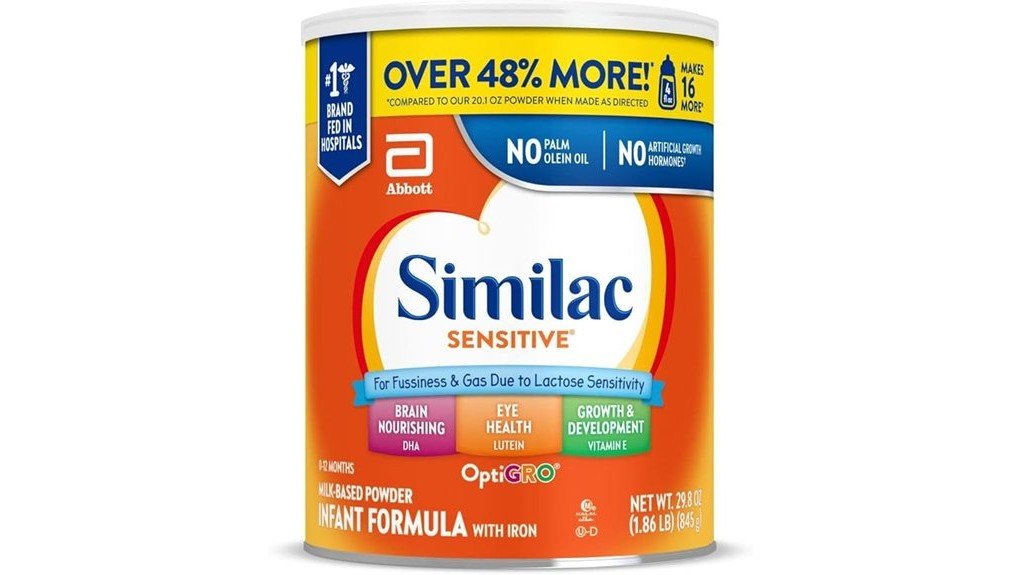
Gas, fussiness, and mild spit-up can make feeding feel stressful, especially when you are trying to decide whether your baby needs a gentler formula or medical help. Similac Sensitive Infant Formula is a milk-based, reduced-lactose formula made for infants who may have feeding discomfort linked to lactose sensitivity. It still provides complete infant nutrition, including nutrients such as DHA and lutein for brain and eye development. This review helps you decide where it fits, who should skip it, and what to ask your pediatrician before switching formulas.
Quick Verdict
Rating: Recommended with caveats
Best For: Babies with gas, fussiness, or mild spit-up that may be related to lactose sensitivity.
Bottom Line: Similac Sensitive can be a practical choice when you want a reduced-lactose formula that still supports complete infant nutrition. It is not the right choice for babies with a true cow’s milk protein allergy, which needs medical guidance and a different formula type.
Key Takeaways
- Similac Sensitive is a milk-based infant formula designed for babies with gas, fussiness, or mild spit-up linked to lactose sensitivity.
- Its reduced-lactose recipe may help ease digestive discomfort for some babies while still supporting complete feeding needs.
- It includes DHA, lutein, and calcium, nutrients commonly associated with brain, eye, and bone development.
- It is not intended for true milk protein allergy, which requires a different feeding plan and medical guidance.
- Parents often choose it for its familiar brand, gentle-use positioning, and ingredients from non-rbST-treated cows.
| Specification | Detail |
|---|---|
| Brand | Similac |
| Product type | Milk-based infant formula |
| Main use | Gas, fussiness, and mild spit-up that may be linked to lactose sensitivity |
| Lactose profile | Reduced-lactose formula |
| Nutrition support | Complete infant nutrition |
| Key nutrients mentioned | DHA, lutein, and calcium |
| Milk source note | Made with ingredients from non-rbST-treated cows, based on the article information |
| Not for | Babies with true milk protein allergy unless a clinician advises otherwise |
| Safety note | Follow the label exactly and ask a pediatric clinician before changing feeding plans. |
What Similac Sensitive Is For
Similac Sensitive Infant Formula is designed for babies who experience fussiness, gas, or mild spit-up that may be associated with lactose sensitivity. It is not a specialty allergy formula, and that difference matters when you are trying to choose the safest option for your baby.
It is a milk-based option for infant nutrition, intended for families seeking a practical response to digestive discomfort without removing milk-based nutrition completely. For some babies, a reduced-lactose formula may be easier to tolerate than a standard milk-based formula.
In cases where lactose intolerance is suspected, this formula may offer a structured alternative while still providing complete feeding support. Its role is not to treat disease, but to help meet nutritional needs with calm, evidence-based care, supporting caregivers who value informed choices and greater feeding confidence.
Before You Buy: Do not use this as a solution for a suspected cow’s milk protein allergy without medical guidance. Allergy symptoms and lactose sensitivity can overlap, but they are not the same feeding issue.
What Is Similac Sensitive Infant Formula?
Similac Sensitive Infant Formula is a reduced-lactose, milk-based formula made for infants who may struggle with gas, fussiness, or mild spit-up after feeding. It is positioned as a gentle option for babies who still need complete infant nutrition but may not tolerate a standard lactose level well.
The formula includes nutrients such as DHA and lutein, which are commonly included in infant formulas to support brain and eye development. It also includes calcium, an important mineral for growing bones.
The main value is balance. You get a formula made for digestive comfort without moving straight to a hypoallergenic or extensively hydrolyzed formula, which may not be necessary for every baby.
Benefits of Similac Sensitive for Gas and Fussiness
For infants whose discomfort appears linked to lactose sensitivity, this milk-based formula may help reduce gas, fussiness, and occasional mild spit-up while still providing complete nutrition. This can be useful when your baby seems uncomfortable after feeds but does not show signs that clearly point to a milk protein allergy.
In a formula comparison, its lactose-reduced profile may be preferable for families observing lactose intolerance signs such as bloating, crying after feeds, or frequent passing of gas. These symptoms can have several causes, so it is best to discuss ongoing problems with your pediatrician.
Clinical experience suggests that reducing fermentable lactose can ease digestive strain for some babies and support calmer feeding. The result may be more predictable tolerance, which can give caregivers more confidence and less constant trial-and-error.
It is not intended for true milk protein allergy, which requires different management. If your baby has blood in stool, rash, severe vomiting, poor weight gain, breathing symptoms, or persistent distress, you should seek professional guidance instead of simply switching formulas on your own.
Key Nutrients in Similac Sensitive
Among its key nutrients, this formula includes DHA and lutein, both associated with brain and eye development, while also providing complete infant nutrition in a milk-based composition. These nutrients are selected to support infant development during a period of fast growth and change.
The formula also offers balanced minerals, including calcium, to aid skeletal formation and overall nutritional adequacy. For parents, this means the formula is not only focused on comfort. It is also designed to support growth needs during the first year.
Its milk-based profile is designed for infants needing a gentler option without sacrificing completeness. In a practical sense, the nutrient blend reflects a careful approach to feeding, helping families support nourishment with confidence, autonomy, and peace of mind.
Who Should Use Similac Sensitive Formula
Similac Sensitive Formula is typically used for infants who show signs of fussiness, gas, or mild spit-up that may be related to lactose sensitivity. It may be considered when caregivers suspect lactose intolerance, though a clinician should confirm the cause before changing feeding plans.
The formula can support infants who need a gentle milk-based option without moving immediately to formula alternatives. Its nutrient profile is designed to preserve complete nutrition while addressing digestive discomfort.
The formula can support infants who need a gentle milk-based option without moving to alternatives too quickly.
For families seeking more feeding freedom, it offers a practical, evidence-based choice when standard formula appears to cause avoidable distress. It is best used as part of a careful feeding plan, especially if symptoms are frequent or intense.
Who Should Buy It?
Best For
- Parents who suspect gas or fussiness may be tied to lactose sensitivity.
- Babies who need a milk-based formula with complete infant nutrition.
- Caregivers who want a reduced-lactose option before considering more specialized formulas.
Skip If
- Your baby has a diagnosed or suspected cow’s milk protein allergy.
- Your baby has severe vomiting, blood in stool, poor weight gain, or ongoing distress.
- You need a hypoallergenic formula recommended by a pediatric clinician.
Baby Safety Notes
Because this is an infant formula, safety matters more than convenience. Always follow the product label for mixing ratios, water amount, storage, and use time. Small changes in powder or water can affect nutrition and feeding safety.
You should also talk with a pediatric clinician before switching formulas if symptoms are ongoing, severe, or new. Gas and fussiness are common, but they can also come from feeding volume, bottle flow, swallowing air, reflux, allergy, illness, or normal infant digestion.
Do not use formula past its expiration date. Once opened, follow the label’s storage timeline and keep the container sealed in a cool, dry place.
Pro Tip: Track feeding times, ounces, spit-up, stool changes, and fussiness for several days before and after a formula change. Clear notes make it easier for your pediatrician to spot patterns.
How to Use It Correctly
Preparation should start with clean hands, a clean bottle, and the exact directions on the formula container. Add water first, then powder, unless the label says otherwise. This helps keep the formula ratio accurate.
Mix gently until the powder is fully dissolved. Shaking too hard can add extra bubbles, which may make some babies swallow more air during feeding. If your baby is already gassy, a slow-flow nipple and burping breaks may also help.
Prepared formula should be used within the safe time window stated on the label. If your baby does not finish a bottle, follow label guidance for discarding leftovers, since bacteria can grow after feeding begins.
How It Performs in Real Use
For Daily Feeding
For everyday bottle feeding, Similac Sensitive gives parents a reduced-lactose option without removing milk-based nutrition from the routine. This can be useful if standard formula seems to trigger gas or fussiness but your baby still does well with milk-based formulas overall.
For Gassy Evenings
Some babies become fussier in the evening, which can make parents suspect a feeding issue. A reduced-lactose formula may help some infants, but bottle technique, feeding volume, burping, and normal evening fussiness should also be considered.
For Mild Spit-Up
The article positions Similac Sensitive for mild spit-up linked to lactose sensitivity. If spit-up is forceful, frequent, painful, or paired with poor weight gain, do not rely on formula choice alone. Medical guidance is the safer next step.
For Combination Feeding
Similac Sensitive may be used alongside breastfeeding when a clinician agrees it fits your baby’s needs. Combination feeding should be planned carefully so your baby gets enough total intake and your breastfeeding routine is protected when that is your goal.
Why Parents Trust Similac Sensitive
Trust often comes from a combination of nutritional adequacy, manufacturing standards, and consistency in use. Similac Sensitive earns confidence through its complete nutrition, hospital use history, and clear formulation choices, including DHA, lutein, and no palm olein oil.
Parent experiences frequently note steadier feeding patterns and less discomfort, which supports reassurance without promising universal results. In formula comparisons, its lactose-sensitive design and quality controls stand out.
The absence of artificial growth hormones and the use of ingredients from non-rbST-treated cows further strengthen trust. For families seeking informed, independent-feeling choices, such details can feel liberating and practical.
Pros and Cons
Pros
- Reduced-lactose design may help babies with gas or fussiness linked to lactose sensitivity.
- Milk-based formula still supports complete infant nutrition.
- Includes DHA and lutein, nutrients commonly linked with brain and eye development.
- Includes calcium for growth and bone development support.
- Useful option before moving to more specialized formula types, when medically appropriate.
Cons
- Not suitable for true cow’s milk protein allergy unless a clinician advises it.
- May not solve fussiness if the cause is reflux, bottle flow, overfeeding, or normal digestion.
- Requires exact mixing, safe storage, and careful symptom tracking.
Is It Worth the Price?
Similac Sensitive is worth considering if you need a reduced-lactose infant formula from a well-known brand and your baby’s symptoms seem tied to lactose sensitivity. Its value comes from combining digestive-comfort positioning with complete infant nutrition.
It may be a smart buy for everyday use when standard formula appears to cause avoidable gas or fussiness. The main limitation is that it is not a fix for every feeding issue, and it should not replace medical guidance when symptoms are serious or persistent.
Before you buy, compare the package size, seller, and current product details. Formula availability and package formats can vary, so it is wise to check the exact listing before ordering.
How It Compares to Alternatives
Compared with a standard milk-based infant formula, Similac Sensitive focuses more on reduced lactose for babies with possible sensitivity. Compared with hypoallergenic formulas, it is less specialized because it is not designed for true milk protein allergy.
If your baby mainly has gas and fussiness that may be related to lactose sensitivity, Similac Sensitive makes sense to discuss with your pediatrician. If allergy symptoms are present, a clinician may recommend a different formula category.
Frequently Asked Questions
How do I mix Similac Sensitive correctly?
Wash your hands, use a clean bottle, add water first, then add powder using the exact ratio on the label. Gentle mixing, such as swirling, can help reduce clumps and extra bubbles.
What age range is Similac Sensitive suitable for?
Similac Sensitive is generally used for infants from birth through 12 months, following pediatric feeding guidance. For older infants or babies with special needs, ask a clinician before choosing any formula.
Can Similac Sensitive be used alongside breastfeeding?
Yes, it may be used with breastfeeding when clinically appropriate. A pediatric clinician can help you plan volumes, timing, and tolerance checks so your baby gets enough nutrition.
Is Similac Sensitive good for milk protein allergy?
No, this article positions it for lactose sensitivity, not true milk protein allergy. If allergy is suspected, ask your pediatrician about the right formula type before switching.
How should unopened Similac Sensitive formula be stored?
Store unopened formula in a cool, dry place away from heat and moisture. Keep the container sealed until use to help preserve quality.
What is the shelf life of Similac Sensitive formula?
Use the printed expiration date on the container as your guide. Once opened, follow the label for how long the powder should be used and how it should be stored.
How quickly can parents notice a difference?
Some babies may seem more comfortable after a formula change, while others need more time or a different approach. Track symptoms and speak with your pediatrician if discomfort continues.
Who should skip Similac Sensitive?
Skip it as a self-directed fix if your baby has severe symptoms, poor weight gain, blood in stool, or a suspected milk protein allergy. Those signs need pediatric guidance.
The Bottom Line
Similac Sensitive Infant Formula is best for babies with mild lactose sensitivity signs, such as gas, fussiness, or mild spit-up, when a clinician agrees a reduced-lactose milk-based formula is appropriate. Its main strength is that it supports digestive comfort while still offering complete infant nutrition with nutrients such as DHA and lutein.
Skip it if your baby may have a true milk protein allergy or more serious feeding symptoms. For the right baby, it remains a practical and reassuring option, but it should be used with careful label-following and professional guidance when needed.

