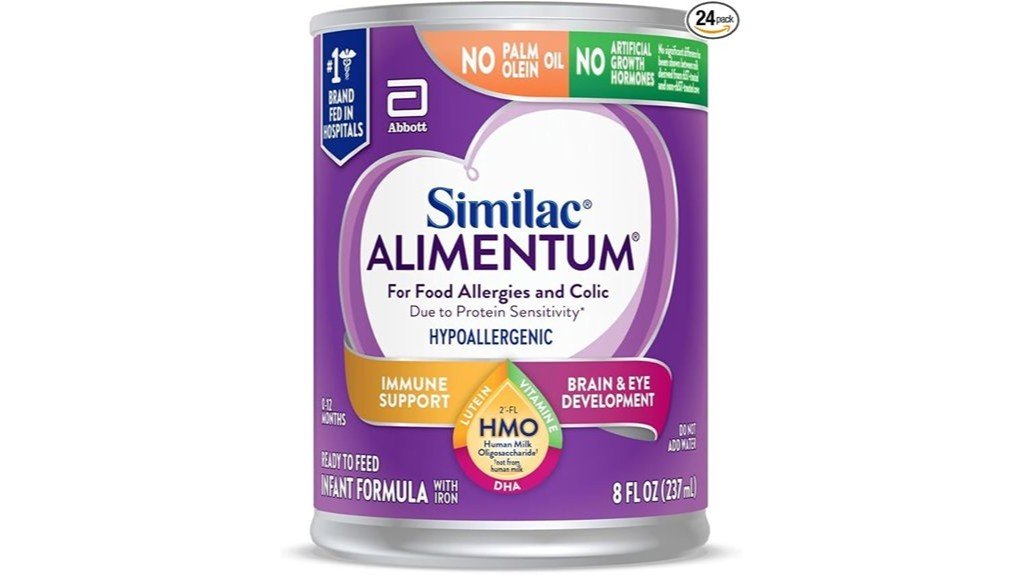
Similac Alimentum is an extensively hydrolyzed, hypoallergenic infant formula designed for babies with suspected protein sensitivity. In one parent’s experience, it was associated with a notable reduction in colic symptoms within the first week. The ready-to-feed option improved nighttime convenience, though taste and texture were initially difficult. Questions remain, however, about long-term use, overall cost, and whether the added immune-support ingredients justify the expense.
Key Takeaways
- Similac Alimentum is a hypoallergenic formula designed for babies with cow’s milk protein sensitivity or food allergies.
- Its extensively hydrolyzed protein may help reduce colic, gas, and crying linked to protein intolerance.
- Some parents notice improvement within 24 hours, while others see gradual changes over the first week.
- The ready-to-feed cans are convenient for nighttime and travel, but the taste and thinner texture may take adjustment.
- It is typically more expensive than standard formula, though bulk buying and rewards programs may help lower costs.
What Similac Alimentum Is
Similac Alimentum with 2′-FL HMO is a hypoallergenic infant formula designed for infants with cow’s milk protein sensitivity, food allergies, or colic related to protein intolerance.
It uses extensively hydrolyzed milk protein, reducing exposure to intact allergens and offering hypoallergenic benefits for formula selection under clinical guidance.
The inclusion of 2′-FL HMO provides immune support, aligning with evidence that human milk oligosaccharides may help nourish developing defenses.
This formulation is available in ready-to-feed cans and is intended for infants needing a specialized nutritional option that prioritizes tolerance, safety, and individualized feeding autonomy.
How Alimentum Helps With Colic
Alimentum is formulated to help reduce colic symptoms associated with protein sensitivity by providing extensively hydrolyzed milk protein that is less likely to trigger gastrointestinal distress. Evidence suggests fewer colic triggers when intact cow’s milk proteins are removed.
| Factor | Effect | Note |
|---|---|---|
| Protein sensitivity | Reduced exposure | Hydrolyzed protein |
| GI irritation | Lower likelihood | Less antigenic |
| Crying episodes | May decrease | Clinical data |
| Feeding tolerance | Often improves | Individual varies |
This supports more autonomous caregiving, since distress may lessen without guesswork. Soothing techniques remain useful, but Alimentum addresses a biologic driver rather than masking symptoms alone.
What the First Week Is Like
During the first week, caregivers may notice a gradual reduction in crying and other colic symptoms related to protein sensitivity, with some infants showing improvement within 24 hours. Clinical data indicates that 5 of 6 infants experienced less excessive crying when Alimentum was started early.
Observation should remain structured, with attention to infant reactions across feeds, stools, and sleep. Adjustment tips include introducing the formula consistently and documenting changes daily to identify patterns without speculation.
The early period may offer practical relief from distress, supporting more autonomy for families seeking evidence-based feeding options. Improvement is not universal, but trends often become clearer quickly.
Taste, Texture, and Feeding Convenience
Although taste and texture can influence acceptance, this formula’s hydrolyzed protein profile gives it a distinct flavor and thinner consistency that some infants tolerate well while others may need an adjustment period.
Clinically, palatability is secondary to nutrition benefits and allergen reduction. Preparation tips can improve feeding efficiency and reduce waste.
- Shake thoroughly before each use.
- Serve at recommended temperature.
- Use clean bottles and nipples.
- Observe intake and tolerance closely.
Its ready-to-feed format also simplifies nighttime feeds and travel, supporting caregivers seeking practical, low-friction feeding routines without compromising nutritional specificity or clinical intent.
Cost, SNAP Eligibility, and Rewards
Cost remains a practical consideration, as Similac Alimentum is a specialized hypoallergenic formula sold in ready-to-feed 8-fl-oz cans, typically in packs of 24. A cost analysis should account for higher unit price, storage burden, and potential waste reduction from ready-to-feed dosing.
| Factor | Note | Impact |
|---|---|---|
| Pack size | 24 cans | Bulk purchase |
| Formula type | Hypoallergenic | Premium pricing |
| Format | Ready-to-feed | Convenience |
| SNAP | Select stores only | Access |
| Rewards | MySimilac QR | Savings |
A rewards overview indicates scan-based points and occasional bonus offers. SNAP eligibility can improve access, but availability depends on retailer policy and local inventory.
Frequently Asked Questions
Is Similac Alimentum Suitable for Babies With Lactose Intolerance?
No, Similac Alimentum is generally not intended for lactose intolerance; it is a hypoallergenic formula for cow’s milk protein sensitivity. For lactose intolerance, clinicians often recommend formula alternatives specifically labeled lactose-free after evaluation.
Does Alimentum Contain DHA or Other Brain-Supporting Nutrients?
Yes—Alimentum includes DHA, an omega-3 linked to brain development, though amounts vary by product. Its broken-down protein may aid nutrient absorption. Like a well-tuned instrument, it supports growth with clinical, targeted nutrition.
Can Alimentum Be Used for Premature Babies?
Alimentum may be used for some premature infants only under medical supervision; prematurity often requires specialized premature nutrition. Because feeding challenges and tolerance vary, a neonatologist should determine suitability, fortification needs, and monitoring.
Are There Any Side Effects When Switching to Alimentum?
Yes—when switching formula, some infants show temporary baby digestion changes such as looser stools, gas, or reduced appetite; however, evidence suggests Alimentum is usually well tolerated, and symptoms often improve as protein sensitivity settles.
How Should Opened Alimentum Cans Be Stored Safely?
Opened Alimentum cans should be covered tightly, refrigerated promptly, and used within 48 hours to preserve proper storage and can longevity. If formula sits at room temperature too long, it should be discarded.
Conclusion
In the broader landscape of infant feeding, Similac Alimentum appears as a bridge over a turbulent river: its extensively hydrolyzed protein may reduce antigenic burden, and in some infants, crying and colic lessen within days. Early resistance to taste or texture is common, yet ready-to-feed formats improve practicality during nocturnal care. With added 2′-FL HMO, it also offers immune-supportive features. For families facing sensitivity-related distress, its value is often measured in calm restored.

