Disclosure: As an Amazon Associate, we earn from qualifying purchases. If you buy through links on this page, we may earn a small commission at no extra cost to you.
By Editorial Team | Updated October 8, 2026
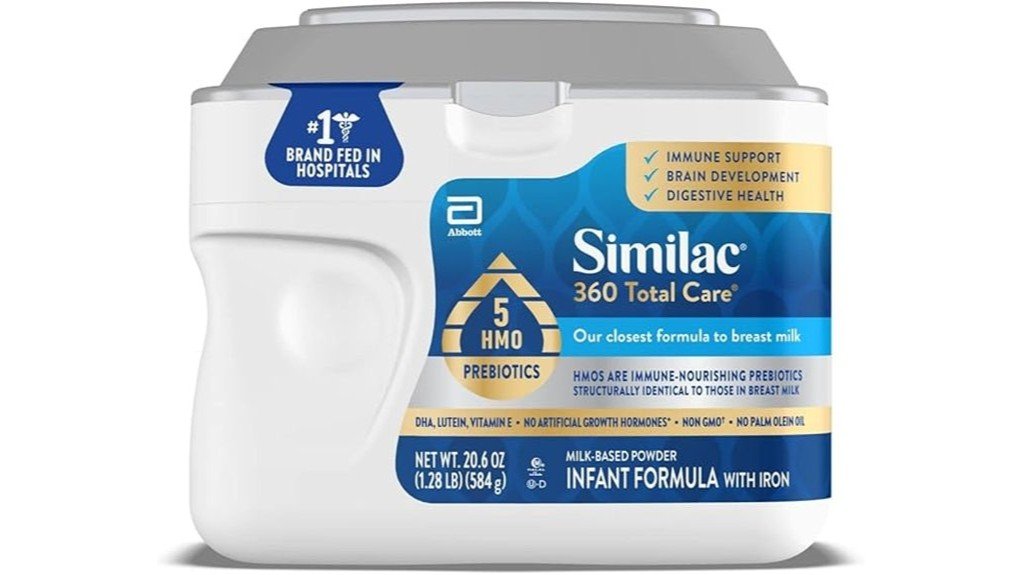
Similac 360 Total Care is a milk-based, iron-fortified infant formula with five human milk oligosaccharides (HMOs). These prebiotics are designed to support beneficial gut bacteria. The formula also provides DHA, lutein, vitamin E, and complete nutrition for healthy term infants.
Its main attraction is a five-HMO blend that more closely reflects certain prebiotics found in human milk. However, a premium ingredient list does not guarantee better results for every baby. This review examines the formula’s ingredients, research, digestive tolerance, safety, and overall value.
Quick Verdict: 8.5/10
Editorial feature-and-value assessment, not a clinical or hands-on test rating.
20 Cal/fl oz
Iron-Fortified
DHA + Lutein
Non-GMO Ingredients
Best for: Families seeking a standard milk-based formula with a broader HMO blend.
Skip if: Your baby needs a hypoallergenic formula or has galactosemia.
Bottom line: A strong option for families who value its prebiotic blend, provided their baby tolerates it well and the ongoing cost fits their budget.
Confirm the package size, seller, expiration date, and delivery details.
Before You Buy
- Check the ingredients: The regular formula contains milk and soy ingredients.
- Know the difference: Regular 360 Total Care is not the same product as Sensitive or Gentle Comfort.
- Consider powder safety: Powdered formula is not sterile. Extra precautions apply to premature babies, young infants, and babies with weakened immune systems.
- Compare the ongoing cost: Calculate value per prepared fluid ounce, not just container size.
Article Contents
Key Takeaways
- Similac 360 Total Care is a nutritionally complete, iron-fortified infant formula intended as an alternative or supplement to breastfeeding.
- Its five HMOs are structurally identical to specific prebiotics found in human milk, but the formula is not equivalent to breast milk.
- Published research supports normal growth and shows differences in some stool characteristics compared with a formula without the five-HMO blend.
- The powder contains lactose, cow’s milk proteins, and soy ingredients. It is not hypoallergenic.
- The manufacturer lists non-GMO ingredients and identifies the formula as halal and kosher.
- Your baby’s growth, feeding comfort, medical needs, and your budget matter more than any single ingredient claim.
What Is Similac 360 Total Care Formula?
Similac 360 Total Care is a standard milk-based infant formula made by Abbott Nutrition. It supplies complete infant nutrition and contains iron, DHA, lutein, vitamin E, and five HMO prebiotics.
The 20.6-ounce powder container is one retail option. Abbott also lists larger powder containers and ready-to-feed liquid formats. It is intended for formula feeding or supplementing breast milk.
Similac 360 Total Care Specifications
| Brand | Similac (Abbott Nutrition) |
|---|---|
| Product | 360 Total Care Infant Formula with Iron |
| Reviewed Format | Powder, 20.6 oz (584 g) |
| Energy | 20 calories per prepared fluid ounce |
| Prebiotics | Five HMOs |
| Main Carbohydrate | Lactose |
| Allergens | Contains milk and soy ingredients |
| Powder Mixing Ratio | 1 unpacked level scoop (8.6 g) per 2 fl oz water |
| Approximate Yield | 151 fl oz from a 20.6 oz container, prepared as directed |
Specifications are based on Abbott’s product information and mixing directions. The container label remains the final reference for the package you purchase.
What’s Included?
The reviewed package contains powdered infant formula in a resealable container, with a measuring scoop for preparation. Feeding bottles, nipples, and sterilizing equipment are separate purchases.
Check the package condition before opening. Do not use formula from damaged packaging or after its expiration date.
Similac 360 Total Care Ingredients and HMO Blend
The five-HMO blend is the formula’s main distinguishing feature. HMOs are special carbohydrates naturally found in breast milk. They act as prebiotics, which help support beneficial gut bacteria.
Abbott produces HMOs for the formula that match the structures of five specific HMOs found in human milk. They are not extracted from breast milk.
Which Five HMOs Does It Contain?
- 2′-Fucosyllactose (2′-FL): A well-studied HMO involved in the early gut environment.
- 3-Fucosyllactose (3-FL): Another HMO associated with prebiotic activity.
- Lacto-N-Tetraose (LNT): A carbohydrate that can help support selected beneficial intestinal bacteria.
- 3′-Sialyllactose (3′-SL): A sialylated HMO included in the prebiotic blend.
- 6′-Sialyllactose (6′-SL): Another sialylated HMO found naturally in human milk.
These ingredients do not make formula biologically identical to breast milk. Human milk also contains antibodies, living cells, enzymes, and many other components that cannot be fully reproduced in infant formula.
Other Important Ingredients
The powder uses nonfat milk, lactose, whey protein concentrate, and a blend of vegetable oils. It also includes DHA from algal oil, ARA from fungal oil, lutein, vitamins, and minerals.
Abbott describes the ingredients as non-GMO, meaning they are not genetically engineered. The manufacturer also lists halal and kosher status, with dairy ingredients.
Parents who require a specific dietary certification should confirm the current package labeling. A religious certification does not mean the formula is free from allergens.
Does It Contain Milk or Soy?
Yes. Similac 360 Total Care contains cow’s milk proteins and soy-derived ingredients, including soy oil and soy lecithin.
It is not suitable as a treatment for cow’s milk protein allergy. It should also not be used by infants with galactosemia. Consult your baby’s clinician if an allergy or metabolic condition is suspected.
How Similac 360 Total Care Supports Immunity and Digestion
The formula is designed to support immune and digestive health through complete nutrition and its five-HMO prebiotic blend. Its potential benefits are most closely linked to the gut microbiome, which is the community of microorganisms living in the digestive tract.
Digestive Health
HMOs can help support beneficial intestinal bacteria. Clinical research also suggests that some HMO-supplemented formulas produce softer stool patterns than comparable formulas without those HMOs.
This does not mean the formula prevents constipation, eliminates gas, or works equally well for every infant. Feeding tolerance remains individual.
Immune Support
Abbott markets the formula for immune support. Its prebiotic blend may help create a gut environment that supports normal immune development.
However, the ingredient claims should not be interpreted as proof that this formula prevents infections or replaces the immune components naturally present in breast milk.
Brain and Eye Development
DHA and lutein are nutrients commonly included in infant formulas to support normal brain and eye development. Similac 360 Total Care contains both, along with other essential nutrients.
Meeting a baby’s nutritional needs is the central benefit. The formula should not be expected to guarantee superior cognitive or visual outcomes compared with every other nutritionally complete infant formula.
What the Similac 360 Total Care Study Found
Published clinical research supports the safety and nutritional use of an infant formula containing the same five types of HMOs. However, the findings need careful interpretation.
A 2022 randomized, double-blind study examined healthy term infants in three feeding groups:
- 129 infants assigned to a standard milk-based control formula.
- 130 infants assigned to an experimental formula containing five HMOs.
- 104 infants in a human-milk-fed reference group.
That represents 363 infants across the three groups. The original article’s reference to 607 infants could not be matched to this published study.
Growth and Tolerance Results
Researchers found no significant difference in weight gain among the three groups during the main growth assessment. This supports the nutritional adequacy of the experimental formula for the healthy term infants studied.
The five-HMO group also had more soft, frequent, yellow stools than the control formula group. Some stool characteristics were closer to those observed in the human-milk-fed group.
What Are the Study’s Limitations?
The trial studied a specific experimental five-HMO formula. Its results do not prove that every product containing these ingredients produces identical effects.
The study was funded by Abbott Nutrition, and the researchers were employees of the sponsor. This connection is worth considering when evaluating the evidence.
Most importantly, the research does not establish that Similac 360 Total Care is superior for every infant or that it treats digestive disorders.
You can read the published five-HMO clinical trial for its methods, results, and limitations.
Who Should Consider Similac 360 Total Care?
Similac 360 Total Care can be a reasonable option for healthy term infants who need standard milk-based formula. It may appeal to caregivers who want complete nutrition with a broader HMO prebiotic blend.
Best Uses
- Exclusive formula feeding: For families using infant formula as their baby’s primary milk source.
- Combination feeding: For supplementing breast milk when needed.
- Routine home feeding: Powder can be practical when you have a safe preparation and cleaning routine.
- Travel and convenience: The ready-to-feed version may be useful when preparing powdered formula is inconvenient.
Who Should Look Elsewhere?
This standard formula may not be appropriate for infants who need specialized medical nutrition.
- Confirmed cow’s milk protein allergy: Ask about a suitable hypoallergenic formula.
- Galactosemia: Do not use this formula.
- Prematurity or weakened immunity: Speak with your baby’s clinician about sterile ready-to-feed formula and safe preparation.
- Persistent feeding problems: Frequent vomiting, poor weight gain, blood in the stool, or dehydration symptoms require medical evaluation.
For healthy infants tolerating a standard formula well, switching solely for additional HMOs may offer uncertain practical benefits.
Similac 360 Total Care Pros and Cons
The formula offers a strong nutritional profile, but its advantages must be weighed against practical limitations.
Pros
- Five HMO prebiotics with published research on growth and stool patterns.
- Complete, iron-fortified nutrition with DHA and lutein.
- Powder and ready-to-feed formats for different routines.
- Clear manufacturer mixing instructions and several container sizes.
Cons
- Contains milk and soy, so it is not hypoallergenic.
- Powder is not sterile and needs careful handling.
- Premium positioning may cost more than simpler formulas.
- Individual gas, stools, and tolerance can vary.
How to Prepare Similac 360 Total Care Safely
Correct preparation matters more than any formula’s marketing claims. Always follow the directions on your specific container and any special instructions from your baby’s healthcare professional.
Powder Preparation Steps
- Wash your hands with soap and water. Clean your preparation surface and feeding equipment.
- Use water from a safe source. Ask your baby’s clinician if extra precautions or boiled water are needed.
- Measure the water first using a clean bottle.
- Add one unpacked level scoop (8.6 g) of regular Similac 360 Total Care powder for every 2 fl oz of water, according to Abbott’s directions.
- Close the bottle and shake thoroughly to mix.
- Check the feeding temperature if the formula has been warmed or prepared with hot water.
- Feed your baby using a clean nipple. Discard any formula remaining after the feeding.
Do not add extra water to stretch the formula, and do not pack the measuring scoop. Both practices can change the intended nutrient concentration.
Important safety warning: Powdered formula is not sterile. For babies younger than 2 months, born prematurely, or with weakened immune systems, the CDC recommends extra preparation precautions. These include using very hot water, about 158°F (70°C), when preparing powder. Consult your baby’s clinician about the safest feeding option. Cool prepared formula before feeding. Never use a microwave to warm a bottle.
See the CDC infant formula preparation and storage guidance for detailed instructions.
How Long Can Prepared Formula Be Stored?
- At room temperature: Use within 2 hours after preparation if feeding has not started.
- Once feeding begins: Finish within 1 hour and discard leftovers.
- Unfed formula refrigerated promptly: Use within 24 hours.
- Opened powder container: Use within 1 month and keep tightly closed in a cool, dry place.
Ready-to-feed liquids have different storage directions after opening. Follow the relevant bottle label rather than applying powder-storage rules to liquid formula.
What Parents Report About Similac 360 Total Care
Parent experiences are mixed, as is common with infant formulas. Online discussions include both families who use Similac 360 Total Care without major difficulties and those who report gas, changes in stool patterns, or concerns about cost.
Commonly Mentioned Benefits
- Some babies tolerate the formula well without significant feeding problems.
- Families sometimes continue using it after their baby received the ready-to-feed version in a hospital.
- Having both powder and ready-to-feed options can simplify different feeding situations.
Common Watch-Outs
- Some parents associate feeding with gas or digestive discomfort.
- Changes in stools can cause concern, especially during the newborn period.
- Some families consider switching to a less expensive standard formula.
These are individual experiences, not controlled research findings. They cannot establish that the formula caused or prevented a particular symptom.
If your baby is growing well, feeding comfortably, and producing appropriate wet diapers, there may be little reason to change formula. Discuss persistent symptoms with your pediatrician rather than switching repeatedly without a plan.
Similac 360 Total Care vs. Other Infant Formulas
The best alternative depends on the reason you are considering a change. Standard formulas, reduced-lactose products, partially hydrolyzed formulas, and hypoallergenic formulas serve different needs.
| Formula | Main Feature | Who May Consider It |
|---|---|---|
| Similac 360 Total Care | Standard milk-based formula with five HMOs | Healthy term infants needing a standard formula |
| Similac 360 Total Care Sensitive | Five HMOs with a different carbohydrate profile for lactose sensitivity | Infants whose clinician recommends a sensitive formula |
| Similac 360 Total Care Gentle Comfort | Five HMOs and partially hydrolyzed proteins | Infants who may benefit from easier-to-digest proteins |
| Similac Advance | Standard milk-based, iron-fortified formula with DHA and prebiotics | Families comparing standard formula options |
| Similac Alimentum | Hypoallergenic, extensively hydrolyzed casein formula | Infants needing specialized feeding for milk protein sensitivity or allergy under medical guidance |
360 Total Care vs. Sensitive
The regular formula uses lactose as its main carbohydrate. The Sensitive version has a different carbohydrate formulation and is marketed for lactose sensitivity.
Both contain milk proteins and are not hypoallergenic. Gas alone does not establish lactose intolerance, so ask your baby’s clinician before switching for that reason.
360 Total Care vs. Gentle Comfort
Gentle Comfort uses partially hydrolyzed proteins, meaning some proteins have been broken into smaller pieces. It also includes five HMOs.
It may be worth discussing if your baby has ongoing feeding discomfort. However, partially hydrolyzed formula is not an appropriate substitute for a prescribed hypoallergenic formula in confirmed cow’s milk protein allergy.
360 Total Care vs. Similac Advance
Both products provide complete, iron-fortified nutrition for infants. The main distinction is the 360 Total Care five-HMO blend.
Similac Advance may be worth comparing if your baby already does well on standard formula and cost matters. Additional HMOs alone do not guarantee a better outcome.
360 Total Care vs. Alimentum
Alimentum is designed for more specific feeding needs involving milk protein sensitivity or allergies. Its extensively hydrolyzed casein protein is different from the intact milk proteins in regular 360 Total Care.
If a clinician suspects a cow’s milk protein allergy, choosing an appropriate specialty formula is more important than the number of HMOs.
Is Similac 360 Total Care Worth the Price?
Similac 360 Total Care may justify its premium positioning for families who want five HMO prebiotics and a formula their baby tolerates well. But the extra ingredients do not automatically make it the best value.
How to Compare Formula Value
Compare the cost per prepared fluid ounce rather than the shelf price or container weight alone. Abbott states that a 20.6-ounce container yields approximately 151 fluid ounces when prepared as directed.
The final cost depends on the retailer, package size, discounts, and whether you use powder or ready-to-feed bottles.
When the Upgrade Makes Sense
The formula may appeal to you if your baby tolerates it comfortably, you value its specific prebiotic blend, and the ongoing cost is manageable.
If your baby already thrives on a different standard infant formula, there is not enough evidence to promise a meaningful benefit simply from switching to a more expensive product.
How We Evaluated Similac 360 Total Care
We reviewed Abbott’s published ingredient lists, formula specifications, preparation instructions, and feeding precautions. We also examined published research, CDC and FDA guidance, and publicly available parent discussions.
Our editorial rating considers ingredient transparency, available evidence, feeding flexibility, safety limitations, and value. We did not conduct hands-on feeding tests, laboratory analysis, or independent clinical testing.
We do not treat individual parent reports as proof of medical effectiveness. Formula choice should account for your baby’s growth, tolerance, and any guidance from a qualified healthcare professional.
Frequently Asked Questions
Is Similac 360 Total Care suitable for newborns?
Yes. Similac 360 Total Care is a nutritionally complete infant formula that may be used for healthy term newborns. Because powdered formula is not sterile, extra precautions are necessary for babies younger than 2 months, premature babies, and those with weakened immune systems. Ask your pediatrician whether powder or ready-to-feed formula is the safer choice.
How do I prepare Similac 360 Total Care correctly?
Measure 2 fluid ounces of safe water first, then add one unpacked level scoop of regular Similac 360 Total Care powder. Shake in a clean bottle until mixed. Follow your container label, since other Similac products may have different scoop weights. Use prepared formula promptly, refrigerate unfed formula within the allowed time, and discard feeding leftovers.
Can Similac 360 Total Care be mixed with breast milk?
Yes, prepared infant formula and expressed breast milk can be combined when handled safely. First prepare powdered formula using the correct amount of water; never use breast milk instead of the required mixing water. You can also feed breast milk and formula separately. Follow safe storage rules and discard any milk left after a feeding.
Does Similac 360 Total Care help with gas or constipation?
It may support digestive health, but it is not a treatment for gas or constipation. Research on five-HMO formula has shown differences in stool characteristics compared with formula without the blend. Individual results vary. If your baby has hard stools, persistent pain, blood in the stool, or poor feeding, contact your pediatrician before changing formulas.
Is Similac 360 Total Care hypoallergenic?
No. Regular Similac 360 Total Care contains cow’s milk proteins and soy ingredients. It is not a hypoallergenic formula and should not be used to manage confirmed cow’s milk protein allergy. Babies who need extensively hydrolyzed or amino-acid-based nutrition require an appropriate formula selected with medical guidance. The five-HMO blend does not remove milk allergens.
Is Similac 360 Total Care available in ready-to-feed form?
Yes. Abbott lists ready-to-feed Similac 360 Total Care in several bottle sizes, including 2, 8, and 32 fluid ounces. Ready-to-feed formula does not require mixing with water and is commercially sterile before opening. It can be useful for travel or when powder preparation is difficult. Follow the specific bottle’s directions for handling and storage.
How long does Similac 360 Total Care last after opening?
Use an opened container of Similac 360 Total Care powder within one month, according to Abbott’s directions. Keep the lid tightly closed and store the powder in a cool, dry place, not the refrigerator. Once mixed, unfed formula can be refrigerated for up to 24 hours. Ready-to-feed bottles have different storage instructions after opening.
Is Similac 360 Total Care better than regular infant formula?
Not necessarily. Its five-HMO blend offers a meaningful ingredient distinction, and research supports normal growth and some digestive differences. However, all suitable infant formulas must meet nutritional requirements. No single formula is best for every baby. If your infant grows well and tolerates a standard formula, the added cost of switching may not be worthwhile.
Where can I buy Similac 360 Total Care?
Similac 360 Total Care is sold through major online retailers, supermarkets, pharmacies, and other baby-formula sellers, although stock varies. Compare package sizes and check the seller and expiration date before purchasing. You should also review any applicable recall information for your specific lot. Choose a trusted retailer and avoid damaged or improperly stored containers.
Conclusion: Is Similac 360 Total Care a Good Choice?
Similac 360 Total Care provides complete, iron-fortified nutrition with five HMO prebiotics, DHA, lutein, and other important nutrients. Published evidence supports the use of a five-HMO formula in healthy term infants, although it does not establish that this product is the best choice for everyone.
For families who want its added prebiotic blend and whose babies tolerate it well, it is a worthwhile formula to consider. For others, a simpler standard formula or a medically appropriate specialty formula may make more sense.
The best feeding choice is one that supports your baby’s growth, comfort, safety, and your family’s practical needs.
Considering Similac 360 Total Care?
Review the exact formula, package size, and seller before deciding.