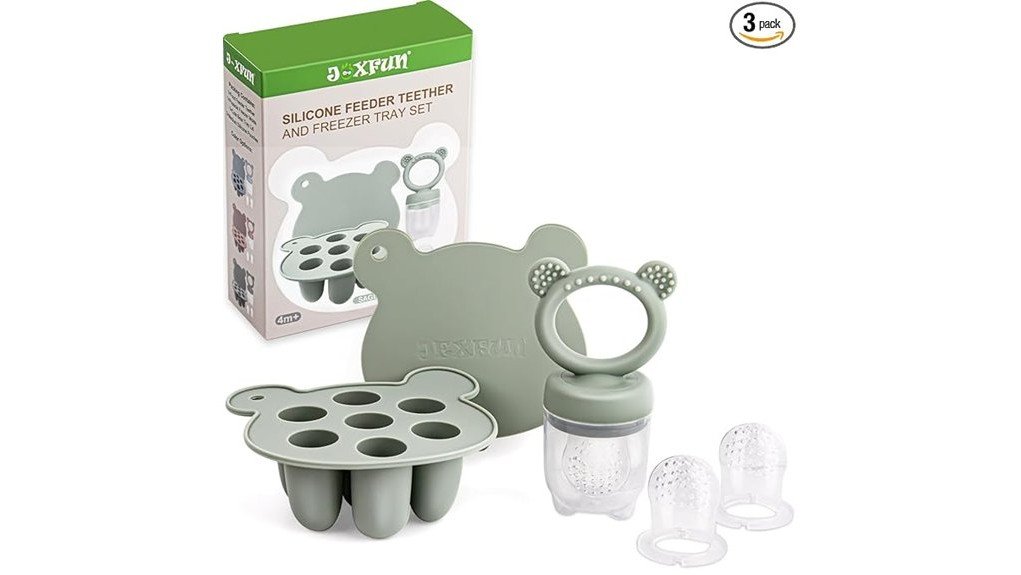
The silicone baby fruit food feeder is often presented as a safer way to introduce solids, with food-grade silicone and small openings designed to reduce choking risk. Its easy-grip handle may help infants practice self-feeding, while the freezer nibble tray adds convenience for caregivers. Cleaning and durability also matter when judging value. Yet whether it truly earns a place in a feeding routine depends on several practical details.
Key Takeaways
- Made from 100% food-grade silicone, it is BPA-free, PVC-free, and phthalate-free for safer infant use.
- Small pouch openings help reduce choking risks while letting babies taste fruit and soft foods.
- The easy-grip handle supports self-feeding and helps infants practice grasp control.
- It is simple to clean with warm soapy water, dishwasher top rack, or sterilization methods.
- The feeder is useful for baby-led weaning and controlled introduction of fruits, purees, and other soft foods.
Is the Silicone Baby Food Feeder Safe?
Yes—when used as intended, the silicone baby food feeder is designed with safety in mind. Its pouch contains small openings that limit larger pieces, reducing choking hazards when appropriately supervised.
Material safety is a central feature: the feeder uses 100% food-grade silicone and is free of BPA, PVC, and phthalates. That composition supports cleaner, lower-risk contact with infant foods.
As with any feeding tool, safety depends on age-appropriate foods, correct assembly, and attentive adult oversight. No device removes all risk, but this design aims to make early feeding more controlled, practical, and less coercive.
How Does the Baby Fruit Feeder Support Self-Feeding?
The baby fruit feeder supports self-feeding by giving infants a controlled way to explore solid foods independently. It encourages baby independence while limiting large bites and allowing repeated practice with self feeding techniques.
| Feature | Effect |
|---|---|
| Silicone pouch | Releasing small portions |
| Easy grip handle | Promoting grasp control |
| Soft texture | Supporting oral exploration |
| Visible food | Increasing engagement |
| Simple refill | Enabling practice |
This structure lets infants manage pace, pressure, and mouth movement with less assistance. Clinical feeding guidance often values such graded exposure, since it can build confidence and motor coordination while preserving caregiver oversight.
Why Is the Freezer Nibble Tray So Useful?
Its value extends beyond the feeder itself because the freezer nibble tray makes advance preparation simple and hygienic. It supports batch portioning of breastmilk, puree, or soft fruit, reducing daily labor and improving freezer benefits for caregivers managing limited time.
Each compartment promotes consistent serving sizes, which can aid predictable thawing and safe feeding. For families pursuing baby-led weaning, the tray adds nibble convenience by enabling ready-to-use frozen portions that align with developmental stages.
The silicone format is durable and practical, while the modular design helps preserve food quality without unnecessary waste or scheduling constraints.
How Do You Clean and Care for the Silicone Feeder?
Cleaning and caring for the silicone feeder is straightforward because the components are designed for repeated sterilization and daily use.
Evidence-based cleaning tips include rinsing immediately after feeding, then washing with warm water and mild soap or placing parts on the top rack of a dishwasher.
The silicone body can also withstand boiling, steaming, or microwave sterilization when needed.
A consistent maintenance routine should include checking the pouch openings for residue and drying all parts fully before storage.
This preserves hygiene, supports safe self-feeding, and reduces unnecessary dependence on disposable feeding tools, aligning care with practical autonomy.
Is This Baby Food Feeder Worth Buying?
Whether this baby food feeder is worth buying depends largely on feeding goals, but the design offers several practical advantages.
It supports baby nutrition by allowing controlled exposure to fruits, purees, and breastmilk without large choking risks. The silicone pouch and freezer tray may suit caregivers seeking flexible feeding tips for teething relief and early self-feeding.
It supports baby nutrition with controlled exposure to fruits, purees, and breastmilk while helping reduce choking risks.
Its BPA-free, PVC-free, and phthalate-free construction adds value for those prioritizing material safety.
It is most useful for families who want a multi-purpose tool that simplifies prep, storage, and gradual solids introduction. For others, it is optional rather than essential.
Frequently Asked Questions
What Age Can Babies Start Using This Feeder?
Babies can start using this feeder around 6 months, when baby weaning typically begins and feeding safety improves with good head control. A clinician would recommend supervision and age-appropriate foods to reduce choking risk.
Can the Feeder Hold Frozen Breastmilk Cubes?
Yes, the feeder can hold frozen breastmilk cubes, provided they fit securely in the pouch. The design supports frozen storage and feeding safety, making it suitable for teething relief and controlled self-feeding.
Does It Come With Different Pouch Sizes?
No different pouch sizes appear included; the package lists one feeder plus two replacement pouches. Like a lock guarding a gate, the pouch material supports feeding safety. Evidence suggests a standardized design, not size variety.
Will the Silicone Stain From Berries or Carrots?
It may stain from berries or carrots, though silicone often resists deep discoloration. Stain prevention improves with prompt rinsing, soaking, and gentle cleaning tips; occasional residue is cosmetic, not a safety concern.
Can You Use It for More Than Fruit and Puree?
Yes; it supports alternative uses beyond fruit and puree, including breastmilk popsicles, teething relief, and small soft foods. Cleaning tips: rinse promptly, then dishwasher, steam, boil, or microwave-safe sterilization.
Conclusion
Overall, the silicone baby fruit food feeder appears to offer a careful balance of safety, convenience, and early feeding support. Its food-grade silicone construction, controlled openings, and easy-grip design suggest practical value for families introducing solids. The freezer nibble tray adds preparation efficiency, while simple cleaning supports routine use. Still, the real test remains in daily handling, infant acceptance, and caregiver consistency. For many parents, the final question is not whether it works, but how well it will endure.

