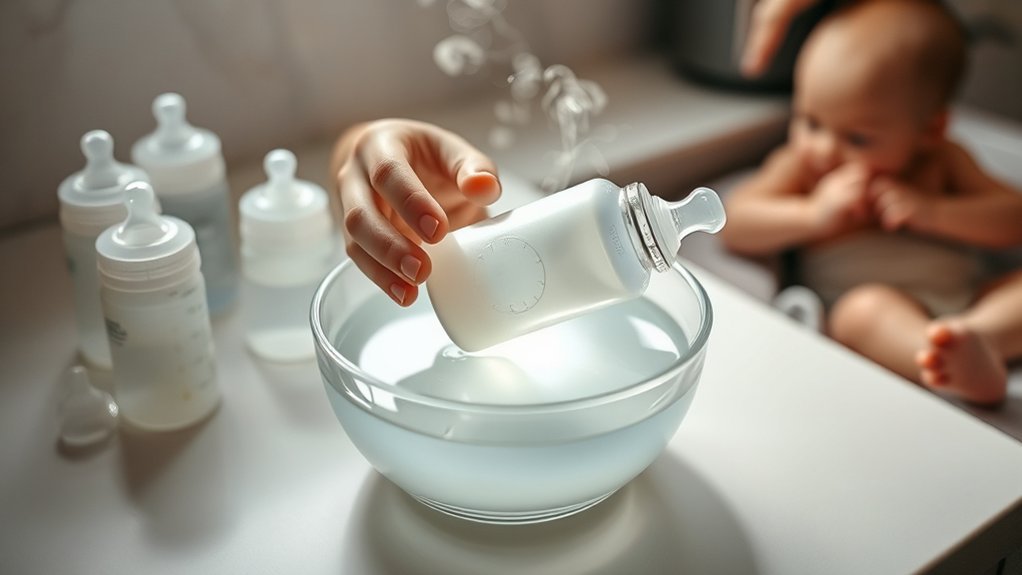
You don’t need to warm baby bottles, but you can if your baby seems more comfortable with milk near body temperature. Warm milk may feel soothing, support relaxed feeding, and match breast milk temperature. If you do warm bottles, use a warm water bath or bottle warmer, then swirl and test a few drops on your wrist. Never use a microwave, since it can heat unevenly and cause burns. There’s more to know about safe feeding choices.
Should You Warm Baby Bottles?
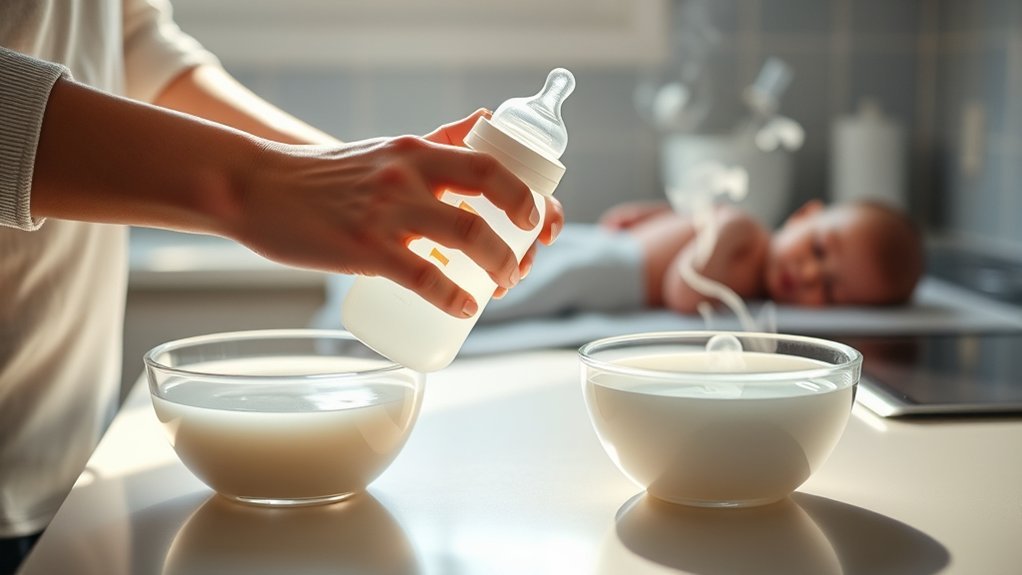
You don’t have to warm baby bottles, but many infants prefer milk that’s close to body temperature because it more closely resembles breast milk and can feel more soothing during feeds.
You can offer a bottle at room temperature or cold if your baby accepts it; health guidance says both are safe. If you choose to warm milk, aim for about 98.6°F (37°C), which matches body temperature.
Bottles can be served room temperature or cold if your baby accepts it; both are safe.
Use safe warming methods such as a warm water bath or running warm water over the bottle. Avoid the microwave, since it can create hot spots and burn your baby’s mouth.
Before feeding your baby, test the temperature by placing a few drops on the inside of your wrist; it should feel comfortably warm, not hot. Additionally, always ensure that the bottles are properly cleaned to maintain hygiene and prevent contamination.
Why Warm Milk May Help Some Babies
Warming milk to about 98°F can make feeds feel more familiar and comforting for some babies because it closely matches the temperature of breast milk. You may notice that warm milk supports a calmer feeding experience, especially when your baby’s milk is at its ideal temperature. Additionally, excessive crying episodes due to gas discomfort may be alleviated when the baby is fed warm milk.
| Benefit | What You May See | Why It Matters |
|---|---|---|
| Comfort | More relaxed feeding | Mimics breast milk |
| Digestion | Less stomach upset | Less effort in the gut |
| Preference | Clear liking for warm milk | Babies often choose it |
| Soothing | Easier settling | Supports emotional ease |
| Bonding | More nurturing feeds | Encourages connection |
Research suggests warmth can aid digestion by reducing the energy your baby spends warming cold liquids in the stomach, which may lower discomfort. Many infants show a strong preference for warm milk, finding it more soothing than cold or room-temperature options. For you, that can mean a steadier routine and a more peaceful, liberated feeding moment together.
Safe Ways to Warm Baby Bottles
A safe bottle-warming method helps bring milk or formula close to breast milk temperature, around 98°F (37°C), without creating hot spots or reducing quality.
You can safely warm a bottle by placing it in warm water or running warm tap water over the bottle, keeping water below the lid so you avoid contamination. This gentle approach preserves nutrients and supports even heating.
If you want more convenience, bottle warmers can offer controlled, steady warming and help you stay flexible during busy feeds.
You should never use a microwave, because it can overheat parts of the milk or formula and may damage nutrient quality.
After warming, test temperature before feeding so you can feel confident it’s comfortably warm, not hot. Additionally, always ensure that bottles are properly sterilized after cleaning to maintain a safe feeding environment for your baby.
A portable warmer can also help you safely warm milk on the go, giving you more freedom without sacrificing safety.
How to Check Baby Bottle Temperature
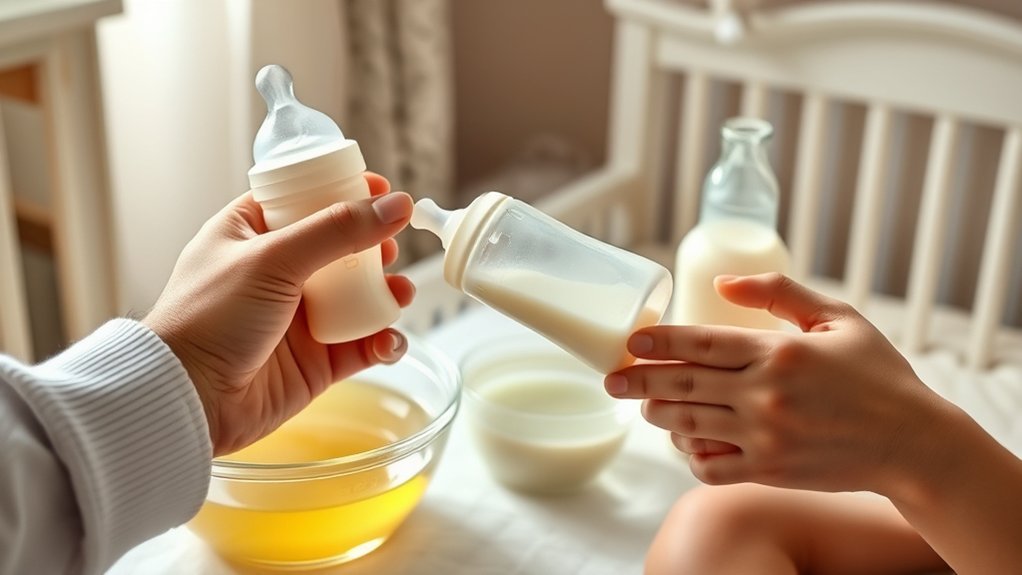
How can you tell if a baby bottle is ready? After warming, swirl the baby bottle to distribute heat and reduce hot spots. Then drop a few drops on the inside of your wrist; it should feel comfortably warm, never hot. Don’t depend on appearance alone, because milk or formula can look fine while the temperature is unsafe. Check each time you warm a baby bottle, since your baby’s comfort and needs can shift. Additionally, ensuring bottles are properly cleaned helps prevent contamination before feeding.
| Check | What to do | Why it matters |
|---|---|---|
| Wrist test | Touch a few drops to inside of your wrist | Confirms safe temperature |
| Swirl first | Mix the contents gently | Lowers hot spots |
| Water safety | Keep the lid out of water | Reduces contamination risk |
| Repeat | Test before each feeding | Supports consistent safety |
This simple routine helps you warm a baby bottle confidently, protecting feeding your baby without giving up convenience.
Why Microwaves Aren’t Safe?
Microwaves aren’t safe for baby bottles because they heat unevenly, which can leave dangerous hot spots that burn your baby’s mouth or throat.
When you use microwaves for warming, the liquid may look fine but still exceed safe temperatures in one area. That matters for breast milk and formula, since excess heat can damage nutrients and increase injury risk.
Microwaves also don’t give you the gradual, controlled warming your baby needs for a consistent feed.
- Hot spots can form even after brief heating.
- Steam and superheated liquid can cause burns.
- Breast milk and formula may lose quality when overheated.
- Avoiding microwaves supports safer feeding and peace of mind.
You deserve simple, evidence-based choices that protect your baby without adding stress.
For reliable warming, choose methods that keep temperatures steady and lower the chance of harm.
Bottle Warming Tips for Newborns and Fussy Babies
When you warm a baby bottle, aim for a temperature close to body warmth, since most newborns and many fussy babies feed more comfortably at about 98°F (37°C).
You can warm your baby’s formula or breast milk with a warm water bath or by running warm water over the bottle; both methods heat evenly and reduce hot spots.
Don’t use hot water, and never microwave, because uneven heating can burn your baby.
Before you feed your baby, test a few drops on your wrist; it should feel warm, not hot.
If your baby is especially fussy or you need speed, a portable bottle warmer can help you warm your baby’s bottle quickly and consistently.
Keep the process simple, safe, and responsive to your baby’s cues.
With careful warming, you support comfort without sacrificing safety, so feeding can feel calmer and more predictable for both of you.
Frequently Asked Questions
Are You Supposed to Warm up Baby Bottles?
No, you don’t have to warm baby bottles. You can follow baby feeding preferences, bottle warming benefits, newborn comfort levels, milk temperature myths, parent convenience factors, feeding routine habits, and pediatrician recommendations.
Does Cold Milk Upset Baby’s Stomach?
Yes, cold milk can upset your baby’s stomach sometimes. You can watch baby digestion, milk temperature, feeding preferences, newborn comfort, bottle feeding, infant reactions, and follow pediatric advice, since evidence varies and your baby’s response matters.
Do Warm Bottles Help With Gas?
Yes, warm bottles can help with gas, oddly enough. You may get more gas relief through better bottle temperature and digestion aid, while respecting baby preferences; evidence suggests improved feeding comfort, though colic concerns still vary with warming techniques.
Are Baby Bottles Better Warm or Cold?
They’re neither inherently better; you can use room temperature benefits or cold bottles, based on baby preferences. Warmth better matches breast milk comparison, may support digestion efficiency, and your feeding routines can guide bottle warming techniques and temperature tolerance.
Conclusion
Ultimately, you can choose to warm your baby’s bottle, but you don’t have to. Some babies feed better with warm milk, some accept it at any temperature, and some prefer one method consistently. Use safe warming methods, test the milk before feeding, and avoid microwaves to reduce hot spots and burns. When you stay consistent, watch your baby’s cues, and follow safe preparation steps, you can feed with confidence and calm.
