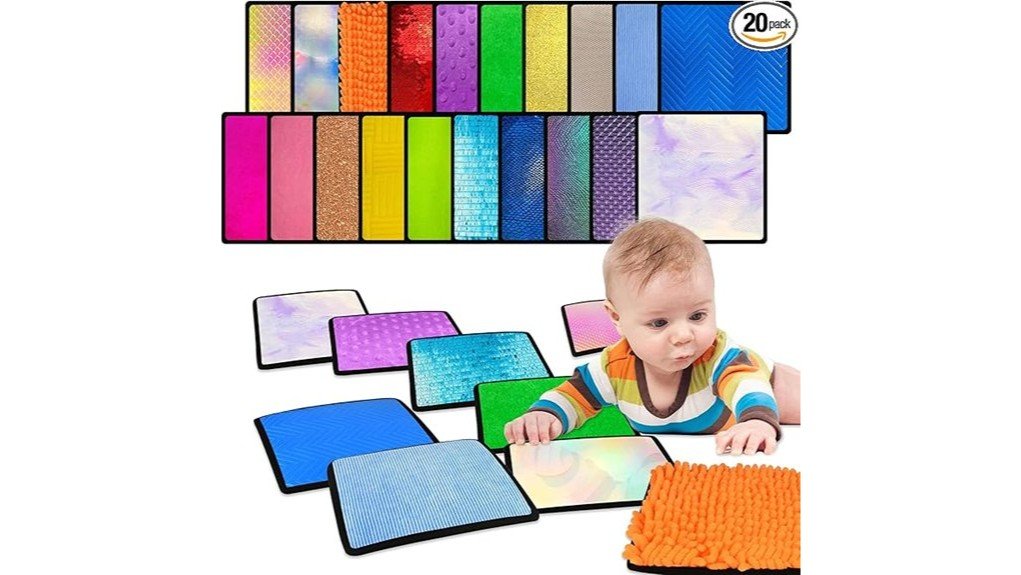
The 15 Sets Square Sensory Mats present a compelling option for enhancing children’s tactile experiences. Each mat features distinct textures and vibrant colors, designed to stimulate sensory exploration. Their non-slip backing guarantees safety during play, making them suitable for various environments. As parents and educators seek effective tools for sensory integration, these mats offer intriguing benefits. However, understanding their full potential requires a closer examination of their unique attributes and applications in different settings.
Overview of 20 Sets Square Sensory Mats
The 20 Sets Square Sensory Mats offer a vibrant and engaging solution for children with sensory processing challenges. Each tile, measuring 8.66 x 8.66 inches, invites sensorial exploration through a delightful variety of colors and textures.
Crafted from 20 distinct fabrics, these mats facilitate texture discovery, enhancing tactile learning. With a non-slip backing, safety is prioritized during playtime, allowing children to immerse themselves fully in their sensory experiences.
Ideal for home, therapy sessions, or classrooms, these mats provide a versatile tool for nurturing developmental growth. Their easy maintenance further guarantees a stress-free environment for both children and caregivers.
What Makes Sensory Mats Beneficial for Children?
Sensory mats offer a wealth of benefits for children, particularly those with sensory processing challenges. These mats facilitate sensory play, providing an engaging environment for tactile exploration.
The diverse textures stimulate the senses, encouraging children to interact and discover, which is essential for their developmental growth. By enhancing hand-eye coordination and motor skills, sensory mats serve as therapeutic tools, promoting relaxation and focus.
In addition, they create safe spaces for children to express themselves freely, fostering independence and confidence. Through immersive experiences, sensory mats empower children to navigate their surroundings, making them invaluable resources for both home and therapeutic settings.
Exploring the Unique Textures of Each Mat
Exploration of the unique textures found in each of the 20 sensory mats reveals a rich tapestry of tactile experiences designed to captivate and engage children.
Each mat invites texture exploration, facilitating sensory engagement that promotes curiosity and learning. The diverse materials offer a spectrum of sensations, ensuring that every interaction is stimulating and rewarding.
- Soft, plush surfaces for comfort
- Bumpy textures for sensory stimulation
- Smooth fabrics promoting calmness
- Grooved patterns that encourage grasping
- Warm colors enhancing visual appeal
These tactile variations not only entertain but also support emotional and cognitive development in a liberating manner.
How Sensory Mats Enhance Motor Skills and Coordination
Engaging with textured mats offers children a dynamic way to enhance their motor skills and coordination. The diverse textures promote sensory exploration, encouraging children to interact with their environment creatively.
As they navigate different surfaces, their hand-eye coordination improves, fostering dexterity and balance. Each mat challenges young learners, stimulating movement and encouraging active play.
This tactile experience not only strengthens fine and gross motor skills but also builds confidence in their physical abilities. Through playful engagement, children develop essential coordination skills, paving the way for more complex activities and fostering a sense of liberation in their exploratory journeys.
Therapeutic Benefits of Using Sensory Mats
The use of textured mats offers significant therapeutic benefits, particularly for children with autism and ADHD. These sensory mats facilitate sensory integration and promote tactile exploration, creating a safe environment for children to engage with varied textures.
Textured mats provide essential therapeutic benefits, enhancing sensory integration and fostering a safe space for tactile exploration in children with autism and ADHD.
- Enhances calming effects through repetitive tactile stimulation
- Encourages emotional regulation and reduces anxiety
- Fosters social interaction during group play
- Supports cognitive development through sensory challenges
- Aids in developing fine motor skills
Ideal Settings for Sensory Mats Use
While many parents and educators seek effective tools for enhancing sensory experiences, sensory mats emerge as a versatile solution suitable for various environments.
Ideal settings include homes, therapy sessions, and classrooms, where they encourage playtime creativity and sensory exploration. These mats provide a tactile playground, inviting children to engage with diverse textures and colors.
Their non-slip design guarantees safety during active play, promoting confidence and comfort. Whether used individually or in group settings, sensory mats foster developmental skills while offering a calming atmosphere.
This makes them an invaluable resource for nurturing creativity and enhancing sensory experiences in children.
Easy Cleaning and Maintenance Tips for Sensory Mats
Maintaining the cleanliness of sensory mats is essential for ensuring a safe and hygienic play environment. Implementing effective cleaning techniques and consistent maintenance routines can prolong the mats’ lifespan while safeguarding children’s health.
- Use a damp cloth with mild soap for regular cleaning.
- Allow mats to air dry completely after washing.
- Rotate mats frequently to distribute wear evenly.
- Store mats in a dry place to prevent mold.
- Inspect mats regularly for signs of wear or damage.
Safety Features of Sensory Mats
How do sensory mats guarantee a safe play environment for children? These mats adhere to rigorous safety standards, ensuring they are crafted from non-toxic, durable mat materials.
The non-slip backing and edging provide stability, reducing the risk of slips and falls during play. Each textured surface is designed to engage children while promoting sensory exploration without compromising safety.
Additionally, the mats are easy to clean, preventing the buildup of germs. With features that prioritize both play and protection, sensory mats create a secure space where children can freely explore their environment, fostering growth and development in a worry-free setting.
How Sensory Mats Keep Kids Safe During Play?
Sensory mats particularly enhance safety during playtime, ensuring that children can explore their environment with minimal risk.
These mats provide a secure surface that encourages sensory exploration and tactile experiences, reducing the likelihood of falls and injuries.
- Non-slip backing prevents slipping
- Soft textures cushion falls
- Variety of colors engages attention
- Easy to clean for hygiene
- Designed for supervised play
Effective Strategies for Using Sensory Mats With Autistic Children
Effective use of sensory mats can significantly enhance the developmental experience for autistic children by fostering a safe and engaging environment. Incorporating these textured mats into playtime encourages sensory exploration, allowing children to interact with various fabrics and colors.
Caregivers can facilitate tactile learning by introducing activities that involve sorting or matching mats based on texture. Creating a structured routine around using the mats can also provide predictability, which is essential for many autistic children.
Customer Reviews on Sensory Mats: What Parents Are Saying
Feedback from parents reveals a wealth of insights regarding the 20 Sets Square Sensory Mats, highlighting their impact on children’s development and playtime engagement.
Many express satisfaction with the diverse sensory experiences these mats provide, fostering child engagement and exploration.
Parents appreciate the rich sensory experiences these mats offer, significantly enhancing children’s engagement and exploration during playtime.
Parents specifically note:
- Enhanced tactile stimulation promotes curiosity.
- Improved motor skills and coordination observed.
- Effective in calming anxious or overstimulated children.
- Versatile for various settings, from home to therapy.
- Easy to clean, maintaining hygiene effortlessly.
Why Sensory Mats Are Great Gifts for Kids
A thoughtful gift can spark joy and creativity in children, and sensory mats are an excellent choice for fostering both.
These textured tiles promote creative play, allowing children to engage in sensory exploration that stimulates their developing minds. With a variety of colors and materials, sensory mats invite tactile interaction, enhancing hand-eye coordination and motor skills.
Ideal for children with sensory sensitivities, they also serve as therapeutic tools, offering comfort and relaxation.
As a versatile gift, sensory mats cater to various settings, making them perfect for home, therapy sessions, or classrooms, ensuring joyful experiences for every child.
Tips for Incorporating Sensory Mats Into Playtime
Incorporating sensory mats into playtime can enhance the overall experience for children, enriching their sensory exploration.
These mats offer a platform for various sensory exploration techniques and creative play ideas:
- Combine mats with themed activities, like a jungle exploration.
- Encourage free play, allowing children to discover textures independently.
- Create obstacle courses using mats to promote physical movement.
- Integrate storytelling sessions, using mats as settings for imaginative tales.
- Organize group activities, fostering social interaction and cooperative play.
Comparing Sensory Mats to Other Sensory Toys: What’s Different?
How do sensory mats stand apart from other sensory toys in fostering developmental growth? Unlike traditional toys, sensory mats provide a unique platform for tactile exploration and sensory integration.
Their textured surfaces engage children in hands-on experiences, promoting fine motor skills and coordination. While many sensory toys focus on auditory or visual stimuli, mats emphasize touch, catering specifically to children with sensory sensitivities.
Additionally, the versatility of sensory mats allows for varied play environments, enhancing their therapeutic benefits. This combination of tactile diversity and safety makes sensory mats an essential tool in developing sensory awareness and motor skills.
Understanding the Importance of Adult Supervision for Sensory Mats Use
Why is adult supervision essential when children engage with sensory mats? Guaranteeing a safe and enriching experience requires vigilant oversight.
Adult supervision not only promotes safety but also enhances the developmental benefits of sensory play. Effective supervision guidelines and safety reminders can prevent accidents and maximize engagement.
- Monitors for choking hazards
- Encourages appropriate use of mats
- Supports social interactions among children
- Provides guidance on exploring textures
- Guarantees a calm, controlled environment
Frequently Asked Questions
Are the Sensory Mats Safe for Infants and Toddlers?
The sensory mats are deemed safe for infants and toddlers, facilitating sensory exploration during infant playtime. Their non-slip design and soft textures promote a secure environment, enhancing developmental benefits while ensuring enjoyable and safe interactions.
What Age Range Is Recommended for Using These Mats?
Curiously, the mats cater to children from infancy to early childhood, where sensory play unfolds crucial developmental benefits. Engaging with diverse textures, they nurture essential skills, proving that even playtime can be profoundly enriching.
How Thick Are the Sensory Mats?
The sensory mats are approximately 0.5 inches thick, offering a comfortable surface. Their texture variety enhances exploration, while maintenance tips suggest easy cleaning with a damp cloth, ensuring longevity for engaging play experiences.
Do the Mats Contain Any Harmful Materials?
The mats symbolize safety and comfort, crafted from non-toxic materials, ensuring minimal chemical exposure. Their design prioritizes material safety, allowing children to explore freely, fostering a liberating environment for sensory development and play.
Can the Mats Be Used Outdoors?
The mats are not specifically designed for outdoor durability or weather resistance. While they may withstand brief outdoor use, prolonged exposure could compromise their integrity, making indoor environments the ideal setting for maximum safety and performance.
Conclusion
To sum up, the 15 Sets Square Sensory Mats are like a vibrant garden of textures, inviting children to explore and blossom in their sensory experiences. Just as a gardener nurtures diverse flowers to thrive, these mats cultivate fine motor skills and emotional regulation among young learners. With their therapeutic benefits and engaging designs, they transform playtime into a rich tapestry of discovery, making them an invaluable addition to any home, therapy session, or classroom setting.