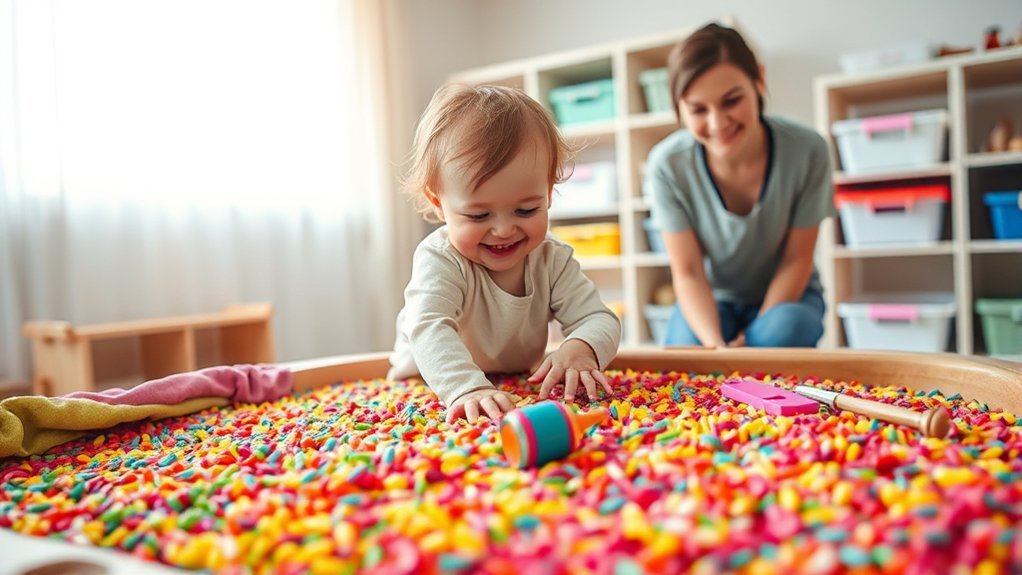
Sensory play helps children explore the world through touch, sight, sound, smell, movement, and sometimes taste. It can be as simple as squeezing playdough, pouring water, sorting leaves, or feeling textured fabric. The goal is not to create a perfect activity. The goal is to make play safe, age-appropriate, and open enough for your child to explore with confidence.
Quick Answer
The best sensory play follows three rules: choose safe materials, supervise closely, and let your child explore at their own pace. Start with one texture, avoid choking hazards, watch for signs of overwhelm, and use simple questions to support language, problem-solving, and curiosity.
Key Takeaways
- Do choose non-toxic, age-appropriate materials and stay close, especially with babies and toddlers.
- Do keep sensory play simple. One bin, one texture, and a few scoops or cups are enough.
- Do avoid small loose items, water beads, magnets, button batteries, marbles, coins, and anything your child may swallow.
- Do stop or simplify the activity if your child looks overwhelmed, upset, tired, or overstimulated.
- Don’t force touching, tasting, sharing, or finishing the activity. Child-led exploration works best.
At a Glance
| Time Required | 5 to 10 minutes for babies or beginners; 10 to 30 minutes for toddlers, preschoolers, and older children who stay engaged |
| Difficulty | Easy |
| Tools Needed | Tray or bin, towel, child-safe scoops, cups, spoons, washable materials, and a simple cleanup plan |
| Cost | Usually $0 to $15 using household items such as water, fabric, cardboard, playdough, or nature finds |
What Is Sensory Play?
Sensory play is any activity that invites a child to explore through the senses. That includes touch, sight, sound, smell, taste, balance, and body awareness. A child may squeeze clay, pour water, listen to dried pasta shake inside a sealed bottle, smell herbs, walk barefoot on grass, or compare rough and smooth textures.
This kind of play is not only about keeping children busy. NAEYC describes play as an important part of children’s learning and development, and sensory activities give children a hands-on way to test ideas, notice patterns, build vocabulary, and practice motor control.
Note: Sensory play at home is not the same as occupational therapy. If your child has strong sensory distress, developmental delays, feeding concerns, or repeated meltdowns around textures, talk with your pediatrician or a qualified occupational therapist.
Benefits of Sensory Play
When you engage in sensory play with children, you give them a simple way to explore, compare, describe, and solve small problems. A child who pours water from one cup to another is learning about volume, cause and effect, hand control, and patience.
Sensory play can support cognitive skills because children make predictions and test them. They may wonder whether a rock will sink, whether a sponge will hold water, or whether two colors will mix into a new one.
It also supports fine motor development. Pinching playdough, tearing paper, using tongs, squeezing sponges, and scooping sand all strengthen the small muscles used for self-feeding, dressing, drawing, and early writing.
Sensory play can support language and social skills, too. When you describe what your child is doing, pause for their response, and answer their sounds, gestures, or words, you create the responsive back-and-forth interaction that the Harvard Center on the Developing Child calls “serve and return”.
Sensory play works best when it feels safe, flexible, and child-led. The goal is exploration, not a perfect craft or a finished product.
You may also notice emotional benefits. Some children calm down when they knead dough, pour water, brush sand from a tray, or sort objects by color. Other children may need shorter sessions or less mess. Both responses are normal. Watch your child’s cues and adjust the activity instead of pushing through discomfort.
How to Set Up Safe Sensory Play
A good sensory activity starts before the bin comes out. Use this simple setup process to reduce mess, frustration, and safety risks.
- Choose one main material. Start with water, playdough, fabric scraps, leaves, ice cubes, washable finger paint, or another age-appropriate texture.
- Match the material to your child’s age. If your child still mouths objects, avoid dried beans, rice, beads, small pasta, coins, buttons, marbles, and other small loose items.
- Set the play area. Use a tray, plastic bin, towel, shower curtain liner, or outdoor space.
- Add simple tools. Cups, spoons, scoops, silicone muffin cups, paintbrushes, and child-safe tongs are usually enough.
- Explain two or three rules. Try “materials stay in the bin,” “we do not eat this,” and “tell me if you need a break.”
- Stay close. Supervision is part of the activity, not something you do from across the room.
- End before it falls apart. Stop when your child loses interest, gets tired, or starts throwing materials.
Pro Tip: Keep a “yes bowl” nearby. If your child wants to mix, pour, or transfer materials, give them one small container where that action is allowed. It helps protect the main setup without stopping exploration.
Creative Sensory Play Ideas
How can you turn everyday materials into exciting sensory experiences for children? Start small. A shallow tray, a safe texture, and a few tools can create plenty of learning.
Sensory Play for Babies
For babies, sensory play should be simple, clean, and closely supervised. The CDC lists 6-month cognitive milestones such as putting things in the mouth to explore and reaching for wanted toys, so choose items that are too large to swallow and safe to touch.
- Let your baby feel a soft washcloth, crinkly baby-safe fabric, or a smooth silicone teether.
- Place a small amount of water on a high-chair tray and let your baby pat it with their hands.
- Use tummy time with a mirror, soft book, or large textured ball.
- Offer sound play with a tightly sealed bottle filled with large objects that cannot leak out.
Sensory Play for Toddlers
Toddlers often enjoy pouring, scooping, stacking, and dumping. Keep the materials large, washable, and non-toxic.
- Make a water bin with cups, sponges, and floating bath toys.
- Offer playdough with large cookie cutters and a rolling pin.
- Create a texture basket with scarves, large wooden blocks, soft balls, and cardboard tubes.
- Let them paint with water on a sidewalk, fence, or dark construction paper.
Sensory Play for Preschoolers
Preschoolers can handle more problem-solving and pretend play. They may enjoy comparing, sorting, and creating.
- Create a sensory bin with large pasta shapes, scoops, and toy animals if your child no longer mouths objects.
- Mix cornstarch and water to make oobleck, then talk about how it feels firm when pressed and runny when released.
- Fill a shallow tray with water and test floating and sinking objects.
- Tear old magazines and glue pieces onto cardboard for textured collages.
- Add herbs such as mint, basil, or rosemary to playdough for a gentle scent activity.
Sensory Play for Older Children
Older children may not want a basic bin, but they still benefit from hands-on exploration. Give them more control and a bigger challenge.
- Set up a nature scavenger hunt with leaves, bark, stones, flowers, and seed pods.
- Invite them to design an obstacle course using balance, jumping, crawling, and carrying tasks.
- Let them make homemade slime only with safe ingredients and adult supervision.
- Ask them to create a “mystery texture” box and write clues for someone else to guess.
- Use cooking tasks, such as kneading dough or washing vegetables, as practical sensory play.
Essential Safety Tips
Safety should always be your top priority when engaging in sensory play with children. First, supervise all activities closely. Young children can move fast, and a safe activity can become unsafe when a child puts materials in their mouth, nose, or ears.
Choose non-toxic and age-appropriate materials. For children under 3, avoid anything small enough to swallow. The U.S. Consumer Product Safety Commission explains that small parts can create choking, aspiration, or ingestion hazards for children under 3.
Warning: Avoid water beads, marbles, beads, coins, button batteries, magnets, balloons, sharp objects, and small loose fillers for babies and toddlers. If your child still mouths objects, use safer options such as water, large silicone tools, fabric, edible yogurt paint, or large washable toys.
Water beads deserve special caution because they can expand when swallowed. AP reported that major retailers stopped selling water beads marketed to children after safety concerns and cited CPSC data on thousands of water bead-related injuries from 2016 to 2022. For home sensory play, safer substitutes include water, large sponges, playdough, fabric pieces, ice, or large washable toys.
Always check for allergies before using food-based materials such as flour, salt dough, peanut butter, oats, spices, or scented playdough. If your child has eczema or sensitive skin, test a small amount first and skip strongly scented materials.
Teach children to wash their hands before and after play. Keep a towel nearby, clean spills quickly, and store sensory materials out of reach when the activity ends. A first aid kit is useful for minor scrapes, but prevention matters more than cleanup.
Sensory Play Do’s and Don’ts
| Do | Don’t |
|---|---|
| Start with one texture or material. | Overload the bin with too many colors, smells, sounds, and tools. |
| Let your child lead when it is safe. | Force touching, tasting, sharing, or finishing. |
| Use words like squishy, rough, smooth, cold, warm, full, empty, heavy, and light. | Turn every moment into a quiz or correction. |
| Keep towels, wipes, and a trash bag nearby. | Set up messy play on a surface you cannot clean easily. |
| Stop early if your child is tired or overwhelmed. | Push through crying, freezing, gagging, or distress. |
Common Mistakes to Avoid
Even with safety precautions in place, it is easy to make a few missteps during sensory play. Here are the most common mistakes to avoid for a calmer and safer experience:
| Mistake | Consequence | Better Choice |
|---|---|---|
| Not supervising closely | Safety risks increase, especially with toddlers | Stay close, watch hands and mouth, and put materials away after play |
| Overloading sensory input | Children may feel overwhelmed or start throwing materials | Introduce one sensory element at a time |
| Using inappropriate materials | Choking, allergic reactions, skin irritation, or unsafe messes may occur | Choose non-toxic, age-appropriate items and check labels |
| Expecting a perfect result | The activity becomes stressful instead of playful | Focus on exploration, not the final product |
| Making sessions too long | Children may lose focus or become overstimulated | End while your child is still calm and interested |
Encouraging Exploration and Learning
As children immerse themselves in sensory play, they naturally explore their environment, discovering textures, scents, sounds, movement, and visual patterns that spark curiosity.
To encourage this exploration, create a safe and inviting space filled with a small number of materials such as water, sand, clay, fabric, or nature items. Allow your child to manipulate these elements freely when it is safe, because this supports creativity and problem-solving skills.
Engage with your child by asking open-ended questions about their discoveries. Try:
- “What does it feel like?”
- “What do you think will happen if we add water?”
- “Which one is heavier?”
- “How can we move this from one cup to the other?”
- “What should we try next?”
You can also introduce themed activities that tie into your child’s interests. A dinosaur fan may enjoy digging toy dinosaurs from kinetic sand. A child who loves cooking may enjoy kneading dough. A child who loves bugs may enjoy looking for outdoor textures such as bark, grass, stones, and leaves.
When to Pause or Adapt Sensory Play
Sensory play should not feel like a test. Some children love messy textures, while others need time to warm up. Pause or simplify the activity if your child:
- covers their ears or eyes
- turns away repeatedly
- cries, freezes, gags, or becomes unusually quiet
- throws materials after repeated reminders
- rubs their skin or says something hurts
- tries to leave the activity several times
If this happens, remove one sensory element. For example, switch from scented playdough to unscented playdough, from sticky slime to dry fabric textures, or from a full bin to one small bowl. You can also offer tools so your child can explore without direct hand contact.
Note: A child who avoids a texture is not being difficult. They may be telling you the activity feels too strong, too sticky, too loud, or too unpredictable.
Frequently Asked Questions
What age is best for introducing sensory play?
You can start simple sensory interaction from birth through voice, gentle touch, music, tummy time, and high-contrast visuals. Around 6 months, many babies begin exploring more actively with their hands and mouth, so choose large, clean, baby-safe materials and supervise closely. For toddlers and preschoolers, you can add pouring, scooping, sorting, and pretend play.
How long should sensory play sessions last?
Let your child’s attention and comfort guide the length. Babies or children new to sensory play may only need 5 to 10 minutes. Toddlers and preschoolers may enjoy 10 to 30 minutes. Older children may stay longer if the activity has a goal, such as building, cooking, sorting, or experimenting. Stop sooner if your child looks tired, frustrated, or overwhelmed.
Can sensory play be done indoors and outdoors?
Yes, sensory play works indoors and outdoors. Indoors, use trays, towels, washable materials, and small bins to control mess. Outdoors, children can explore water, mud, leaves, grass, stones, snow, shadows, and natural sounds. Outdoor play still needs supervision, especially around water, plants, insects, and small objects.
What materials should I avoid for sensory play?
Avoid small beads, marbles, coins, button batteries, magnets, sharp objects, broken toys, water beads, loose glitter for young children, strong fragrances, and toxic substances. Also avoid dried beans, rice, or small pasta for children who still mouth objects. When in doubt, choose larger washable items, water, fabric, edible paint, or playdough made with ingredients your child can safely touch.
How can I involve older children in sensory play?
Give older children more choice and responsibility. Ask them to design the bin, choose a theme, create a science question, build an obstacle course, make a texture guessing game, or prepare a recipe with you. Older children often enjoy sensory play more when it feels like a challenge, experiment, craft, or real-life task.
Is sensory play supposed to be messy?
It can be messy, but it does not have to be. Water painting, fabric sorting, sound bottles, nature walks, playdough, and texture books all offer sensory input with little cleanup. If mess stresses you or your child, use smaller containers, outdoor spaces, washable materials, and clear boundaries.
What should I do if my child refuses to touch a sensory material?
Do not force it. Offer a spoon, scoop, brush, glove, or small toy so your child can explore from a distance. You can also place the material beside a familiar favorite, such as a toy animal or car. If your child still refuses, switch to a gentler texture and try again another day.
Conclusion
Incorporating sensory play into your child’s routine can support creativity, motor skills, language, problem-solving, and confidence. The best activities are not the biggest or messiest ones. They are the ones that match your child’s age, interests, and comfort level.
Follow the basic do’s and don’ts: supervise closely, choose safe materials, avoid choking hazards, start small, and let your child lead when it is safe. Every scoop, pour, squeeze, splash, and question gives your child another way to understand the world and their own body.
Sources
- National Association for the Education of Young Children: Play — supports play as part of children’s learning and development.
- CDC: Milestones by 6 Months — supports baby mouthing, reaching, and age-related safety guidance.
- U.S. Consumer Product Safety Commission: Small Parts Ban and Choking Hazard Labeling — supports choking hazard and small-parts safety guidance.
- Harvard Center on the Developing Child: Serve and Return — supports responsive adult-child interaction during play.
- Associated Press: Water Bead Safety Concerns — supports current caution around water beads marketed for children.

