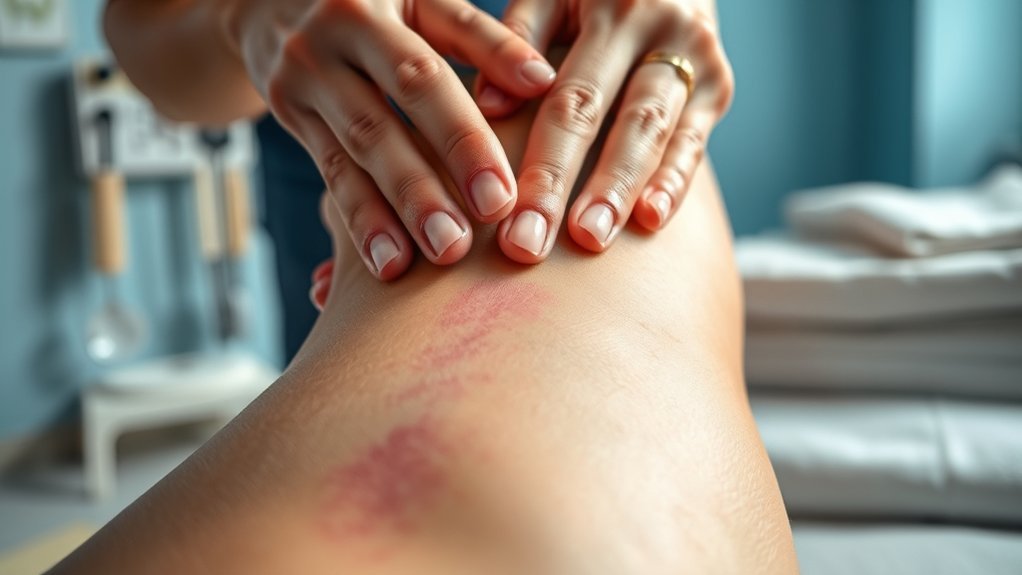
Scar tissue can feel tight, tender, or hard to move long after a cut, surgery, burn, or injury heals. That tightness can pull on nearby skin, fascia, muscles, and joints, which may limit your comfort and range of motion. This guide explains how scar tissue forms, when gentle mobilization may help, and how to approach it safely with support from a qualified healthcare professional.
Quick Answer
Scar tissue mobilization uses gentle massage, stretching, and pressure techniques to help scarred tissue move more freely. You should only start after the skin has fully closed and a healthcare professional says it’s safe. Stop if you notice sharp pain, spreading redness, warmth, drainage, or swelling.
Key Takeaways
- Scar tissue forms when your body repairs damaged skin and deeper tissue with collagen.
- Gentle mobilization may improve comfort, flexibility, and scar mobility over time.
- You should avoid scar massage until the wound has fully healed and closed.
- Use light pressure first, then adjust based on pain, skin response, and professional guidance.
- Seek medical help for worsening pain, swelling, redness, warmth, drainage, or loss of movement.
Understanding Scar Tissue Formation
When your body has an injury, it starts a repair process that often leads to scar tissue formation. This process begins with inflammation, as your body sends blood, immune cells, and repair cells to the injured area.
Next, fibroblasts, a type of connective tissue cell, make collagen. Collagen helps close and strengthen the injured tissue.
Fibroblasts produce collagen, which helps build and strengthen new tissue as a wound heals.
As healing continues, collagen fibers can become thick, dense, and less flexible than nearby healthy tissue. This scar tissue gives the area strength, but it may not move like normal skin.
Over time, scar tissue can mature and soften. But some scars stay tight, raised, painful, or stuck to deeper tissue, which can limit mobility and cause discomfort.
Potential Benefits of Scar Tissue Mobilization
Scar tissue mobilization may help improve how a scar and nearby tissue move. Many physical therapists and occupational therapists use these techniques as part of a broader rehab plan.
Gentle mobilization may help reduce stiffness, support range of motion, and make daily movement feel easier. It may also help you notice which areas feel tight, tender, or stuck.
Scar massage and soft tissue work may support local comfort and flexibility, but results vary. Your scar type, injury, surgery, skin health, and healing stage all affect how much change you may see.
Regular sessions may also help you move with less guarding. That can support better posture, easier joint motion, and more natural movement patterns.
When It Is Safe to Start Scar Tissue Mobilization
You should not mobilize a scar while the wound remains open, scabbed, bleeding, draining, or infected. Scar work usually starts only after the skin has fully closed and your healthcare professional clears you.
Your provider may ask you to wait longer after surgery, burns, deep wounds, or complicated healing. They may also adjust your plan if you have diabetes, poor circulation, fragile skin, or a history of keloid or hypertrophic scars.
Warning: Do not massage a scar that feels hot, looks infected, drains fluid, or causes sharp pain.
Preparing for Scar Tissue Mobilization
Before you try scar tissue mobilization, confirm that a healthcare professional has cleared you to begin. This step matters most after surgery, burns, deep cuts, or injuries near joints.
Consult a healthcare professional to make sure scar tissue mobilization suits your condition and healing stage.
Wash your hands and check the scar before each session. Look for redness, warmth, drainage, swelling, new bleeding, or skin breakdown.
Gather simple tools, such as a clean towel and a small amount of lotion, cream, or oil if your provider approves it. Use enough to reduce friction, but avoid products that irritate your skin.
Choose a quiet, comfortable place where you can focus on the tissue response. Warm the area with a warm shower or a mild heat pack if your provider says heat is safe for you.
Set realistic expectations. Scar tissue often changes slowly, and gentle, steady work usually works better than forceful pressure.
Techniques for Effective Scar Tissue Mobilization
Effective mobilization uses the right pressure, direction, and pace. You should feel mild pulling or pressure, not sharp pain.
Start gently and check your skin response often. If the area feels more painful, swollen, or irritated after treatment, reduce pressure or stop and contact your provider.
Manual Techniques Overview
Manual scar work starts with gentle skin gliding. Use light pressure to see how well the scar and nearby skin move in each direction.
You can then use cross-friction techniques if your provider has shown you how. Move across the scar fibers with small, controlled motions to help the tissue glide better.
Myofascial release uses slow, sustained pressure over tight areas. This technique may help the deeper layers relax and move with less restriction.
Stretching techniques may also help when the scar crosses or sits near a joint. Use active or passive movement within a comfortable range.
If you work with a therapist, give clear feedback during the session. Your therapist can adjust pressure, speed, and technique based on your pain and skin response.
Tools for Mobilization
The right tool can make scar work easier, but your hands often give you the best control. Start with clean fingers before you try any device.
Some people use soft massage tools, small rollers, or textured balls for gentle pressure around scarred areas. Use light pressure and avoid dragging or scraping the skin.
A foam roller may help broader areas around the scar, such as the thigh or calf. Do not roll directly over a painful, raised, fragile, or newly healed scar unless your provider approves it.
Some therapists use silicone cups or other tools for soft tissue work. You should only use suction or powered tools with professional guidance, especially after surgery or burns.
Note: Tools should support gentle tissue movement, not force the scar to change faster.
Self-Mobilization Methods
When you use self-mobilization for scar tissue, approach the area with care. Begin with gentle pressure from your fingers, then increase only if your skin and pain level tolerate it.
Use small movements, such as circles, glides, or light stretching in different directions. Aim for short, consistent sessions instead of long or painful ones.
| Technique | Description |
|---|---|
| Circular Massage | Use your fingertips to make small circles around and over the healed scar. |
| Gliding | Apply gentle, steady pressure along the length of the scar. |
| Stretching | Gently move the skin in different directions to support flexibility. |
These methods may improve comfort and mobility over time. Listen to your body, and stop if symptoms worsen.
Frequency and Duration of Sessions
Your ideal frequency and duration depend on the scar, your symptoms, and your provider’s advice. Many people start with short sessions to see how the tissue responds.
A common starting point is 5-10 minutes per session, several days per week. Some rehab plans may use 2-3 sessions per week with a therapist, while home care may involve shorter, more frequent work.
Consider these key factors:
- Type of scar: Surgical, burn, traumatic, keloid, and hypertrophic scars may need different plans.
- Body area: Scars near joints may affect movement more than scars on flatter areas.
- Skin response: Redness, swelling, or lasting soreness may mean you used too much pressure.
- Therapy goals: Pain relief, flexibility, and daily function may each require a different pace.
Gentle soreness may happen, but pain should not keep increasing after a session. If it does, reduce the dose or ask your provider to reassess your plan.
Monitoring Progress and Adjustments
Track your progress as you continue scar tissue mobilization. This helps you decide whether your current approach helps or irritates the area.
Watch changes in mobility, pain, skin texture, and daily function. Use that feedback to adjust pressure, technique, session length, and frequency.
Tracking Mobility Improvements
You can track mobility improvements with simple checks before and after sessions. Keep the checks consistent, so you compare the same movement each time.
Useful tracking methods include:
- Range of motion checks: Use a goniometer with a therapist, or compare the same joint motion each week.
- Functional movement checks: Test daily tasks, such as reaching, squatting, walking, or bending.
- Progress notes: Record stiffness, tightness, comfort, and ease of movement after each session.
- Video review: Record the same movement over time to compare smoothness and control.
Pain Level Assessment
Pain level assessment helps you keep scar work safe and useful. Use a 0-10 pain scale before, during, and after each session.
Record your pain level and note the type of pain. Burning, sharp, throbbing, or spreading pain needs more caution than mild pressure or pulling.
Also track how pain affects your range of motion and daily tasks. If pain rises after treatment and does not settle, stop and contact a healthcare professional.
Technique Adjustments Needed
Adjust your scar work based on your symptoms and progress. The best technique should improve movement without increasing irritation.
Use these adjustments when needed:
- Pressure: Lower the pressure if discomfort increases or lasts after the session.
- Technique: Switch between gliding, circles, gentle lifting, and light stretching.
- Duration: Shorten the session if the skin becomes sore, red, or swollen.
- Frequency: Space sessions farther apart if your tissue needs more recovery time.
Common Mistakes to Avoid
Many scar problems come from doing too much too soon. Forceful pressure can irritate healing tissue and make pain worse.
Avoid these common mistakes:
- Starting too early: Wait until the wound has fully closed and your provider clears you.
- Ignoring skin changes: Stop if you see drainage, warmth, spreading redness, or new swelling.
- Using too much force: Gentle, steady pressure works better than painful digging.
- Skipping follow-up care: Ask for help if motion, pain, or scar texture does not improve.
You should also avoid comparing your scar to someone else’s. Age, skin type, wound depth, surgery type, and genetics can all affect healing.
When to Seek Professional Help
Self-care techniques for scar tissue mobilization can help some people, but you need professional care when symptoms persist or worsen. A provider can check whether the scar, joint, nerve, or deeper tissue needs a different plan.
Contact a healthcare professional if you have persistent pain, swelling, numbness, tingling, or restricted movement despite gentle care. Also seek help if the scar looks more red, feels warm, drains fluid, bleeds, or opens.
A physical therapist, occupational therapist, surgeon, dermatologist, or scar specialist can guide treatment. They can also teach safe techniques for your scar type and healing stage.
Frequently Asked Questions
Can Scar Tissue Mobilization Be Done at Home?
Yes, you can perform scar tissue mobilization at home if your skin has fully healed and your provider says it’s safe. Use gentle pressure, watch your skin response, and stop if pain or irritation increases.
What Should I Expect During My First Session?
During your first session, your therapist may assess the scar, nearby skin, and related movement. You may feel light pressure, stretching, or mild tenderness, but you should not feel sharp or severe pain.
Are There Any Risks Associated With Scar Tissue Mobilization?
Yes, scar tissue mobilization can cause temporary soreness, bruising, swelling, or skin irritation. The risk increases if you start too early, use too much pressure, or work on infected or fragile skin.
How Long Before I See Results From Mobilization?
Some people notice small changes in comfort or mobility after a few sessions. Scar tissue often changes over weeks or months, so steady, gentle work usually gives better results than forceful treatment.
Can I Combine Mobilization With Other Therapies?
Yes, your provider may combine mobilization with stretching, strengthening, splinting, silicone gel, compression, or movement training. A coordinated plan can support healing and help you avoid overloading the tissue.
Medical Disclaimer: This article is for informational purposes only and does not constitute professional medical advice. Always consult a qualified doctor, physical therapist, or healthcare professional before making decisions based on this information.
Conclusion
Scar tissue mobilization may help a healed scar move with less tightness and discomfort. Start slowly, use gentle pressure, and track how your skin and pain respond.
Your best next step is to ask a qualified healthcare professional when and how to begin. With patience, safe technique, and the right support, you can give your healing tissue a better chance to move well again.
References
- Wound Healing Phases — StatPearls, National Center for Biotechnology Information
- Hypertrophic Scarring and Keloids — StatPearls, National Center for Biotechnology Information
- Taking Care of Your Scar After Surgery — MedlinePlus, U.S. National Library of Medicine