
Rotavirus vaccine myths can make you hesitate, but the facts are clear: this vaccine helps protect your baby from a highly contagious virus that can cause severe diarrhea, dehydration, and hospital stays. RotaTeq and Rotarix have strong safety records, and serious side effects are rare. Mild fever or irritability can happen, but they’re usually brief. If you follow the schedule and talk with your pediatrician, you’ll see why this protection matters. Here’s what else you should know.
What Is Rotavirus and Why It Matters

Rotavirus is a highly contagious virus that can cause severe diarrhea and dehydration, especially in infants and young children. When you understand rotavirus, you can see why vaccination matters.
Before the vaccine, it caused about 55,000 to 70,000 U.S. hospitalizations each year and a large share of childhood gastroenteritis. It spreads fast, especially in childcare settings, so one child can expose many others before you know it.
That’s why public health experts recommend early vaccination: it helps protect your child and the wider community. Since vaccination began, hospitalizations have dropped 80% to 90%, and global lives saved are estimated in the hundreds of thousands.
Current vaccines, RotaTeq and Rotarix, have been thoroughly tested and offer strong protection with a very small risk of intussusception compared with the benefits.
When you choose vaccination, you choose freedom from preventable illness and the reassurance that you’re acting on solid evidence.
Common Rotavirus Vaccine Myths
Even with strong evidence behind the vaccine, myths about rotavirus shots still circulate and can make parents hesitate. You may hear that the rotavirus vaccine causes serious side effects, but that claim usually comes from the withdrawn RotaShield, not today’s RotaTeq or Rotarix.
Those newer vaccines underwent extensive safety testing in large populations. The small intussusception risk is about 1 to 6 extra cases per 100,000 vaccinated infants, far below the 25 to 40 cases seen before vaccination.
Newer rotavirus vaccines were extensively tested, with only a tiny intussusception risk compared with the danger before vaccination.
You may also hear that protection isn’t worth it, yet current vaccines have cut hospitalizations for severe diarrhea by 80% to 90% and save about 165,000 lives worldwide each year.
For infants and young children, facts matter more than fear. When you choose the rotavirus vaccine, you’re not giving up freedom—you’re protecting your family with evidence, and rejecting misinformation that only keeps you trapped in anxiety.
Why Healthy Babies Need the Rotavirus Vaccine
Although your baby may seem perfectly healthy, rotavirus can still cause severe diarrhea and dehydration, and before the vaccine was introduced it led to more than 55,000 U.S. hospitalizations each year.
Healthy children aren’t exempt from this virus, because it spreads easily and can trigger serious illness fast. Rotavirus vaccines lower that risk dramatically: studies show hospitalizations have dropped by about 80% to 90% since routine immunization began.
When you choose vaccination, you help your child’s body stay protected against a preventable threat that can steal fluids, energy, and comfort in just a few days. You also help shield infants who are too young or too vulnerable to fight infection well.
In other words, this isn’t about fear; it’s about informed freedom. You get to protect your baby before exposure, reduce the chance of emergency care, and support community immunity at the same time.
Is the Rotavirus Vaccine Safe for Infants?

Yes—the current rotavirus vaccines, RotaTeq and Rotarix, have been extensively studied in large clinical trials involving tens of thousands of infants and have been found to be safe and effective.
When you choose this vaccine, you help protect your baby from rotavirus infections that can cause severe diarrhea, dehydration, and hospitalization. After widespread use began, U.S. hospitalizations for rotavirus illness dropped by 80% to 90%, showing how powerful this protection is.
Protect your baby from severe rotavirus illness—hospitalizations fell 80% to 90% after widespread vaccine use.
You may hear older concerns about intussusception, but with current vaccines the risk is very low, about 1 to 6 extra cases per 100,000 vaccinated infants. That small risk doesn’t outweigh the clear benefits.
Vaccination also supports herd immunity, helping shield babies and others who can’t be vaccinated. You’re not just following routine care—you’re claiming evidence-based protection for your child and your community.
The data show these vaccines are safe and effective, and they’ve saved thousands of hospital visits and lives worldwide.
What Side Effects Should Parents Expect?
After the rotavirus vaccine, most infants do very well, and the most common side effects are mild—such as a low-grade fever or irritability—as the immune system responds.
You may also notice a little fussiness, but these short-lived effects usually pass without treatment.
The rotavirus vaccine has been studied extensively, and most children tolerate it well.
Serious side effects are very rare, and the overall benefits far outweigh the minimal risks.
Can the Rotavirus Vaccine Cause Intussusception?
Yes, intussusception is the rare side effect parents often hear about with rotavirus vaccine, but the current vaccines, RotaTeq and Rotarix, have been extensively studied and show only a very small increased risk—about 1 to 6 extra cases per 100,000 vaccinated infants.
You should know this risk is far lower than with the old vaccine, RotaShield, which was withdrawn after 100 cases among 1 million children.
Before rotavirus vaccine use, intussusception occurred at about 25 to 40 cases per 100,000 children, so today’s vaccinations may prevent more cases than they cause. Ongoing monitoring hasn’t shown a meaningful rise in intussusception since these vaccines were introduced.
Meanwhile, rotavirus disease can cause severe dehydration and hospitalization, and vaccination has cut those hospitalizations by 80% to 90%.
Why the Rotavirus Vaccine Schedule Matters
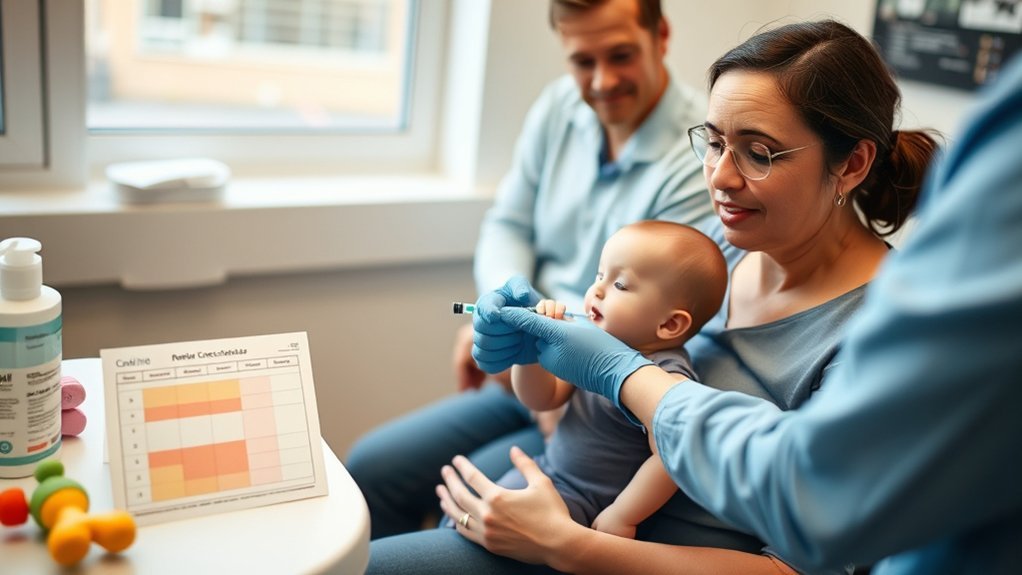
Sticking to the rotavirus vaccine schedule matters because the timing of the 2-, 4-, and 6-month doses is designed to give your child the best protection against severe rotavirus gastroenteritis when they’re most vulnerable.
When you follow the recommended vaccination schedule, you help your child build strong immunity at the right time, before rotavirus infection can cause dangerous vomiting, diarrhea, and dehydration.
Studies show timely vaccination can cut rotavirus hospitalizations by 80% to 90%, which is a powerful benefit for your family.
The current vaccines, RotaTeq and Rotarix, were tested extensively to maximize safety and immune response.
By staying on schedule, you’re also supporting herd immunity, which helps protect infants and others in your community who may be more vulnerable.
Keeping these doses on time gives you a clear, evidence-based path to protection, without unnecessary worry or guesswork.
What Happens If You Delay or Skip Doses?
Delaying or skipping rotavirus vaccine doses can leave your child unprotected during the months when they’re most vulnerable to severe gastroenteritis. When you miss the recommended schedule, you lower the protection these vaccines provide and raise the chance of severe infection, dehydration, and hospitalization.
The full series, usually two or three doses depending on the product, works best when you give it on time. Current vaccines have cut rotavirus hospitalizations by about 80% to 90%, but that benefit depends on timely vaccination.
If vaccination rates drop in your community, rotavirus can still spread and trigger outbreaks, especially where coverage is uneven. In the U.S., rotavirus still causes roughly 55,000 to 70,000 hospitalizations each year.
Staying on schedule helps you protect your child and supports broader community immunity. You deserve clear, practical care, and keeping doses on time is one evidence-based way to claim it.
Why Pediatricians Recommend Rotavirus Vaccination
Pediatricians recommend the rotavirus vaccine because it helps protect infants from severe diarrhea and dehydration during the months when they’re most vulnerable. You’re getting a proven defense that’s cut rotavirus hospitalizations by about 80% to 90% and helped spare families from the 55,000 to 70,000 annual U.S. hospitalizations seen before vaccination.
The rotavirus vaccine, including RotaTeq and Rotarix, has a strong safety record, and the risk of intussusception is low. By starting the series as early as 2 months of age, you help your child build protection before rotavirus can cause serious illness.
Pediatricians also recommend it because your choice supports herd immunity, lowering the chance of outbreaks in babies who’re too young or medically fragile to be fully protected. When you vaccinate, you’re choosing prevention, resilience, and more freedom from avoidable illness for your child and your community.
How To Talk To Your Pediatrician About The Rotavirus Vaccine
When you talk with your pediatrician about the rotavirus vaccine, ask about its safety, effectiveness, and the recommended schedule so you know what to expect. You deserve clear answers that help you make confident choices for your child’s health. Current vaccines like RotaTeq and Rotarix have cut hospitalizations by 80% to 90%, showing strong protection.
Ask your pediatrician about rotavirus vaccine safety, schedule, and effectiveness to protect your child with confidence.
- Ask about vaccine safety and expected side effects, like mild fussiness or diarrhea.
- Confirm the vaccination schedule: two or three doses, starting as early as 2 months.
- Discuss why timely rotavirus vaccine doses matter, because delays can leave your child vulnerable.
- Review the benefits: rotavirus can cause severe diarrhea, dehydration, and thousands of hospitalizations.
A direct, evidence-based conversation lets you protect your child with confidence. Your pediatrician can help you weigh concerns, explain risks, and support a vaccination schedule that keeps your family free to focus on thriving, not preventable illness. Additionally, understanding the importance of regular health screenings can be crucial for overall wellness as your child grows.
Frequently Asked Questions
Why Is the Rotavirus Vaccine Controversial?
You see controversy because early vaccine safety concerns followed RotaShield’s rare intussusception link; today’s evidence shows RotaTeq and Rotarix are very safe, but public perception and misinformation impact still fuel hesitancy and fear.
Why Is the Rotavirus Vaccine No Longer Recommended?
It isn’t no longer recommended; you should still get it. Newer rotavirus vaccines have strong vaccine effectiveness, protect public health, and help herd immunity, with only a very small intussusception risk compared with severe dehydration from infection.
Why Doesn’t Denmark Recommend Rotavirus Vaccines?
Denmark skips routine rotavirus shots because Danish healthcare judges severe disease rare and manageable, while vaccine safety concerns like intussusception shape public perception. You’re protected through hydration and supportive care, not fear-driven overmedicalization.
Why Do Parents Decline Rotavirus Vaccines?
You may decline because vaccine safety concerns, misinformation impact, and limited parental education strategies shape your choices. Evidence shows rotavirus vaccines’re safe and effective, so clear, respectful counseling can help you choose confidently.
Conclusion
Rotavirus can feel like a storm cloud over your baby’s health, but the vaccine is a sturdy umbrella that helps shield against severe dehydration and hospital stays. You can trust the evidence: healthy infants need protection, and the schedule is timed to work best and safely. If you’re unsure, talk with your pediatrician—they’ll help you separate fear from fact and choose the path that keeps your baby safer.
