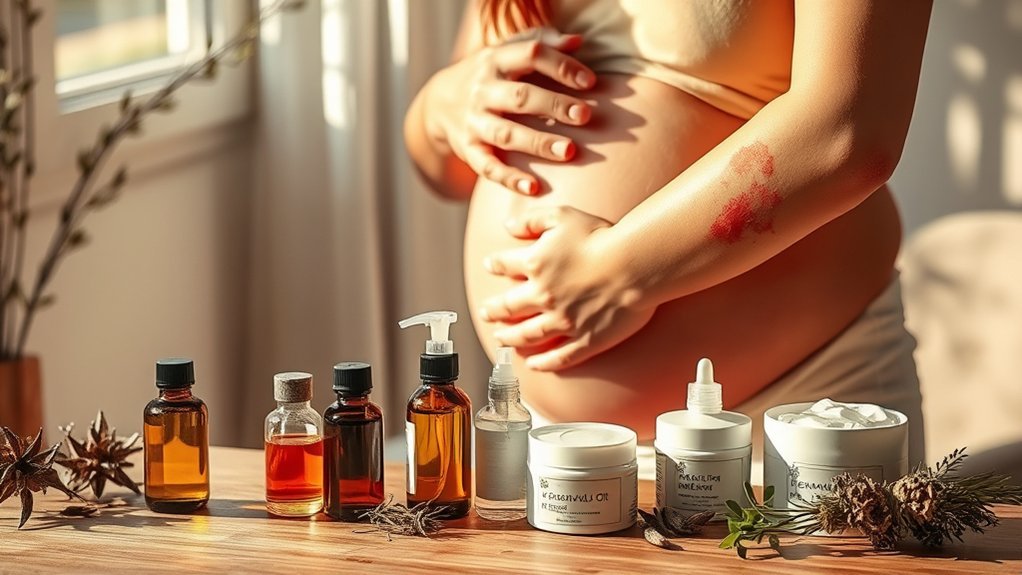
Pregnancy can make your skin more sensitive, itchy, dry, or reactive. Some changes, such as melasma or stretch marks, are common and usually harmless. Other symptoms, such as intense itching without a rash, blisters, fever, or a fast-spreading rash, need prompt medical advice. This guide explains common pregnancy rashes, safe relief options, and when to call your healthcare provider.
Quick Answer
Most pregnancy rashes are caused by skin stretching, heat, eczema, hives, contact irritation, or pregnancy-specific conditions such as PUPPP. Use fragrance-free moisturizers, cool compresses, loose cotton clothing, and provider-approved treatments. Call your healthcare provider quickly for severe itching, itching without a rash, blisters, fever, pain, or rapid spreading.
Key Takeaways
- PUPPP usually starts in abdominal stretch marks during the third trimester and is very itchy, but it usually does not harm the baby.
- Melasma and stretch marks are common pregnancy skin changes, but they are not true rashes.
- Intense itching without a rash, especially on the palms or soles or worse at night, can be a sign of intrahepatic cholestasis of pregnancy and should be checked promptly.
- Blisters, fever, pain, pus, swelling, or a rash spreading quickly are red flags that need medical advice.
- Do not start steroid creams, oral antihistamines, medicated acne products, or herbal remedies during pregnancy without checking with your healthcare provider or pharmacist.
Common Skin Rashes During Pregnancy
Pregnancy changes your hormones, immune system, sweat glands, and skin barrier. That can make old skin problems flare up or cause new itching and irritation. The most common causes include heat rash, eczema, hives, contact dermatitis, and pregnancy-specific rashes.
PUPPP or Polymorphic Eruption of Pregnancy
PUPPP, also called polymorphic eruption of pregnancy, is one of the best-known pregnancy rashes. It usually starts in the stretch marks on the abdomen during the third trimester, especially in the final weeks. It may spread to the buttocks, thighs, arms, or legs.
The rash often looks like small pink or red bumps that join into raised, hive-like patches. It can be very itchy and may disturb sleep. PUPPP is uncomfortable, but it usually does not cause problems for the baby and often improves after delivery.
Atopic Eruption and Prurigo of Pregnancy
Prurigo of pregnancy can cause itchy, grouped bumps on the arms, legs, or trunk. Some bumps may become scratched or crusted. It may appear in the second or third trimester, but it can occur at other points in pregnancy too.
If you already have eczema or sensitive skin, pregnancy may make dryness and itching worse. Gentle skin care, regular moisturizing, and avoiding known triggers can help, but persistent symptoms should be checked.
Heat Rash, Hives, and Contact Irritation
Heat, sweating, tight clothing, new laundry detergent, fragrance, skin-care products, and certain fabrics can trigger itching or a rash. Heat rash may feel prickly and appear in sweaty areas. Hives can look like raised welts that come and go. Contact dermatitis often appears where a product, elastic band, metal, plant, or fabric touched your skin.
Note: Melasma and stretch marks are common pregnancy skin changes, but they are not the same as rashes. Melasma causes brown facial patches, while stretch marks are pink, red, purple, or pale lines caused by skin stretching.
Pregnancy Skin Changes That Are Not Rashes
Some skin changes can look alarming but are usually expected during pregnancy. Melasma, sometimes called the “mask of pregnancy,” causes brown or gray-brown patches on the face. Sun exposure can make it darker, so daily broad-spectrum sunscreen, shade, and hats are helpful.
Stretch marks, also called striae, are also common. They often appear on the abdomen, breasts, hips, thighs, or buttocks as the skin stretches. They may look red or purple at first, then fade over time. Moisturizer can reduce dryness and tightness, but no cream can guarantee prevention.
Identifying Symptoms and Triggers
To understand what may be causing your rash, track when it started, where it appeared first, and what changed before it began. Useful details include new foods, medicines, supplements, skin-care products, laundry products, fabrics, heat exposure, sweating, insect bites, or contact with plants or animals.
Take clear photos in natural light once a day if the rash is changing. Note your itching level from 1 to 10, whether it is worse at night, and whether you have fever, pain, swelling, blisters, yellowing of the skin or eyes, dark urine, pale stools, or reduced sleep from itching.
Symptoms at a Glance
| Itchy bumps in belly stretch marks | May fit PUPPP, especially in the third trimester. Ask your provider to confirm. |
| Itching without a rash | Call your pregnancy care provider, especially if it is intense, constant, on the palms or soles, or worse at night. |
| Blisters or rash around the belly button | Needs prompt medical review because pemphigoid gestationis may need diagnosis and treatment. |
| Fever, chills, pus, severe pain, or rapid spreading | Seek urgent medical advice because infection or another serious condition may be possible. |
| Brown patches on the face | Often melasma, a pigmentation change. Use sun protection and ask before using lightening products. |
Safe Treatment Options
Safe treatment depends on the cause. A mild heat rash or contact irritation may improve with cooling, loose clothing, and stopping the trigger. PUPPP, eczema, hives, or prurigo may need provider-approved medicine if itching affects sleep or daily life.
Fragrance-free moisturizers and emollients are often a good first step. Apply them after bathing and whenever your skin feels tight or dry. Cold compresses can reduce itching and redness for short periods.
Some people may be advised to use a low-potency steroid cream, such as hydrocortisone, or an oral antihistamine. Do not start these on your own during pregnancy unless your healthcare provider or pharmacist says they are suitable for you. Stronger steroid creams, oral steroids, prescription acne products, and medicated lightening creams should only be used under medical guidance.
Warning: Intense itching without a visible rash can be a sign of cholestasis of pregnancy. Call your pregnancy care provider promptly if itching is constant, extreme, worse at night, or strongest on your palms or soles.
Home Remedies for Relief
Simple comfort steps can help many mild pregnancy rashes, especially when irritation, dryness, sweating, or heat is involved.
- Use cool compresses for 10 to 15 minutes at a time.
- Take cool or lukewarm baths or showers instead of hot ones.
- Add colloidal oatmeal to a lukewarm bath if your provider says it is safe for your skin.
- Use fragrance-free cleanser, moisturizer, and laundry detergent.
- Wear loose clothing made from breathable natural fibers, such as cotton.
- Keep nails short and try patting or tapping itchy skin instead of scratching.
- Drink enough water, especially if heat or sweating is making itching worse.
Pro Tip: Keep a simple “rash diary” with the date, location, itch level, new products, foods, medicines, and photos. This can help your provider identify patterns faster.
Aloe vera gel may feel cooling for some people, but choose a simple fragrance-free product and stop if it stings or worsens redness. Avoid essential oils, strong exfoliants, skin-lightening creams, retinoids, and high-strength acne treatments unless your provider approves them.
Serious Pregnancy-Related Rashes to Know
Most rashes in pregnancy are not dangerous, but a few need fast diagnosis because they can affect you, your baby, or both.
Intrahepatic Cholestasis of Pregnancy
Intrahepatic cholestasis of pregnancy, often called ICP or cholestasis of pregnancy, is a liver condition that can happen in late pregnancy. The main symptom is intense itching without a rash. It may affect the palms and soles and can be worse at night. Your provider may order bile acid and liver function blood tests if ICP is suspected.
Pemphigoid Gestationis
Pemphigoid gestationis is a rare autoimmune blistering condition linked to pregnancy. It can begin with itchy red bumps around the belly button and may later form tense blisters. It needs medical evaluation and may require topical or oral corticosteroids under specialist care.
Infection or Allergic Reaction
Call your provider quickly if a rash is painful, warm, swollen, oozing, crusted, or spreading fast. Seek urgent help if you also have fever, trouble breathing, facial or lip swelling, dizziness, or a widespread rash after a new medicine or food.
When to Seek Medical Advice
Contact your healthcare provider if a rash is new, persistent, very itchy, spreading, or not improving with gentle care. It is better to check early than to guess, because pregnancy rashes can look similar but need different treatment.
Call promptly or seek urgent care if you have:
- Constant or extreme itching, especially without a visible rash
- Itching on the palms or soles, especially at night
- Blisters, open sores, pus, or crusting
- Fever, chills, severe pain, or swelling
- Yellowing of the skin or eyes, dark urine, pale stools, nausea, or loss of appetite
- A rash that spreads quickly or covers a large area
- A rash after starting a new medicine
- Any symptom that makes you feel something is not right
This article is general education, not a diagnosis. Your pregnancy care team can decide whether you need a skin exam, blood tests, liver tests, a prescription, or a dermatology referral.
Frequently Asked Questions
Can pregnancy hormones affect my skin’s sensitivity?
Yes. Pregnancy can change your hormones, immune response, sweating, oil production, and skin barrier. You may react to products, fabrics, heat, or fragrances that never bothered you before. Switch to gentle, fragrance-free products and tell your provider about any persistent rash.
Are there specific foods that can trigger rashes during pregnancy?
Food can trigger hives or eczema flares in some people, but pregnancy rashes are not always food-related. If you notice a rash after dairy, nuts, gluten, citrus, shellfish, or another food, write it down and ask your provider. Seek urgent help for swelling, breathing trouble, dizziness, or a widespread reaction.
How does stress influence skin rashes during pregnancy?
Stress may worsen itching, hives, eczema, or scratching habits, but it is not the only cause to consider. If a rash is severe, blistering, painful, or paired with intense itching without a rash, do not assume stress is the reason. Contact your healthcare provider.
Can I use regular skincare products while pregnant?
You can use many gentle products, such as fragrance-free cleansers, moisturizers, and mineral sunscreen. Ask before using retinoids, high-strength salicylic acid, hydroquinone, strong peels, medicated acne treatments, essential oils, or prescription creams. Pregnancy can make your skin more reactive, so patch-test new products when your provider says they are safe.
Are certain rashes more common in specific trimesters?
Yes. PUPPP usually appears in the third trimester or shortly after delivery. Prurigo of pregnancy often appears in the second or third trimester but can occur at other times. Cholestasis of pregnancy is most common in the third trimester but can begin earlier. Any severe, unusual, or fast-changing rash should be checked.
Can PUPPP hurt my baby?
PUPPP is usually uncomfortable for you but not harmful to the baby. Still, you should let your provider confirm the diagnosis because other conditions, such as pemphigoid gestationis or cholestasis of pregnancy, can need closer care.
What should I avoid putting on a pregnancy rash?
Avoid perfumed lotions, harsh scrubs, strong acids, retinoids, skin-lightening creams, unknown herbal mixtures, and essential oils unless your provider approves them. Also avoid using someone else’s prescription cream, especially strong steroid, antibiotic, or antifungal products.
Conclusion
Rashes during pregnancy can be uncomfortable, but many improve with gentle skin care, cooling steps, fragrance-free moisturizer, and trigger avoidance. The key is knowing which symptoms are routine and which need medical care. Call your healthcare provider for severe itching, itching without a rash, blisters, fever, pain, swelling, or fast spreading. Getting checked early protects your comfort and helps keep your pregnancy care on track.
Sources
- DermNet: Skin changes in pregnancy — pregnancy skin changes, melasma, stretch marks, and pregnancy-specific dermatoses
- DermNet: Polymorphic eruption of pregnancy — PUPPP timing, symptoms, spread, and treatment
- DermNet: Prurigo of pregnancy — symptoms, timing, diagnosis, and treatment options
- DermNet: Pemphigoid gestationis — blistering rash symptoms, risks, diagnosis, and treatment
- Mayo Clinic: Cholestasis of pregnancy — intense itching without rash, red flags, and pregnancy risks
- NHS: Itching in pregnancy — safe self-care steps and when medical treatment may be needed