Disclosure: As an Amazon Associate, we earn from qualifying purchases. If you buy through links on this page, we may earn a small commission at no extra cost to you.
By Editorial Team | Updated October 9, 2026
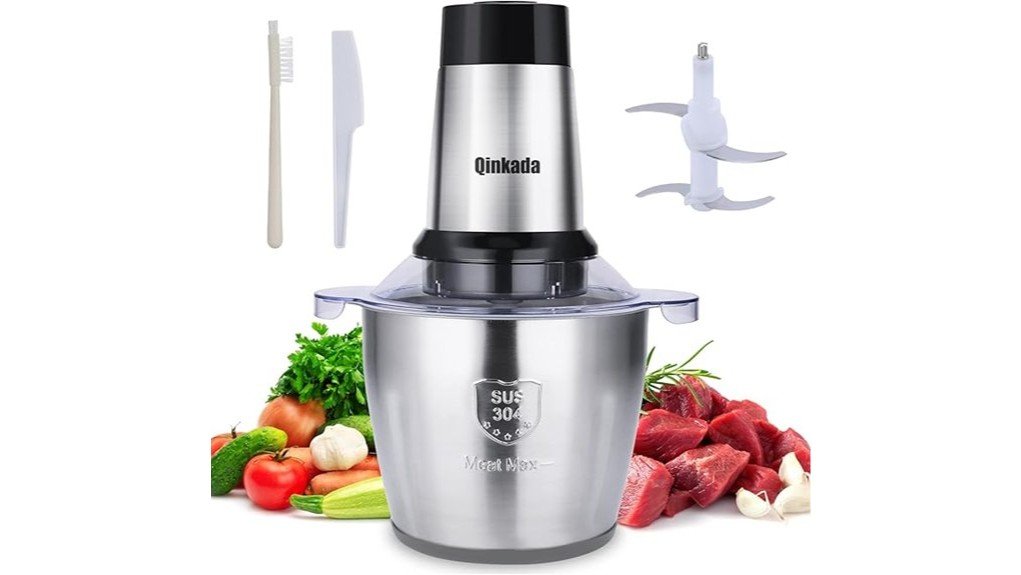
The Qinkada Food Processor is a 500W electric food chopper with a 3.5L (14-cup) stainless steel bowl, three speed settings, and four bi-level blades. Designed for chopping vegetables, mincing meat, grinding nuts, and preparing soft foods, it offers a large mixing bowl without the attachments of a traditional full-size food processor.
Its biggest advantage is the combination of a roomy bowl and straightforward chopping controls. However, the manufacturer’s six-second processing claim is not a guaranteed result, and the appliance has important limits involving continuous use, food texture, and available accessories. This review examines what the specifications and available owner feedback actually support.
Quick Verdict: Qinkada Food Processor
7/10 Editorial assessment based on specifications and available owner feedback; not hands-on testing
3.5L bowl
3 speeds
4 cutting blades
304 stainless steel bowl
Best for: Home cooks who regularly chop vegetables, mince boneless meat, or prepare larger batches of mixed ingredients.
Skip if: You need slicing discs, shredding attachments, dough kneading, or a compact appliance exclusively for tiny portions.
Bottom line: A practical large-bowl chopper on paper, with useful speed controls and safety features. Long-term durability, exact processing performance, and warranty coverage deserve closer attention.
Before You Buy
- It chops rather than slices: The listed configuration does not include slicing or shredding discs.
- 14 cups is bowl capacity: It does not mean every ingredient can be processed at that volume.
- Check your electrical supply: The US-listed model is rated for 120V power.
- Check support terms: A specific warranty duration and reliable replacement-blade availability were not confirmed.
Jump to Review Sections
Key Takeaways
- The Qinkada Food Processor uses a 500W motor with three speed settings for different chopping tasks.
- Its 3.5L stainless steel bowl offers generous space, although usable batch size depends on ingredients and texture.
- Four bi-level blades help cut food at different heights inside the bowl.
- The manufacturer lists onions, garlic, nuts, vegetables, fruits, boneless meat, and baby food among intended uses.
- An internal safety lock and advertised overheating protection are useful safeguards, but they do not replace careful operation.
- This is primarily an electric food chopper, not a complete slicing, shredding, or dough-processing system.
What Makes the Qinkada Food Processor Stand Out?
The Qinkada Food Processor stands out for its large stainless steel bowl, three speed settings, and double-layer cutting system. These features make it appealing to home cooks who want to process more ingredients without moving to a complex food processor.
The stainless steel bowl is especially useful if you prefer metal over glass or plastic. The manufacturer identifies the bowl material as 304 stainless steel, which offers good resistance to ordinary kitchen corrosion when properly maintained.
The four-blade arrangement is another distinction. Instead of cutting from a single level near the bottom, blades positioned at two heights can contact ingredients throughout more of the bowl.
However, the design does not guarantee uniform chopping. Food size, quantity, ingredient hardness, and processing time still affect the result.
The unit also includes a safety interlock intended to stop the blades when the motor head is lifted. Its removable bowl and accessories can make cleaning less complicated than maintaining a food processor with several discs and attachments.
Qinkada Food Processor Specifications
The Amazon-listed Qinkada model is identified as Qinkada-Meat Grinder, with ASIN B0936VBTBS. Its published specifications describe a household electric chopper rather than a commercial meat grinder.
| Specification | Qinkada Food Processor |
|---|---|
| Brand | Qinkada |
| Model | Qinkada-Meat Grinder |
| ASIN | B0936VBTBS |
| Motor | 500 watts |
| Bowl capacity | 3.5 liters (advertised as 14 cups) |
| Bowl material | 304 stainless steel, according to manufacturer listing |
| Blades | Four bi-level stainless steel cutting blades |
| Speeds | Three |
| Electrical rating | 120V AC |
| Listed dimensions | 7.7 x 6.9 x 12.4 inches (depth x width x height) |
| Listed weight | 4.1 pounds |
| Safety features | Internal safety lock and advertised overheat protection |
| Cleaning | Dishwasher-safe bowl listed; never immerse motor head |
Capacity note: The advertised 14-cup figure is a rounded description of the 3.5L bowl. It does not establish a safe maximum working load for chopped meat, nuts, or thick mixtures.
What’s in the Box?
The listed configuration includes the electric motor unit, stainless steel bowl, chopping blade assembly, and lid. The Amazon product details also specifically list a food scraper and cleaning brush.
Check the contents against the package information when it arrives. Other Qinkada configurations, including versions with more than one bowl, should not be assumed to have identical accessories.
Who Should Buy the Qinkada Food Processor?
The Qinkada is most suitable for someone who needs a large-bowl electric chopper for repeat kitchen tasks. It makes more sense as a dedicated chopping tool than as a replacement for every food-preparation appliance.
Good Fit
- Families preparing chopped ingredients in batches
- Home cooks making meat fillings and patties
- People who prefer stainless steel mixing bowls
- Cooks who want several chopping speeds
Consider Another Appliance
- You need uniform vegetable slices or shredded cheese
- You regularly knead bread dough
- You process only tiny servings
- You need a machine for continuous heavy-duty grinding
Qinkada Food Processor Pros and Cons
The main strengths are its capacity and straightforward chopping design. The main limitations concern accessory versatility, working capacity, and unconfirmed after-sales support.
Pros
- 3.5L stainless steel bowl accommodates batch prep.
- Three speeds provide basic chopping control.
- Four bi-level blades handle common ingredients.
- Removable bowl makes cleanup simpler.
Cons
- No slicing or shredding attachments are listed.
- Bowl capacity is not a recommended fill line.
- Two-minute protection calls for short processing sessions.
- Warranty and replacement-part details remain unclear.
Qinkada Food Processor Power, Speed, and Blades
The Qinkada Food Processor combines a 500W electric motor with three selectable speeds. The design is intended to handle ingredients ranging from soft fruit and garlic to firmer vegetables and boneless meat.
Motor wattage describes electrical power consumption, not a guaranteed chopping speed or level of torque. Blade design, loading, and ingredient texture also determine how efficiently a food chopper works.
How Do the Three Speed Settings Work?
Qinkada’s published operating guidance groups the three settings by ingredient type:
- Low speed: Soft fruits, tomatoes, garlic, and tender vegetables.
- Medium speed: Firmer vegetables, apples, and nuts in manageable amounts.
- High speed: More demanding chopping tasks, including suitable cuts of boneless meat.
These are starting points rather than fixed rules. Short bursts give you more control over texture than leaving the motor running longer than necessary.
Do Four Bi-Level Blades Improve Chopping?
The four cutting blades are arranged at two levels. This layout is designed to contact ingredients at different heights, which may reduce the amount of food left untouched at the bottom or sides.
However, evenly sized ingredient pieces and suitable batch loads remain important. A full bowl can limit food movement, even when the appliance has multiple blades.
Is the Six-Second Processing Claim Realistic?
Qinkada advertises processing some ingredients in approximately six seconds. This is a manufacturer claim, not an independently measured result for every food.
Soft, pre-cut ingredients may chop quickly. Whole vegetables, larger meat portions, and harder ingredients can require additional pulses or smaller batches.
For best results, stop when the mixture reaches the texture you need instead of treating six seconds as a universal processing time.
What Foods the Qinkada Food Processor Can Handle
The Qinkada Food Processor is marketed for everyday chopping, including onions, garlic, fruits, vegetables, nuts, boneless meat, and baby food ingredients. Its usefulness depends on how ingredients are prepared and how much food is placed in the bowl.
| Ingredient | Practical Approach | Watch-Out |
|---|---|---|
| Onions and garlic | Use short bursts for controlled chopping. | Long processing can create a paste. |
| Carrots and firm vegetables | Cut into smaller pieces before processing. | Large hard pieces may process unevenly. |
| Boneless meat | Use manageable, chilled pieces. | Do not include bones or overload the bowl. |
| Nuts | Start with small amounts and monitor texture. | Very hard or dense mixtures can strain the motor. |
| Cooked vegetables and soft fruit | Process in suitable portions for softer mixtures. | Very small quantities may not reach the blades well. |
| Frozen ingredients | Avoid hard frozen blocks unless specifically approved. | May damage blades or strain the drive system. |
Unlike a food processor fitted with specialty discs, this unit primarily cuts and minces. It is not designed to produce uniform cucumber slices, shredded cheese, or thin potato chips.
Best Uses for the Qinkada Food Processor
The strongest use cases are recipes that require chopped or minced ingredients rather than precision-cut pieces. These examples show where its bowl capacity and blade design may be most useful.
Chopping Vegetables for Family Meals
Onions, garlic, peppers, and other prepared vegetables are natural matches for this chopper. Start with similarly sized pieces and process in short bursts to prevent some ingredients from turning into a puree while others remain coarse.
Mincing Boneless Meat for Fillings
The Qinkada is marketed for chopping boneless meat used in dishes such as meatballs, burger patties, and dumpling fillings. Chilled, evenly cut pieces are easier to handle than large or partially frozen blocks.
For a specific coarse or fine grind, a dedicated meat grinder may offer more predictable texture control.
Preparing Soft Foods and Baby Purees
Cooked vegetables and suitable soft foods can be processed into smoother mixtures. The outcome depends on batch size, moisture, and processing time.
For infant feeding, ingredients must be appropriately prepared, safely cooked where needed, and blended to an age-appropriate texture. A food chopper does not guarantee a completely smooth puree or remove choking hazards.
Chopping Nuts and Making Recipe Mixtures
The blades can be useful for chopping nuts or combining ingredients for sauces and fillings. However, producing smooth nut butter or processing thick dough may place much greater strain on the motor.
Use the appliance for its listed chopping applications rather than assuming it can replace a high-powered blender or specialized grinder.
How to Use the Qinkada Food Processor
Correct assembly is essential because the unit uses a safety interlock. Before its first use, follow the instructions supplied with the exact model and clean the appropriate food-contact parts.
- Prepare the work area. Put the bowl on a stable, dry, level surface.
- Fit the blades. With the appliance unplugged, position the blade assembly correctly on its shaft.
- Prepare the food. Remove bones and other unsuitable hard materials, then cut ingredients into manageable pieces.
- Load the bowl. Leave enough room for food to move and observe any fill marks or limits in the instructions.
- Fit the lid and motor head. Align the parts according to the manufacturer’s assembly directions.
- Select a speed. Start with a suitable setting and operate in short bursts.
- Check the texture. Release the control, allow the blades to stop fully, and unplug before opening the appliance.
- Remove the ingredients. Carefully lift out the blade assembly before emptying the bowl.
- Clean the appliance. Wash the food-contact parts using the approved cleaning method and wipe the unplugged motor housing separately.
If the unit does not start, check that the lid and motor head are seated correctly. If it shuts off while operating, unplug it, allow it to cool, and consult the supplied instructions before trying again.
Qinkada Food Processor Safety and Cleanup
The Qinkada includes a safety interlock and advertised overheating protection. These features can reduce certain operating risks but do not make the appliance safe to open, overload, or leave unattended while running.
How Does the Safety Lock Work?
The manufacturer states that lifting the motor head during operation causes the internal safety lock to stop the blades. It is intended to prevent operation when the motor head is improperly seated.
Never test this feature by reaching into the bowl or lifting the running appliance. Release the controls, wait for all movement to stop, and disconnect power before removing any part.
Understanding the Overheat Protection
The listing advertises a two-minute overheat-protection feature. This should not be interpreted as permission to run the appliance continuously under a heavy load for two minutes.
Use brief processing intervals and respect the actual duty-cycle instructions included with your unit. If the motor becomes unusually hot, smells abnormal, or stops unexpectedly, unplug it and allow it to cool before investigating.
Safety warning: The blades are sharp even when the motor is unplugged. Keep fingers away from cutting edges, never immerse the motor housing in water, and keep the appliance out of children’s reach.
Are the Bowl and Blades Dishwasher Safe?
The product information identifies the appliance as dishwasher-safe, and the original product description specifically refers to the bowl. A publicly available instruction reference also describes the bowl, lid, and blade assembly as dishwasher-safe.
Because care instructions may vary by configuration, confirm the cleaning directions supplied with your exact unit before putting the lid or blades in the dishwasher.
Always clean the motor housing with a suitable damp cloth while unplugged. Never put it in the dishwasher or submerge it.
Preventing Cross-Contamination
If you prepare raw meat in the bowl, wash all food-contact surfaces thoroughly before using the appliance for fruit, vegetables, or ready-to-eat food.
FoodSafety.gov recommends cleaning utensils and surfaces after contact with raw meat and separating raw animal products from foods that will not be cooked.
This is especially important when the same chopper is used for family meals and baby food.
What Do Qinkada Food Processor Owners Report?
Available owner-review excerpts show appreciation for chopping convenience and the simple blade-and-bowl arrangement. They also raise questions about packaging, noise, lid handling, and long-term durability.
The comments below are a qualitative summary of publicly accessible review excerpts, not findings from independent testing or a representative customer survey.
Commonly Reported Strengths
- Vegetable preparation: Some buyers describe satisfactory results chopping potatoes, onions, and other vegetables.
- Meat preparation: Owners report using the appliance for household meat-mincing tasks.
- Simple cleaning: Several comments favor the relatively small number of removable parts.
- Two-level blades: One detailed owner account credits the blade arrangement with helping food process more consistently.
- Storage: Some users appreciate the simpler setup compared with larger processors that include many accessories.
Owner-Reported Watch-Outs
- Noise: Experiences vary. Some users describe moderate noise, while others consider the unit relatively quiet.
- Lid handling: At least one detailed review describes the lid as awkward to handle.
- Shipping and packaging: One buyer reported problems with the condition of delivered packaging.
- Reliability: Other publicly accessible review summaries include complaints about early malfunction or inconsistent chopping.
These experiences do not establish a defect rate. They are reasons to inspect the appliance immediately after delivery and test its basic operation within the seller’s applicable return period.
Qinkada Food Processor vs. Alternatives
Choosing between the Qinkada and another food processor depends on whether you value bowl size, compact storage, or slicing and shredding functions. Three established alternatives provide useful points of comparison.
| Model | Capacity | Power | Main Advantage |
|---|---|---|---|
| Qinkada Food Processor | 3.5L, advertised 14 cups | 500W | Large metal bowl and three chopping speeds |
| KitchenAid KFC3516 | 3.5 cups | Not compared | Compact chopping and a drizzle basin |
| Cuisinart Mini-Prep Plus DLC-4CHB | 4 cups | 250W | Small-batch chop/grind controls |
| Hamilton Beach 70730 | 10 cups | 450W | Slicing and shredding attachments |
Specifications are based on published manufacturer information. These products were not compared through standardized hands-on tests.
Qinkada vs. KitchenAid 3.5-Cup Food Chopper
The KitchenAid KFC3516 uses a smaller 3.5-cup work bowl, with two speeds and pulse control. It also includes a drizzle basin for adding liquid ingredients while preparing dressings and sauces.
Choose KitchenAid if you mostly make small portions, sauces, or dressings and want convenient storage. Choose Qinkada if a substantially larger stainless steel bowl is more useful.
Qinkada vs. Cuisinart Mini-Prep Plus
The Cuisinart DLC-4CHB offers a 4-cup bowl and 250W motor, with an automatic reversing blade intended for chopping and grinding.
Choose Cuisinart if you need a smaller appliance for everyday aromatics and limited portions. Qinkada offers more bowl capacity, but the larger container may be less practical for very small quantities.
Qinkada vs. Hamilton Beach 10-Cup Food Processor
The Hamilton Beach 70730 is a more conventional food processor. Its 10-cup bowl, built-in scraper, feed chute, and slicing/shredding disc offer functions that the Qinkada’s listed configuration lacks.
Choose Hamilton Beach if you regularly shred cheese, slice vegetables, or want several preparation functions. Qinkada makes more sense if you primarily want electric chopping in a stainless steel bowl.
Is the Qinkada Food Processor Worth Buying?
The Qinkada Food Processor is worth considering if your priority is batch chopping with a metal bowl rather than multifunction food processing. Its listed combination of 500W power, three speeds, and a four-blade arrangement is well suited to its intended household role.
The value calculation becomes less favorable if you need reliable precision slices, very small batch preparation, extended continuous operation, or clearly documented replacement-part support.
| Factor | Assessment | Reason |
|---|---|---|
| Motor and chopping design | Promising | 500W rating and multi-level blades |
| Bowl capacity | Generous | 3.5L total bowl volume |
| Versatility | Limited to chopping tasks | No listed slicing or shredding discs |
| Safety | Useful safeguards | Safety interlock and advertised heat protection |
| Cleaning | Relatively simple | Removable bowl and blade assembly |
| After-sales support | Uncertain | Specific warranty and parts terms not confirmed |
The final buying decision depends on the current offer and your intended workload. Compare the listing price and seller terms against the smaller choppers or the more versatile full-size processors above.
How We Evaluated the Qinkada Food Processor
This review is a research-based product assessment. We examined the Amazon listing for model B0936VBTBS, publicly available operating guidance, accessible owner-review excerpts, and manufacturer specifications for comparable appliances.
We assessed the published capacity, cutting design, controls, practical limitations, cleaning requirements, safety claims, and support information. The editorial score reflects these factors and the uncertainty surrounding independent performance and long-term reliability.
We have not conducted hands-on chopping tests, measured noise, tested motor temperature, inspected blade durability, or confirmed how many ingredients the machine processes in six seconds. No claim in this review should be understood as a firsthand laboratory result.
Frequently Asked Questions
Does the Bowl Fit in Standard Kitchen Cabinets?
The Qinkada Food Processor may fit many kitchen cabinets, but the available space determines whether it can be stored assembled. The product listing gives overall dimensions of 7.7 inches deep, 6.9 inches wide, and 12.4 inches high. Measure the usable shelf height and depth, and allow room to handle the motor head and removable parts safely.
Is the Qinkada Food Processor Noisy During Operation?
The Qinkada produces motor and chopping noise, but a verified decibel measurement is not available. Owner accounts are mixed: some describe it as reasonably quiet, while others notice more noise at higher speeds. Sound also depends on ingredients, bowl loading, and the work surface. Do not assume the appliance is silent or unusually loud without a controlled comparison.
Can It Grind Frozen Ingredients Effectively?
The Qinkada is not confirmed to be suitable for grinding fully frozen blocks of food. Hard frozen ingredients may strain the motor or damage the cutting system. For recipes using frozen food, follow the supplied operating instructions and prepare ingredients to an approved size and condition. Do not assume that a 500W rating alone establishes frozen-food capability.
Are Replacement Parts Available for This Model?
Replacement-part availability for the exact Qinkada-Meat Grinder model has not been confirmed. The removable bowl and blades do not necessarily mean replacement components are sold separately. Before purchasing, ask the seller whether compatible blade assemblies, lids, and bowls can be ordered. Also confirm the process for obtaining a replacement if a component arrives damaged or becomes unusable.
Does It Come With a Warranty or Customer Support?
A specific warranty duration for this Qinkada configuration could not be independently confirmed. A publicly available instruction reference mentions limited warranty coverage but does not establish reliable terms or a verified manufacturer support contact. Review the warranty information accompanying the actual listing and ask the seller about coverage, replacement eligibility, and customer-service options before buying.
Can the Qinkada Food Processor Chop Raw Meat?
Yes, the Qinkada is marketed for chopping boneless meat, including ingredients for patties and fillings. Use manageable pieces and avoid bones, thick frozen blocks, and excessive loads. Keep meat properly chilled during preparation. After processing raw meat, thoroughly wash the bowl, blades, and food-contact components before using them for vegetables or ready-to-eat foods.
Can the Qinkada Food Processor Make Baby Food?
Yes, the manufacturer lists baby food among the intended applications. The appliance can help chop or puree appropriately prepared soft ingredients, although it does not guarantee a completely smooth texture. Cook foods when required, remove unsuitable pieces, and check the final consistency before feeding. Clean the appliance thoroughly, especially after preparing raw meat or poultry.
Can It Replace a Traditional Food Processor?
Not completely. The Qinkada can perform several common chopping and mincing tasks, but the listed package does not include slicing discs, shredding attachments, or dough-processing accessories. If your recipes depend on those functions, a traditional food processor is more appropriate. The Qinkada is better viewed as a large-capacity electric chopper for everyday ingredient preparation.
How Long Can the Qinkada Run Continuously?
The product advertises a two-minute overheating-protection feature, while a publicly available instruction reference advises against operating continuously for more than two minutes. That is not a guarantee that every heavy load is safe for that duration. Use short processing bursts and follow the supplied instructions. If overheating protection activates, unplug the appliance and let it cool before reuse.
Can the Qinkada Food Processor Work on 220V or 240V?
The US-listed Qinkada model is rated for 120V AC, so it should not be plugged directly into a 220V or 240V outlet unless the actual appliance label explicitly supports that voltage. A plug adapter alone does not change supply voltage. Buyers outside North America should verify electrical compatibility and use only an appropriately rated power solution.
Conclusion
The Qinkada Food Processor offers a useful combination of a 500W motor, three speed settings, four bi-level blades, and a 3.5L stainless steel bowl. Its main appeal is preparing chopped or minced ingredients in household batches without managing a large collection of attachments.
It is less suitable for precision slicing, shredding, heavy continuous grinding, or buyers who require clearly documented replacement-part support. If those limits fit your needs, the Qinkada deserves consideration alongside similarly priced small food processors.
Before ordering, confirm the exact listing configuration, warranty coverage, and electrical compatibility.
Considering the Qinkada Food Processor?
Review the current seller details, included parts, and return terms before deciding.