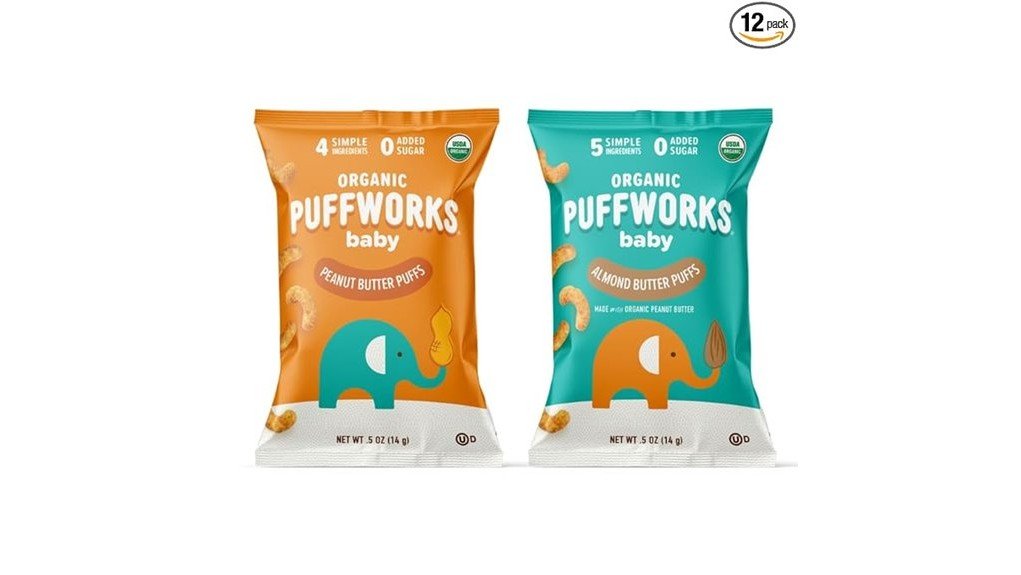
Puffworks Baby Peanut and Almond presents a simple approach to early nut exposure in a handheld snack form. The ingredient lists are short, the textures are designed for infant self-feeding, and the absence of added sugars may appeal to parents seeking cleaner options. Peanut and almond differ in intensity, which can matter as a child’s palate develops. The broader question is whether these puffs do more than just simplify snack time.
Key Takeaways
- Puffworks Baby Peanut and Almond puffs are organic, gluten-free, Non-GMO, and kosher with no added sugar.
- They are designed for early allergen introduction in a baby-friendly, easy-to-grasp puff format.
- The puffs soften and dissolve easily, supporting safer supervised self-feeding.
- Peanut tastes more roasted and familiar, while almond is milder with a subtle sweetness.
- The simple nut-based ingredients and low sodium make them a clean-label snack for early feeding.
What Is Puffworks Baby Puff Snacks?
Puffworks Baby Puff Snacks are organic nut butter puffs made for early peanut and almond introduction in babies. The product fits current baby snack trends by offering a simple, handheld format aligned with organic baby foods preferences.
It is presented as a controlled, familiar option for families seeking practical ways to support early allergen exposure while keeping feeding routines calm and manageable. Each small puff is designed for easy grasping and gradual self-feeding, supporting autonomy in early eating.
The detached clinical view suggests a thoughtful, convenience-oriented snack for households prioritizing simplicity, safety, and nourishment.
Puffworks Baby Ingredients and Nutrition
At the ingredient level, the product is built around a simple formula: dry roasted nuts used as the primary nut butter base, with no added sugar and low sodium content. This supports a clean-label profile that may suit families seeking transparency and ingredient sourcing they can verify.
In nutritional comparison, the puffs provide plant-based protein alongside organic, gluten-free, Non-GMO, and kosher credentials. The texture is engineered to soften readily, but the ingredient list itself remains restrained and clinically straightforward.
For caregivers prioritizing liberated choices, the composition reflects minimal processing without unnecessary additives or sweeteners.
Why These Puffs Work for Early Allergen Introduction
From a feeding-safety standpoint, the product’s simple nut-based formulation supports early allergen introduction because peanut and almond are presented in a controlled, baby-friendly format rather than as sticky or hard pieces.
This structure can help caregivers offer early exposure with greater confidence and less mess. The puffs dissolve readily, which may improve practical allergen safety during supervised feeding.
Their single-category nut focus also reduces ingredient complexity, a feature often valued when introducing common allergens one at a time.
For families seeking a calm, informed approach, the format supports gradual, developmentally appropriate access to nut proteins without unnecessary barriers or sensory overwhelm.
How Peanut and Almond Flavors Compare
Peanut and almond puffs offer slightly different flavor profiles while maintaining the same gentle, baby-friendly texture.
The peanut flavor is typically more robust, with a familiar roasted depth that some infants accept readily. The almond flavor tends to read as lighter and milder, with a subtly sweet finish.
Both remain low in sodium and free of added sugar, allowing the nut notes to stay clear and uncluttered.
For caregivers seeking a calm, evidence-based introduction to nut tastes, either option supports gradual palate development while preserving autonomy in snack choice.
Best Ways to Use Puffworks Baby Snacks
Puffworks Baby snacks work well as a simple, portable option for early nut exposure and everyday feeding routines. They can be offered during snack time, alongside breast milk, formula, or age-appropriate baby meals, when a caregiver is ready to observe tolerance. Their soft texture supports easy self-feeding and reduces mess.
| Use | Benefit | Setting |
|---|---|---|
| Finger food | Melts easily | Home |
| Travel snack | Portable pack | Diaper bag |
| Meal accompaniment | Nut exposure | Chair |
Clinical practice favors calm, supervised introduction, one new food at a time, to support informed, liberated feeding choices without pressure.
Frequently Asked Questions
How Many Puffs Are in Each Bag?
Each 0.5-ounce bag’s puff count is not specified. The pouch emphasizes puff size, nutritional value, and easy infant handling. Evidence suggests compact, soft puffs that support safer self-feeding, though exact quantity varies.
Are Puffworks Baby Puffs Suitable for Travel?
Yes, they are travel-friendly snacks, conveniently packaged for diaper bags and on-the-go nutrition. Ironically, something so small can be so practical; the evidence suggests easy handling, low mess, and reassuring portability for caregivers seeking liberation.
What Certifications Do These Snacks Have?
They are USDA Organic Certified, Non-GMO Project Verified, Gluten-Free, and Kosher Certified. Their nutritional benefits derive from simple ingredient sourcing, with dry-roasted nuts, low sodium, no added sugar, and plant-based protein for infant snacking.
Can Babies Self-Feed These Puffs Easily?
Yes, these puffs can be easily self-fed; their soft, meltable texture is almost miraculous for beginners. With appropriate self feeding techniques and respect for texture preferences, babies may grasp, mouth, and consume them safely.
Is the Variety Pack Sold in Other Sizes?
The variety pack appears limited to the 12-bag size, with no clearly documented alternative packaging options. The variety pack flavors are peanut and almond, and evidence suggests the current packaging options favor convenience over expanded sizing.
Conclusion
Puffworks Baby Peanut and Almond offers a practical, evidence-aligned option for early allergen exposure in a handheld form. Its simple ingredient profile and absence of added sugar support a clean-label approach for infants beginning self-feeding. One meaningful statistic: early introduction of peanut around 4 to 6 months can reduce peanut allergy risk by up to 81% in high-risk infants. Overall, these puffs combine convenience, safety, and nutritional purpose in a reassuring snack format.