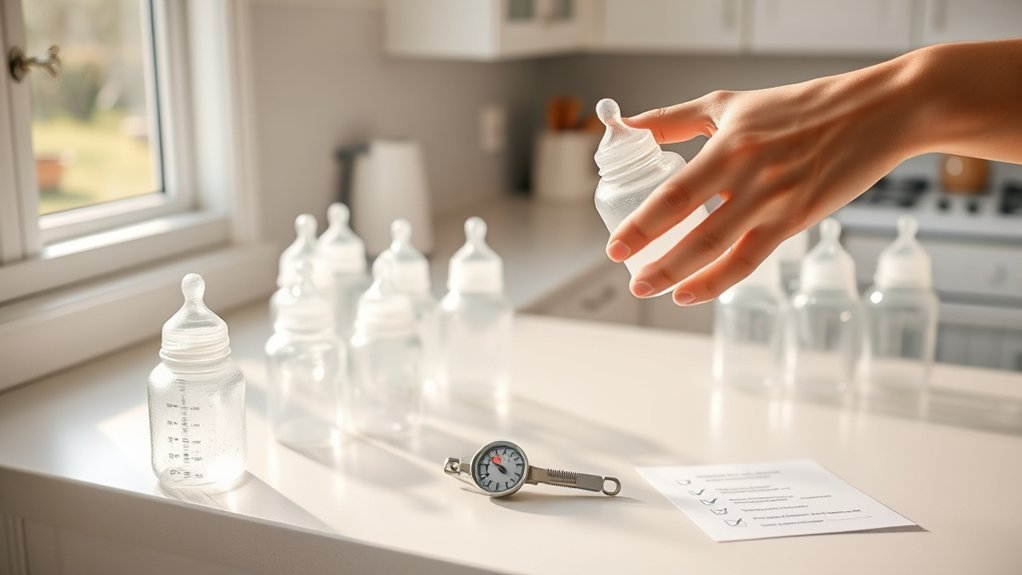
When it comes to preparing bottles for your little one, keeping safety in mind is essential. You need to be aware of potential signs of contamination and how your baby might react if something’s off. Understanding these symptoms can help you create a safer feeding environment. Plus, knowing the best practices for bottle preparation can make a significant difference. So, what should you look out for to guarantee your baby’s well-being?
Importance of Proper Bottle Preparation
When you’re preparing bottles for your little one, it’s essential to understand the importance of doing it safely. Proper bottle preparation guarantees that your baby receives the right nutrients while minimizing the risk of harmful bacteria.
You should always wash your hands before handling bottles and use clean, sterilized equipment. Mixing formula according to the manufacturer’s instructions is critical, as incorrect ratios can lead to nutritional imbalances.
It’s essential to check expiration dates on formula and avoid using old or expired products. By taking these precautions, you protect your baby’s health and give them a great start in life.
Recognizing Temperature Risks
While preparing bottles, it’s important to be aware of temperature risks that can affect your baby’s safety.
Always check the temperature of the milk or formula before feeding. Ideally, it should be warm but not hot, around body temperature (98.6°F or 37°C). You can test it by placing a few drops on your wrist; it should feel lukewarm, not hot.
Always test the milk or formula temperature; it should feel lukewarm, around body temperature (98.6°F or 37°C), before feeding.
Avoid using a microwave, as it can create hot spots that may scald your baby. Instead, use a bottle warmer or a bowl of warm water for gentle heating.
Remember, if the formula has been left out for more than two hours, it’s best to discard it to prevent bacterial growth.
Prioritizing these precautions guarantees a safe feeding experience for your little one.
Signs of Contamination in Bottles
To guarantee your baby’s safety, it’s crucial to recognize the signs of contamination in bottles.
Look for unusual odors, as spoiled milk or formula often has a sour smell. Check for any visible particles, like clumps or residue, which can indicate bacterial growth. If the bottle’s contents appear discolored or separated, that’s a red flag too.
Pay attention to any unusual bubbles forming, as they can signal fermentation or spoilage. Finally, inspect the bottle itself for cracks or scratches, which can harbor harmful germs.
By staying vigilant and aware of these signs, you empower yourself to guarantee your baby’s health and well-being while fostering a nurturing environment.
Symptoms of Digestive Distress in Infants
How can you tell if your baby is experiencing digestive distress? Recognizing the signs is essential for your infant’s comfort and well-being. Here are three common symptoms to watch for:
- Excessive crying or fussiness: If your baby seems unusually irritable, it could indicate discomfort.
- Spitting up or vomiting: Frequent spit-ups may signal that your little one’s tummy is upset.
- Changes in bowel movements: Diarrhea or constipation can be a sign of digestive distress, impacting their overall health.
Being aware of these symptoms helps you respond quickly and compassionately.
Best Practices for Safe Bottle Feeding
Ensuring your baby’s bottle feeding is safe is essential for their health and comfort.
Start by washing your hands and sterilizing bottles and nipples before each use. Always check the expiration dates on formula or breast milk, and store them correctly in the fridge.
To ensure safety, always wash your hands and sterilize bottles and nipples before each use, and check expiration dates on milk.
When warming milk, use a warm water bath instead of the microwave to avoid hot spots that could burn your baby.
Hold your baby in a semi-upright position during feeding to reduce the risk of choking and promote better digestion.
Keep an eye on your baby’s cues; if they show signs of discomfort, pause and comfort them.
Finally, never leave your baby unattended while feeding.
Frequently Asked Questions
How Often Should I Clean Baby Bottles?
You should clean baby bottles after every use. This helps prevent bacteria growth and guarantees your baby stays healthy. Regularly inspect for wear or damage, too; it’s essential for keeping feeding safe and hygienic.
Can I Reuse Old Bottles Safely?
You can reuse old bottles safely if they’re free from cracks or scratches. Think of them like trusty shoes; with care and cleaning, they can continue supporting your baby’s journey. Regular inspections guarantee their safety and longevity.
What Materials Are Safest for Baby Bottles?
The safest materials for baby bottles are BPA-free plastics, glass, and stainless steel. These options guarantee your baby’s health while providing durability and easy cleaning. Always check for safety certifications to make informed choices.
How Can I Tell if a Bottle Is Damaged?
You can tell if a bottle’s damaged by checking for cracks, chips, or warping. Also, inspect the nipple for holes or tears. If you notice any issues, it’s best to replace the bottle immediately.
Should I Sterilize Bottles After Each Use?
Absolutely, you should sterilize bottles after each use, especially for infants. Think of it as giving your baby a clean slate, free from harmful germs. It guarantees their health and safety, promoting a nurturing environment.
Conclusion
To sum up, ensuring safe bottle preparation is essential for your baby’s health and comfort. You might think it’s time-consuming, but a few simple steps can make a world of difference. By staying vigilant for signs of contamination and recognizing symptoms of digestive distress, you’re not just preventing problems—you’re nurturing your little one’s well-being. Embrace these practices as part of your routine, and you’ll create a safe and loving feeding environment for your baby.