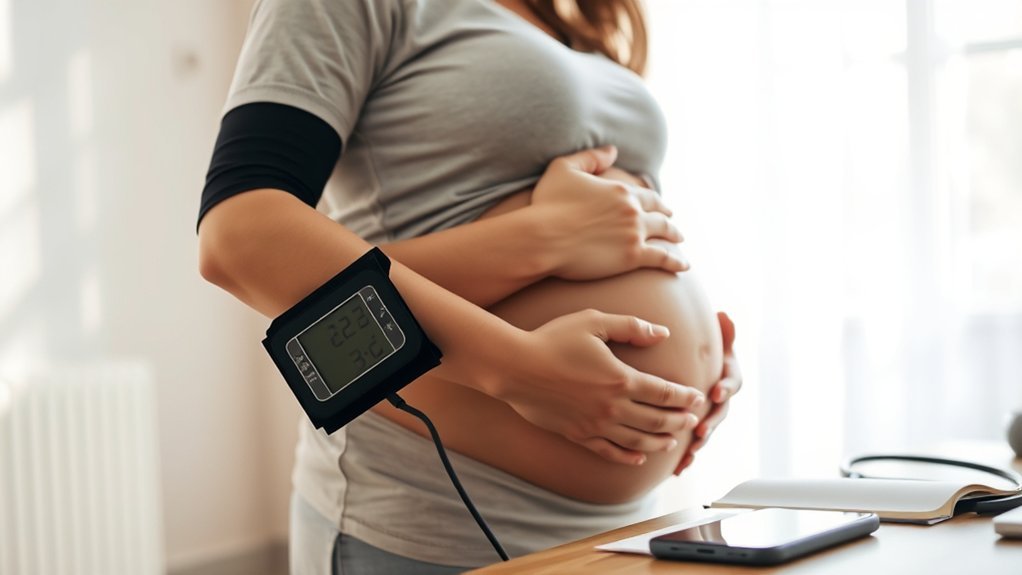
Preeclampsia warning signs can appear suddenly, and some people have few or no symptoms before their blood pressure rises. Call your healthcare provider right away for a blood pressure of 140/90 mm Hg or higher, a persistent severe headache, vision changes, sudden swelling of the face or hands, upper-abdominal pain, or trouble breathing. A blood pressure of 160/110 mm Hg or higher or severe symptoms need emergency medical assessment.
Quick Answer
If you are pregnant after 20 weeks or within 6 weeks after birth, call your obstetric team right away for a blood pressure of 140/90 mm Hg or higher or concerning symptoms. A reading of 160/110 mm Hg or higher, a seizure, severe breathing trouble, or other severe symptoms needs emergency care.
Key Takeaways
- Preeclampsia may cause no obvious symptoms, so routine blood-pressure checks during prenatal care still matter.
- Protein in the urine can support the diagnosis, but preeclampsia can also be diagnosed when high blood pressure occurs with other signs of organ problems.
- Postpartum preeclampsia can develop after delivery, including in people whose blood pressure was normal during pregnancy.
- Mild foot and ankle swelling is common in pregnancy; sudden or extreme swelling of the face or hands is more concerning.
- People at increased risk may be offered low-dose aspirin during pregnancy, but it should be taken only on a healthcare professional’s advice.
Understanding Preeclampsia: What It Is and Why It Matters
)
Preeclampsia is a pregnancy-related high blood pressure disorder that usually develops after 20 weeks. It can affect the kidneys, liver, blood, brain, lungs, placenta, and other organs, so early recognition matters for both you and your baby.
According to ACOG’s preeclampsia guidance, symptoms may include a headache that will not go away, vision changes, upper-abdominal or shoulder pain, nausea or vomiting later in pregnancy, sudden weight gain, swelling of the face or hands, and difficulty breathing.
Preeclampsia is not diagnosed from swelling alone. Doctors look at blood pressure together with urine tests, blood tests, symptoms, and other evidence that organs are being affected.
Protein in the urine, called proteinuria, is one possible finding. However, preeclampsia can occur without proteinuria when new high blood pressure is accompanied by certain kidney, liver, blood, lung, neurological, or visual problems.
The condition can lead to complications such as fetal growth restriction, preterm birth, placental abruption, stroke, organ injury, HELLP syndrome, or eclampsia. Eclampsia means seizures associated with preeclampsia and is a medical emergency.
Preeclampsia can also begin after birth. ACOG’s postpartum guidance notes that postpartum preeclampsia most often appears within a few days after delivery but can occur up to 6 weeks later, even after a pregnancy with normal blood pressure.
Preeclampsia Warning Signs to Watch For
)
The most important preeclampsia warning signs are new high blood pressure, a persistent headache, changes in vision, upper-abdominal pain, sudden swelling, nausea or vomiting later in pregnancy, and shortness of breath. Symptoms can vary, and some people feel normal despite having high blood pressure.
- Blood pressure of 140/90 mm Hg or higher: this is a concerning level during pregnancy or postpartum and should prompt a call to your healthcare provider.
- Persistent or severe headache: especially one that does not improve as expected or becomes worse.
- Vision changes: including blurred vision, flashing lights, bright spots, blind spots, or temporary loss of vision.
- Upper-abdominal pain: particularly pain under the ribs on the right side or pain that extends toward the shoulder.
- Nausea or vomiting: especially when it is new in the second half of pregnancy and occurs with other warning signs.
- Sudden swelling: particularly swelling of the face, hands, or around the eyes.
- Shortness of breath: this can be associated with fluid in the lungs and needs prompt assessment.
| Finding | What to Do |
|---|---|
| Blood pressure 140–159 systolic or 90–109 diastolic | Call your obstetric healthcare provider right away for instructions and assessment. |
| Blood pressure 160 systolic or 110 diastolic, or higher | Seek immediate medical care. This is severe-range hypertension. |
| Persistent severe headache, vision changes, severe upper-abdominal pain, or significant trouble breathing | Get urgent medical evaluation even if you do not know your blood pressure. |
| Sudden face or hand swelling or rapid weight gain | Call your provider promptly, especially if another warning sign is present. |
Warning: Seek emergency medical care for a blood pressure of 160/110 mm Hg or higher, a seizure, severe trouble breathing, fainting or confusion, chest pain, a severe persistent headache with vision changes, or severe upper-abdominal pain.
When Swelling Becomes Concerning
)
Some swelling is common during pregnancy, especially in the feet and ankles. The pattern matters more than swelling by itself: sudden, extreme, or rapidly worsening swelling of the face or hands is more concerning for preeclampsia.
Normal vs. Abnormal Swelling
Mild swelling that gradually develops in both feet or ankles is common, particularly later in pregnancy, after standing for long periods, or in hot weather. It often improves with rest.
Swelling deserves more attention when it appears suddenly, becomes severe, affects the hands or face, or occurs with a headache, vision changes, high blood pressure, upper-abdominal pain, nausea, or shortness of breath.
MedlinePlus guidance on preeclampsia symptoms also lists sudden weight gain over 1 or 2 days or more than 2 pounds in a week as a reason to contact a provider. Weight gain alone, however, does not diagnose preeclampsia.
Areas of Concern
The face and hands are especially important areas to watch. Extreme hand swelling may make rings feel suddenly tight or make it difficult to bend the fingers, while facial swelling may make the eyes and surrounding tissues look unusually puffy.
Swelling in the feet by itself is much less specific because it is common in healthy pregnancies. What matters is a sudden change, unusual severity, or swelling combined with other preeclampsia warning signs.
Timing for Doctor Visit
Call your healthcare provider promptly if swelling develops suddenly, is much worse than usual, affects your face or hands, or occurs with another warning sign. Do not wait for a routine prenatal appointment if you also have a persistent headache, vision changes, high blood pressure, upper-abdominal pain, or breathing difficulty.
If symptoms are severe, or your blood pressure reaches the severe range, use emergency medical care rather than waiting for an office appointment.
The Importance of Monitoring Blood Pressure
Blood-pressure measurement is one of the best ways to detect preeclampsia because high blood pressure itself often causes no noticeable symptoms. Your provider checks it during prenatal care and may recommend home monitoring if you have hypertension or other risk factors.
Blood Pressure Basics
The top number is the systolic pressure, and the bottom number is the diastolic pressure. A blood pressure of 140/90 mm Hg or higher after 20 weeks is abnormal and needs medical assessment.
NICHD’s diagnostic guidance explains that clinicians evaluate high blood pressure together with protein in the urine or signs that organs such as the kidneys or liver are being affected. This distinction matters because proteinuria is not the only way preeclampsia can present.
A blood pressure of 160/110 mm Hg or higher is severe-range hypertension. The National Heart, Lung, and Blood Institute identifies a sudden rise above this level during pregnancy or after birth as a medical emergency.
If you use a home blood-pressure monitor, follow your provider’s instructions and record your readings. Home monitoring can help identify changes, but it does not replace prenatal visits or professional assessment of concerning symptoms.
Risk Factors Identification
Some pregnancies have a higher risk of preeclampsia. Major risk factors include a history of preeclampsia, chronic high blood pressure, kidney disease, type 1 or type 2 diabetes before pregnancy, autoimmune disease, and carrying more than one baby.
Other factors include a first pregnancy, obesity, a family history of preeclampsia, age 35 or older, in vitro fertilization, a long interval between pregnancies, and certain previous pregnancy complications.
Risk factors do not mean you will definitely develop preeclampsia. They help your healthcare professional decide how closely to monitor you and whether preventive treatment is appropriate.
For people at sufficiently high risk, ACOG recommends low-dose aspirin prophylaxis, commonly 81 mg daily, beginning after 12 weeks of pregnancy according to clinical risk. Do not start aspirin during pregnancy unless your healthcare professional recommends it.
Regular Monitoring Importance
Regular monitoring can identify rising blood pressure before you feel unwell. Keep prenatal appointments, follow any home-monitoring plan your healthcare provider gives you, and report readings or symptoms that cross the limits they have set for you.
If preeclampsia is suspected, your provider may repeat your blood pressure and order urine and blood tests. Depending on your stage of pregnancy and the results, they may also assess your baby’s growth, heart rate, and well-being.
Do not change prescribed blood-pressure medicine or other pregnancy medications on your own because of a single reading. Contact your healthcare professional for instructions unless the reading or your symptoms require emergency care.
Other Warning Signs You Shouldn’t Ignore
Preeclampsia can affect more than blood pressure. A worsening headache, new vision problems, significant shortness of breath, reduced urination, upper-right abdominal pain, nausea or vomiting later in pregnancy, or a sudden feeling that something is seriously wrong should not be dismissed as routine pregnancy discomfort.
HELLP syndrome is a serious complication involving breakdown of red blood cells, elevated liver enzymes, and low platelets. Symptoms can include headache, nausea or vomiting, upper-right abdominal pain, and feeling very unwell, and it may develop quickly.
The CDC’s urgent maternal warning signs include a headache that will not go away, vision changes, trouble breathing, severe belly pain, and extreme swelling of the hands or face. These symptoms are not specific to preeclampsia, but they can signal serious pregnancy complications and need prompt medical attention.
Remember that absence of symptoms does not rule out preeclampsia. Some cases are first detected through routine blood-pressure measurement and laboratory testing.
Steps to Take If You Suspect Preeclampsia
If you think you may have preeclampsia, the safest approach is to act on the warning signs rather than trying to diagnose yourself. Your healthcare team can determine whether you need immediate testing, monitoring, treatment, or hospital care.
- Pay attention to new symptoms. Note persistent headache, vision changes, sudden face or hand swelling, upper-abdominal pain, nausea or vomiting, or breathing difficulty.
- Check your blood pressure if a monitor is available. Do not delay seeking help for severe symptoms simply because you cannot measure your blood pressure.
- Call your obstetric healthcare provider right away for a reading of 140/90 mm Hg or higher. Also call for concerning preeclampsia symptoms even if you do not have a blood-pressure reading.
- Seek emergency care for severe warning signs. A blood pressure of 160/110 mm Hg or higher, seizure, severe trouble breathing, severe or persistent neurological symptoms, or severe upper-abdominal pain needs immediate assessment.
- Tell the medical team that you are pregnant or recently gave birth. Postpartum preeclampsia can occur after delivery, so this information is important even if your pregnancy has already ended.
During assessment, clinicians may repeat your blood pressure and check urine protein, kidney and liver function, platelet levels, and other findings. During pregnancy, fetal monitoring or ultrasound may also be used when needed.
Note: Symptoms alone cannot confirm or exclude preeclampsia. If you have warning signs, especially severe or rapidly worsening symptoms, professional medical assessment is more important than trying to interpret them at home.
Frequently Asked Questions
Can preeclampsia occur after childbirth?
Yes. Postpartum preeclampsia most often develops within a few days after delivery but can occur up to 6 weeks later. It can happen even if your blood pressure was normal during pregnancy, so new headache, vision changes, upper-abdominal pain, breathing difficulty, swelling, or high blood pressure needs prompt medical attention.
How is preeclampsia diagnosed?
Preeclampsia is diagnosed by evaluating new high blood pressure after 20 weeks of pregnancy together with protein in the urine or other evidence of organ involvement. Your healthcare provider may repeat blood-pressure measurements and order urine tests, blood tests, and tests to assess your baby’s condition.
What blood pressure is an emergency during pregnancy or postpartum?
A blood pressure of 160/110 mm Hg or higher is severe-range hypertension and needs immediate medical assessment during pregnancy or after birth. A reading of 140/90 mm Hg or higher is also abnormal and should prompt you to contact your obstetric healthcare provider for advice and evaluation.
Can you have preeclampsia without protein in your urine?
Yes. Protein in the urine is a common sign, but it is not required in every case. Preeclampsia can be diagnosed when new high blood pressure occurs with other signs of organ problems, such as kidney or liver dysfunction, low platelets, fluid in the lungs, or certain neurological or visual symptoms.
What are the long-term effects of preeclampsia?
Preeclampsia is associated with a higher later-life risk of chronic high blood pressure, cardiovascular disease, stroke, and kidney problems. Tell future healthcare providers about a history of preeclampsia and continue routine blood-pressure and cardiovascular risk follow-up after pregnancy.
Can diet or lifestyle changes prevent preeclampsia?
No diet or lifestyle change can reliably prevent preeclampsia. Healthy habits and good management of existing conditions still support pregnancy health, while people at increased risk may be advised to take low-dose aspirin. Ask your healthcare provider about your individual risk rather than starting aspirin or supplements yourself.
Are there risk factors for developing preeclampsia?
Yes. Risk is higher with previous preeclampsia, chronic hypertension, kidney disease, pregestational diabetes, autoimmune disease, or a pregnancy with more than one baby. First pregnancy, obesity, family history, age 35 or older, in vitro fertilization, and certain previous pregnancy outcomes can also increase risk.
Conclusion
Preeclampsia can become serious quickly, but knowing the warning signs helps you act sooner. Call your healthcare provider for new high blood pressure or concerning symptoms, and seek emergency care for severe-range blood pressure, seizures, serious breathing problems, severe neurological symptoms, or severe upper-abdominal pain.
Continue watching for symptoms after delivery as well as during pregnancy. Postpartum preeclampsia can begin even after an uncomplicated pregnancy, so do not dismiss new warning signs simply because your baby has already been born.
Sources
- American College of Obstetricians and Gynecologists: preeclampsia symptoms, complications, and pregnancy guidance.
- American College of Obstetricians and Gynecologists postpartum guidance: postpartum preeclampsia timing and blood-pressure warning signs.
- National Heart, Lung, and Blood Institute: pregnancy hypertension thresholds and severe hypertension emergencies.
- Eunice Kennedy Shriver National Institute of Child Health and Human Development: diagnostic evaluation for preeclampsia and organ involvement.
- CDC Hear Her Campaign: urgent maternal warning signs during and after pregnancy.
- MedlinePlus: preeclampsia symptoms and reasons to contact a healthcare provider.
- ACOG low-dose aspirin guidance: risk assessment and aspirin prophylaxis for people at increased risk of preeclampsia.