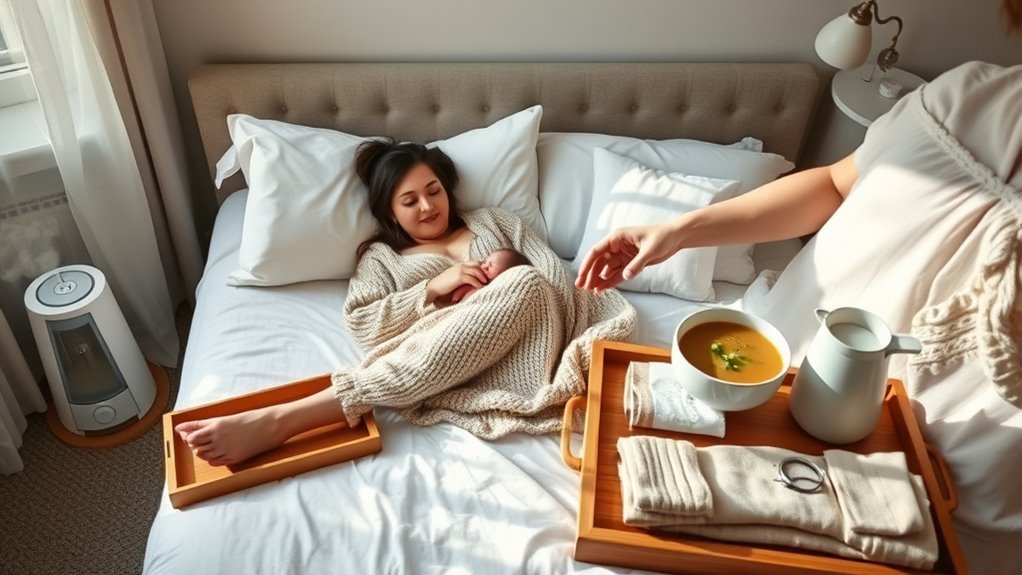
Postpartum confinement is a traditional recovery period after childbirth that helps you rest, regain strength, and support breastfeeding with structured family care. Practices vary by culture, lasting about 21 to 40 days, sometimes longer, and often include warm, nutrient-rich foods, reduced activity, and help with chores and newborn care. Modern versions are more flexible and personalized, combining cultural guidance with professional support to improve healing, mood, and infant care, with more details below.
What Is Postpartum Confinement?
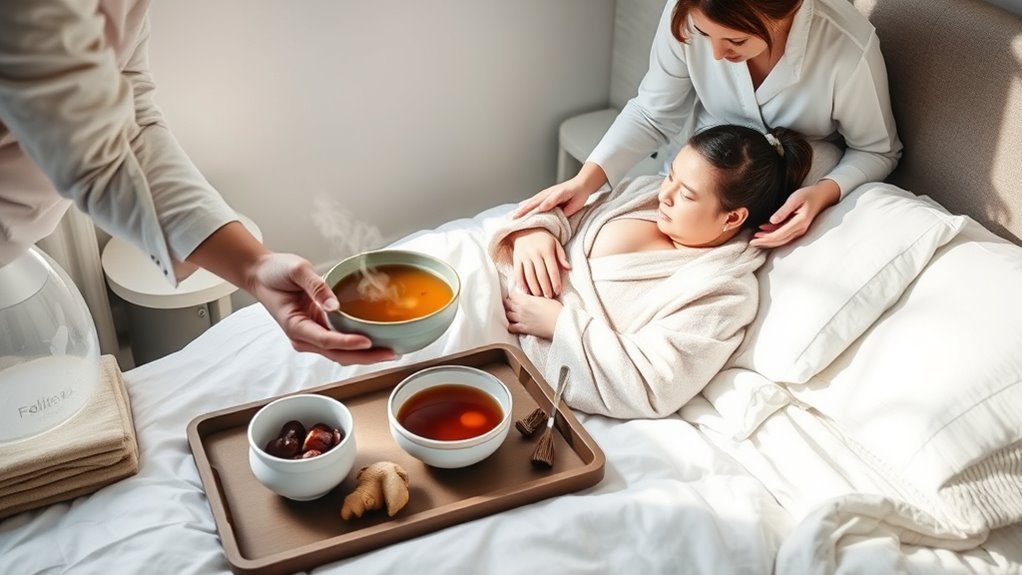
Postpartum confinement, often called “doing the month,” is a traditional recovery period after childbirth in many cultures. You use this postpartum confinement to prioritize maternal recovery through rest, reduced activity, and structured care.
During the confinement period, traditional practices often include support for feeding, hygiene, and sleep, with dietary guidance centered on nutrient-rich foods such as fish soup and hard-boiled eggs. In Chinese postpartum confinement, similar approaches aim to protect your energy and promote breastmilk production.
Traditional postpartum care often includes nourishing foods like fish soup and hard-boiled eggs to support energy and breastmilk production.
Across settings, confinement can last 28 to 100 days, and local rules vary.
Clinical evidence on mental health outcomes is mixed: some studies suggest benefit, while others show no clear effect. You don’t need to treat confinement as mandatory obedience; you can adapt it to your needs.
Modern versions increasingly combine cultural support with contemporary healthcare, so you can preserve helpful elements while rejecting those that limit autonomy.
The Cultural Origins of Postpartum Confinement
These recovery practices don’t exist in isolation; their roots run deep across Asian medical and family traditions. In Chinese culture, postpartum confinement, often called “doing-the-month,” has guided postnatal care for more than 2,000 years.
You can see a clear pattern: traditional practices prioritize nourishment, rest, and protection so your body can regain strength after birth. Similar principles appear in India’s jaappa, where 40 days of structured dietary support aim to improve milk production and physical recovery.
In Japan, satogaeri bunben brings you back to your maternal home, underscoring how extended family can actively support health during the postpartum period. Across Asia, these customs link maternal wellness with infant wellbeing, using food, rest, and community care as practical tools.
If you’re seeking liberation, understanding these origins helps you distinguish culturally grounded support from rigid obligation, and choose what genuinely serves your recovery and autonomy.
How Long Postpartum Confinement Lasts
How long confinement lasts varies widely across cultures, but the underlying goal stays consistent: supporting your recovery after birth. Your postpartum confinement duration may range from 12 days to 100 days, depending on local practices and family support.
In traditional Chinese doing-the-month, you’ll typically observe 30 to 40 days centered on maternal recovery and newborn care. Korean practices often recommend 21 days, with strict rest and dietary structure to promote healing.
Japanese traditions tend to be more flexible, allowing you to receive maternal family support without rigid limits on bathing or cold exposure. In Taiwan, contemporary confinement often shortens, giving you more control while still protecting bonding and recovery.
These patterns show that confinement isn’t one fixed rule. You can use the structure that helps you heal, rest, and reclaim autonomy after childbirth while honoring the practical needs of your postpartum body.
Postpartum Confinement Across Cultures
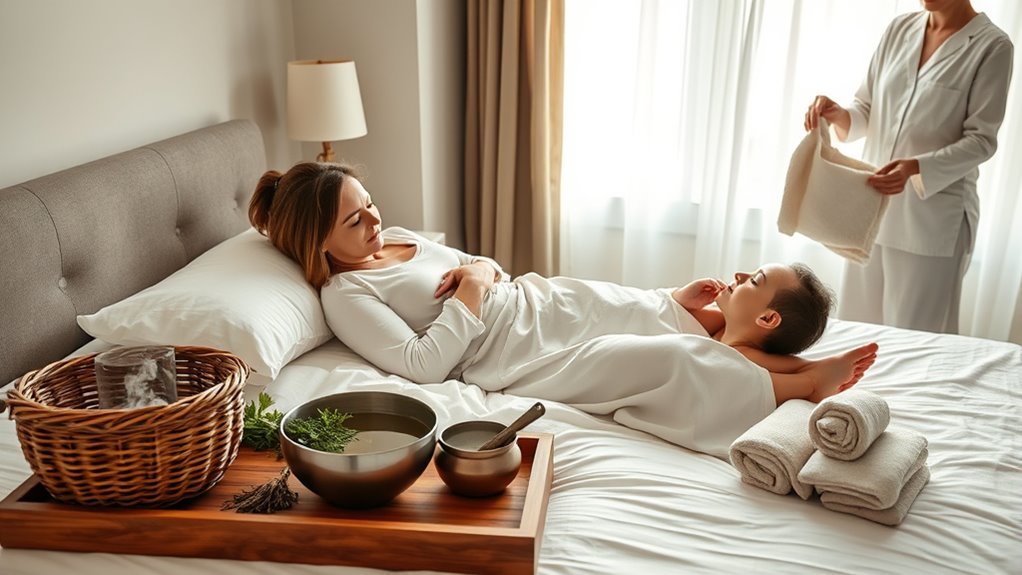
You’ll find that postpartum confinement varies widely across cultures, from China’s “Sitting the Month” to India’s jaappa and Persia’s chilla.
You’ll also see global care practices that support recovery through family assistance, professional nursing, dietary guidance, and reduced social demands.
Despite these differences, each tradition aims to promote maternal healing, breastfeeding, and newborn care.
Cultural Traditions
Postpartum confinement practices vary widely across cultures, yet they commonly center on rest, nourishment, and protected recovery.
In your postnatal period, traditional confinement practices reflect cultural beliefs about healing and resilience. In China, you may observe “sitting the month” for 28 to 100 days; in India, jaappa often lasts 40 days with dietary restrictions that support milk production and maternal health.
Japanese satogaeri bunben encourages you to return to your maternal home, strengthening family support during postpartum care. Korean practice often includes miyeokguk and extended rest to restore nutrients.
In Singapore, you’ll see mothers adapt these routines across ethnic communities, balancing tradition with autonomy. These customs can protect recovery, yet you should evaluate them critically and preserve choices that serve your body and wellbeing.
Global Care Practices
Across cultures, postpartum care often centers on a protected recovery window that balances rest, nutrition, and family support. In your recovery, you’ll see traditional postpartum care expressed through confinement traditions that vary widely but share one goal: protecting healing.
- In China, “sitting the month” can last 28 to 100 days, giving you rest and structured nutrition.
- In India’s jaappa and Persia’s chilla, 40-day periods shape dietary practices and recovery.
- In Japan, satogaeri bunben sends you to your maternal home for social support, while Korea’s miyeokguk supports iron and iodine intake.
These cultural practices may improve mental health, though effects on postpartum depression remain mixed.
You deserve care that’s evidence-informed, culturally aware, and personally liberating.
What to Eat During Postpartum Confinement
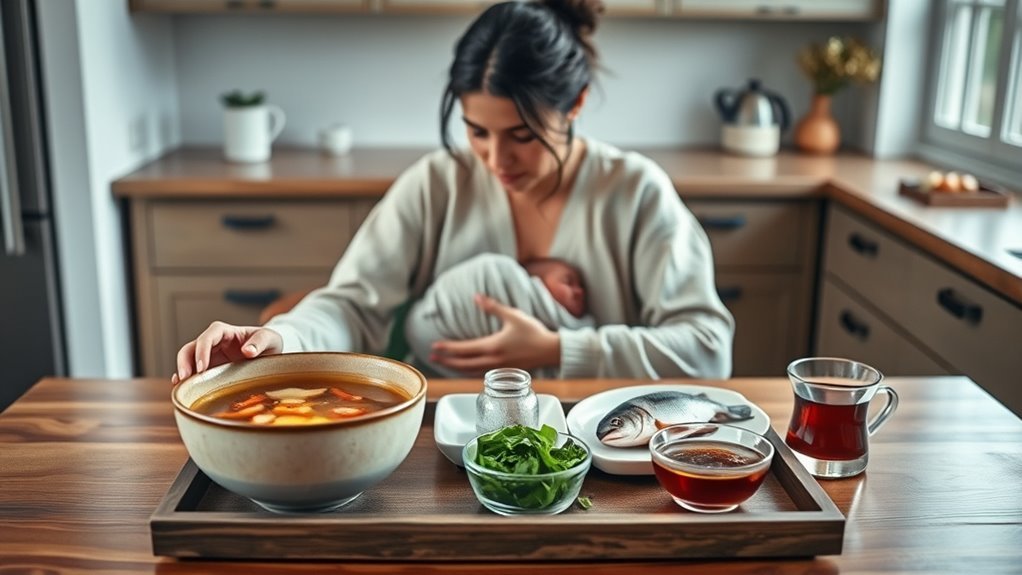
During postpartum confinement, you should focus on nutrient-rich recovery foods that provide enough energy and protein to support healing and breastfeeding.
You’ll often benefit from warm, easy-to-digest meals such as porridge, fish soup, seaweed soup, eggs, and dishes prepared with ginger, sesame oil, or rice wine.
Traditional confinement meals are designed to promote recovery while aligning with cultural practices that may also support circulation and digestion.
Nutrient-Rich Recovery Foods
Nutrient-rich foods play a central role in postpartum confinement because they help restore energy, support tissue repair, and promote breastmilk production.
During postpartum confinement, you can choose recovery foods that reflect traditional practices while serving your needs, not rigid rules. Chinese mothers often favor rich porridge, fish soup, and hard-boiled eggs to supply protein and calories.
- Seaweed soup gives you iron and iodine, supporting blood recovery.
- Green papaya soup and black vinegar pig trotters add protein and other nutrients.
- Sesame oil, rice wine, and ginger-based dishes appear in Taiwanese dietary practices and can widen your meal options.
These nutrient-rich choices align with lochia discharge and breastfeeding demands, helping you recover with intention, confidence, and control.
Warmth And Digestion
Warm foods and easy-to-digest meals are central to postpartum confinement because they can help support recovery while fitting cultural expectations around balance and comfort.
You should prioritize warmth in your confinement diet by choosing energy- and protein-rich options that support digestion and breastfeeding. Nutritional guidelines often favor rich porridge, fish soup, hard-boiled eggs, and nutrient-dense soups as practical galactogogues during postpartum recovery.
In Taiwan, sesame oil and ginger are commonly used to warm meals and ease digestion. Korean seaweed soup can also fit this pattern because it supplies iron and iodine.
Avoid cold foods and drinks when possible, since many traditions view them as disruptive to recovery. You’re allowed to make these choices intentionally, using food as support rather than restriction.
Supportive Traditional Meals
You can use these supportive traditional meals to meet your body’s needs without sacrificing autonomy, because traditional practices should serve your nourishment, not control it.
- Fish soup or rich porridge gives you protein and calories for recovery, while hard-boiled eggs and Red Dates Tea act as common galactogogues.
- In Guangdong, pork knuckles and ginger are used to replenish calcium and add warmth; Taiwanese meals often include sesame oil and rice wine.
- Korean miyeokguk supplies iron and iodine, supporting lactation and healing.
These options can guide your choices during postpartum confinement while respecting your pace, preferences, and lived experience.
Common Rest and Hygiene Rules
During postpartum confinement, rest and hygiene rules are commonly structured to support recovery and reduce perceived health risks.
Postpartum confinement often centers on rest and hygiene, aiming to support recovery and limit perceived health risks.
In the postpartum period, you may find that a traditional postpartum practice limits bathing, washing your hair, and other hygiene practices, though many modern routines now allow brief, careful washing.
You’re also told to stay warm, avoid cold environments, and reduce physical activities so your body can heal efficiently.
In places such as Taiwan and Korea, these rules emphasize warmth as part of recovery.
In India, mothers are often relieved from household chores, giving you space to rest and bond.
Japan shows how confinement can evolve, with more relaxed guidance on bathing and cold exposure.
These rules can feel restrictive, but they’re often framed as protection.
If you’re choosing your own path, you can weigh tradition against evidence and decide what supports your healing, comfort, and autonomy best.
What Family Support Looks Like During Confinement
Family support during postpartum confinement often makes the difference between mere rest and meaningful recovery. During postpartum confinement, you’re not expected to manage the home alone; family support usually means relatives take over chores, meal preparation, and childcare so you can rest and bond.
In many Chinese and Indian households, maternal relatives stay close, offering emotional support and reinforcing traditional practices that honor recovery while respecting your autonomy.
- Practical help: Someone cooks, cleans, and manages errands.
- Cultural care: Family follows dietary beliefs, preparing foods thought to support healing and milk production.
- Added expertise: Confinement nannies, or pui yuet, supplement care with specialized newborn guidance.
This combination can protect maternal mental health by reducing isolation and easing the pressure to perform.
Strong family support doesn’t erase your needs; it creates space for you to recover on your terms, with informed care and dignity.
How Postpartum Confinement Affects Health and Mood
Postpartum confinement practices, such as Chinese “doing-the-month,” are designed to support physical recovery after birth. Research suggests they can improve some health outcomes, especially when the routine includes rest, nutrient-rich meals, and practical help with newborn care.
You may experience better maternal recovery when dietary practices prioritize protein, fluids, and easily digested foods that support healing and breastfeeding. Evidence on mental health is less consistent: postpartum depression doesn’t reliably decrease with traditional practices alone.
What matters most is social support. When you receive steady emotional support, shared caregiving, and respect for your choices, your mood often improves and stress drops. By contrast, rigid expectations, criticism, or conflict around caregiving can undermine well-being and make confinement feel isolating.
A 2023 review suggests that flexibility, not strict ritual, better protects mental health. You deserve support that strengthens recovery without limiting autonomy, and your needs should guide care, not tradition.
Modern Postpartum Confinement Practices
In Hong Kong, this personalized service may cost HKD 63,800 to HKD 268,000 for 26 to 30 nights, reflecting intensive care. Many new mothers also adapt cultural beliefs with practical tools, such as air conditioning, to maintain comfort without abandoning recovery goals.
- You rest in a quiet room while your pui yuet prepares nourishing food.
- You use modern conveniences to regulate temperature and protect healing.
- You may choose postpartum care facilities, such as Boram Postnatal Retreat, for supervised support.
Social media has made these options more visible, including viral accounts of pui yuet care. As a result, you can evaluate postpartum care choices with clearer information and greater autonomy.
Frequently Asked Questions
What Is Postpartum Confinement?
Postpartum confinement is a culturally significant recovery period after birth where you rest, follow traditional practices and dietary restrictions, and lean on support systems. It can promote health benefits, emotional well being, and modern adaptations.
How Long Does Postpartum Confinement Last?
It lasts 28-100 days; 42’s common. Your Duration variations reflect Cultural differences, Traditional practices, and Modern adaptations. You’ll protect Health benefits, secure Emotional support, and follow Dietary restrictions as needed, so you’re liberated and recovering well.
What Happens in Confinement?
You rest, nourish, and heal, following breastfeeding practices, nutrition guidelines, and recovery tips while receiving emotional support and family involvement. This culturally significant period protects your mental health, and you can adapt rituals to suit your needs.
What Is the 3 3 3 Rule for Postpartum?
The 3 3 3 rule for postpartum recovery means you rest three weeks, ease into activity three weeks, then prioritize bonding and self-care three weeks, with traditional practices, cultural variations, nutritional guidelines, mental health, family support, healing rituals.
Conclusion
As you move through postpartum confinement, you’re not simply resting—you’re entering a protected pause, a quiet room where recovery can take root. You may nourish your body, accept support, and honor the slow return of strength. In this window, healing gathers like dawn light through a curtain: gradual, steady, and necessary. When you treat this time with care, you give yourself a steadier emotional and physical foundation for the months ahead.
