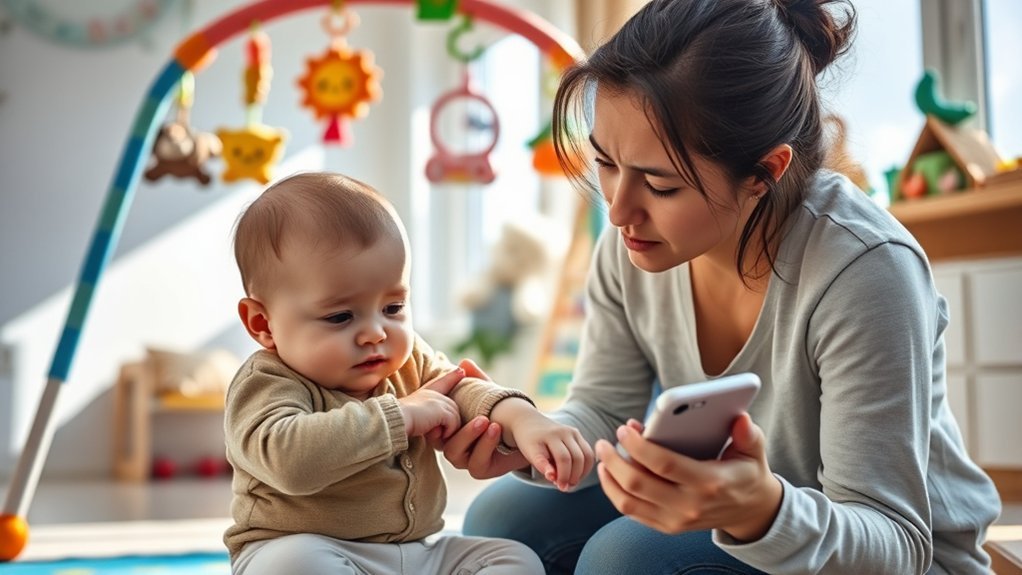
Did you know that your baby’s reactions during playtime can reveal vital insights about their well-being? Play gyms can be a fantastic tool for development, but they can also bring about moments of distress. It’s important to recognize these signs and understand when it’s time to take action. By being attentive, you can guarantee a safe and enjoyable experience for your little one. What should you look for, and when should you reach out for help?
Understanding Your Baby’s Developmental Milestones
Understanding your baby’s developmental milestones is essential for their growth and your peace of mind. As your baby grows, you’ll notice key changes in their physical, social, and cognitive skills.
Typically, you can expect them to start smiling around six weeks, rolling over by four to six months, and sitting up by about six to eight months. Each child develops at their own pace, but being aware of these milestones helps you celebrate their achievements and identify any concerns early.
Engaging with your baby through play and exploration not only aids their development but also strengthens your bond. Remember, if you have concerns about their progress, don’t hesitate to consult your pediatrician for guidance and reassurance.
Signs of Distress During Playtime
How can you tell if your baby is experiencing distress during playtime? Look for signs like excessive crying, arching their back, or turning their head away. These behaviors often indicate discomfort or frustration.
Look for signs of distress during playtime, such as excessive crying or turning their head away, indicating discomfort or frustration.
If your baby suddenly becomes unusually quiet, it might signal that they’re overwhelmed and need a break. Watch for signs of irritability, such as clenching their fists or fussing when interacting with toys.
Pay attention to their facial expressions; a furrowed brow or wide-open eyes can indicate distress. Remember, every baby is different, so trust your instincts.
If you notice persistent distress, it’s crucial to consult a pediatrician for guidance. You want your baby to enjoy playtime, so keeping an eye on these signs can help guarantee their comfort.
Monitoring Physical Reactions to Play Gyms
As you watch your baby explore their play gym, it’s essential to monitor their physical reactions closely. Babies communicate their feelings through body language and movements. By observing their responses, you can guarantee they’re enjoying their playtime safely.
| Positive Reactions | Signs to Monitor |
|---|---|
| Smiling and cooing | Excessive crying |
| Reaching for toys | Stiffening of the body |
| Engaging with sounds | Arching the back |
| Relaxed limbs | Flinching or tensing up |
Keep an eye on these reactions. If you notice signs of discomfort or distress, consider taking a break. Your baby’s well-being is the priority, and being attentive helps create a positive play environment.
Recognizing Unusual Behavior Patterns
While monitoring your baby’s reactions during playtime, it’s important to also be aware of any unusual behavior patterns that may arise. Look for signs like excessive fussiness, prolonged disinterest in toys, or unusual body movements.
If your baby suddenly becomes overly clingy or appears distressed without any clear reason, these could be indicators of discomfort or overstimulation. Pay attention to changes in their usual play patterns, such as a lack of engagement or reduced responsiveness to stimuli.
Trust your instincts; if something feels off, it’s always better to check in with a healthcare professional. Early recognition of these behaviors can help guarantee your baby’s well-being, making playtime enjoyable and safe for both of you.
When to Seek Medical Advice for Feeding Issues
If you notice your baby struggling with feeding, it’s crucial to seek medical advice sooner rather than later. Feeding issues can lead to inadequate nutrition and growth concerns. Here are some signs that indicate you should consult a doctor:
| Signs to Watch For | Action Required |
|---|---|
| Refusing to eat | Call your pediatrician |
| Losing weight | Schedule an appointment |
| Vomiting frequently | Seek immediate help |
| Signs of dehydration | Visit the doctor urgently |
| Unusual fussiness during feeding | Discuss with your doctor |
Being proactive about your baby’s feeding challenges can make a significant difference in their health and development. Trust your instincts, and don’t hesitate to reach out for support when needed.
Assessing Communication and Social Interaction
How can you tell if your baby is developing healthy communication and social interaction skills? Watch for their eye contact and facial expressions.
By about two months, your baby should smile in response to you. As they grow, they’ll start cooing and babbling, showing excitement through sounds and movements.
By two months, your baby should respond with smiles, and as they grow, they’ll begin cooing and babbling excitedly.
Pay attention to their ability to engage with you; they should enjoy back-and-forth interactions. If your baby doesn’t respond to your voice or seems uninterested in social play by six months, it might be time to consult a doctor.
Early intervention can make a significant difference in their development. Trust your instincts, and don’t hesitate to seek professional advice if you’re concerned about your baby’s communication milestones.
Understanding the Role of Tummy Time
Tummy time is essential for your baby’s development, as it helps strengthen their neck, shoulders, and back muscles. By encouraging this practice, you’re fostering motor skills that are vital for crawling and other physical milestones. Start with short sessions, gradually increasing the duration as your baby becomes more comfortable.
Here’s a quick guide to tummy time:
| Age | Recommended Duration |
|---|---|
| Newborn | 2-3 minutes, 2-3 times a day |
| 1-2 months | 4-5 minutes, a few times a day |
| 3-4 months | 10-15 minutes, 2-3 times a day |
| 5-6 months | 20-30 minutes, multiple times |
| 6+ months | As long as baby enjoys it |
The Importance of Regular Check-ups
As your baby grows and develops their motor skills through activities like tummy time, regular check-ups become increasingly important.
These appointments help guarantee your little one is hitting developmental milestones and receiving necessary vaccinations. They also provide an opportunity for you to discuss any concerns or questions you might’ve about your baby’s health or growth.
Routine check-ups allow healthcare providers to monitor your baby’s physical and emotional development, catching potential issues early on.
By addressing concerns promptly, you can support your child’s overall well-being. Remember, these visits aren’t just about physical health; they also foster a trusting relationship between you and your healthcare provider.
Regular check-ups empower you to advocate for your baby’s health effectively.
Trusting Your Parental Instincts
While steering through the early stages of parenthood, trusting your parental instincts is essential. You know your baby best, and your gut feelings often lead you in the right direction. When unsure about your child’s health, consider these key factors:
| Signs of Concern | Trust Your Instincts |
|---|---|
| Unusual crying patterns | If it feels different, it probably is |
| Lack of interest in play | Your intuition knows their normal |
| Changes in sleep habits | Trust what seems off |
| Unexplained fevers | Follow your gut feelings |
Frequently Asked Questions
How Long Should My Baby Spend on the Play Gym Each Day?
Your baby can spend about 15 to 30 minutes on the play gym each day, divided into shorter sessions. This helps stimulate their development while ensuring they don’t get overwhelmed or fatigued.
What Toys Are Safest for My Baby’s Play Gym?
Brightly colored, soft toys with no small parts are safest for your baby’s play gym. Ironically, the simplest options often provide the most joy, allowing your little one to explore without the worry of hazards.
Can Play Gyms Help With Colic Relief?
Yes, play gyms can help with colic relief by providing visual stimulation and comfort through gentle movements. Engaging your baby in play can distract from discomfort, creating a soothing environment that may ease their distress.
Are There Specific Ages for Different Play Gym Activities?
Yes, different play gym activities suit various ages. From newborns focusing on visual stimulation to older infants engaging in tummy time, adjusting activities helps promote development and guarantees your baby enjoys the experience at every stage.
Should I Always Supervise My Baby During Playtime?
Yes, you should always supervise your baby during playtime. This guarantees their safety, promotes exploration, and helps you engage with them. Your presence fosters confidence and encourages healthy development as they learn and discover new skills.
Conclusion
In the vibrant world of play gyms, your baby’s joyful giggles should paint a picture of happiness. However, if you spot signs of distress—like a furrowed brow or trembling limbs—don’t hesitate to pause and reassess. Just as a flower needs the right sunlight, your little one thrives in a nurturing environment. Trust your instincts; if something feels off, reaching out to a pediatrician can be the key to ensuring your baby blossoms with health and joy.
