Disclosure: As an Amazon Associate, we earn from qualifying purchases. If you click a link on this page and make a purchase, we may receive a small commission at no extra cost to you.
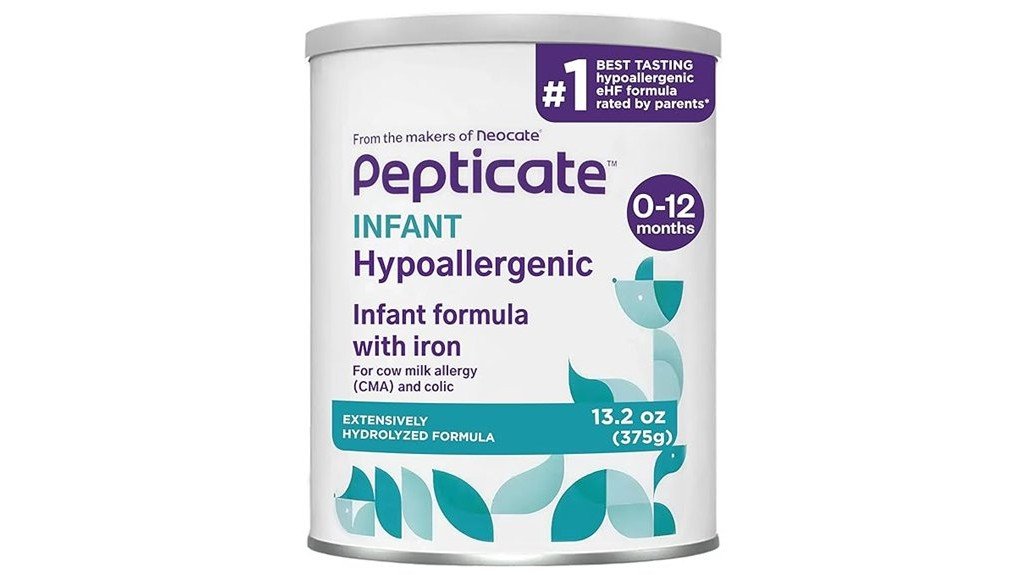
Choosing a hypoallergenic infant formula is a high-trust decision because your baby’s comfort, nutrition, and allergy plan all matter. Pepticate Hypoallergenic Infant Formula is made for infants who need a specialized formula option because standard cow milk-based formula may not be tolerated. It uses extensively hydrolyzed whey proteins, plus DHA, ARA, and GOS/FOS prebiotics, to support complete infant nutrition from birth to 12 months. This review helps you decide where Pepticate may fit, where it has limits, and why you should use it with guidance from your baby’s healthcare professional.
Quick Verdict
Rating: Recommended with caveats
Best For: Parents whose baby has a suspected or diagnosed cow milk allergy and whose clinician recommends an extensively hydrolyzed formula.
Bottom Line: Pepticate is a practical hypoallergenic formula option because it uses broken-down whey proteins and includes DHA, ARA, and prebiotics. The main tradeoff is that it is a specialized formula, so cost, taste acceptance, supply, and medical guidance all matter.
| Specification | Detail |
|---|---|
| Product name | Pepticate Hypoallergenic Infant Formula |
| Product type | Extensively hydrolyzed infant formula powder |
| Primary use | For infants who need a specialized formula option for cow milk allergy or feeding intolerance under professional guidance |
| Age range | Birth to 12 months, based on the article-supported product description |
| Protein design | Hydrolyzed whey proteins broken into smaller peptides |
| Nutrition features | DHA, ARA, and GOS/FOS prebiotics |
| Format | Powder formula |
| Package note | The source article references a 13.2 oz powder can, but you should confirm the current package size before buying |
| Preparation note | Measure with the provided scoop and mix only as directed on the product label |
| Safety note | Use with a pediatrician, allergist, or qualified healthcare professional, especially for allergy management |
What Is Pepticate Hypoallergenic Infant Formula?
Pepticate Hypoallergenic Infant Formula is an extensively hydrolyzed formula for babies from birth to 12 months who need a nutritionally complete alternative to standard cow milk-based formula. It is designed for situations where cow milk allergy or feeding intolerance makes regular formula a poor fit.
The key difference is its hydrolyzed whey protein. Instead of using intact cow milk proteins, the formula uses smaller protein fragments that may be less likely to trigger a reaction in some babies with cow milk allergy. It also includes DHA and ARA for brain and vision support, plus GOS/FOS prebiotics for gut support.
This does not mean Pepticate is right for every fussy or gassy baby. It is a specialized formula, so you should use it as part of a feeding plan from your baby’s healthcare professional, not as a casual first switch.
Before You Buy: Do not choose Pepticate only because your baby is fussy after feeds. Cow milk allergy needs proper evaluation, and some babies may need a different formula type or a different feeding plan.
Who Should Buy It?
Best For
- Parents whose baby has cow milk allergy symptoms and a clinician recommends an extensively hydrolyzed formula.
- Babies who need complete nutrition from a specialized formula for the first 12 months.
- Caregivers who want a formula with DHA, ARA, and prebiotics in addition to hydrolyzed protein.
Skip If
- Your baby has not been evaluated for allergy or feeding intolerance and you only need a routine formula.
- Your baby has a severe or complex allergy history and your clinician recommends an amino acid-based formula instead.
- You need a ready-to-feed format, since the source article only supports powder can details.
Pepticate Ingredients and Nutrition
Pepticate is built around extensively hydrolyzed whey proteins. This matters because smaller protein fragments may reduce exposure to intact cow milk proteins, which are the issue for many babies with cow milk allergy.
The formula also includes DHA and ARA, two fatty acids commonly added to infant formulas to support brain and eye development. Its GOS/FOS prebiotics are included to support a balanced gut environment, which can be useful when a baby’s feeding plan has become restricted because of allergy concerns.
The ingredient profile is useful because it balances allergy-focused protein design with broader nutrition. Still, ingredient tolerance is individual, so a baby’s response should be watched closely during the transition.
How Pepticate May Help With Cow Milk Allergy Feeding
Pepticate’s main role is to reduce the amount of intact cow milk protein your baby receives. By breaking the protein into smaller peptides, the formula may be easier for some babies with cow milk allergy to tolerate.
The source article mentions possible improvement in symptoms such as eczema, colic, and fussiness. A safer way to view this is that Pepticate may help when those symptoms are linked to cow milk allergy and when a healthcare professional agrees that an extensively hydrolyzed formula is appropriate.
It should not be treated as a cure or a general solution for every feeding problem. Reflux, gas, crying, stool changes, and skin symptoms can have several causes, so professional guidance is still important.
Baby Safety Notes
Because this formula is for infants and allergy-related feeding, safety matters as much as convenience. Always follow the product label for water amount, scoop size, mixing order, and storage time. Too much powder, too little powder, or incorrect water volume can affect nutrition and hydration.
Use clean bottles, clean hands, and safe water preparation. Prepare bottles close to feeding time when possible, and discard formula that has been left out longer than the label allows. Do not save leftover formula from a bottle your baby has already started drinking.
If your baby has breathing trouble, swelling, repeated vomiting, blood in stool, dehydration signs, poor weight gain, or worsening symptoms, contact a healthcare professional right away. Those signs need medical attention, not just a formula change.
Pro Tip: Before opening multiple cans, confirm the formula plan with your baby’s clinician and check the current package size, expiration date, and seller details on the product page.
How to Mix and Use Pepticate Formula
Pepticate should be prepared exactly as the label directs. Use the provided scoop, measure level scoops, and mix with the required amount of water. Do not guess the ratio, pack the powder down, or use a scoop from another formula.
After adding the powder and water, shake the bottle well so the formula mixes evenly. Check that the nipple is flowing normally and that no dry clumps remain. If your baby is switching from another formula, ask your clinician whether to transition gradually or switch directly.
Common Mixing Mistakes to Avoid
Do not dilute the formula to make a can last longer. Do not add extra powder to help your baby sleep longer. Do not add cereal, sweeteners, supplements, or medication unless your baby’s healthcare professional tells you to do so.
Also avoid preparing large batches unless the label allows it and you can store them safely. Powdered formula is convenient, but it requires careful handling each time.
How It Performs in Real Use
For Daily Feeding
For everyday use, Pepticate’s biggest advantage is that it gives you a structured formula option when regular cow milk-based formula is not tolerated. The powder format also makes it practical for home feeding, as long as you prepare each bottle carefully.
For Allergy Management
When cow milk allergy is the concern, the extensively hydrolyzed whey protein design is the key reason to consider it. You should track feeding amounts, stool changes, skin changes, spit-up, crying patterns, and sleep changes so your clinician can judge whether the formula is helping.
For Travel or Daycare
Powder cans can work for travel, daycare, or a grandparent’s house, but preparation rules still apply. Send clear written mixing instructions, the correct scoop, and the original container so another caregiver does not use the wrong ratio.
For Taste Acceptance
The source article notes that parents often report good acceptance compared with some other hypoallergenic formulas. Even so, taste varies by baby. Some infants accept it quickly, while others may need time or a clinician-approved transition plan.
Pepticate Pros and Cons
Pros
- Extensively hydrolyzed whey proteins reduce exposure to intact cow milk proteins.
- Designed as a nutritionally complete formula for infants from birth to 12 months.
- Includes DHA and ARA for brain and vision support.
- Includes GOS/FOS prebiotics for gut support.
- Powder format can be practical for home, travel, daycare, and backup feeding.
Cons
- Requires medical guidance, especially when cow milk allergy is suspected or diagnosed.
- May cost more than standard infant formula.
- Some babies may still reject the taste or need a different formula type.
Is It Worth the Price?
Pepticate is best viewed as a specialized formula, not a budget formula. It is worth considering if your baby needs an extensively hydrolyzed option and your clinician agrees that this type of formula fits your feeding plan.
You get the most value from it when the hydrolyzed protein design, DHA, ARA, and prebiotics match your baby’s needs. If your baby only needs a routine formula, or if your clinician recommends a different allergy formula, it may not be the best fit.
The biggest value concern is trial and error. Even a well-designed hypoallergenic formula may not work for every baby, so avoid stockpiling until you know your baby tolerates it.
How It Compares to Alternatives
Compared with standard cow milk-based infant formulas, Pepticate is more specialized because it uses extensively hydrolyzed proteins. That makes it more relevant for allergy-focused feeding, but less necessary for babies who tolerate regular formula well.
Compared with other hypoallergenic options such as Nutramigen, Similac Alimentum, or amino acid-based formulas like Neocate, the main question is your baby’s tolerance and your clinician’s recommendation. Pepticate makes the most sense if an extensively hydrolyzed whey-based formula is the right step before moving to a more specialized amino acid-based product.
Frequently Asked Questions
Is Pepticate suitable for babies with cow milk allergy?
Pepticate is designed for babies who need an extensively hydrolyzed formula, often because of cow milk allergy or feeding intolerance. You should use it with guidance from your baby’s healthcare professional.
Can Pepticate be used from birth?
The source article describes Pepticate as suitable from birth to 12 months. For newborns, especially those with allergy symptoms or poor feeding, confirm the choice and feeding amount with a pediatrician.
Can you use Pepticate alongside breastfeeding?
Pepticate may be used as supplementation when your clinician recommends formula support. If cow milk allergy is involved, your baby’s clinician may also discuss your diet, breastfeeding plan, and symptom tracking.
How does Pepticate taste compared with other hypoallergenic formulas?
The article notes that parents often report good taste acceptance. Still, each baby is different, and some babies may resist any hypoallergenic formula because the taste can differ from standard formula.
Is Pepticate a cure for eczema, colic, or fussiness?
No. It may help some babies when those symptoms are linked to cow milk allergy, but symptoms can have other causes. Ask your baby’s healthcare professional before using formula as a treatment plan.
Is Pepticate available as ready-to-feed formula?
The source article only supports a powder can format and references a 13.2 oz can. Check the current product listing and authorized sellers before buying because package size and format can vary by market.
What is the biggest mistake to avoid with Pepticate?
The biggest mistake is changing formulas without a clear reason or professional guidance. Another common mistake is mixing powder with the wrong water amount, which can affect your baby’s nutrition.
Who should skip Pepticate?
Skip it if your baby does well on standard formula or if your clinician recommends a different product type. Babies with severe or multiple allergies may need a more specialized formula plan.
The Bottom Line
Pepticate Hypoallergenic Infant Formula is worth considering if your baby needs an extensively hydrolyzed formula for cow milk allergy or feeding intolerance and your clinician recommends this type of product. Its main strengths are hydrolyzed whey proteins, complete infant nutrition, DHA, ARA, and GOS/FOS prebiotics.
Skip it if you need a routine formula, a ready-to-feed format, or a formula for a baby whose allergy plan requires a different product type. The verdict is recommended with caveats because Pepticate can be useful, but tolerance, taste, cost, package availability, and professional guidance all matter.