Disclosure: As an Amazon Associate, we earn from qualifying purchases. If you click a link on this page and make a purchase, we may receive a small commission at no extra cost to you.
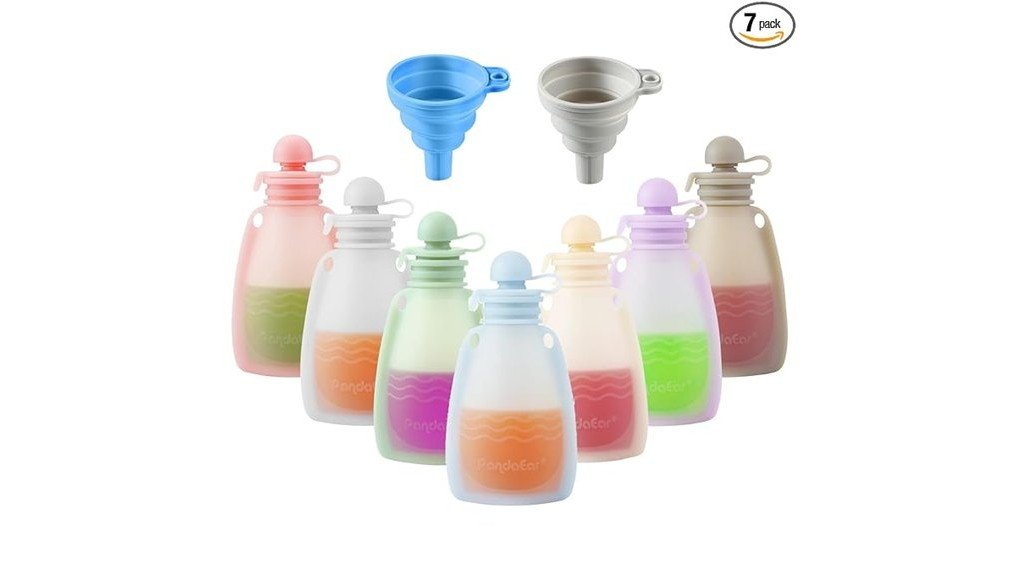
Reusable food pouches can save you money and cut down on single-use packaging, but they only work well when the size, material, and cleaning routine fit your daily life. PandaEar baby food pouches are reusable silicone containers made for smooth toddler foods such as purées, yogurt, applesauce, and thin homemade blends. Their 5 oz / 150 ml capacity is practical for snacks and small meals, while the main tradeoff is that you need to fill, seal, and wash each pouch after use. This review helps you decide if they are useful for your child, your travel routine, and your kitchen cleanup habits.
Quick Verdict
Rating: 8.2/10
Best For: Parents who want refillable 5 oz pouches for smooth foods, daycare snacks, diaper bags, and lower-waste toddler feeding.
Bottom Line: PandaEar baby food pouches are a smart buy if you already make or portion smooth foods at home. They are not the best fit if you need large servings, chunky textures, or a no-cleanup disposable option.
Key Takeaways
- PandaEar baby food pouches are reusable 5 oz / 150 ml silicone containers for toddlers and kids.
- They work best with smooth foods like purees, yogurt, applesauce, and thin fruit or vegetable blends.
- The article-supported material claim is food-grade silicone that is free from BPA, PVC, lead, and phthalates.
- The refillable design can reduce disposable pouch waste and make snacks easier to pack.
- The main drawbacks are the small portion size, the need for careful sealing, and the cleaning step after each use.
| Specification | Detail |
|---|---|
| Brand | PandaEar |
| Product type | Reusable baby food pouch |
| Capacity | 5 oz / 150 ml per pouch |
| Material | Food-grade silicone |
| Material notes | Described as BPA, PVC, lead, and phthalate free |
| Best foods | Smooth purees, yogurt, applesauce, and thin blended foods |
| Care notes | Dishwasher safe, freezer safe, and microwave safe according to the article details |
| Use case | Home snacks, diaper bags, travel, daycare, and portioned toddler meals |
| Safety note | Use with age-appropriate foods, supervise young children, and follow the product instructions for filling, heating, and cleaning. |
What Are PandaEar Baby Food Pouches?
PandaEar Baby Food Pouches are refillable silicone pouches designed for toddlers and kids who eat smooth foods. Each pouch holds 5 oz / 150 ml, which makes it useful for snacks, small portions of yogurt, applesauce, or homemade fruit and vegetable blends.
The main appeal is control. You choose the food, the texture, and the portion instead of relying only on store-bought disposable pouches. That can help if you want fewer additives, less packaging waste, or a more budget-friendly way to pack soft foods.
The pouches are best treated as a reusable snack tool, not as a full meal container. The 5 oz size is convenient for portability, but older toddlers or bigger appetites may need more than one pouch or an extra side food.
Before You Buy: These pouches work best with smooth, thin foods. Chunky blends, thick oatmeal, large seeds, or fibrous pieces can clog the opening and may not be safe for younger children.
Who Should Buy It?
Best For
- Parents who prepare purees, yogurt, applesauce, or thin smoothies at home.
- Families who want refillable pouches for diaper bags, car rides, daycare, or grandparents’ house.
- Eco-conscious buyers who want to reduce single-use pouch packaging.
Skip If
- You want disposable convenience with no filling or washing.
- Your child mainly eats chunky foods that do not squeeze smoothly.
- You need larger portions than 5 oz at a time.
Food-Safe Materials and Baby Safety Notes
The article describes these pouches as made from food-grade silicone and free from BPA, PVC, lead, and phthalates. That matters because the pouch touches food directly, and parents usually want materials that are simple to clean and safe for repeated use.
Silicone can also be more flexible than rigid plastic, which helps with squeezing and packing. Still, material safety depends on correct use. Wash the pouch before first use, inspect the seal, avoid using damaged pouches, and follow the product label for heating, freezing, and dishwasher placement.
For babies and toddlers, food texture is just as important as the container. Use age-appropriate foods, avoid choking hazards, and supervise young children while they eat from any pouch.
Ease of Filling and Sealing
The pouch design is meant to let you open the container, add food, seal it, and serve it without needing a disposable pouch. That routine is simple once you get used to it, but it does require care. Overfilling can make the seal harder to close and may increase the chance of leaks in a bag.
For best results, fill below the top edge, press out excess air when practical, and check the seal before handing the pouch to your child. A quick squeeze over the sink can help you spot a poor seal before the pouch goes into a diaper bag.
Pro Tip: Thin thick purees with a small amount of water, breast milk, formula, or yogurt when appropriate for your child, then test the flow before packing the pouch for travel.
Best Foods for PandaEar Baby Food Pouches
The best fillings are smooth, nutrient-dense foods that move through the pouch without clogging. Good options include apple puree, pear puree, mango puree, banana blends, sweet potato puree, carrot puree, pumpkin puree, applesauce, and plain yogurt.
Pureed fruits and vegetables like apple, pear, sweet potato, and pumpkin make smooth, nourishing pouch fillings.
You can also use blended oatmeal if it is thin enough to dispense easily. For more balanced snacks, you may combine fruit with vegetables or a small amount of nut butter if your child already tolerates those foods and the texture stays smooth.
Avoid large chunks, firm skins, whole seeds, or sticky mixtures that do not flow well. These can make the pouch harder to use and may create a safety concern for younger eaters.
Cleaning and Maintenance
Cleaning is the biggest difference between reusable and disposable pouches. After each use, rinse the pouch as soon as possible so yogurt, puree, or oatmeal does not dry inside. Then wash it with warm soapy water or place it in the dishwasher if you prefer that routine.
Because food pouches have seams and openings, inspect them after washing. Look for trapped food, odor, residue, or seal wear. Let each pouch dry fully before storage to help reduce moisture buildup.
The article notes that the pouches are freezer safe and microwave safe. Even so, follow the product instructions and test food temperature before serving, especially after heating. Hot spots can occur in soft foods, and babies or toddlers should never be handed overheated food.
How It Performs in Real Use
For Daily Snacks
For everyday snacks, the 5 oz capacity is useful for yogurt, applesauce, and fruit or vegetable purees. It gives you a controlled portion without packing a spoon, bowl, and separate container every time.
For Travel and Diaper Bags
The refillable design is helpful for car rides, stroller walks, daycare drop-offs, and diaper bags. The key is checking the seal before packing it. If the pouch is overfilled or not sealed correctly, it may leak under pressure.
For Homemade Baby Food
If you already make purees at home, these pouches help you portion food into grab-and-go servings. They also let you rotate flavors based on what your child eats well, such as pear and yogurt, apple and carrot, or sweet potato and pumpkin.
For Long-Term Use
Reusable pouches make the most sense when you use them often enough to justify the filling and washing routine. They can reduce disposable packaging over time, but only if you are willing to clean them carefully after each use.
How to Use PandaEar Baby Food Pouches Correctly
Start with clean hands, a clean pouch, and a smooth food that is appropriate for your child’s age and chewing skills. Open the pouch, add the food slowly, leave space near the top, then close the seal firmly.
| Step | Action | Why It Matters |
|---|---|---|
| 1 | Open the pouch fully | Makes filling cleaner and easier |
| 2 | Add smooth food slowly | Helps prevent overfilling and spills |
| 3 | Seal the pouch firmly | Reduces the chance of leaks |
| 4 | Test the flow | Confirms the food is thin enough |
| 5 | Rinse and wash after use | Keeps the pouch ready for safe reuse |
Do not leave filled pouches sitting out longer than is safe for the food inside. Yogurt and homemade purees should be handled with the same care you would use for any perishable toddler food.
Pros and Cons
Pros
- Reusable silicone design can reduce single-use pouch waste.
- 5 oz / 150 ml size works well for toddler snacks and small portions.
- Good for smooth purees, yogurt, applesauce, and thin homemade blends.
- Article-supported material details include BPA, PVC, lead, and phthalate-free construction.
- Dishwasher, freezer, and microwave-safe design adds flexibility for busy routines.
Cons
- Requires filling, sealing, rinsing, washing, and drying after each use.
- 5 oz capacity may be too small for older toddlers or bigger snacks.
- Not ideal for chunky foods, very thick blends, or parents who want disposable convenience.
Is It Worth the Price?
PandaEar Baby Food Pouches offer strong value for the price if you use pouch snacks often and want a reusable option. They are especially practical for parents who already buy yogurt, applesauce, or ingredients for homemade purees.
The value comes from repeated use, portion control, and less reliance on disposable pouches. The tradeoff is time. If you do not want to wash and dry pouches after snacks, a reusable design may feel like extra work.
They are worth considering if you need a travel-friendly way to serve smooth foods. They are not the best fit if your child needs larger portions or mostly eats textured meals.
How It Compares to Alternatives
Compared with disposable baby food pouches, PandaEar pouches give you more control over ingredients and can reduce packaging waste. Disposable options are easier when you want zero cleanup, but they cost more over time if you use them daily.
Compared with small snack cups or bowls, these pouches are more portable and less dependent on spoons. Cups and bowls are better for chunky foods, finger foods, or meals where you want your child to practice scooping.
Frequently Asked Questions
Are PandaEar baby food pouches BPA and phthalate free?
Yes, the article-supported product details describe the pouches as free from BPA, PVC, lead, and phthalates. They are also described as made from food-grade silicone.
What is the capacity of each PandaEar pouch?
Each pouch holds 5 oz / 150 ml. That size works well for snacks, yogurt, applesauce, and small servings of smooth homemade puree.
Can you put PandaEar pouches in the dishwasher?
Yes, the article states that the pouches are dishwasher safe. Rinsing them soon after use can make cleaning easier, especially after yogurt, oatmeal, or fruit puree.
Can you freeze homemade baby food in these pouches?
Yes, the article describes the pouches as freezer safe. Leave room for expansion, seal carefully, and thaw food safely before serving it to your child.
Do PandaEar pouches work for chunky foods?
They are best for smooth foods that flow through the pouch opening. Chunky blends, thick oatmeal, fruit skins, or whole seeds can clog the pouch and may not be safe for younger children.
Are these pouches good for diaper bags and travel?
Yes, the refillable 5 oz size is useful for diaper bags, car rides, daycare, and stroller trips. Check the seal before packing, and keep perishable foods chilled when needed.
Who should skip PandaEar reusable food pouches?
Skip them if you want disposable convenience, need bigger portions, or mostly serve chunky foods. They also may not be ideal if you do not want to clean and dry reusable feeding gear after each use.
The Bottom Line
PandaEar Baby Food Pouches are recommended with caveats for parents who want reusable 5 oz silicone pouches for smooth toddler foods, travel snacks, and lower-waste feeding. Their biggest strengths are portability, refillable use, and flexible food choices, while the main limitations are cleaning, sealing, and the small portion size. Skip them if you want disposable convenience or need a pouch for chunky meals.