Disclosure: As an Amazon Associate, we earn from qualifying purchases. If you click a link on this page and make a purchase, we may receive a small commission at no extra cost to you.
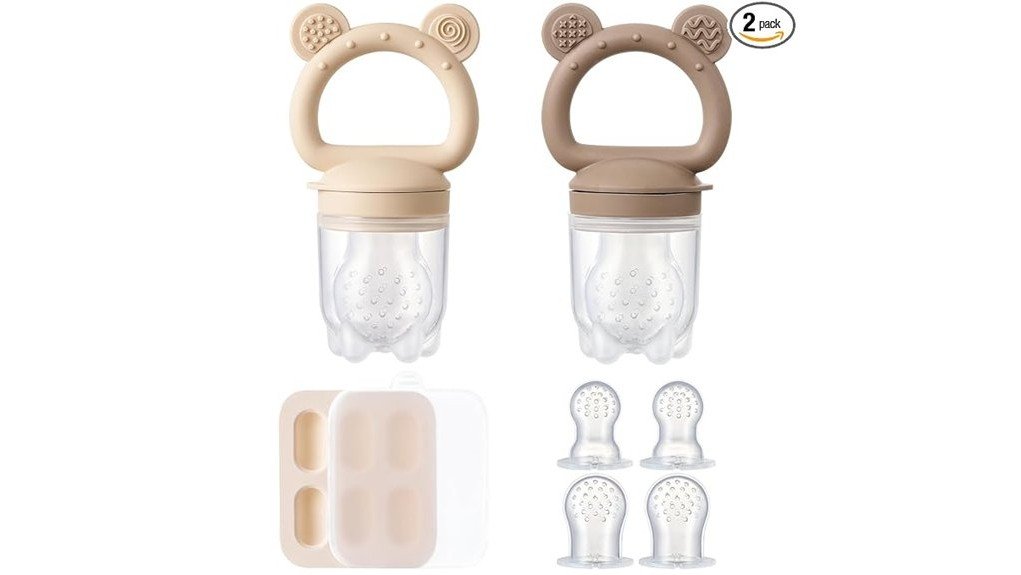
Introducing solids can feel messy, slow, and a little stressful when your baby is still learning how to chew and swallow. The 2 Pack Silicone Baby Fruit Feeder gives your baby a safer way to taste soft fruit, purees, and frozen breast milk while the silicone pouch helps limit larger pieces from reaching the mouth. It is made with BPA-free, PVC-free, and phthalate-free silicone, and the set includes two feeders, six teat inserts, and breast milk popsicle molds. This review helps you decide if it is a smart everyday feeding tool or if you need a different option for your baby’s stage.
Quick Verdict
Rating: Recommended with caveats
Best For: Parents who want a simple baby fruit feeder for supervised self-feeding, teething relief, and early food exploration.
Bottom Line: This silicone feeder is useful for soft fruits, purees, and chilled breast milk because it gives your baby small tastes through a flexible pouch. It still needs close supervision and should not replace age-appropriate feeding guidance from your pediatrician.
Key Takeaways
- This 2-pack silicone baby fruit feeder is designed for supervised self-feeding and teething relief.
- BPA-free, PVC-free, and phthalate-free silicone makes it a safer food-contact choice for babies.
- The soft pouch helps reduce the chance of larger food pieces reaching your baby’s mouth.
- The one-piece handle and secure pouch design help limit loose-part concerns during normal use.
- It supports soft fruits, purees, and breast milk popsicles for early food exploration.
- The set includes two feeders, six teat inserts, and breast milk popsicle molds for flexible use.
Product Specifications
| Specification | Detail |
|---|---|
| Product type | Silicone baby fruit feeder and teething feeder set |
| Pack size | 2 feeders |
| Included accessories | 6 teat inserts and breast milk popsicle molds |
| Material | Silicone |
| Material safety | BPA-free, PVC-free, and phthalate-free |
| Design | One-piece handle with secure silicone feeding pouch |
| Best use | Soft fruit, purees, chilled fruit, and frozen breast milk for teething relief |
| Care | Hand wash, dishwasher cleaning, brief boiling, or microwave-safe sanitation when used as directed |
| Safety note | Use only with adult supervision and follow your baby’s feeding readiness. |
What Is a Silicone Baby Fruit Feeder?
A silicone baby fruit feeder is a small feeding accessory that holds soft foods inside a perforated silicone pouch. Your baby can suck or chew on the pouch to taste food in small amounts, while the pouch helps keep larger chunks contained.
This type of feeder is often used during the shift from milk-only feeding to early solids. It can support self-feeding, hand-eye coordination, oral exploration, and teething comfort when you use soft or chilled foods that match your baby’s readiness.
The 2 Pack Silicone Baby Fruit Feeder is most useful when you want a controlled way to offer mashed fruit, puree, or frozen breast milk. It is not a replacement for safe feeding habits, proper food sizing, or close adult supervision.
Before You Buy: This feeder is for supervised use only. It can help reduce exposure to larger food pieces, but it does not remove all choking risk or replace age-appropriate feeding advice.
Who Should Buy It?
Best For
- Parents introducing soft fruits or purees in a controlled way.
- Babies who are ready for early solids and enjoy holding feeding tools.
- Families who want a washable feeder for teething relief with chilled fruit or frozen breast milk.
Skip If
- Your baby is not developmentally ready for solids.
- You want a no-cleanup feeding option, because silicone pouches still need careful washing.
- You need a product for unsupervised feeding, crib use, or sleep time.
Why This Baby Fruit Feeder Is Safe
This baby fruit feeder is designed with safety at the center. The silicone material is listed as BPA-free, PVC-free, and phthalate-free, which matters because the pouch touches food and your baby’s mouth during use.
The secure pouch helps keep larger food pieces inside the feeder, while the soft silicone surface is gentle for gums. The one-piece handle also gives your baby something simple to hold without adding extra small parts to the feeding area.
| Feature | Benefit | Safety Impact |
|---|---|---|
| Silicone body | Soft contact surface | Gentler on gums |
| One-piece handle | Simple grip for babies | Fewer loose parts during use |
| Secure pouch | Holds soft food inside | Helps limit large food pieces |
| Free from BPA, PVC, and phthalates | Cleaner food contact | Better fit for infant feeding |
| Smooth silicone surface | Easier to rinse and clean | Supports better hygiene |
Food-Safe Materials and Baby Safety Notes
Because this feeder touches food, the material matters. The BPA-free, PVC-free, and phthalate-free silicone design is a strong point for parents who want fewer concerning materials near their baby’s mouth.
You should still inspect the feeder before each use. Do not use it if the pouch is torn, the latch does not close securely, or the silicone shows damage. Replace worn parts when needed, and follow the product instructions for safe cleaning and use.
For babies around 4 to 12 months, readiness can vary a lot. Your baby should have enough head and neck control and should be ready for solids before using a fruit feeder. Ask your pediatrician if your baby was born early, has feeding concerns, or has a history of choking, reflux, or allergies.
How to Use the Baby Fruit Feeder
To use the baby fruit feeder, open the silicone pouch, add a small amount of soft fruit, puree, or chilled breast milk, then close it firmly. Check that the pouch is secure before giving it to your baby.
Your baby can hold the handle and explore the food by sucking or chewing on the pouch. Start with a small portion so the feeder is not overfilled, because too much food can make it harder to close and harder to clean.
Good starter foods include soft banana, ripe mango, steamed apple, mashed pear, or breast milk frozen into a small feeder-safe portion. Avoid hard foods, sticky foods, large chunks, or anything your baby is not ready to eat.
Pro Tip: Chill soft fruit or breast milk before use when your baby is teething. Keep the portion small, close the pouch firmly, and rinse it right after feeding so food does not dry inside the silicone holes.
Ease of Use
The best part of this feeder is its simple design. You fill the pouch, close it, and let your baby hold the handle while you supervise closely. That makes it useful for short feeding sessions at home, in a high chair, or during a calm snack time.
The included teat inserts give you more flexibility as your baby grows or as you switch between thinner purees and softer fruit pieces. The two-pack design also helps because you can keep one feeder clean while the other is being washed or stored.
The main limitation is that feeders like this can get messy if you overfill them or use watery purees. For less mess, use small portions and keep a bib, wipe, and clean bowl nearby.
How It Supports Self-Feeding
Self-feeding is not only about eating. It also helps your baby practice gripping, bringing food toward the mouth, and learning different tastes and textures. This feeder supports that learning in a more controlled way than handing over loose pieces of fruit.
The handle is useful for babies who are starting to explore food independently. The silicone pouch slows the feeding process, which can help your baby focus on taste, chewing motion, and oral movement rather than taking large bites.
It is still important to treat the feeder as a learning tool, not a shortcut. Your baby should sit upright, stay supervised, and use foods that match their age and feeding readiness.
Teething Relief and Comfort
For teething babies, chilled foods can feel soothing on sore gums. This feeder can hold chilled fruit or frozen breast milk, giving your baby a cold surface to chew while still keeping the food contained inside the pouch.
The soft silicone is gentler than hard plastic teething toys, which may be helpful when gums are tender. It also gives your baby a food-based option instead of only a standard teether.
Do not freeze the feeder into a hard block that feels uncomfortable or too cold. Let frozen breast milk or fruit soften slightly when needed, and stop use if your baby seems upset, cold, or frustrated.
How to Clean and Care for It
Keeping the feeder clean is important because fruit pulp, milk, and puree can settle into small openings. Rinse the pouch soon after use so food does not dry into the silicone.
You can wash it by hand with warm water and mild soap, place it in the dishwasher when needed, or use brief boiling for deeper sanitation when the product instructions allow it. The original article also notes that the silicone design supports microwave-safe sanitation, which can help with hygiene when used correctly.
Always dry all parts fully before storage. Moisture trapped in a closed feeder can lead to odor, residue, or poor hygiene.
What Comes in the Feeding Set?
The feeding set includes two silicone feeders, six teat inserts in varied sizes, and breast milk popsicle molds. This gives you enough pieces for daily use, backup cleaning, and different feeding needs.
| Item | Purpose |
|---|---|
| 2 feeders | Useful for daily feeding, backup, or rotating while one is being cleaned |
| 6 teats | Helps match different feeding needs and stages |
| Breast milk popsicle molds | Allows you to freeze breast milk into soothing portions |
| Silicone build | Soft, washable, and easy for babies to handle |
This bundle makes the product more practical than a single feeder because you do not have to clean and reuse the same pouch immediately after every snack.
How It Performs in Real Use
For First Foods
For early solids, the feeder works best with very soft foods that can pass through the silicone pouch with gentle sucking or chewing. Ripe banana, soft pear, mango, or smooth puree are better choices than firm fruit chunks.
For Teething Days
On teething days, chilled fruit or frozen breast milk can give your baby a cooling surface to chew. The feeder keeps the food more controlled than loose frozen pieces, but you still need to watch your baby the whole time.
For Travel or Grandparents’ House
The two-pack design is helpful when you want one feeder packed and one clean at home. For travel, carry it in a clean container or sealed bag, and wash it as soon as possible after use to prevent sticky residue.
For Daily Snack Practice
For daily use, the feeder can help your baby practice holding and bringing food to the mouth. It is best for short, supervised sessions rather than long snack times where food can warm, leak, or dry inside the pouch.
Common Mistakes to Avoid
Do not overfill the pouch. A packed pouch can be harder to close, harder for your baby to use, and harder to clean after feeding.
Do not use hard foods or food pieces that do not match your baby’s stage. The feeder is designed for soft foods, purees, and chilled breast milk, not raw hard fruit, nuts, sticky candy, or unsafe solids.
Do not let your baby use it while lying down, crawling, walking, or sleeping. Keep your baby upright and supervised during every feeding session.
Pros and Cons
Pros
- BPA-free, PVC-free, and phthalate-free silicone supports safer food contact.
- Secure pouch helps limit larger food pieces during early food exploration.
- Two feeders and six teat inserts add useful everyday flexibility.
- Breast milk popsicle molds make it helpful for teething relief.
- Washable silicone design supports repeat use and easier cleaning.
Cons
- Requires close adult supervision every time.
- Can be messy if overfilled or used with watery purees.
- Not suitable for babies who are not ready for solids.
Is It Worth the Price?
This feeder set can be a strong value for the price if you plan to use it often for soft fruit, purees, and teething comfort. The two feeders, six teat inserts, and breast milk popsicle molds give you more than a basic single feeder.
It is a smart buy for everyday use if you want a simple tool that supports self-feeding practice and controlled food tasting. Parents who only need one feeder for rare use may not need the full set, but the extra pieces help if you want backups.
The biggest value comes from correct use. If you rinse it quickly, rotate the two feeders, and use soft foods that fit your baby’s stage, the set becomes more practical for daily feeding.
How It Compares to Alternatives
Compared with a mesh baby feeder, this silicone feeder may be easier to rinse because the surface is smooth and less likely to trap fibers. Compared with handing your baby loose soft fruit, it gives you more control over the size of food that reaches the mouth.
A standard teether may be simpler for gum comfort, but it does not introduce food flavor. This feeder makes the most sense if you want one product for supervised food exploration and teething relief.
Frequently Asked Questions
Can it hold frozen breast milk for teething relief?
Yes, it can hold frozen breast milk for teething relief when used as directed. Let the frozen portion soften slightly if it feels too hard or cold for your baby.
What ages is this feeder best suited for?
It is best suited for babies around 4 to 12 months who are developmentally ready for early solids. Readiness matters more than age alone, so check with your pediatrician if you are unsure.
Are replacement silicone teats available separately?
Replacement options are often available depending on the seller and size match. Check the product page and make sure any replacement teat fits the feeder securely before use.
Does the freezer tray make baby food popsicles?
Yes, the freezer tray can be used to make small baby food or breast milk popsicles. Use soft, age-appropriate ingredients and supervise your baby closely during feeding.
Can it be used on the go without leaking?
It can work for travel when the pouch is closed correctly and packed upright in a clean container. Watery foods may still leak or make a mess, so it is best to pack it carefully.
What foods work best in this feeder?
Soft fruits, smooth purees, chilled fruit, and frozen breast milk are the best fit. Avoid hard foods, sticky foods, and foods your baby has not been cleared or prepared to eat.
How should you clean it after fruit or milk?
Rinse it right after use, then wash it with warm water and mild soap or place it in the dishwasher when suitable. Dry every part fully before storage to reduce odor and residue.
Who should skip this baby fruit feeder?
Skip it if your baby is not ready for solids, has feeding issues that need medical guidance, or needs a product for unsupervised use. It is a helpful tool, but it does not replace safe feeding habits.
The Bottom Line
The 2 Pack Silicone Baby Fruit Feeder is a practical choice for parents who want a safer, cleaner way to introduce soft foods and offer teething relief. It is best for supervised use with age-appropriate foods, and it is not the right fit if your baby is not ready for solids or if you want a hands-off feeding solution.