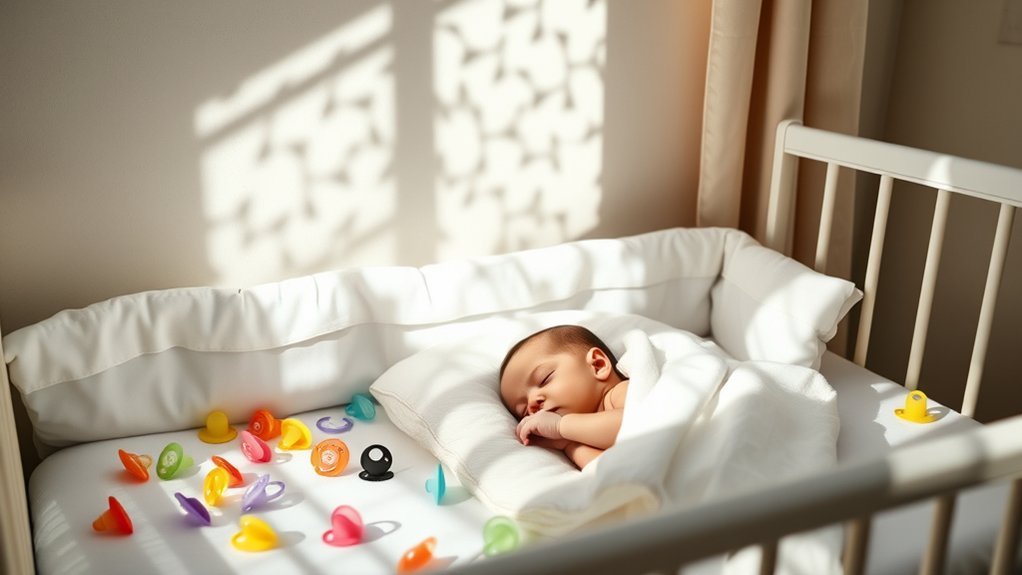
Just as the myths surrounding the Loch Ness Monster captivate our imagination, the misconceptions about pacifiers and Sudden Infant Death Syndrome (SIDS) can mislead parents. Many believe that using a pacifier might elevate SIDS risk, but research tells a different story. Understanding the actual role of pacifiers in infant sleep safety is essential for every parent. What evidence exists to support their use, and how can you guarantee your baby sleeps safely?
Understanding Sudden Infant Death Syndrome (SIDS)
When you think about your baby’s sleep safety, understanding Sudden Infant Death Syndrome (SIDS) is vital.
SIDS refers to the unexplained death of an otherwise healthy infant, usually during sleep. It typically occurs between one month and one year of age, with the highest risk between two and four months.
Research indicates that placing your baby on their back to sleep considerably reduces the risk of SIDS. A safe sleep environment, including a firm mattress and absence of soft bedding, is essential.
Additionally, avoiding exposure to smoke and ensuring your baby’s head remains uncovered during sleep can help protect against SIDS.
The Role of Pacifiers in Infant Sleep
When it comes to your baby’s sleep, pacifiers can play a significant role in enhancing safety.
Research shows that using a pacifier during naps and nighttime can reduce the risk of SIDS.
Understanding how pacifiers contribute to sleep safety helps you make informed choices for your infant.
Pacifiers and Sleep Safety
While many parents seek ways to secure their infants’ sleep safely, the role of pacifiers in this process often sparks debate. Pacifiers can offer comfort and may help your baby settle down for sleep, but understanding their impact is essential.
| Aspect | Benefit | Consideration |
|---|---|---|
| Comfort | Provides soothing effect | May lead to dependency |
| Sleep Duration | Can promote longer sleep stretches | Risk of waking if lost |
| Safety Guidelines | Recommended for sleep time | Must be used correctly |
Incorporating a pacifier into your baby’s sleep routine can be beneficial, but balance is key. Always maintain a safe sleep environment and consult your pediatrician for personalized advice.
SIDS Prevention Benefits
Pacifiers can play a significant role in reducing the risk of Sudden Infant Death Syndrome (SIDS). Research shows that using a pacifier during naps or at bedtime can decrease the likelihood of SIDS by promoting safer sleep positions and reducing airway obstruction.
When your baby sucks on a pacifier, it helps keep their airway open, which is essential for safe breathing. Additionally, pacifiers may encourage lighter sleep, making it easier for infants to rouse from deeper sleep stages.
While the exact mechanism isn’t fully understood, the benefits are clear. By incorporating a pacifier into your baby’s sleep routine, you’re taking an important step toward ensuring their safety and well-being during those vulnerable early months.
Common Myths About Pacifiers and SIDS
You may have heard that pacifiers increase the risk of SIDS, but this claim is often misunderstood.
The timing of pacifier use and its interaction with breastfeeding also play essential roles in this conversation.
Let’s clarify these common myths to guarantee you have the right information for your baby’s safety.
Pacifiers Increase SIDS Risk
Though many parents worry that using a pacifier might increase the risk of Sudden Infant Death Syndrome (SIDS), research indicates quite the opposite.
In fact, studies show that pacifier use during sleep can greatly reduce the risk of SIDS. The American Academy of Pediatrics supports this finding, suggesting that pacifiers can help maintain an open airway, promote arousal from sleep, and provide a soothing effect for infants.
By encouraging pacifier use, especially during naps and bedtime, you’re taking a proactive step toward safeguarding your baby’s well-being.
It’s essential to rely on credible research rather than myths. Embracing this evidence empowers you to make informed decisions about your child’s sleep environment, ensuring peace of mind for both you and your little one.
Timing of Pacifier Use
Many parents believe that the timing of pacifier use can influence SIDS risk, leading to confusion about when it’s appropriate to introduce one. Here are some key points to reflect on:
- Introduce after breastfeeding: It’s often recommended to introduce a pacifier after breastfeeding is established, usually around 3-4 weeks.
- Use during naps and sleep: Offering a pacifier during sleep can help reduce SIDS risk, as studies suggest it may promote safer sleep patterns.
- Avoid forcing use: If your baby doesn’t want the pacifier, don’t force it. Comfort should come naturally.
- Monitor age appropriateness: Keep in mind that pacifier use is generally safe until around 6 months, but consult your pediatrician for personalized advice.
Understanding these guidelines can empower you to make informed choices for your baby’s safety.
Breastfeeding and Pacifiers
Breastfeeding and pacifiers often spark debate among parents, leading to several misconceptions about their relationship and potential impact on SIDS risk. Many believe that using a pacifier can interfere with breastfeeding. However, research shows that introducing a pacifier after breastfeeding is established can actually support both practices.
| Myth | Fact |
|---|---|
| Pacifiers hinder breastfeeding | Pacifiers can complement it |
| They increase SIDS risk | They may reduce SIDS risk |
| Babies prefer pacifiers over breast | Babies can enjoy both |
Evidence Supporting Pacifier Use
While some parents may hesitate to introduce pacifiers, research consistently demonstrates their potential benefits in reducing the risk of Sudden Infant Death Syndrome (SIDS).
Here are some key findings that support pacifier use:
- Reduced SIDS Risk: Studies show that babies who use pacifiers during sleep have a lower incidence of SIDS.
- Soothing Effect: Pacifiers can calm infants, promoting better sleep patterns which may contribute to safety during rest.
- Airway Protection: The use of a pacifier can help keep the airway open, decreasing the chance of suffocation.
- Easier Adjustment: Pacifiers can provide a comforting outlet for sucking, making it easier for babies to self-soothe when needed.
Considering these points, pacifiers can be a beneficial addition to your infant’s care routine.
Recommended Guidelines for Pacifier Use
Understanding the benefits of pacifiers is important, but knowing how to use them effectively is equally essential. To maximize their advantages, consider offering a pacifier at nap time and bedtime, which can help reduce the risk of SIDS.
Make sure to choose a one-piece design, as this minimizes the risk of choking. Introduce the pacifier after breastfeeding is established, usually around three to four weeks, to avoid any breastfeeding issues.
It’s also wise to avoid forcing your baby to take a pacifier; let them decide. When your child reaches one year, consider gradually weaning them off the pacifier to promote healthy oral development.
Following these guidelines can enhance your baby’s comfort and safety while using pacifiers.
Potential Risks Associated With Pacifiers
Although pacifiers offer several benefits, it’s crucial to be aware of the potential risks they pose. Understanding these risks can help you make informed decisions for your baby’s well-being.
Here are some key concerns:
- Dental Issues: Prolonged use can lead to misalignment of teeth and bite problems.
- Ear Infections: Studies suggest a higher risk of ear infections associated with pacifier use.
- Dependency: Babies may become reliant on pacifiers for comfort, making it hard to wean them off later.
- SIDS Misconceptions: While some believe pacifiers reduce SIDS risk, improper use can create confusion and lead to unsafe sleep practices.
Tips for Safe Sleep Practices
To guarantee your baby sleeps safely, it’s essential to follow evidence-based practices that minimize the risk of sleep-related incidents.
Always place your baby on their back for every sleep, whether during the night or naps. Use a firm mattress covered with a fitted sheet, and keep the crib free of soft toys, blankets, and bumper pads.
Maintain a comfortable room temperature to avoid overheating. Consider using a pacifier during naps and bedtime, as studies suggest it may reduce the risk of SIDS.
Make sure your baby sleeps in the same room as you, but not in the same bed, to promote safety.
Making Informed Choices for Your Baby
When it comes to making informed choices for your baby, staying updated on the latest research and guidelines is vital. Here are four key considerations to guide you:
- Consult Trusted Sources: Rely on pediatricians, reputable health organizations, and evidence-based resources for accurate information.
- Understand SIDS Risks: Familiarize yourself with factors that contribute to Sudden Infant Death Syndrome and how to minimize them.
- Evaluate Pacifier Use: Research shows that pacifiers may reduce SIDS risk, but assess their appropriateness for your baby.
- Create a Safe Sleep Environment: Ascertain your baby’s sleep area is free of hazards, promoting a secure sleep space.
Frequently Asked Questions
Can Pacifiers Cause Dental Problems in Infants?
Yes, pacifiers can cause dental problems in infants, especially with prolonged use. It’s essential to monitor their usage and shift away from them by age two to promote healthy oral development and prevent future issues.
What Age Is Appropriate to Stop Using a Pacifier?
You’ll find it’s best to gently shift away from pacifiers by age two. This timing helps your child embrace new habits while minimizing potential dental issues, promoting healthy development and independence in their early years.
Are There Alternatives to Pacifiers for Soothing Infants?
Yes, there are alternatives to pacifiers for soothing infants. You can try swaddling, gentle rocking, or white noise. Skin-to-skin contact and breastfeeding can also provide comfort, helping your baby feel secure and calm.
How Do Cultural Practices Influence Pacifier Use?
Cultural practices markedly shape pacifier use, reflecting beliefs about soothing methods, infant care, and parental roles. You’ll notice variations in acceptance, with some cultures embracing pacifiers while others prefer alternative soothing techniques for infants.
Can Pacifiers Affect Breastfeeding Success?
Yes, pacifiers can affect breastfeeding success. They may cause nipple confusion or reduce the frequency of breastfeeding. If you’re concerned, consider waiting until breastfeeding is well-established before introducing a pacifier to guarantee a smoother shift.
Conclusion
To sum up, understanding the facts about pacifiers and SIDS can empower you to make the best choices for your baby’s sleep safety. While it’s easy to get lost in the myths, evidence shows that pacifiers can actually reduce SIDS risk. By following recommended guidelines and practicing safe sleep habits, you’re not just giving your baby comfort—you’re potentially saving their life. So, embrace the power of informed decisions and rest easy knowing you’re doing everything you can for your little one.
