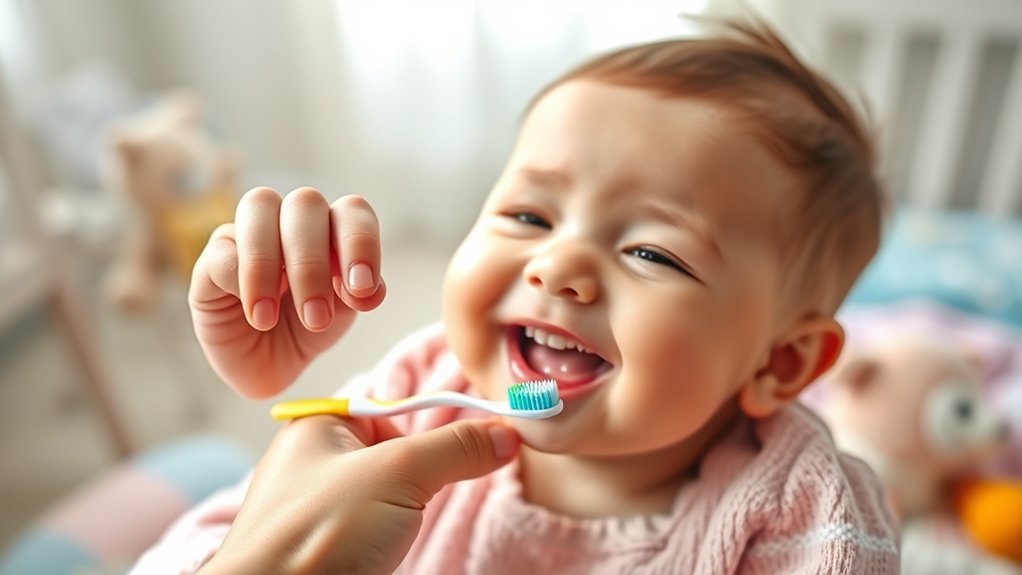
When it comes to your baby’s dental health, establishing a solid oral care routine is vital from the very start. You might wonder how to best support your little one’s developing teeth and gums. By following a few simple steps, you can guarantee a healthy foundation for their future smiles. Let’s explore the essential practices that will guide you through this important journey.
Understanding Your Baby’s Oral Development
As your baby grows, understanding their oral development becomes vital for ensuring a healthy start. From the moment they’re born, their mouth plays a significant role in feeding and bonding.
You’ll notice their gums are soft and sensitive, preparing for teething, which typically starts around six months. During this phase, you might see signs of discomfort, like increased drooling or fussiness. It’s important to soothe their gums with gentle massages or teething rings.
As teeth begin to emerge, monitor their growth closely. Each tooth serves not only for chewing but also for proper speech development. Recognizing these milestones helps you support your baby’s journey toward a healthy mouth, setting the stage for good oral hygiene habits later on.
Establishing a Daily Oral Care Routine
Creating a daily oral care routine for your baby is essential to promote healthy habits from the start.
Begin by wiping your baby’s gums with a clean, damp cloth after feedings. Once their first tooth appears, switch to a soft-bristled toothbrush designed for infants. Aim to brush twice a day, ideally in the morning and before bedtime.
Start by gently wiping your baby’s gums after feedings, then transition to a soft toothbrush when the first tooth appears.
Make it a fun experience by singing songs or letting your baby hold the toothbrush. Consistency is key, so try to keep the routine at the same times each day.
As your baby grows, involve them in choosing flavors of toothpaste that are safe for their age. This routine builds a foundation for a lifetime of good oral health.
Choosing the Right Tools for Oral Hygiene
When selecting the right tools for your baby’s oral hygiene, it’s essential to contemplate both safety and effectiveness.
Start with a soft-bristled toothbrush designed for infants, ensuring it’s gentle on tender gums. Look for a size that fits comfortably in your hand, allowing you to maneuver easily.
A silicone finger brush can also be a great option, making it simple to clean your baby’s mouth while offering a soothing sensation.
For toothpaste, choose a fluoride-free option specifically formulated for babies, as swallowing fluoride can be harmful.
Additionally, consider using a teething toy that promotes gum health.
Tips for a Positive Dental Experience
How can you make dental visits a positive experience for your baby? Start by creating a calm atmosphere. Talk gently and warmly about the visit beforehand, so your baby feels at ease.
Bring a favorite toy or blanket to provide comfort during the appointment. Timing matters too; schedule visits when your baby is well-rested and not hungry.
Bring along a comforting toy or blanket and choose appointment times when your baby is well-rested and fed for a smoother visit.
During the visit, stay positive and reassuring—your attitude sets the tone. Consider role-playing brushing and visits at home to familiarize your baby with the process.
Finally, praise your little one for their bravery after the appointment. This reinforces a positive association with dental care, making future visits easier and more enjoyable for both of you.
Regular Dental Check-Ups and What to Expect
Regular dental check-ups are essential for your baby’s oral health, as they help catch potential issues early and establish a foundation for good dental habits.
Typically, you should schedule the first visit when your baby’s first tooth appears, or by their first birthday. During the check-up, the dentist will gently examine your baby’s mouth, looking for any signs of decay or developmental issues.
You’ll also receive personalized advice on proper brushing techniques and dietary choices that support oral health. It’s a great opportunity to ask questions and express any concerns you might have.
Frequently Asked Questions
When Should I Start Using Toothpaste for My Baby?
You should start using toothpaste when your baby’s first tooth appears, typically around six months. Use a rice-sized amount of fluoride toothpaste, ensuring it’s safe and appropriate for their age to promote healthy dental habits.
How Can I Prevent My Baby From Getting Cavities?
You can prevent cavities by ensuring your baby’s teeth are cleaned regularly, limiting sugary snacks, and scheduling dental check-ups. Don’t worry if it seems overwhelming; establishing a routine now sets the foundation for lifelong oral health.
Is It Safe for My Baby to Share Utensils?
It’s not safe for your baby to share utensils. Doing so can spread bacteria, increasing the risk of cavities and infections. Always use separate utensils to protect your baby’s oral health and keep them safe.
What Should I Do if My Baby Has a Toothache?
If your baby’s got a toothache, soothe them gently. You can apply a cool, damp cloth to their gums and consult your pediatrician. Don’t wait too long; addressing pain helps keep those tiny smiles bright!
Are Pacifiers Harmful to My Baby’s Dental Health?
Pacifiers can be harmful to your baby’s dental health if used excessively. They may lead to misalignment of teeth or bite issues. Limit usage and guarantee proper cleaning to help maintain healthy oral development.
Conclusion
In nurturing your baby’s oral health, you’re planting the seeds for a lifetime of bright smiles. Just as a gardener tends to new growth, your gentle care and consistency will cultivate strong teeth and a positive attitude toward dental visits. By embracing this journey, you’re not just brushing away plaque; you’re building a foundation of confidence and well-being. Remember, each tiny step in oral care is a stride toward a future filled with health and happiness.