You might think structured toys are the only way to guide children during play, but open-ended toys can give children more room to imagine, explore, and solve problems in their own way. These simple, flexible play materials support critical thinking skills, problem-solving abilities, language growth, and social development because they do not force one “right” answer. The key is knowing how to guide the play without controlling it.
Quick Answer
Open-ended toys are toys that can be used in many different ways, such as blocks, art supplies, pretend-play items, fabric pieces, and loose parts. The best approach is to offer a small variety, let children lead, ask open-ended questions, and avoid strict rules that limit creativity.
Key Takeaways
- Open-ended toys encourage creativity because children can use them in more than one way.
- Blocks, art supplies, loose parts, dress-up items, and everyday safe materials can support imaginative play.
- Rigid rules, too many choices, and adult-led play can reduce curiosity and problem-solving.
- Joining play works best when you follow the child’s ideas instead of taking control.
- Good open-ended play builds confidence, independence, communication, and flexible thinking.
Understanding Open-Ended Toys
When you explore the world of open-ended toys, you quickly discover that they offer endless possibilities for creativity and imagination. Unlike toys with one fixed purpose, open-ended toys do not come with a single script, answer, or finished result.
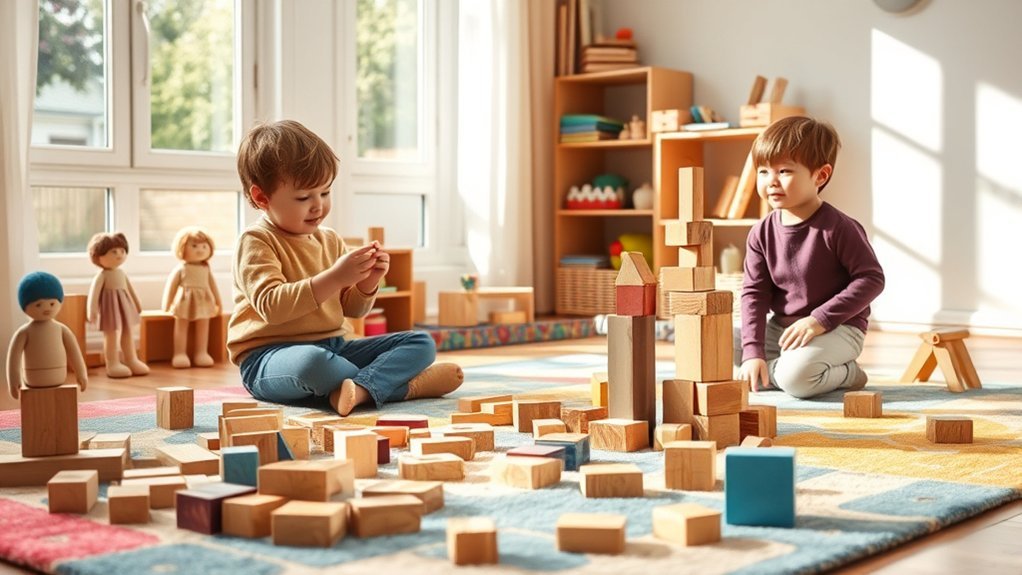
These toys, unlike traditional ones, don’t come with specific instructions or predetermined outcomes. Instead, they encourage your child to use problem-solving skills, make choices, build ideas, and create something personal. A set of wooden blocks can become a castle, a bridge, a garage, a zoo, or a pretend kitchen. A cardboard box can become a rocket, a shop, a reading nook, or a puppet stage.
Materials like blocks, art supplies, and loose parts foster exploration and experimentation. They also give children a chance to test cause and effect, practice patience, and learn from mistakes without feeling like they failed.
Blocks, art supplies, and loose parts can ignite creativity by encouraging children to explore, experiment, rebuild, and invent freely.
It’s helpful to recognize that open-ended toys promote cognitive development by allowing children to think critically and make decisions. They also support social interaction when kids collaborate, negotiate roles, share materials, and explain their ideas to each other.
Note: Open-ended toys do not need to be expensive. Simple items such as cardboard tubes, scarves, cups, wooden blocks, crayons, play dough, and safe household objects can offer rich learning when used with imagination.
Do: Encourage Imagination and Creativity
Encouraging imagination and creativity in your child is essential for their development. Open-ended play gives children permission to think beyond the obvious and create their own meaning from simple materials.
By fostering role-playing scenarios, you can help them explore different perspectives and situations, enhancing their social skills. Supporting experimental play activities also allows them to test ideas, push boundaries, and build stronger problem-solving abilities.
Foster Role-Playing Scenarios
Role-playing scenarios serve as a powerful tool for fostering imagination and creativity in children. By encouraging your child to step into different roles, such as a doctor, teacher, parent, builder, shopkeeper, explorer, or superhero, you help them explore various perspectives.
This type of play not only enhances storytelling skills but also promotes problem-solving as children navigate different situations. A child pretending to run a store learns about turn-taking, counting, speaking clearly, and planning. A child pretending to be a doctor may practice empathy, listening, and care.
You can provide props or costumes to support their roles, but let them take the lead in crafting the narrative. This freedom allows for self-expression and critical thinking. Additionally, role-playing with peers fosters social skills, as children learn to collaborate, communicate, disagree respectfully, and adjust their ideas.
Embracing these scenarios can greatly enrich your child’s developmental journey, nurturing a lifelong love for imaginative exploration.
Support Experimental Play Activities
To truly release your child’s imagination and creativity, supporting experimental play activities is essential. These activities allow your child to explore new ideas and concepts in a safe environment.
Encourage them to use open-ended toys, like building blocks, clay, magnetic tiles, recycled boxes, fabric scraps, or art supplies, which invite endless possibilities. When your child experiments, they’re not just playing; they’re learning important problem-solving skills and how to think outside the box.
As you observe, resist the urge to direct their play. Instead, ask open-ended questions that spark curiosity and further exploration. Try questions such as “What are you making?”, “What else could this become?”, “How did you decide that?”, or “What might happen if you try it another way?”
Celebrate their unique creations, reinforcing their confidence in experimentation. By providing a supportive atmosphere, you’re nurturing their ability to innovate, adapt, and express themselves. These skills can serve them well in school, friendships, and daily life.
Pro Tip: Instead of asking “What is it supposed to be?”, try saying, “Tell me about what you made.” This keeps the focus on the child’s thinking instead of judging the final product.
Don’t: Limit Play With Rigid Rules
When you impose strict rules on play, you can stifle imaginative exploration and limit your child’s ability to think outside the box. Open-ended toys work best when children are allowed to use them in unexpected ways, as long as the play remains safe and respectful.
Open-ended toys thrive on creativity, allowing kids to experiment and solve problems in unique ways. If every block tower must look a certain way or every drawing must match an adult’s idea, the child may stop taking creative risks.
Encourage Imaginative Exploration
Encouraging imaginative exploration in play is essential for fostering creativity and problem-solving skills in children. That is why it’s crucial not to impose rigid rules that can stifle their creativity.
When you provide open-ended toys, you’re allowing your child to navigate their own stories, develop characters, and invent scenarios. This freedom promotes self-expression and critical thinking.
Instead of dictating how a toy should be used, invite your child to experiment. Ask open-ended questions that spark their imagination, like “What happens next?” or “How can we make this even better?” These questions guide without taking over.
Foster Creative Problem-Solving
While it’s tempting to set strict guidelines around play, doing so can hinder your child’s ability to develop creative problem-solving skills. When you allow open-ended play, your child learns to think critically and explore multiple solutions to a problem.
Instead of imposing rigid rules, encourage experimentation and flexibility. If a tower falls, let your child think through why it happened. If a pretend game changes direction, let the story evolve. If a child uses a scarf as a river, cape, blanket, or road, that flexible thinking is part of the learning.
| Rigid Rules | Open-Ended Play | Benefits |
|---|---|---|
| Limits creativity | Encourages imagination | Enhances problem-solving |
| Discourages exploration | Promotes safe risk-taking | Builds resilience |
| Fosters dependency | Cultivates independence | Develops critical thinking |
Warning: Freedom in play does not mean ignoring safety. Avoid small loose parts for children who still mouth objects, check materials for sharp edges, and supervise play with strings, fabric, water, or household items.
Do: Provide a Variety of Materials
Providing a variety of materials is essential for fostering creativity and problem-solving skills in children. When you offer different textures, colors, sizes, and shapes, you encourage exploration and imaginative play.
Items like building blocks, fabric scraps, cardboard tubes, cups, scarves, paper, crayons, magnetic tiles, and natural elements like stones or leaves can spark unique ideas and solutions. By mixing these materials, children learn to experiment, combine, sort, compare, and innovate, enhancing their critical thinking abilities.
It’s important to observe what captures their interest and adapt your offerings accordingly. If your child keeps building towers, add toy animals, small cars, or paper signs to extend the play. If they enjoy pretend cooking, offer safe bowls, spoons, cloth pieces, and pretend ingredients.
This approach not only keeps playtime engaging but also helps children develop a sense of agency in their creations. They learn that their ideas matter and that materials can be used in more than one way.
Examples of Open-Ended Toy Materials
The best open-ended toys are usually simple, flexible, and easy to combine. You do not need every item on this list. Start small and rotate materials based on your child’s age, interest, and safety needs.
- Building materials: wooden blocks, magnetic tiles, cardboard boxes, stacking cups, and interlocking bricks.
- Art materials: crayons, washable paint, paper, clay, play dough, stickers, glue sticks, and child-safe scissors.
- Pretend-play items: scarves, hats, bags, toy dishes, dolls, animal figures, and dress-up clothes.
- Loose parts: large buttons, lids, fabric pieces, pinecones, shells, stones, and wooden rings for older children who can use them safely.
- Everyday items: empty containers, tubes, blankets, baskets, and clean kitchen tools used with supervision.
Don’t: Overwhelm With Too Many Options
Although offering a variety of materials is important, overwhelming children with too many options can stifle their creativity instead of nurturing it. When you present too many choices, kids may feel paralyzed or anxious, unable to focus on any one idea. This can lead to frustration rather than imaginative play.
Instead, aim for a balanced selection that encourages exploration without causing confusion. By limiting options, you allow children to dive deeper into their ideas, fostering critical thinking and problem-solving skills. Remember, it’s not about quantity but quality.
Curate your materials thoughtfully, ensuring they inspire creativity and engagement. Simplifying choices can lead to richer play experiences, helping children develop their imagination and confidence in a supported environment.
How to Rotate Open-Ended Toys Without Limiting Creativity
A simple toy rotation can keep open-ended play fresh without filling the room with too many choices. Choose a few core materials, then rotate extras every week or two. For example, you might keep blocks available all the time but rotate animal figures, fabric pieces, vehicles, or art supplies.
Watch what your child returns to again and again. If they are deeply engaged with one type of play, you do not need to switch materials too quickly. The goal is not constant novelty. The goal is focused, meaningful play that lets children build on their ideas.
Pro Tip: Try offering 6 to 10 open-ended items at a time instead of filling the whole play area. A smaller selection often leads to longer, calmer, and more creative play.
Do: Join in the Play Experience
Joining in the play experience not only enhances children’s creativity but also strengthens your bond with them. When you participate actively, you show that their interests matter, fostering a nurturing environment.
The key is to join without taking over. Children benefit most when adults follow their lead, respond with interest, and support the play without turning it into a lesson every time.
Here are three ways to engage effectively:
- Encourage Imagination: Ask open-ended questions that prompt them to think creatively, like, “What can we build with these blocks?” or “Who lives in this house?”
- Model Problem-Solving: Demonstrate how to tackle challenges together. If a structure collapses, explore rebuilding it instead of showing frustration.
- Celebrate Their Ideas: Acknowledge and praise their unique creations. This validation boosts their confidence and inspires further exploration.
What to Say During Open-Ended Play
Your words can either open up play or close it down. Instead of correcting, testing, or rushing the child, use language that invites thinking.
- “Tell me about what you’re making.”
- “What gave you that idea?”
- “What do you want to try next?”
- “That looks tricky. What could help it stay up?”
- “I see you used the red block as a door. How does it open?”
These comments show interest without forcing a specific answer. They also help children build vocabulary, explain their thinking, and feel proud of their ideas.
Choosing Age-Appropriate Open-Ended Toys
Open-ended toys can work for many ages, but the safest and most useful choices depend on your child’s development. A toddler may need large blocks, stacking cups, chunky crayons, and soft scarves. A preschooler may enjoy pretend-play props, play dough, magnetic tiles, and simple art materials. An older child may use craft supplies, construction sets, fabric, nature items, and more complex building materials.
Always consider choking hazards, sharp edges, toxic materials, and whether the child can use the item safely. Open-ended play should feel free, but the materials should still match the child’s age and abilities.
Balancing Open-Ended Play and Structured Play
Open-ended play does not mean structured toys or guided activities are bad. Children can benefit from both. Structured games may teach turn-taking, rules, memory, counting, and patience. Open-ended toys support imagination, flexible thinking, independence, and creative problem-solving.
A healthy play routine includes room for both types. You might use a puzzle or board game for focused learning, then offer blocks, art supplies, or pretend-play materials for child-led exploration. The balance helps children practice following directions while still developing their own ideas.
Frequently Asked Questions
What age groups benefit most from open-ended toys?
Children aged 2 to 8 often benefit strongly from open-ended toys because creativity, language, problem-solving, and social skills are growing quickly during these years. Older children can benefit too, especially when the materials are more advanced, such as craft kits, building systems, nature materials, or design-based projects.
How can open-ended toys support social skills development?
Open-ended toys support social skills because children often need to share materials, negotiate roles, explain ideas, solve disagreements, and work together. A group of children building a pretend city, for example, may practice teamwork, communication, compromise, and patience without feeling like they are doing a formal lesson.
Are there specific brands known for quality open-ended toys?
Yes, brands like Grimm’s, Haba, and Tegu are often known for durable, creative, open-ended toys. However, quality open-ended play does not depend only on brand names. Simple blocks, art supplies, cardboard boxes, scarves, and safe household materials can also support rich imaginative play.
How do open-ended toys promote problem-solving skills?
Open-ended toys promote problem-solving by giving children a goal without one fixed path. As they stack, build, sort, pretend, draw, or invent, they test ideas, make adjustments, and learn from mistakes. This helps them practice planning, flexible thinking, cause and effect, and persistence.
Can open-ended toys be used in structured educational settings?
Yes, open-ended toys can be used in structured educational settings. Teachers and caregivers can connect them to learning goals while still allowing children to explore. For example, blocks can support math, balance, design, teamwork, and language when children describe what they are building.
What are the best open-ended toys for beginners?
Good beginner options include wooden blocks, stacking cups, chunky crayons, play dough, scarves, cardboard boxes, animal figures, and simple pretend-play props. Start with a small set of safe materials and add more as you notice what your child enjoys.
How many open-ended toys should I offer at once?
A smaller selection usually works better than a crowded playroom. Try offering a few flexible materials at a time, such as blocks, figures, fabric, and art supplies. Rotate items when play feels stale, but keep favorites available if your child continues using them in new ways.
Conclusion
Incorporating open-ended toys into playtime can transform a child’s creative journey. By encouraging imagination, providing diverse materials, and actively engaging in their world, you set the stage for limitless exploration. The best open-ended play happens when children feel safe, supported, and free to test their own ideas.
At the same time, rigid rules and overwhelming choices can snuff out that spark of creativity. Keep the materials simple, follow your child’s lead, ask thoughtful questions, and allow the play to move in unexpected directions. When you let go of unnecessary control and embrace the unexpected, the possibilities become as vast as your child’s imagination.