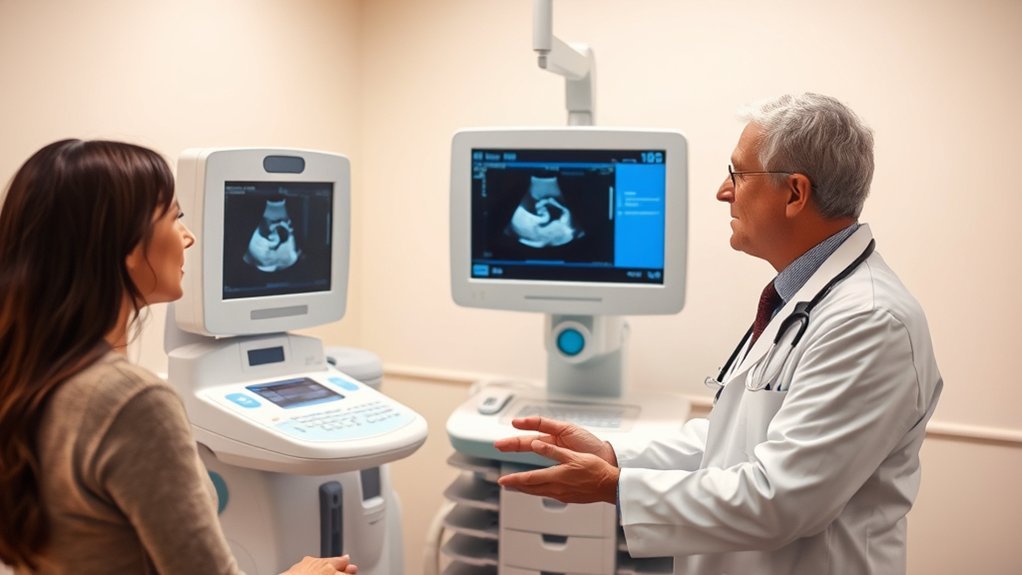
After an NT scan, it is normal to feel relieved, curious, or worried while you wait for results. This first-trimester screening test can give helpful information about your baby’s development, but it is still a screening tool, not a diagnosis. The most important thing is knowing which results or symptoms should prompt a call to your doctor and which questions to ask next.
Quick Answer
Call your doctor after an NT scan if your report says the NT measurement or combined screening result is high risk, or if you have bleeding heavier than spotting, severe belly pain, fever, fainting, severe headache, vision changes, extreme swelling, chest pain, trouble breathing, or fluid leaking from the vagina.
Key Takeaways
- An NT scan measures fluid at the back of the baby’s neck during the first trimester, usually as part of early screening for chromosomal conditions.
- A higher NT measurement does not diagnose Down syndrome, Edwards syndrome, Patau syndrome, or any other condition. It means your provider may recommend more testing.
- The NT number is interpreted with gestational age, crown-rump length, blood test results, age-related risk, and the lab’s cutoff.
- Heavy bleeding, severe belly pain, vision changes, severe headache, fever, fainting, chest pain, trouble breathing, or fluid leaking should be treated as urgent symptoms.
At a Glance
| Typical Timing | Usually around 11 to 14 weeks of pregnancy, depending on your provider and local screening program. |
| Time Required | Often about 20 to 30 minutes, though the visit may take longer if images are hard to capture. |
| Preparation | Wear comfortable two-piece clothing. Ask ahead whether you need a full bladder. |
| Follow-Up | Your provider may discuss combined screening results, cfDNA/NIPT, CVS, amniocentesis, a repeat scan, or genetic counseling. |
Medical note: This article is for general education only. It cannot diagnose your pregnancy or replace care from your OB-GYN, midwife, maternal-fetal medicine specialist, or local emergency service.
Understanding the NT Scan: What It Is and Why It Matters
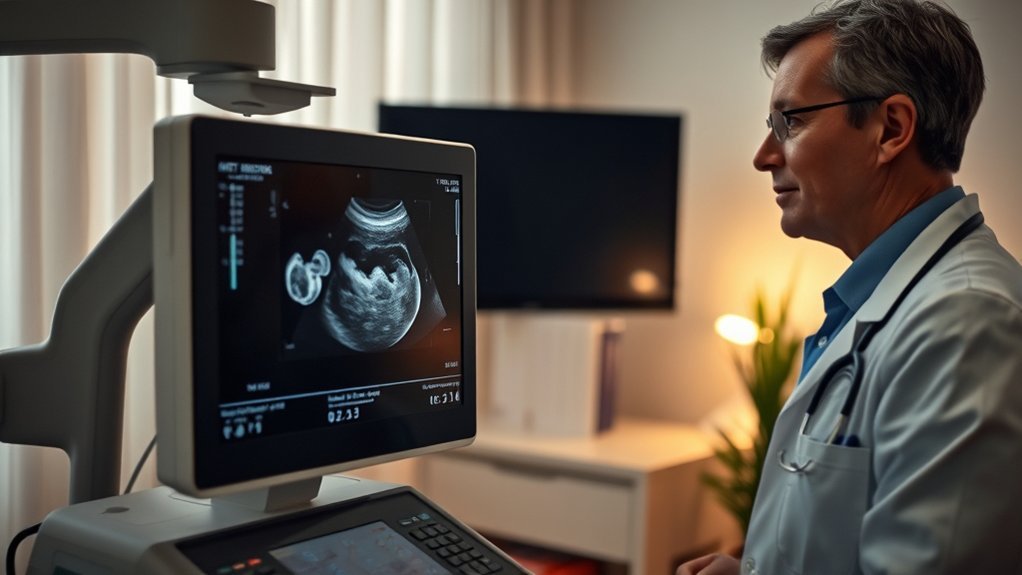
The NT scan, short for nuchal translucency scan, is a first-trimester ultrasound that measures the small fluid-filled space at the back of your baby’s neck. It is commonly used as part of early screening for chromosome conditions such as Down syndrome, Edwards syndrome, and Patau syndrome.
In many screening programs, the NT measurement is combined with a blood test and other risk factors. The NHS explains that this early screening may happen during the dating scan and can include a blood test plus measuring the fluid at the back of the baby’s neck.
A higher NT measurement can raise concern, but it does not prove that your baby has a condition. It means your healthcare provider may want to review the full result, check dating accuracy, look for other ultrasound findings, or offer additional screening or diagnostic testing.
Note: An NT scan is a screening test. Screening estimates risk. Diagnostic tests, such as CVS or amniocentesis, are used when a provider needs to confirm or rule out a chromosome condition.
The Procedure: What to Expect During the NT Scan

During the NT scan, you usually lie on an exam table while a sonographer applies gel to your lower abdomen. The sonographer moves a handheld transducer over your skin to capture images of the baby. Sometimes, a transvaginal ultrasound may be used in early pregnancy if clearer images are needed.
RadiologyInfo, reviewed by radiology experts, notes that obstetric ultrasound uses sound waves, does not use ionizing radiation, and has no known harmful effects when used as a medical exam. You may feel pressure from the transducer, but the scan should not cause severe pain.
Here’s what commonly happens during the appointment:
| Step | What Happens |
|---|---|
| Preparation | You lie down and expose your lower abdomen. Your clinic may ask you to arrive with a full bladder. |
| Gel Application | A water-based gel is placed on your skin so sound waves can pass clearly between the transducer and your body. |
| Scanning | The sonographer captures the baby in the correct position and measures the nuchal translucency area. |
| Review | The images are reviewed, and your provider explains the result or tells you when to expect the report. |
Interpreting NT Scan Results: Normal vs. Abnormal Findings

Your NT scan result should be interpreted by your healthcare provider, not by the measurement alone. The report may include the NT measurement in millimeters, but the meaning depends on your baby’s gestational age, crown-rump length, the lab’s cutoff, your age-related risk, blood test results, and whether other ultrasound findings were seen.
A lower-risk result can be reassuring, but it does not guarantee that no condition is present. A higher-risk result does not mean your baby definitely has a chromosome condition. It means the screening found a reason to take a closer look.
Your provider may describe the result as:
- Low risk: The combined screening result does not suggest a high chance of the screened conditions.
- Increased risk: The NT measurement, blood test, age-related risk, or combined result suggests more information is needed.
- Inconclusive or incomplete: The baby’s position, dating uncertainty, or timing may make the result harder to interpret.
What an Abnormal NT Scan Result Can Mean
An abnormal or increased NT result is a signal for follow-up, not a final answer. It may be linked with chromosome conditions such as Down syndrome, Edwards syndrome, or Patau syndrome. It may also lead your provider to look more closely at the baby’s heart, anatomy, or growth as pregnancy continues.
Sometimes, additional testing does not find a chromosome condition. That is why your provider may recommend a step-by-step plan instead of making assumptions from the NT number alone.
Pro Tip: When you receive your report, ask whether the result is based on NT alone or on combined screening. A combined result is usually more useful than the NT measurement by itself.
Common Concerns: Symptoms That Warrant a Call to Your Doctor
You should call your doctor or midwife if your NT scan report says your result is high risk, increased risk, abnormal, or needs follow-up. You should also call if you feel unsure about what the result means.
Symptoms matter too. Most people can return to normal activity after an ultrasound, but certain symptoms during pregnancy should never be brushed off.
Warning: Seek medical care right away if you have bleeding heavier than spotting, fluid leaking from the vagina, severe belly pain that does not go away, fainting, fever of 100.4°F (38°C) or higher, severe headache, vision changes, extreme swelling of the face or hands, chest pain, trouble breathing, or thoughts of harming yourself or your baby. The CDC lists these as urgent maternal warning signs.
Abnormal Test Results
If your NT scan or combined screening result is marked abnormal or increased risk, ask your provider to explain the result in plain language. Helpful questions include:
- What was the NT measurement, and what cutoff did the lab use?
- Was this result based on ultrasound only or combined with blood work?
- Does the baby’s crown-rump length and gestational age match the scan window?
- Were any other ultrasound findings seen?
- Should I consider cfDNA/NIPT, CVS, amniocentesis, a repeat ultrasound, or genetic counseling?
Abnormal results can feel frightening, but they do not always mean something is wrong. They mean you need a clear follow-up plan.
Severe Discomfort or Pain
Mild pressure during the scan can happen, especially if the sonographer needs a better view. Severe, sharp, worsening, or lasting pain is different. Call your healthcare provider if you have intense cramping, pain on one side, shoulder pain, dizziness, fever, or pain that does not settle after the appointment.
If pain is sudden, severe, or paired with bleeding, fainting, or weakness, seek urgent medical care.
Unusual Bleeding or Spotting
Light spotting can happen in pregnancy for several reasons, but bleeding should always be taken seriously if it is heavy, increasing, bright red, paired with pain, or includes clots or tissue. Use this table as a practical guide, but follow your provider’s advice first.
| Type of Bleeding | What It May Look Like | What to Do |
|---|---|---|
| Light spotting | A few drops or faint marks | Call your provider if it continues, increases, or worries you. |
| Moderate bleeding | Bright red bleeding or steady flow | Call your doctor or maternity unit promptly. |
| Dark brown discharge | Old blood or brown staining | Ask your provider, especially if it increases or comes with pain. |
| Clots or tissue | Any clots, tissue-like material, or heavy cramping | Seek medical advice right away. |
| Heavy bleeding | Soaking a pad in an hour or bleeding like a period | Seek urgent medical care. |
When to Seek Medical Advice: Key Indicators
Reach out to your healthcare provider after an NT scan if the report is unclear, high risk, incomplete, or different from what you expected. Also call if you have symptoms that feel unusual for you.
When you call, be ready to share:
- How many weeks pregnant you are
- The date and location of the NT scan
- The exact wording on the report, if you have it
- Your NT measurement and risk result, if listed
- Any bleeding, pain, fever, dizziness, headache, swelling, or vision changes
- Whether symptoms are getting better, staying the same, or worsening
If you are told to go to an emergency department, maternity triage unit, or urgent care center, take your scan report and prenatal records if available.
The Next Steps: Follow-Up Actions After the NT Scan
After your NT scan, the next step is to understand whether your result is low risk, increased risk, incomplete, or pending. Your provider may review the scan on its own or combine it with blood test results.
Understanding NT Scan Results
If your result shows increased risk, try not to read it as a diagnosis. According to MedlinePlus prenatal testing guidance, screening tests check whether you or your fetus may have certain health issues, but they do not diagnose problems. An abnormal screening result means more information is needed.
Your provider may recommend one or more follow-up steps based on your risk result, ultrasound findings, medical history, and personal preferences.
Discussing With Healthcare Provider
Use your follow-up visit to ask direct questions. You can say, “Can you explain what this result means for my pregnancy and what choices I have next?” This helps keep the discussion practical and less overwhelming.
Good questions include:
- Is this result considered low risk, high risk, or inconclusive?
- What conditions were screened for?
- What is the chance of a false positive or false negative?
- Do I need a maternal-fetal medicine referral?
- Would a genetic counselor help explain my options?
- How quickly do I need to decide about follow-up testing?
Additional Testing Options Available
While the NT scan provides useful early information, your provider may recommend more testing if the result is increased risk. MedlinePlus explains that prenatal cell-free DNA screening, also called cfDNA or NIPT, is a blood test that can be done as early as the 10th week of pregnancy, but it still cannot confirm a diagnosis.
| Follow-Up Option | What It Does | Important Note |
|---|---|---|
| cfDNA / NIPT | Uses a blood sample to screen for chromosome conditions. | Very useful for risk assessment, but still a screening test. |
| CVS | Tests placental tissue for chromosome information. | A diagnostic test often discussed in the first trimester. It has benefits and risks. |
| Amniocentesis | Tests amniotic fluid cells for chromosome information. | A diagnostic test usually done later than CVS. It has benefits and risks. |
| Repeat or specialist ultrasound | Looks again at dating, anatomy, or specific areas such as the heart. | May be done by a maternal-fetal medicine specialist. |
| Genetic counseling | Explains results, risks, test choices, and possible outcomes. | Helpful if you feel overwhelmed or need support making a decision. |
Emotional Support After an Abnormal NT Scan
Waiting for follow-up results can be stressful. You may feel anxious even when your provider says the result is only a risk estimate. That reaction is common and valid.
Try to avoid searching random forums before you understand your own report. Instead, ask your provider for written information, a genetic counselor referral, or a clear timeline for the next result. If anxiety is affecting your sleep, appetite, work, or daily life, tell your healthcare team. Emotional support is part of pregnancy care.
Frequently Asked Questions
How is the NT scan different from other prenatal tests?
The NT scan is an ultrasound measurement taken in early pregnancy. It may be combined with blood tests to estimate the chance of certain chromosome conditions. Other tests, such as cfDNA/NIPT, use a blood sample, while CVS and amniocentesis are diagnostic tests that examine fetal or placental genetic material.
Can the NT scan be performed at any stage of pregnancy?
No. The NT scan is a first-trimester screening measurement and must be done during a specific pregnancy window. If you are too far along for the combined first-trimester screening, your provider may discuss other screening or diagnostic options.
What should I wear for the NT scan appointment?
Wear comfortable clothing that makes your lower abdomen easy to access. A two-piece outfit is often easiest because you can lift your top without fully changing clothes.
Is the NT scan safe for both mother and baby?
Yes, an NT scan uses ultrasound, which uses sound waves rather than ionizing radiation. It is considered safe when performed as a medical exam by trained professionals. You may feel pressure, but severe pain is not expected.
How do I prepare for an NT scan?
Follow your clinic’s instructions. Some clinics ask you to arrive with a full bladder, while others do not. Wear comfortable clothing, bring your prenatal notes if you have them, and ask when you should expect results.
Does an abnormal NT scan mean my baby has Down syndrome?
No. An abnormal or increased NT result means the screening found a higher chance of certain conditions. It does not diagnose Down syndrome or any other condition. Your provider may recommend cfDNA/NIPT, CVS, amniocentesis, a specialist ultrasound, or genetic counseling.
Can an NT scan cause bleeding?
A standard abdominal ultrasound should not cause heavy bleeding. If you notice bleeding after the appointment, call your provider, especially if it is bright red, increasing, heavier than spotting, or paired with pain or dizziness.
Conclusion
Staying informed about your NT scan can help you respond calmly and quickly. A high-risk or abnormal result does not confirm a diagnosis, but it does deserve a clear follow-up plan with your healthcare provider. Call your doctor if the report is unclear, if you are offered further testing, or if you have worrying symptoms such as bleeding, severe pain, fever, severe headache, vision changes, swelling, chest pain, trouble breathing, fainting, or fluid leaking. Your provider is the right person to explain your result and guide the safest next step for you and your baby.
Sources
- NHS: 12-week scan — supports scan timing and combined screening details.
- RadiologyInfo: Obstetric Ultrasound — supports ultrasound safety, preparation, and procedure details.
- MedlinePlus: Prenatal Testing — supports screening versus diagnostic test explanation.
- MedlinePlus: Prenatal Cell-Free DNA Screening — supports cfDNA/NIPT purpose, timing, and limitations.
- CDC: Urgent Maternal Warning Signs — supports urgent pregnancy symptoms that need immediate care.