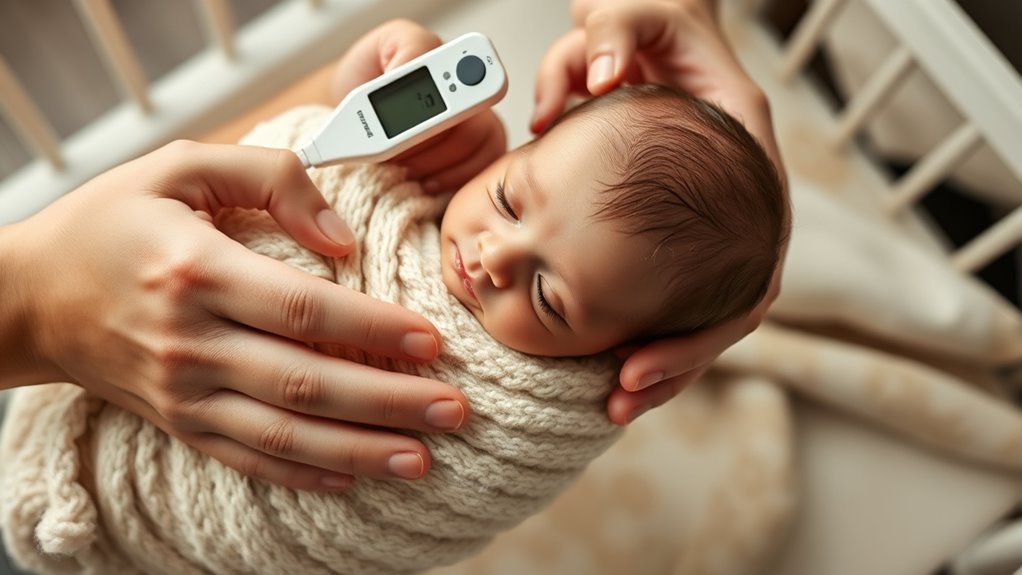
Your newborn’s rectal temperature is usually normal between 96.8°F and 100.3°F. Use a digital rectal thermometer for the most accurate reading in babies under 3 months. Clean it before and after use, place your baby on their back or tummy, and insert the tip ½ to 1 inch into the rectum. Call your pediatrician right away if it reaches 100.4°F or higher. You’ll also learn what can affect it at home.
What Is a Normal Newborn Temperature?
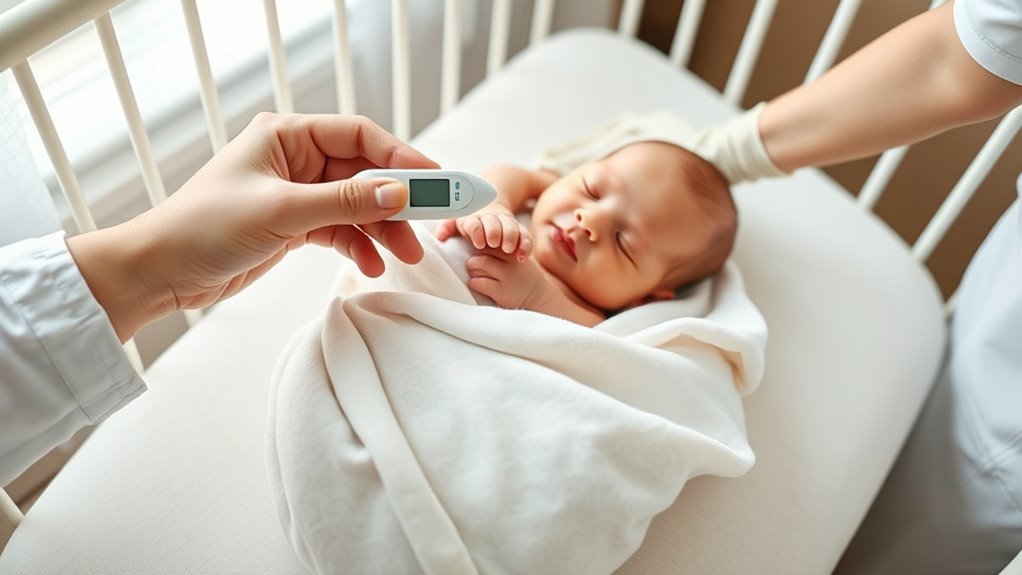
A newborn’s normal rectal temperature typically falls between 96.8°F and 100.3°F (36°C to 37.9°C), though it may run a little lower in the morning and higher in the evening.
That range defines your baby’s temperature when you check their temperature correctly. Rectal temperature readings are the most accurate way to confirm a normal temperature in the first weeks of life.
Rectal temperature readings are the most accurate way to confirm a newborn’s normal temperature in the first weeks of life.
If your baby’s temperature reaches 100.4°F (38°C) or higher, treat it as fever in newborns and seek immediate medical care. Don’t wait to see if it settles, especially if your infant is under one month old.
Low temperatures matter too; newborns can become hypothermic, and this can happen even in healthy term babies.
Which Thermometer Is Best for a Newborn?
For newborns, a digital thermometer is the best choice because it gives fast, accurate readings, and a rectal measurement is the most precise method for babies under 3 months old. You can trust this tool to support a healthy temperature check without guesswork.
- Use a digital thermometer for the most reliable temperature reading.
- A rectal thermometer gives the clearest result in newborns and preterm infants.
- Avoid digital ear thermometers under 6 months; they’re often inaccurate.
- Temporal artery thermometers work better after 3 months, even during sleep.
- Clean the thermometer before and after each use, and label rectal and oral devices.
This approach helps you act with confidence and protect your baby’s well-being.
If your newborn feels warm or unwell, use the right device, note the result, and contact your clinician for guidance. A precise reading can help you respond calmly and promptly, while keeping care simple, safe, and freeing.
How to Take a Newborn’s Temperature Safely
Once you have the right thermometer, taking a newborn’s temperature safely is straightforward: use a digital thermometer, clean it with alcohol or soap and water before and after use, and place your baby on their back or tummy before gently inserting the tip ½ to 1 inch into the rectum.
Keep the thermometer steady until it signals, then read the rectal temperature. For newborns under three months, this method gives the most accurate temperature.
You can take a reading when your baby is calm and unbundled for at least 10 minutes if you suspect fever. If the temperature is above 100.4°F (38°C), call your pediatrician right away, especially if your baby is under one month old.
You’re not overreacting by checking carefully; you’re protecting your child with clear, evidence-based care. Stay calm, follow each step, and trust that you can handle this safely.
Why Newborns Get Too Cold or Too Hot
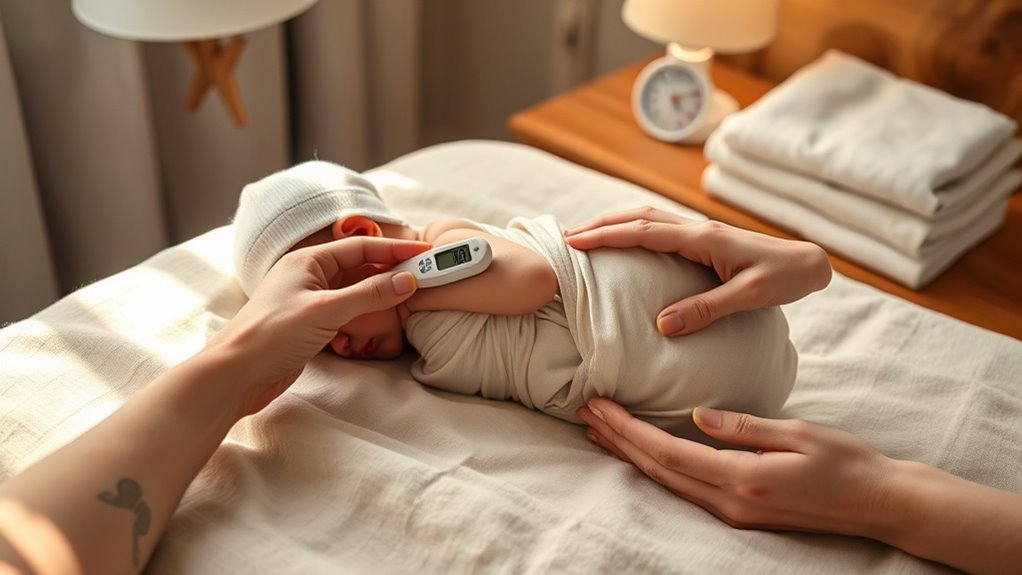
Newborns can get too cold or too hot because their temperature-control systems are still immature, which makes them especially sensitive to their environment. You may see temperature fluctuations when wet amniotic fluid cools the skin, when the delivery room feels chilly, or when a smaller or premature baby loses heat faster.
Newborns can get too cold or too hot because their temperature control is still immature.
Hypothermia can occur even in otherwise well newborns, and hyperthermia can develop if clothing, blankets, or room temperature trap too much warmth. Skin-to-skin contact helps you stabilize body heat and supports calm, protected change outside the womb.
- Dry your newborn promptly after birth.
- Keep room temperature comfortable, not overheated.
- Use light layers that you can adjust.
- Choose skin-to-skin contact to support warmth.
- Watch for sweating or flushed cheeks.
You can support your baby’s comfort by staying attentive, adjusting the environment, and letting their needs guide your care.
When a Newborn Temperature Needs Medical Help
Even with careful temperature control, some readings mean your baby needs prompt medical evaluation. Use a digital thermometer, and trust the number plus your baby’s behavior. A rectal temperature of 100.4°F (38°C) or higher in an infant under 3 months needs immediate medical attention. If your baby is 3 to 6 months old and reaches 101°F (38.3°C) with irritability or discomfort, contact a healthcare professional. For ages 6 to 24 months, seek advice if a fever above 101°F lasts more than one day without other signs of illness. Prolonged inconsolable crying or reduced appetite can also signal illness and deserve assessment.
| Age | Trigger | Action |
|---|---|---|
| Under 3 months | 100.4°F rectal | Immediate medical attention |
| 3–6 months | 101°F + irritability | Call clinician |
| 6–24 months | >101°F for 1 day | Seek advice |
| Symptom | Concern | Response |
| Febrile seizure | Serious fever sign | Immediate consultation |
| Poor feeding | Possible fever | Pediatrician review |
How to Keep Your Newborn Warm at Home
To keep your baby warm at home, aim for a room temperature of 72°F to 75°F (22.2°C to 23.8°C) and dress your newborn in about the same number of layers you’d wear, since too many layers can lead to overheating.
You can support steady temperature by using skin-to-skin contact for 60 to 90 minutes. After baths, dry your newborn completely, because wet skin loses heat fast.
Stay alert and monitor for sweating, flushed cheeks, or a hot chest, and adjust clothing or room settings right away. You’re building comfort without excess, so your baby can stay regulated and free.
- Keep the nursery within range.
- Dress one layer at a time.
- Use skin-to-skin contact often.
- Dry thoroughly after bathing.
- Monitor for overheating signs.
Frequently Asked Questions
Is 99.5 a Fever for a 2 Week Old?
No—99.5°F isn’t a fever for your 2-week-old. You should watch temperature readings, fever symptoms, and health monitoring. For newborn care and parental concerns, follow pediatric advice; seek help if rectal temperature reaches 100.4°F.
What Is the 3 6 9 Rule for Babies?
You monitor, you note, you act: the 3 6 9 guidelines track baby temperature ranges at 3, 6, and 9 months. Use temperature monitoring methods, watch fever symptoms signs, follow newborn care tips, and keep safe sleep practices.
What Temperature Is a Risk for SIDS?
A newborn temperature of 100.4°F (38°C) or higher raises SIDS risk factors and needs urgent pediatric advice. You should follow temperature guidelines, keep safe sleep practices, use infant monitoring, and address parental concerns quickly.
Is 96.6 a Normal Temperature for a Newborn?
No, 96.6°F isn’t within normal ranges for a newborn; you should watch newborn health, continue temperature monitoring, and follow safety guidelines. Check for fever signs or cold stress, and contact your clinician about parental concerns.
Conclusion
So, is it true that a newborn’s temperature is always easy to judge by touch? Not really. A normal newborn temperature usually stays between 97.7°F and 99.5°F when measured correctly. Use a digital rectal thermometer for the most accurate reading, and call your pediatrician if your baby’s temperature is 100.4°F or higher, or below 97°F. You can keep your baby comfortable by dressing in light layers and avoiding overheating.
