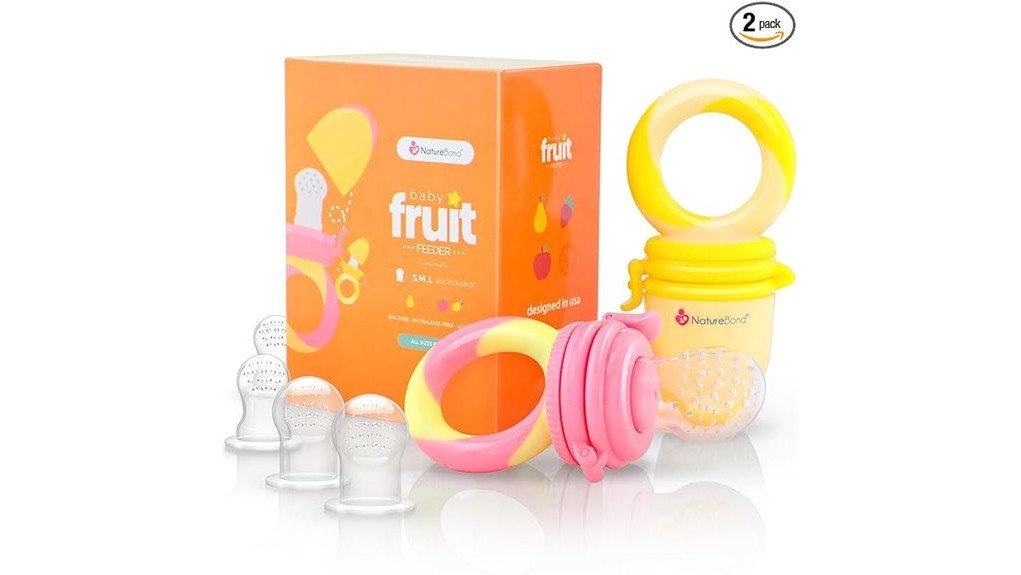
The NatureBond Baby Food Feeder is designed to introduce solids in a controlled way while limiting choking risk and reducing mess. Its silicone sac lets babies handle soft fruit and vegetables, and the multiple teat sizes support different stages of use. It is also marketed as a teething aid. Safety, ease of cleaning, and real-world usefulness remain the key questions, and the details are worth examining further.
Key Takeaways
- NatureBond Baby Food Feeder is a practical tool for introducing soft fruits and vegetables during teething and weaning.
- Its silicone sac lets babies self-feed safely while reducing choking risk compared with larger food pieces.
- The feeder also works as a teether, helping soothe sore gums with gentle chewing and mouth stimulation.
- Safety-focused materials include BPA-free, latex-free, lead-free, and phthalate-free construction with Bureau Veritas USA certification.
- It offers good value with multiple teat sizes, washable parts, and extra silicone teats for growing infants.
What Is the NatureBond Baby Food Feeder?
The NatureBond Baby Food Feeder is a two-pack fruit feeder pacifier designed for infants in the teething and weaning stages.
It holds soft fruit or vegetables in a silicone sac, letting liquids pass while limiting larger pieces. The design supports controlled feeding techniques and may help introduce baby nutrition without direct spoon-feeding.
It also functions as a teether, offering gum stimulation during oral development. The package includes multiple teat sizes, allowing age-appropriate selection.
Its detachable parts simplify cleaning, supporting hygienic use. The overall format reflects a practical, low-friction tool for early feeding independence and caregiver flexibility.
Is the NatureBond Feeder Safe for Babies?
Yes—on paper, the NatureBond feeder is designed with infant safety in mind. It is marketed with product certifications from Bureau Veritas USA and is listed as BPA free, latex free, lead free, and phthalates free. Those claims support baby safety when the feeder is used as directed and cleaned thoroughly.
Its detachable parts may reduce residue buildup, which is relevant for hygiene. Still, no device eliminates risk entirely; supervision remains necessary, and the correct size should match the infant’s stage.
Safety depends less on branding than on careful use, inspection, and informed caregiver judgment.
How Does the NatureBond Feeder Help With Teething?
Teething relief comes from the feeder’s silicone teat, which allows infants to chew and massage sore gums without exposure to large food pieces. This mechanical action can provide teething benefits by offering controlled pressure during oral exploration.
The soft silicone may reduce local discomfort and deliver soothing relief while limiting accidental biting on harder objects. Because the feeder contains small amounts of food or liquid within a perforated sac, it can keep the mouth engaged safely and briefly.
Its design supports developmental self-feeding without overstimulation, giving caregivers a practical, low-risk option during periods of gum tenderness and oral sensitivity.
How Do You Use the NatureBond Feeder With Fruit?
When using the NatureBond feeder with fruit, a caregiver typically places a soft fruit such as banana, ripe pear, or melon into the silicone sac, secures the teat, and allows the infant to hold and mouth the feeder under supervision.
Effective feeding techniques emphasize small pieces, ripe texture, and avoidance of seeds, skins, or hard flesh. Fruit choices should prioritize low-choking-risk options that release juice readily when compressed.
The feeder may be inverted and gently squeezed to expose flavor.
After use, the unit should be disassembled, washed thoroughly, and inspected for residue before reuse.
Is the NatureBond Baby Food Feeder Worth It?
The NatureBond Baby Food Feeder appears to offer solid value for families introducing solids during teething and weaning.
Its 2-pack, extra silicone teats, and washable parts support practical use and hygiene. Certified BPA-free, latex-free, lead-free, and phthalate-free materials reduce safety concerns.
The feeder can also function as a teether, which may help soothe gums while supporting feeding milestones.
For caregivers seeking straightforward parenting tips, it provides a controlled way to offer fruit and vegetables with less mess.
It is not essential, but its low-risk design and multipurpose utility make it a reasonable purchase for many households.
Frequently Asked Questions
How Do I Choose the Right Teat Size for My Baby?
Choose the smallest teat that allows comfortable sucking without gagging; larger sizes suit older infants with stronger oral control. Inspect teat material for softness and safety, and match size to the baby feeding stage.
Can the Feeder Be Sterilized in Boiling Water?
Yes—if the manufacturer specifies heat-resistant silicone, boiling-water sterilization is typically acceptable. Evidence suggests this supports sterilization methods and feeding safety, though components should be inspected first; warped or damaged parts should not be used.
Are Replacement Silicone Teats Available Separately?
Replacement silicone teats are sometimes sold separately, offering practical replacement options that preserve feeding safety. Availability should be verified with the seller or manufacturer, since stock, sizing, and compatibility can vary by region and batch.
What Age Range Is Best for the Small and Medium Sacs?
Small sacs generally suit younger infants beginning baby feeding, while medium sacs fit slightly older babies with stronger chewing; age recommendations typically depend on oral development, not months alone. Like tailoring shoes, fit should guide safety.
Does the Turning Knob Work With Frozen Fruit Pieces?
No, the turning knob is unlikely to work well with frozen fruit pieces; hard chunks resist juice extraction and may strain the feeder. For feeding safety, fully thawed, soft fruit is the safer, evidence-based choice.
Conclusion
In conclusion, the NatureBond Baby Food Feeder appears to be a remarkably practical aid for early feeding and teething, combining safety-focused design with simple functionality. Its silicone sac, BPA-free materials, and multiple teat sizes make it a controlled way to introduce soft foods while reducing mess. Though not miraculous, it may feel almost like a tiny training device for infants, easing discomfort and supporting independence. For many families, its value is hard to dismiss.