Disclosure: As an Amazon Associate, we earn from qualifying purchases. If you click a link on this page and make a purchase, we may receive a small commission at no extra cost to you.
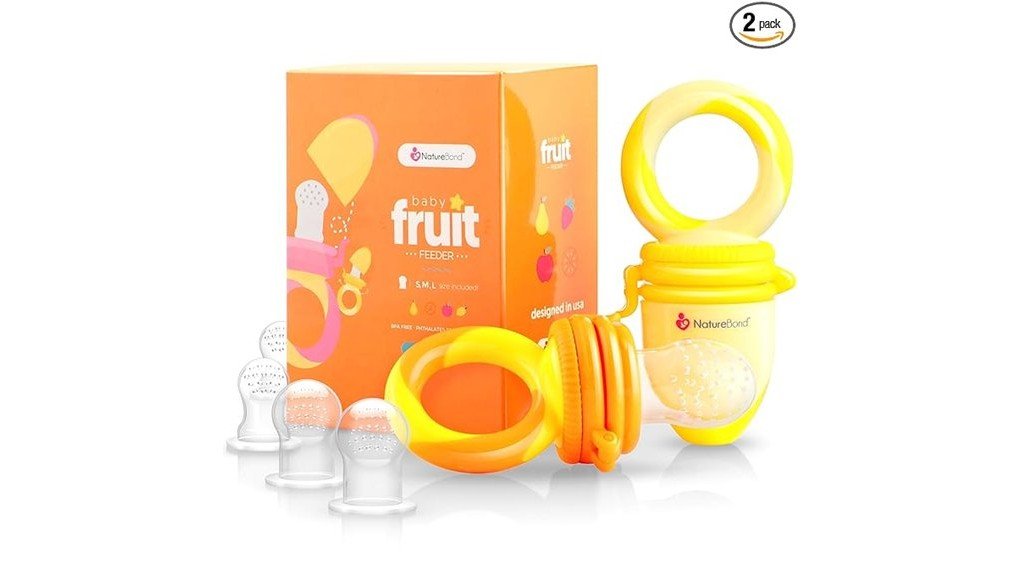
Introducing solids can feel stressful when your baby is teething, gagging on textures, or trying to grab food before they are ready for bigger bites. The NatureBond Baby Food Feeder is designed to hold soft fruit or puree inside a silicone sac so your baby can taste food in small, controlled amounts. It can be useful for early weaning, teething comfort, and self-feeding practice, but it still needs close supervision, correct teat sizing, and careful cleaning after each use.
Quick Verdict
Rating: Recommended with caveats
Best For: Parents who want a supervised silicone fruit feeder for teething babies and early solid-food practice.
Bottom Line: The NatureBond Baby Food Feeder is a practical 2-pack option for soft fruits, purees, and gum-soothing chewing. The main tradeoff is that it requires proper size selection, full cleaning, and active adult supervision every time.
Key Takeaways
- NatureBond Baby Food Feeder is a 2-pack silicone fruit feeder designed for teething infants and early weaning.
- It lets babies explore soft fruits and purees in small, controlled portions.
- The soft silicone sac can help soothe sore gums while encouraging supervised self-feeding.
- It is listed as BPA-, latex-, lead-, and phthalate-free, with safety certification noted in the article.
- Detachable parts and multiple sac sizes improve fit and hygiene, but cleaning and size selection may take effort.
| Specification | Detail |
|---|---|
| Brand | NatureBond |
| Product type | Baby food feeder and fruit feeder pacifier |
| Pack count | 2 feeders |
| Included sacs | 4 silicone sacs noted in the article |
| Material note | Soft silicone sac for baby chewing and feeding |
| Listed free from | BPA, latex, lead, and phthalates |
| Safety note | Requires adult supervision and correct sac sizing |
| Best use | Soft fruits, purees, teething comfort, and early self-feeding practice |
| Care note | Dismantle, rinse promptly, clean thoroughly, and air-dry fully |
What Is the NatureBond Baby Food Feeder?
The NatureBond Baby Food Feeder is a 2-pack fruit feeder pacifier nibbler designed to help infants explore solid foods during teething and early weaning. Instead of giving your baby a loose piece of fruit, you place soft food inside the silicone sac, then allow your baby to chew and suck under supervision.
The feeder is meant for soft textures such as banana, pear, melon, or puree. The sac helps limit how much food passes through at once, which can make early tasting feel more controlled for parents and more manageable for babies who are still learning oral skills.
Its main appeal is simple: it gives your baby a way to explore food texture while also chewing on a soft silicone surface. It is not a replacement for normal feeding, spoon feeding, or age-appropriate finger foods, but it can be a useful bridge when your baby is ready for early solids.
Who Should Buy It?
Best For
- Parents introducing soft fruits or purees during early weaning.
- Teething babies who like chewing on soft silicone surfaces.
- Caregivers who want a controlled, supervised way to encourage self-feeding practice.
Skip If
- You want a product your baby can use without close adult supervision.
- You do not want to clean small detachable feeding parts after each use.
- Your baby is not developmentally ready for solids or has feeding concerns that need pediatric guidance.
Before You Buy: This feeder still needs active supervision. Choose the correct sac size, check the parts before each use, and do not treat it as a substitute for safe feeding habits or pediatric advice.
Is the NatureBond Feeder Safe for Babies?
Based on the product information used in the article, the NatureBond feeder is designed with baby-safe material concerns in mind. It is described as BPA-free, latex-free, lead-free, and phthalate-free, and the article notes Bureau Veritas USA certification.
The silicone sac helps reduce direct access to larger food pieces, but it does not remove all feeding risk. Your baby should sit upright, stay supervised, and use only age-appropriate soft foods. You should also check the sac, handle, and locking parts before each use.
| Safety feature | Why it matters |
|---|---|
| Certified | Bureau Veritas USA certification is noted in the article |
| Materials | Listed as BPA, latex, lead, and phthalate free |
| Hygiene | Detachable parts allow more complete cleaning |
| Fit | Multiple sac sizes help match the feeder to the baby’s stage |
How Does the Feeder Help With Teething?
The NatureBond feeder gives your baby a soft silicone surface to chew while also tasting food. That gentle chewing pressure may help soothe tender gums during teething, especially when your baby wants to bite but is not ready for firmer foods.
You can also use chilled, soft fruit when appropriate for your baby’s stage. The goal is comfort and sensory practice, not treating a medical condition. If your baby has severe discomfort, feeding refusal, or unusual symptoms, ask your pediatrician for guidance.
- Soft chewing may help calm sore gums.
- Controlled exposure supports early texture learning.
- Soft fruit or puree can make self-feeding practice less messy than loose pieces.
Pro Tip: Start with a small amount of soft food and watch how your baby handles it. If your baby coughs, strains, or seems uncomfortable, stop and try again later with pediatric guidance if needed.
Which NatureBond Teat Size Should You Use?
The best NatureBond teat size depends on your baby’s age, mouth size, and feeding readiness. Smaller sacs are generally better for younger babies or first-time feeder use, while medium and larger sacs may suit older babies with stronger sucking and chewing skills.
Do not choose a larger sac just to make feeding faster. A better fit should feel calm and controlled, with your baby able to chew and suck without coughing, gagging, or frustration. If the sac looks too large for your baby’s mouth, move down a size.
Also check the feeder before every use. Make sure the sac is locked in place, the food is soft enough, and your baby is sitting in a safe feeding position.
Ease of Use and Parent-Friendly Design
The feeder is simple to understand: open it, place a small amount of soft food inside the silicone sac, close it securely, and let your baby explore it while you supervise. This makes it useful for parents who want less direct spoon-feeding pressure during early food exploration.
The 2-pack design is helpful because you can keep one feeder ready while the other is being washed or dried. That is especially useful during busy feeding windows, teething days, or short trips to a grandparent’s house.
The main limitation is that small feeding parts can be easy to misplace. You will also need to clean the sac openings carefully because fruit pulp can stick inside if it dries.
Cleaning and Maintenance
The NatureBond feeder separates into parts, which helps with hygiene. After each use, rinse the silicone sac promptly so fruit, puree, or saliva does not dry inside the small holes.
For better cleaning, dismantle the feeder, wash each part carefully, and let everything air-dry fully before storage. Regularly inspect the sac for wear, tears, discoloration, or trapped food. Replace any part that looks damaged.
Cleaning is one of the biggest tradeoffs with this type of product. It can be very useful, but it is not as quick as washing a basic spoon.
How It Performs in Real Use
For First Solid-Food Practice
For early solids, the feeder gives your baby a controlled way to taste soft foods without holding a full piece of fruit. This can be helpful when you want your baby to experience flavor and texture but still limit bite size.
For Teething Days
During teething, the silicone sac gives your baby something soft to chew. When filled with a suitable soft food, it can combine gum pressure with flavor exploration, which may keep your baby engaged for short supervised sessions.
For Travel or Grandparents’ House
The 2-pack setup can be useful outside the home because one feeder can be packed as a backup. It still needs careful cleaning, so bring a small storage bag or container for used parts until you can wash them properly.
For Learning Self-Feeding
The handle-style feeder can encourage your baby to hold, bring food toward the mouth, and explore at their own pace. This supports independence, but you should still stay close and guide your baby as needed.
How to Use It Correctly
- Choose the sac size that fits your baby’s mouth and feeding stage.
- Use soft foods such as mashed banana, ripe pear, melon, or smooth puree.
- Do not overfill the sac, since too much food can make it harder to close and clean.
- Make sure the feeder is locked before giving it to your baby.
- Keep your baby seated upright and supervised during the full feeding session.
- Wash and dry all parts after each use.
NatureBond Feeder Pros and Cons
Pros
- 2-pack design gives you a spare feeder for washing, travel, or backup use.
- Soft silicone sac supports teething comfort and controlled food exposure.
- Multiple sac sizes help match the feeder to your baby’s stage.
- Detachable design makes deeper cleaning easier than sealed feeders.
- Useful for soft fruits, purees, sensory learning, and supervised self-feeding practice.
Cons
- Requires close supervision and is not suitable for unsupervised feeding.
- Small sac openings can take extra effort to clean well.
- Size selection may take trial and error as your baby grows.
Is It Worth the Price?
The NatureBond Baby Food Feeder can be a strong value for the price if you want a simple feeder for soft foods, teething comfort, and early self-feeding practice. The 2-pack format and included silicone sacs add practical value because you are not relying on only one feeder.
It is best for parents who will use it often enough to justify the cleaning routine. If you only need a basic spoon or your baby already handles age-appropriate finger foods well, this may be more of an add-on than a must-have.
The value depends on how much you care about controlled texture exposure and teething-friendly chewing. It is worth considering if you want one tool that supports both, but it is not the best fit if you want a no-cleanup feeding solution.
How It Compares to Alternatives
Compared with a regular baby spoon, the NatureBond feeder gives your baby more independence and more chewing practice. A spoon is easier to clean, but it does not offer the same teething-style chewing surface.
Compared with open finger foods, this feeder gives you more portion control for soft fruits and purees. Finger foods may be better once your baby is ready for more texture, while the NatureBond feeder makes more sense during the early transition stage.
Frequently Asked Questions
How many feeders and silicone sacs come in the package?
The article notes that the package includes two feeders and four silicone sacs. This gives you a backup feeder and extra sacs for cleaning rotation or different sizing needs.
Is the feeder easy to clean and disassemble?
Yes, the feeder separates into parts, which makes cleaning easier than a sealed design. Rinse it soon after feeding, wash each part carefully, and air-dry fully before storing it.
Does it help introduce different fruit flavors safely?
It can help your baby explore soft fruit flavors in small amounts. The silicone sac limits access to larger pieces, but you still need to use soft, age-appropriate foods and supervise closely.
Can the teat length be adjusted for comfort?
The article describes the design as adjustable for comfort. You should still choose the sac size carefully and watch whether your baby handles the feeder calmly.
What age range is each teat size suitable for?
Small sacs are generally better for younger babies or first use, while medium and larger sacs may suit older babies with stronger oral skills. Use developmental readiness, mouth fit, and comfort as your guide.
Can you use frozen fruit in the NatureBond feeder?
Use caution with very hard frozen foods, especially for younger babies. Softer chilled fruit may be easier on gums and safer to manage, but always follow your pediatrician’s advice for your baby’s stage.
Who should skip this feeder?
Skip it if you want a product your baby can use alone, because this feeder requires supervision. You may also want to skip it if you dislike cleaning small silicone feeding parts after each use.
The Bottom Line
The NatureBond Baby Food Feeder is a useful choice if you want a supervised way to introduce soft fruits, support early self-feeding, and give your teething baby a gentle silicone surface to chew. It is less ideal if you want a low-maintenance feeding tool or if your baby is not ready for solids.
Its biggest strengths are the 2-pack setup, soft silicone sacs, and controlled feeding design. Its main limitations are the cleaning effort, size selection, and need for careful adult supervision.

