Understanding Mirror Play and Its Significance
Mirror play may look simple, but it can reveal a lot about how your child sees themselves and connects with you. A few minutes in front of a safe mirror can support self-awareness, emotional expression, imitation, and early social skills. In this guide, you’ll learn how mirror play helps children grow, what to expect by age, and how to make the experience safe and meaningful.
Quick Answer
Mirror play helps children explore their faces, bodies, feelings, and social cues through reflection. It can support self-recognition, imitation, language practice, emotional expression, and bonding when you keep the activity safe, playful, and age-appropriate.
Key Takeaways
- Mirror play helps your child notice facial expressions, body movements, and emotions.
- Babies and toddlers use mirror play in different ways as their awareness grows.
- You can support social skills by copying expressions, taking turns, and naming feelings.
- A child-safe mirror at eye level makes mirror play easier and safer.
- Talk with a qualified professional if mirror play causes distress or replaces social interaction.
What Is Mirror Play and Why Does It Matter?
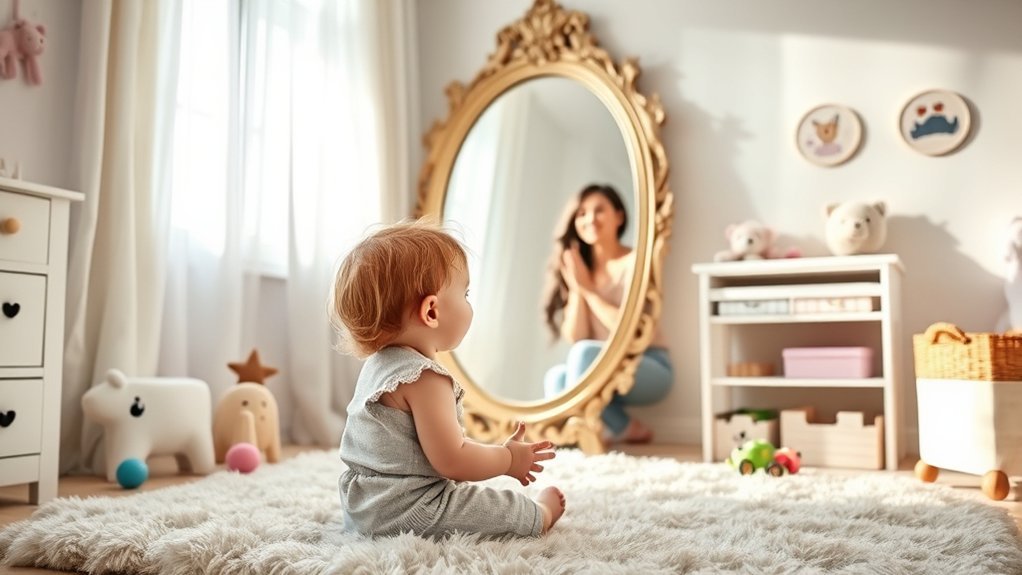
Mirror play happens when your child looks at, moves with, talks to, or makes faces in a mirror. This activity helps your child explore identity, emotions, movement, and connection through reflection.
When your child gazes into a mirror, they may copy facial expressions, wave, point, dance, or talk to their reflection. These small actions can support self-awareness, imitation, emotional expression, and early social learning.
Mirror play gives your child a safe way to explore facial expressions, movement, and feelings while you model warm, positive responses.
As your child interacts with their reflection, they’re not just playing. They’re learning how their body moves, how feelings can look, and how you respond to their signals.
Use mirror play as a calm, low-pressure way to build confidence and self-acceptance. Your attention matters more than the mirror itself.
The Developmental Stages of Mirror Play
As your child engages in mirror play, they begin to explore their body, expressions, and sense of self. Each stage looks different, and each one offers a chance for connection.
This early exploration can support self-awareness and social interaction as your child learns to notice and respond to people around them.
Early Exploration of Self
Mirror play gives young children a simple way to explore who they are and how they feel. When you encourage this play, your child can begin to notice their own face, body, sounds, and movements.
| Age Range | Developmental Focus | Emotional Growth |
|---|---|---|
| 0-6 months | Sensory exploration | Basic emotional responses |
| 6-12 months | Visual tracking | Interest in faces and movement |
| 1-2 years | Imitation | Expressing emotions |
| 2-3 years | Role-play | Naming and understanding feelings |
| 3+ years | Self-concept formation | Developing empathy |
As your child interacts with their reflection, they learn about their body and their place in the world. This early exploration can support emotional growth, especially when you respond with warmth.
Social Interaction Development
Mirror play also helps your child practice social interaction. It gives them a clear view of facial expressions, gestures, and body language.
You can support these skills through simple, shared moments:
- Self-recognition: Your child starts to notice their face, movements, and emotional expressions.
- Imitation: Your child copies smiles, waves, sounds, and gestures, which supports communication.
- Turn-taking: You make a face, your child copies it, and then you copy them back.
- Emotional regulation: Your child sees how feelings look and practices naming them with your help.
Encouraging mirror play creates small chances for deeper connection as your child grows.
How Mirror Play Supports Self-Identity
When children engage in mirror play, they don’t just have fun. They explore what makes them unique.
As they look in the mirror, they begin to notice how they look, move, and react. Over time, this can support a stronger sense of individuality.
Mirror play also lets your child experiment with expressions, movements, voices, and roles. By watching their own reflection, they can practice recognizing emotions and calming their body with your support.
Emotional Exploration Through Reflective Play
Reflective play gives you and your child a natural way to explore emotions together. You can name feelings, copy expressions, and help your child connect words to what they see.
This process strengthens your bond and creates a safe space for your child to practice emotional expression.
Understanding Self-Identity
As you engage in mirror play with your child, you open a simple path to self-identity and emotional expression. This shared activity helps your child understand who they are and how they relate to others.
Mirror play can support:
- Body awareness: Your child notices and appreciates their face, hands, posture, and movements.
- Emotional reflection: Your child copies happy, sad, surprised, or calm expressions.
- Self-recognition: Your child builds a sense of individuality and early self-esteem.
- Social understanding: Your child starts to notice similarities and differences between themselves and others.
Enhancing Emotional Expression
Mirror play can help your child practice emotional expression in a clear, visual way. When your child copies facial expressions in the mirror, they explore feelings like joy, sadness, surprise, and frustration.
You can name each feeling as your child acts it out. For example, say, “That looks like a happy face,” or “Your eyebrows look worried.”
This kind of play helps your child connect feelings, words, and body cues. It also gives you a chance to model calm, kind responses.
Building Social Skills
While your child plays in front of a mirror, they can practice social skills in a safe setting. They can watch expressions, copy movements, and learn how emotions affect communication.
Mirror play can help your child build:
- Empathy: Your child learns to recognize and respond to different emotional expressions.
- Communication skills: Your child practices facial cues, gestures, sounds, and simple words.
- Self-confidence: Your child sees their own reactions and gains comfort with social expression.
- Problem-solving: Your child can role-play small social challenges and try different responses.
These playful moments can strengthen emotional intelligence and social confidence.
How to Encourage Healthy Social Skills With Mirror Play
When you add mirror play to your child’s routine, you support more than creativity. You also help your child notice expressions, gestures, and other non-verbal cues.
Mirror play lets your child observe their own face and movements. This can help them understand how emotions look in themselves and in other people.
As your child mimics and responds to reflections, they can practice turn-taking, cooperation, and shared attention. These skills support healthy relationships as your child grows.
You can also support mental and emotional development by using mirror play as part of a warm, responsive routine.
Note: Mirror play works best when you follow your child’s interest instead of turning it into a lesson.
Tips for Parents to Facilitate Mirror Play Experiences
To get the most from mirror play, create a safe space that invites exploration. Keep the tone light, playful, and pressure-free.
Try these simple ideas:
- Choose the right mirror: Use a child-safe, unbreakable mirror at your child’s eye level.
- Encourage movement: Invite your child to dance, wave, jump, or make funny faces.
- Join the play: Copy your child’s expressions and let them copy yours.
- Ask simple questions: Try “What do you see?” or “How does that face feel?”
Keep sessions short if your child loses interest. A few engaged minutes can offer more value than a long, forced activity.
Mirror Play Safety Tips
Safety matters because young children may touch, lean on, or bump into mirrors. Choose an unbreakable mirror made for children whenever possible.
Place the mirror on a stable surface or secure it to the wall. Stay close during play, especially with babies and toddlers.
Warning: Don’t use loose glass mirrors for babies or toddlers because they can break and cause injury.
When Mirror Play May Need Extra Support
Most mirror play is normal and healthy. But some patterns may deserve closer attention.
Talk with your child’s pediatrician or a qualified child development specialist if mirror play causes distress, leads to intense fear, or replaces most social interaction. You should also seek guidance if you notice delays in communication, eye contact, play, or emotional response.
Frequently Asked Questions
How Can Mirror Play Support Language Development in Young Children?
Mirror play supports language development by giving your child a reason to copy sounds, words, and facial movements. You can model simple words like “smile,” “wave,” “happy,” and “sad” while your child watches and responds.
What Materials Are Best for Facilitating Mirror Play at Home?
Use an unbreakable child-safe mirror, a soft mat, and a few colorful toys or scarves. Soft lighting and gentle music can also make the activity more inviting.
Can Mirror Play Help Children With Special Needs?
Mirror play may help some children with special needs practice self-awareness, movement, communication, and social interaction. Keep the activity flexible and follow advice from your child’s therapist or healthcare provider when needed.
How Does Mirror Play Differ From Other Types of Play?
Mirror play gives your child instant visual feedback. Unlike many other play activities, it centers on self-observation, imitation, facial expression, and shared response.
When Should I Be Concerned About My Child’s Mirror Play Behavior?
You should seek guidance if mirror play becomes distressing, repetitive in a way that blocks other activities, or prevents social interaction. Early support can help you understand what your child needs.
Medical Disclaimer: This article is for informational purposes only and does not constitute professional medical advice. Always consult a qualified doctor or child development professional before making decisions based on this information.
Conclusion
Mirror play helps your child explore identity, feelings, movement, and connection in a simple way. Start with a child-safe mirror, join your child at their level, and keep the activity warm and playful.
These small shared moments can build confidence, communication, and trust. With your support, mirror play can become a meaningful part of your child’s growth.
References
- HealthyChildren.org — American Academy of Pediatrics