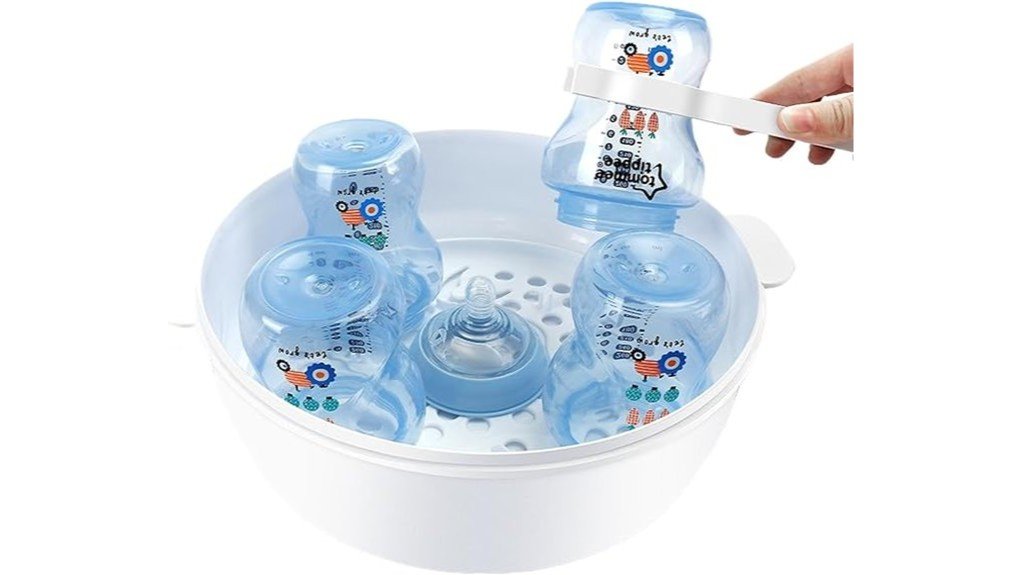
A microwave cleaner for baby bottles can simplify daily sterilizing for parents who need speed and convenience. It uses steam to clean bottles, nipples, and small accessories without harsh chemicals or heavy scrubbing. Still, size limits, safety features, and ease of use can vary by model. For households with limited space or busy routines, the difference between a useful tool and a missed purchase may come down to a few practical details.
Key Takeaways
- Uses microwave steam to sanitize baby bottles quickly with minimal effort and fewer harsh chemicals.
- Holds up to six bottles plus pacifiers, caps, and small accessories for compact organization.
- Enclosed design helps distribute steam evenly, improving cleaning results.
- Made from food-grade PP and ABS with heat-resistant grips and secure clips for safer handling.
- Best for parents needing a convenient, low-labor cleaner in microwave-equipped kitchens.
Why a Microwave Bottle Cleaner Helps
A microwave bottle cleaner helps simplify the routine of sanitizing baby feeding items by using natural steam to clean bottles, pacifiers, breast pump parts, and other small accessories quickly.
Its value lies in bottle sterilization benefits, which can support a more hygienic feeding routine without adding much effort. The steam cleaning advantages include speed, reduced reliance on harsh chemicals, and a process that fits into ordinary microwave use.
For caregivers seeking practical freedom, the device offers a compact, low-labor option. It does not eliminate every concern, but it can reduce repetitive work and bring a clearer sense of control.
What Fits Inside the Bottle Cleaner
Inside the cleaner, the layout is designed to hold up to six baby bottles at once, along with pacifiers, bottle caps, and other small feeding accessories. Its bottle capacity supports modest households and busy routines without demanding separate loads.
| Item | Fit |
|---|---|
| Bottles | Up to 6 |
| Accessories | Pacifiers, caps, small parts |
The arrangement favors practical sorting, helping cleaning accessories stay contained and organized. It accommodates many standard bottle shapes, while remaining compact enough for limited kitchen space. Overall, the internal design appears measured, efficient, and serviceable for users seeking simple control over daily care tasks.
How Does the Microwave Steam Cleaner Work?
The microwave steam cleaner works by using natural steam generated inside the unit to help clean baby bottles and small feeding parts.
Water inside the container heats in the microwave, creating steam that surrounds the items and loosens residue. This process supports steam cleaning benefits by reducing reliance on manual scrubbing and by offering quick sanitization for busy routines.
The enclosed design helps steam circulate evenly around multiple pieces at once. It is a straightforward method that fits compact spaces and may suit households seeking a simple, flexible cleaning option with minimal effort.
Is the Bottle Cleaner Safe to Use?
Yes, it is generally designed with safety in mind, thanks to its food-grade PP and ABS construction, heat-resistant side grips, extended handles, and secure clip for handling after heating.
Still, safe use depends on following safety guidelines, especially when removing a hot container from the microwave. The sealed design helps contain steam, supporting steam efficiency while reducing direct exposure during cleaning.
It remains important that the unit is handled on a stable surface and inspected for wear. Proper use matters more than marketing claims, and informed users retain control over risk, convenience, and freedom from unnecessary complications.
When Should You Choose This Bottle Cleaner?
This bottle cleaner is best suited for parents, caregivers, and travelers who want a compact steam-cleaning option for bottles, pacifiers, breast pump parts, and other small accessories.
It may be a practical choice when bottle cleaning must be quick, low-effort, and limited to microwave access. Its steam efficiency can suit households that prefer simple routines over bulky electric units.
It also fits users seeking portable tools that support more independent, less cluttered care.
However, it is less ideal for larger sterilizing loads or spaces without a microwave, where other systems may offer greater capacity and convenience.
Frequently Asked Questions
How Long Does a Cleaning Cycle Usually Take?
A cleaning cycle usually takes about 2 to 8 minutes, depending on microwave power and load size. Its cleaning effectiveness is generally strong, though safety concerns require careful handling of the hot steam and lid.
Can It Be Used With Hard Water?
Yes, it can be used with hard water, though hard water effects may leave mineral residue over time. Cleaning efficiency should remain adequate, but occasional descaling or filtered water may better preserve performance and ease.
Does It Fit Tall Baby Bottles?
It may fit tall baby bottles if their diameter matches the chamber. Bottle compatibility is broad, but extra-tall designs could be tight. Cleaning efficiency stays strong, though users should verify dimensions before purchasing.
Is It Dishwasher Safe?
It is not clearly dishwasher safe; the device appears intended for microwave bottle sterilization instead. Testing the theory shows cleaning efficiency comes from steam, not dishwasher cycles, so users should verify manufacturer instructions before washing.
How Often Should the Cleaner Be Replaced?
It should be replaced when replacement indicators appear, such as warping, cracks, lingering odors, or reduced steam performance. Cleaning frequency affects lifespan; with regular care, it may last many months before needing replacement.
Conclusion
In the end, the microwave cleaner for baby bottles stands out for its quiet practicality: it uses simple steam instead of harsh chemicals, yet delivers a fast, hygienic result. It is compact, but holds several bottles and accessories; easy to use, but still designed with safety in mind. For busy caregivers, that contrast is appealing. It may not replace every sterilizing method, but it offers a sensible, low-effort option for everyday feeding routines.