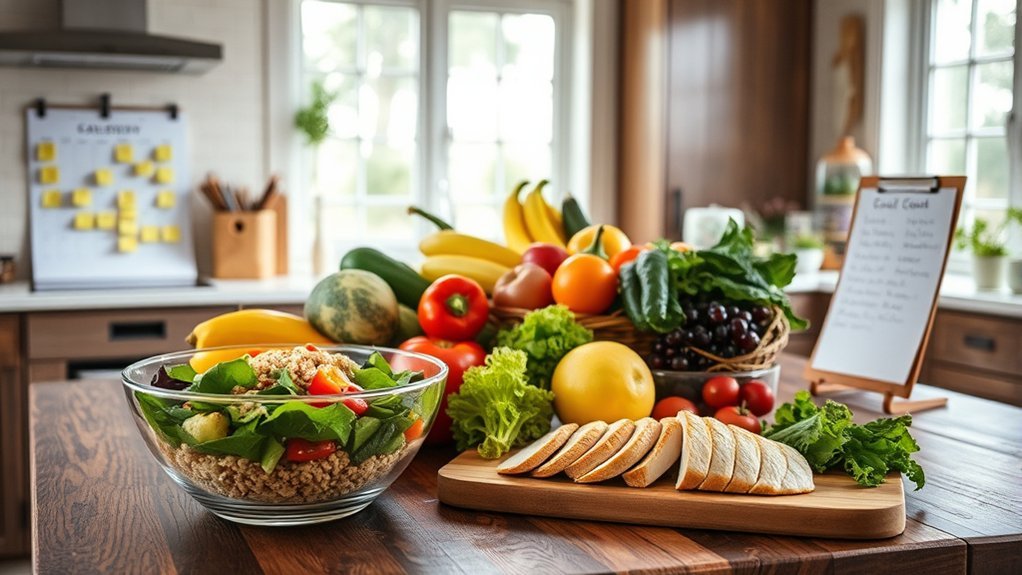
Meal planning can greatly enhance your dietary habits and reduce food waste. It’s essential to understand how to assess your nutritional needs and select appropriate recipes. You might be wondering how to organize your grocery list or the best practices for prepping meals. Plus, knowing how to store and reheat your food safely is vital. Let’s explore these common questions to help you create a sustainable meal planning routine.
What Is Meal Planning and Why Is It Important?
Meal planning is a strategic approach to organizing your meals ahead of time, and it plays an essential role in maintaining a healthy lifestyle. By planning your meals, you can guarantee a balanced intake of nutrients, helping you meet dietary goals.
Meal planning is key to a healthy lifestyle, ensuring balanced nutrition and supporting your dietary goals.
This practice reduces impulsive food choices, which often lead to unhealthy eating habits. In addition, it allows you to optimize your grocery shopping, minimizing waste and saving money.
Research indicates that individuals who meal plan tend to consume more fruits and vegetables while reducing processed food intake. Incorporating variety in your planned meals can also enhance your culinary skills and keep you engaged in your diet.
Ultimately, meal planning empowers you to take control of your nutrition and fosters healthier eating patterns.
How Do I Choose Recipes for Meal Planning?
When choosing recipes for meal planning, it’s essential to take into account your dietary preferences, nutritional needs, and cooking skills.
Start by identifying any dietary restrictions, such as allergies or specific diets like vegetarian or gluten-free. Next, consider your nutritional goals, ensuring your selections include a balance of proteins, carbohydrates, and healthy fats.
Assess your cooking skills honestly; choose recipes that match your comfort level to avoid frustration. It’s also helpful to select recipes that share similar ingredients, reducing waste and saving money.
Finally, think about meal variety to keep your palate excited while maintaining nutritional balance. By strategically selecting recipes, you’ll create a meal plan that’s both enjoyable and sustainable.
How Can I Organize My Grocery List Effectively?
After selecting your recipes, the next step is to organize your grocery list effectively. Start by categorizing items into sections, such as produce, dairy, grains, and proteins. This method aligns with how grocery stores are typically organized, making shopping more efficient.
Next, cross-reference your list with pantry staples to avoid unnecessary purchases. Use a digital app or a simple notepad to track your items—this helps in quick adjustments and prevents forgetting essential ingredients.
Additionally, consider prioritizing perishable items to guarantee they’re used timely. Finally, review your list before heading out; this final check can enhance efficiency and prevent impulse buys, ultimately promoting a more structured approach to your meal planning.
What Are Some Tips for Meal Prepping?
To make meal prepping efficient, you should start by planning your menu to guarantee variety and balance.
Implementing batch cooking strategies can save you time and reduce food waste, while effective storage solutions help maintain freshness.
Plan Your Menu
Meal prepping can simplify your week and save you time, especially when you follow a few key tips. Start by planning a balanced menu that includes a variety of proteins, grains, and vegetables. This guarantees you get all necessary nutrients while avoiding monotony.
Here’s a simple table to help you visualize your menu options:
| Protein | Grain | Vegetable |
|---|---|---|
| Chicken | Quinoa | Broccoli |
| Tofu | Brown Rice | Spinach |
| Salmon | Couscous | Bell Peppers |
| Lentils | Barley | Carrots |
Choose recipes that share ingredients to reduce waste and maximize efficiency. By planning your menu thoughtfully, you’ll streamline your meal prep process and make healthy eating easier.
Batch Cooking Strategies
While batch cooking can seem intimidating at first, it’s a highly effective way to streamline your meal prep process and guarantee you always have nutritious options on hand.
To make it easier, consider these practical tips:
- Choose versatile ingredients: Select foods that can be used in multiple meals, like grains, proteins, and vegetables.
- Plan your cooking day: Dedicate a specific day each week to cook, ensuring you have uninterrupted time.
- Use proper techniques: Employ methods like roasting, steaming, or slow cooking to maximize flavor and retain nutrients.
- Portion wisely: Divide meals into single-serving containers to simplify reheating and reduce food waste.
Storage Solutions Tips
Effective storage solutions are essential for maintaining the freshness and nutritional quality of your prepped meals. Start by investing in high-quality, airtight containers to prevent moisture and air exposure. Glass containers are particularly effective, as they don’t leach chemicals and can be safely reheated.
Label each container with the contents and date to keep track of freshness. Store meals in portion sizes that fit your needs, making it easy to grab and go.
Utilize your freezer for longer storage; most cooked meals can last up to three months when properly frozen. Finally, organize your fridge and freezer to use older meals first, minimizing waste and ensuring you consume your prepped meals while they’re still at their best.
How Do I Store and Reheat Meal Prepped Food?
Storing and reheating meal-prepped food properly is essential for maintaining freshness, flavor, and safety.
To guarantee your meals stay delicious and safe to eat, follow these guidelines:
- Use airtight containers: This prevents moisture loss and protects against bacterial growth.
- Label your meals: Write the date and contents to track freshness and avoid confusion.
- Cool before refrigerating: Allow food to reach room temperature to prevent condensation, which can lead to spoilage.
- Reheat thoroughly: Ensure meals reach an internal temperature of at least 165°F (74°C) to kill any harmful bacteria.
How Can I Make Meal Planning a Sustainable Habit?
How can you make meal planning a sustainable habit? Start by setting aside a specific time each week to plan your meals. Consistency is key; it reinforces the habit.
Use a template or app to streamline the process, making it quicker and more efficient. Focus on seasonal ingredients and local produce to enhance nutritional value and reduce costs.
Utilize a meal planning template or app for efficiency, and prioritize seasonal, local produce to maximize nutrition and savings.
Batch cooking and prepping can save time and minimize waste, while keeping your meals varied and exciting. Stay flexible—if something doesn’t work, adjust your approach.
Incorporate your family’s preferences to boost participation and enjoyment. Finally, track your progress and celebrate small victories, as this will motivate you to maintain the habit over time.
Frequently Asked Questions
Can Meal Planning Help With Dietary Restrictions or Allergies?
Yes, meal planning can help you manage dietary restrictions or allergies effectively. By organizing your meals, you can guarantee you’re selecting safe ingredients, avoiding allergens, and maintaining a balanced diet tailored to your specific needs.
How Do I Adjust Portion Sizes for Meal Planning?
Adjusting portion sizes for meal planning’s like tuning a musical instrument; you need precision. Start by measuring food, consider your nutritional needs, and adjust based on activity levels, ensuring balanced meals that satisfy your hunger.
What Tools or Apps Can Assist With Meal Planning?
You can use tools like MyFitnessPal, Paprika, or Mealime to streamline your meal planning. These apps help you track nutritional values, create shopping lists, and simplify recipe organization, making your meal prep efficient and enjoyable.
How Often Should I Update My Meal Plan?
You should update your meal plan weekly or bi-weekly. This frequency allows you to adapt to changes in your schedule, seasonal ingredients, and personal preferences, ensuring your meals remain enjoyable and balanced.
Can Meal Planning Save Money on Groceries?
Meal planning can save you a fortune on groceries. By strategically organizing your meals, you eliminate impulse buys, reduce food waste, and guarantee you buy only what you truly need, maximizing your budget’s potential.
Conclusion
Incorporating meal planning into your routine not only simplifies your cooking process but can also lead to significant savings—studies show that meal planners save an average of $1,200 annually on groceries. By taking the time to choose recipes, organize your grocery list, and efficiently prep meals, you enhance your overall eating habits while reducing food waste. Embrace these basics, and you’ll find that meal planning becomes a rewarding and sustainable part of your lifestyle.

